13.-17. August 2024, Nevis
Hello everyone,
I am Rebecca Lellau, a PhD candidate at the Max Planck Institute of Geoanthropology (MPI-GEA) supervised by Dr. S. Yoshi Maezumi (https://www.shh.mpg.de/person/123125/2164017) and Professor Will D. Gosling. For my work I will use geochemical, palynological and charcoal proxy data from sediment cores from Curaçao to examine the long-term human-environment interactions.
In this blog post, I would like to share with you my first trip to a conference abroad – the International Association for Caribbean Archaeology (IACA) congress, which was also my first stay in the Caribbean in general.
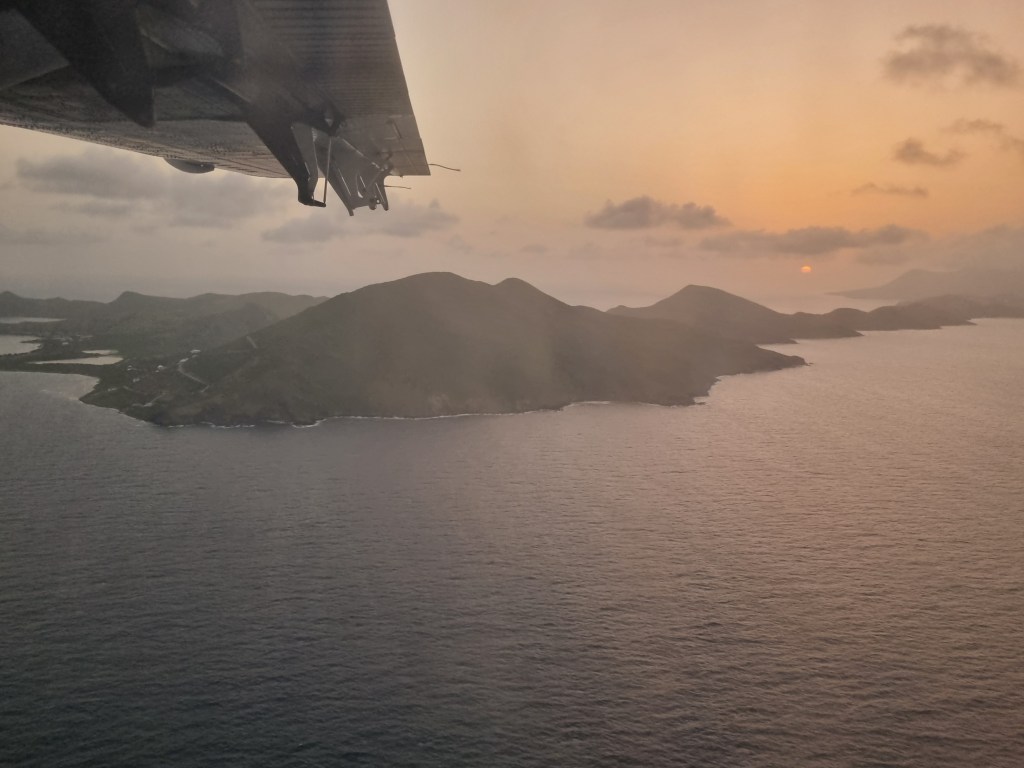
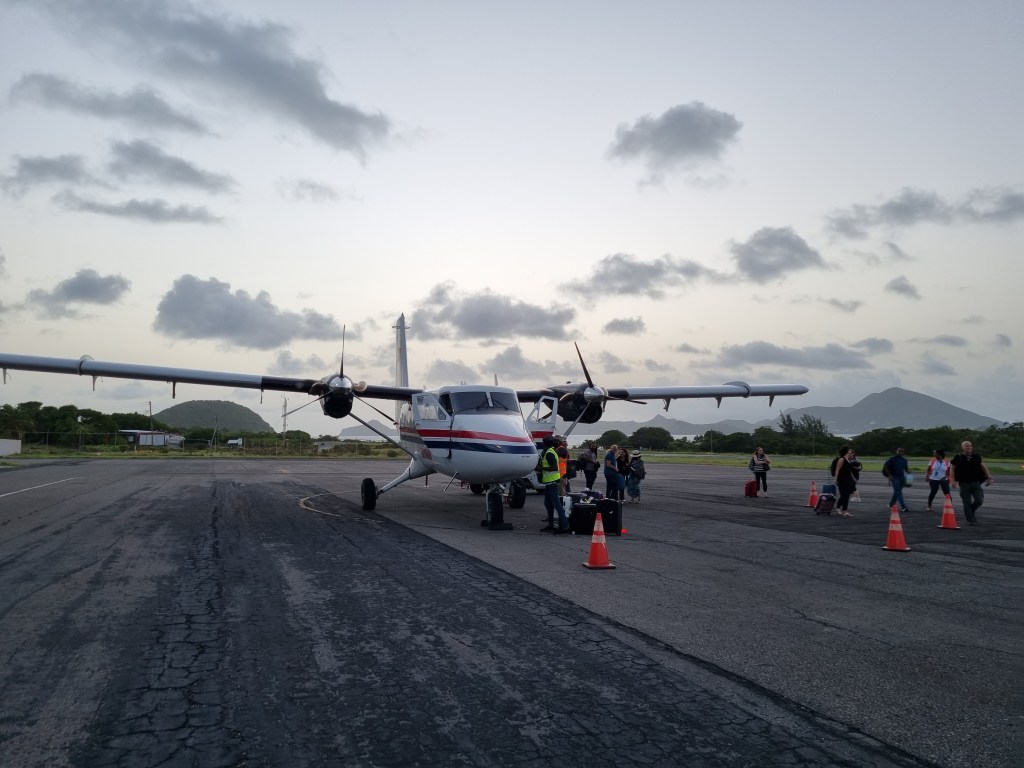
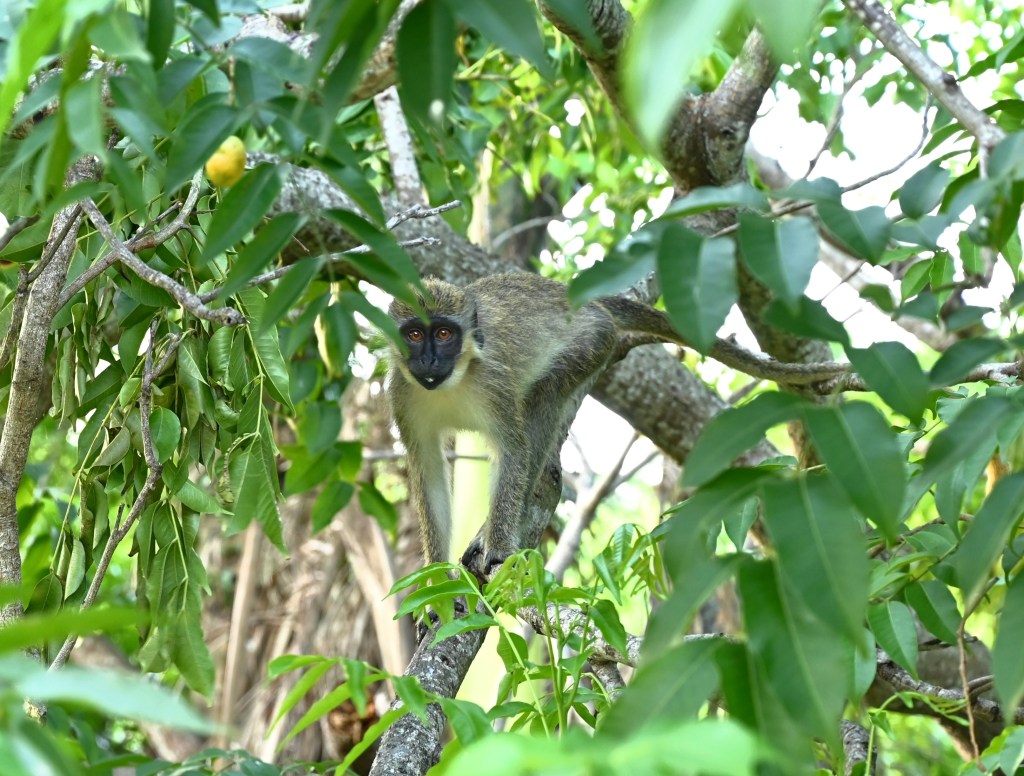

The adventurous journey from Germany to the beautiful Caribbean Island of Nevis ended with a flight from St. Maarten to Nevis in a very small 20-passenger propeller plane. During this flight the view of the neighboring islands and the tropically forested volcanic slopes made me feel like I was in the movie “Jurassic Park”. I was accommodated with my supervisor in one of the oldest wooden cottages on the island, which were once used as farmhouses on a former small plantation. This direct link to the archaeological history of the island was a good prelude to the conference. In the early morning and at dawn, another highlight took place every day: my neighbors – a large family of green monkeys (Chlorocebus sabaeus) – settled on the tree next to my balcony and enjoyed the ripe fruit of the hog plum (Spondias sp.). After a day off to explore the island, tropical storm Ernesto (https://www.thestkittsnevisobserver.com/tropical-storm-ernesto-heading-towards-st-kitts-and-nevis-with-rain-and-high-winds/) arrived. Heavy rain and gusts of wind led to power outages and travel chaos, which also caused the conference to be postponed for one day.
The IACA congress is organized every two years to ensure an exchange on archaeological projects in the Caribbean islands and neighboring regions. In a collaborative session with our partners*, various aspects of the “Curaçao Cultural Landscape Project – CCLP” (https://naam.cw/publikashon/curacao-cultural-landscape-project/) were presented. As part of my talk: “Preliminary results of the palaeoecological investigations of the sediment cores from Curaҫao’s Saliña Sint Marie and Jan Thiel”, I outlined preliminary results and plans for my PhD. Besides radiocarbon dates of the cores and geochemical data, I showed microfossil analyses (collaboration with the Friedrich Schiller University Jena, Germany) and some preliminary pollen results.
It was a wonderful conference and trip, to meet our project partners and many researchers from the Caribbean in person.
*NAAM Foundation, Simon Fraser University in Canada, University of Queensland in Australia, InTerris Registries
 Ecology of the past