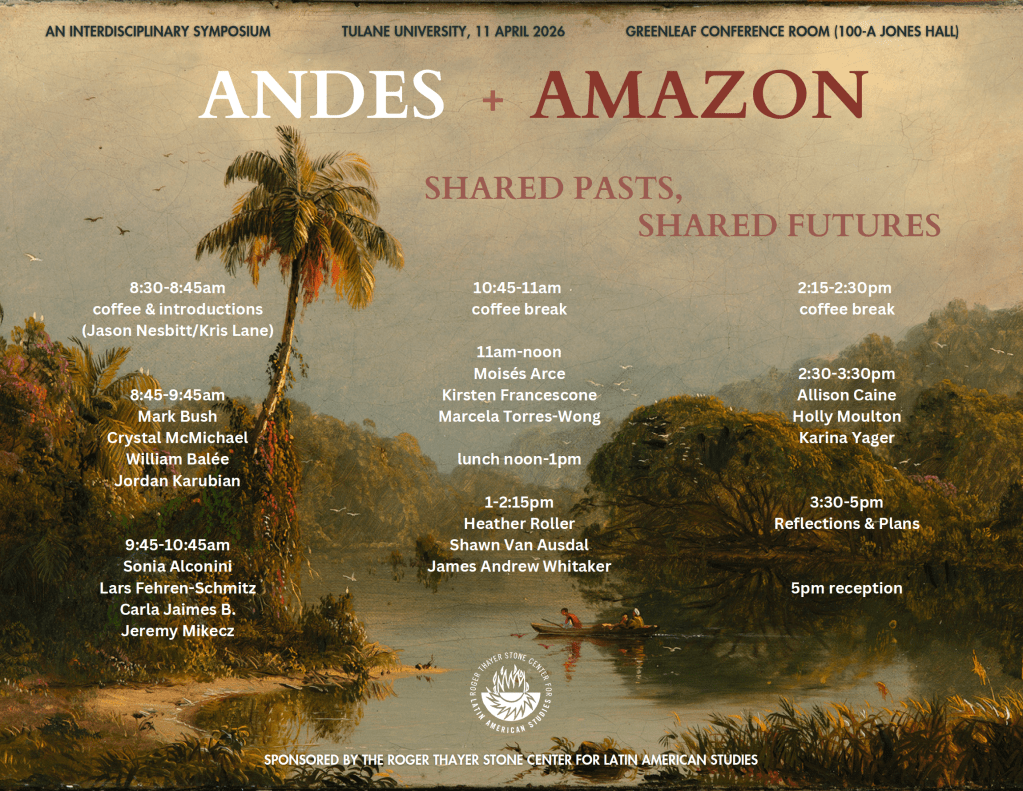
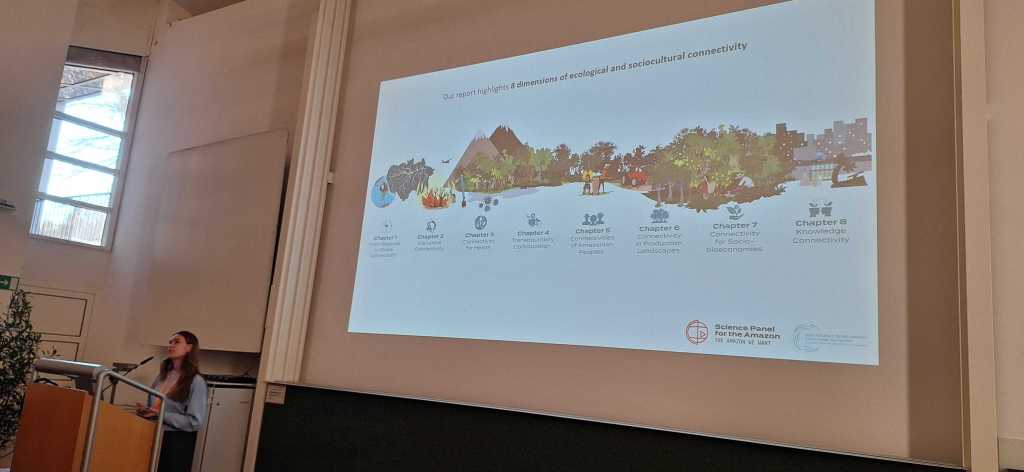
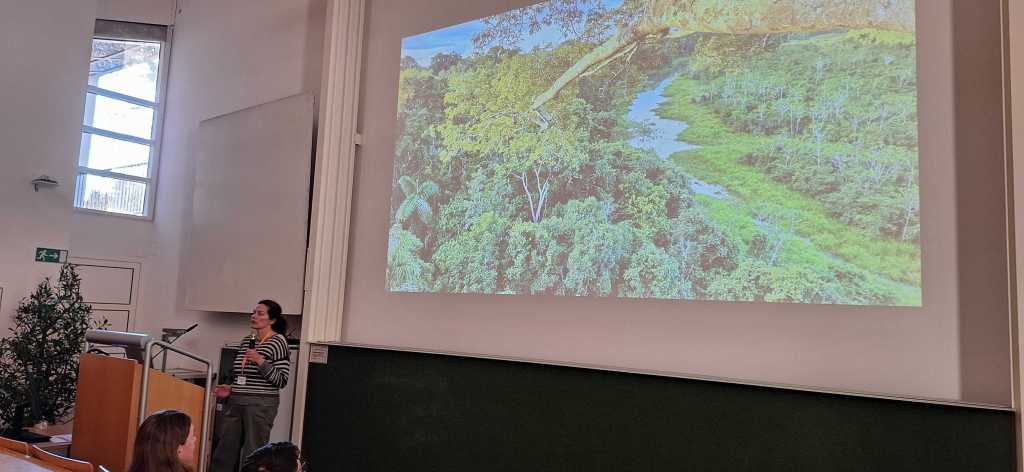
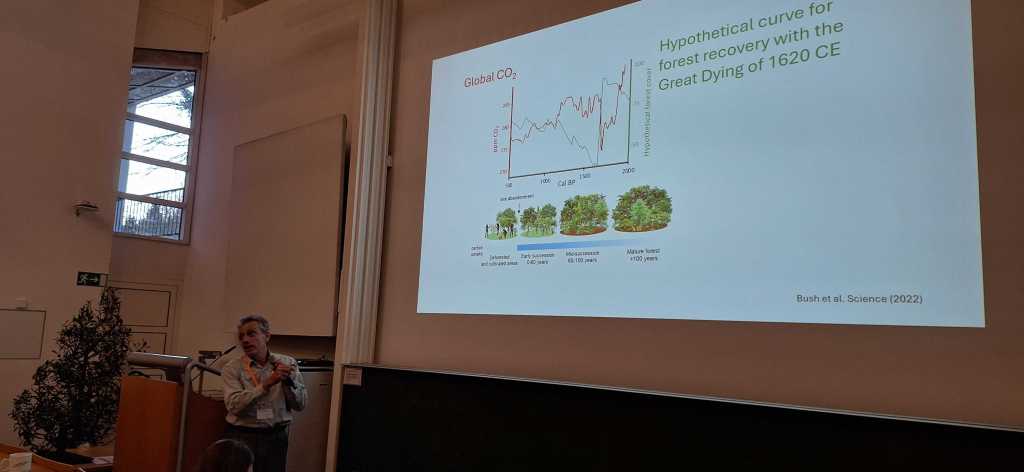
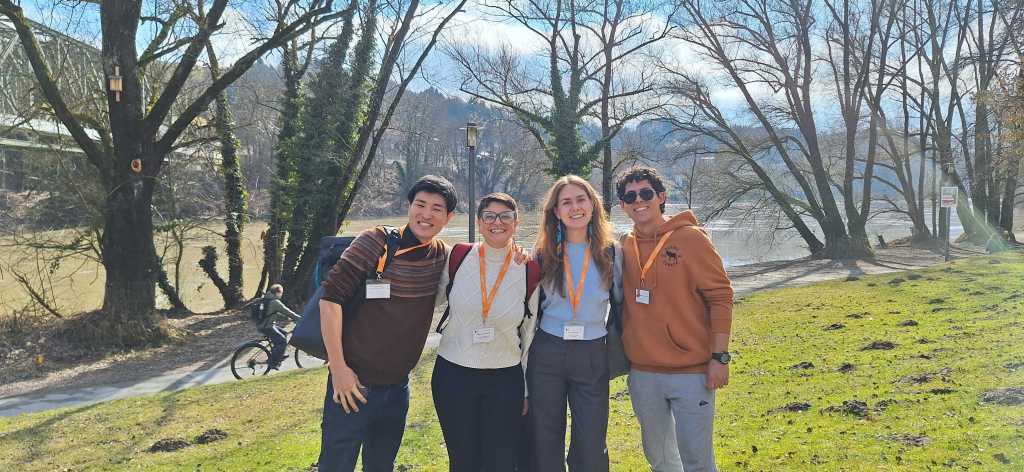
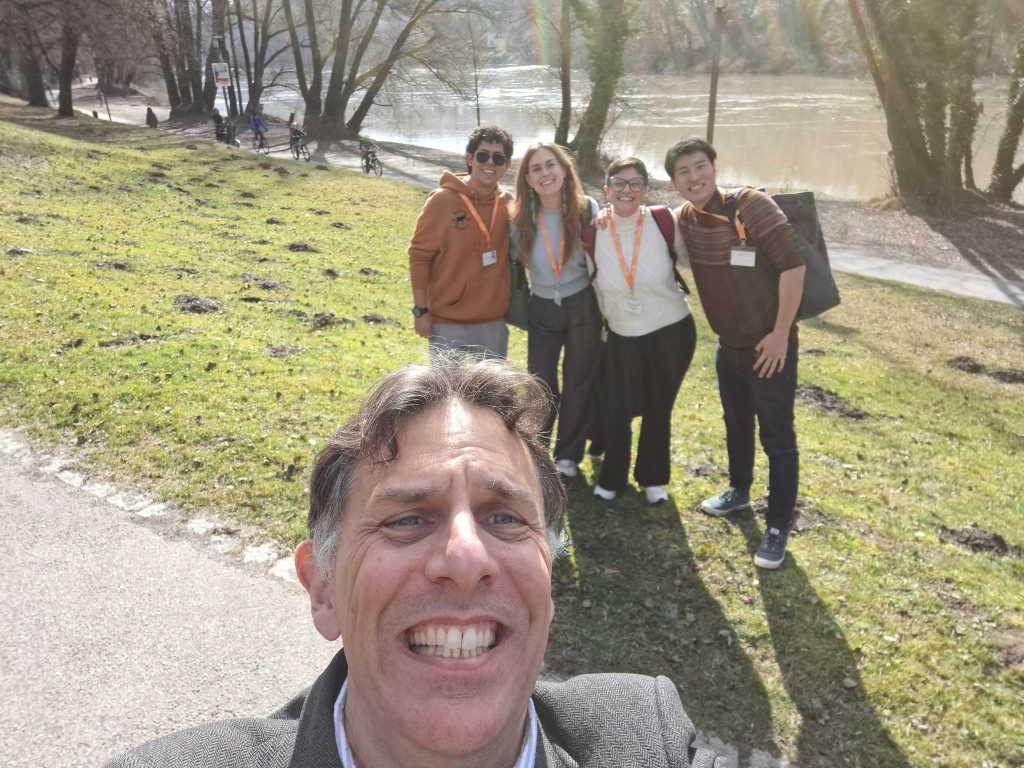
I just attended a symposium at Tulane University organized by Kris Lane and Jason Nesbitt of the Center for Latin American Studies. “Andes + Amazon, Shared Pasts and Shared Futures” was an amazing interdisciplinary experience, with talks from scholars in disciplines ranging from law and history to paleoecology and paleogenetics. But we all had a common goal, which is understanding how human-environment interactions have shaped, and will continue to shape, the immense biological and cultural diversity of Andean and Amazonian ecosystems.
I enjoyed seeing colleagues, meeting new colleagues, and speaking with PhD students who are eager to work in tropical ecosystems. One of my highlights was meeting Bill Baleé, whose work I’ve read since I was a PhD student. He is a historical ecologist who studies how Indigenous people modify Amazonian forests. His knowledge is immense, and he is also an incredibly warm and welcoming person. I am really looking forward to our future collaborations. I think there is strong momentum coming from this symposium, and we plan to put out a volume of articles that show the importance of a multidisciplinary lens for understanding the future of Andean and Amazonian ecosystems. Stay tuned!
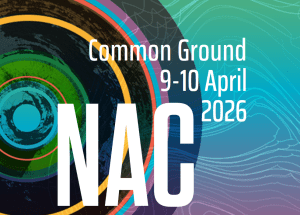
The annual Dutch Earth & Environmental Science conference took place at the NH Noordwijk Conference Centre Leeuwenhorst in Noordwijkerhout amoung some of the many Dutch flower fields.
Before the conference was a “Strategic evening” which provided an opportunity to meet scientists from other universities and organisations, and to discuss topical issues. This included a presentation of the recently completed “Earth & Environmental Science Vision” document (which can be dowloaded from the AMW Raad [Earth & Environmental Science Council] web page).
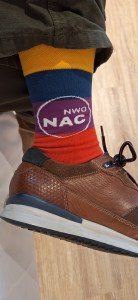
On the first day of the conference proper I was involved in chairing two sessions on “Palaeoclimate”. These sessions covered a wide range of topics, proxies and time periods, and included work on the Paleocene-Eocene Thermal Maximum, tipping points, and the Younger Dryas period. Excitingly for chairing these sessions I recieved a pair of NWO NAC socks!
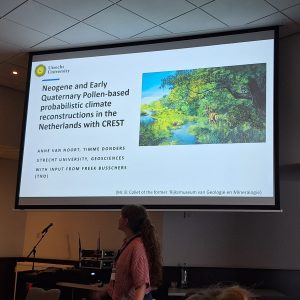
On the second day of the conference – sporting my new NAC socks – I presented our recently published work on landscape openness in the pre-farming European landscape. This was centred upon the recent publication of the palaeoecological record from Well-Aijen (Limburg, the Netherlands) which was the culmination of many years, and many students, research (Gosling et al., 2025). It was great to get positive feedback from the Dutch scientific community on this study. The session also included exciting work on reconstructing past climate from pollen data using the CREST model (Chevalier, 2022) and the extraction of biodiversity data from sedimentary pollen records.
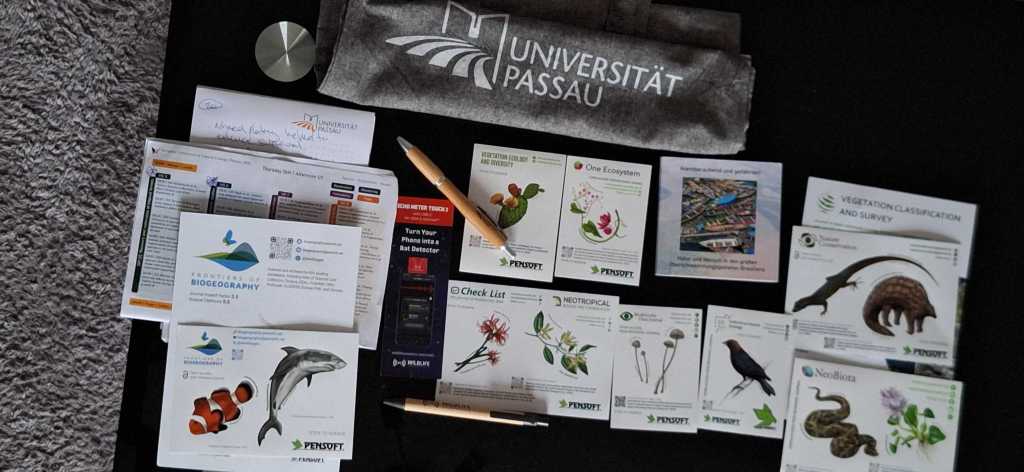
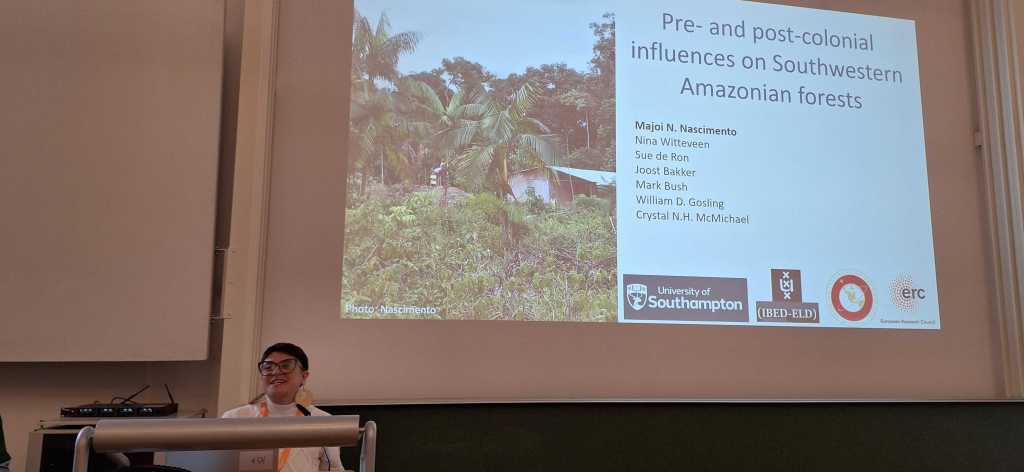
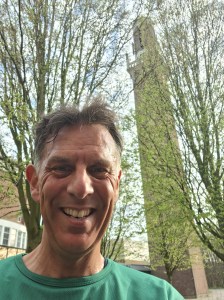
As well as the science talks the meeting had posters, exhibitors, workshops (I attended the one of scientific drilling) and social events (pub quiz, bowling, dancing). The atmosphere was very friendly and it was very easy to meet new people. The area around is very pretty and I even managed to get out for a short run on one of the days. I would recommend this event to anyone working in Earth or environmental sciences in the Netherlands.
References
Chevalier, M. (2022). crestr: An R package to perform probabilistic climate reconstructions from palaeoecological datasets. Climate of the Past, 18(4), 821–844. https://doi.org/10.5194/cp-18-821-2022
Gosling, W. D., de Wolf, I. K., Witteveen, N. H., de Zwaan, S. B., van Teulingen, C., Föllmi, D., Thissen, W., Vink, V. B., Woutersen, A., Philip, A. L., van Herk, M. J., Nascimento, M. N., Prins, M. A., & McMichael, C. N. H. (2025). Herbivory and vegetation openness in a pre-farming European landscape. Plant Ecology & Diversity, 1–22. https://doi.org/10.1080/17550874.2025.2576566
By Bouwe Groeneveld (MSc Biological Sciences, track Ecology & Evolution, University of Amsterdam)
From 2 to 6 March, I joined the Mapping Ancient Africa Research and Writing Workshop at Fountainhill Estate near Pietermaritzburg, South Africa. The week brought together focused writing, interdisciplinary exchange, and time in the landscape.
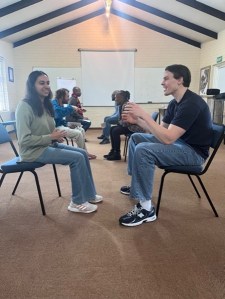
We began with a speed dating session that set an open and collaborative tone. Participants introduced their research backgrounds, ranging from botany and ecology to geography. The group was highly international, with participants from Ghana, Ethiopia, Nigeria, Kenya, South Africa, and the Netherlands. This diversity quickly proved valuable, as different perspectives naturally complemented one another throughout discussions.
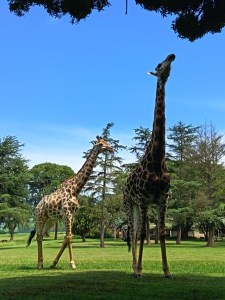
The second day centred on the challenges of academic writing and publishing. Through group conversations and smaller sessions, we reflected on common difficulties such as structuring arguments and navigating the publication process. Later that afternoon, we walked across the estate to the Holley Shelter archaeological site. During the walk, I noticed how the surrounding landscape offered a sense of calm that contrasted with the intensity of writing. Along the way, we encountered a giraffe standing only a few metres from us, quietly feeding on acacia leaves.
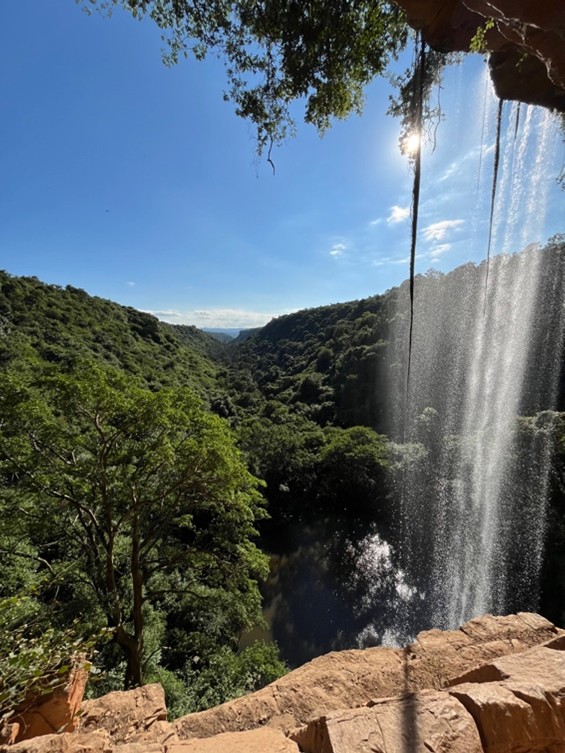
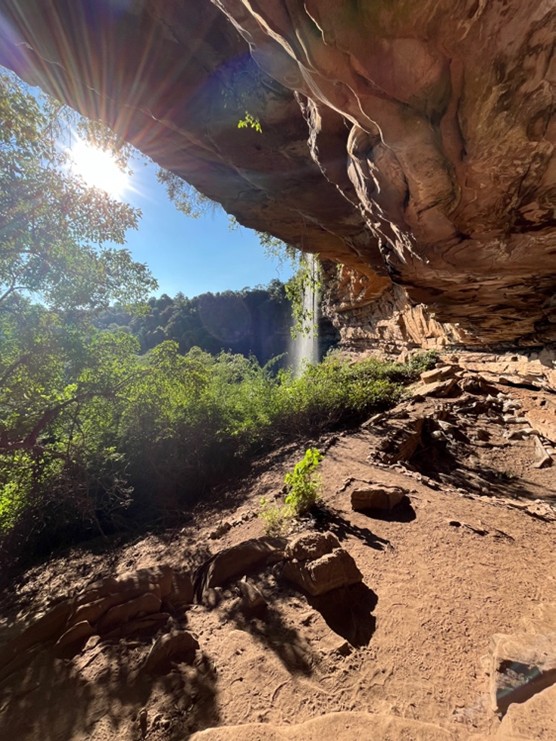
The shelter itself was striking. A clear waterfall flowed down the rock face, catching the sunlight as it filtered into the green valley below. The interplay of water, rock, and light created a remarkably beautiful and tranquil setting, making the site feel both impressive and deeply serene.
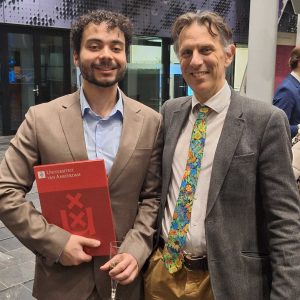
Reyan Christ graduating with an MSc in Earth Sciences
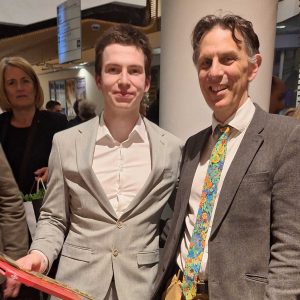
On the 18 March 2026 I had the fun challenge of speaking at two MSc graduation ceremonies that were running at the same time. Two ‘long-term’ members of the palaeoecology team at the University of Amsterdam had reached the culmination of their degree program.
Reyan Christ graduating Cum laude in MSc Earth Sciences (track Earth System Science) and Jelle Kraak graduating in MSc Biological Sciences (track Ecology & Evolution).
Reyan was up 2nd in the Earth Sciences program, and Jelle was up 5th in Biological Sciences, giving me approximately 10 mins to get between rooms! Thankfully everything ran to time and I was able to deliver my speeches for them both. It was great to meet their friends and families and celebrate this important moment for their education.
Jelle Kraak graduating with an MSc in Biological Sciences
It was also great to celebrate the submission of a manuscript (the day before) on which they are first and second author. This manuscript is based on a combination of their, and other students, theses work on past environmental change in the Drakensberg Mountains (South Africa), and conducted in collaboration with Jemma Finch and Trevor Hill at the University of KwaZulu-Natal. We now cross our fingers that the journal editors and reviewers are as excited as we are about their findings. Fingers crossed we can be announcing the published version on here later in the year…
The third Mapping Ancient Africa (MAA) workshop took place in South Africa during March 2026. This workshop was supported by the International Union for Quaternary Research as part of the MAA multi-year project. The aim of this work shop was to provide specialist training in developing research projects and writing of scientific articles. During the workshop each participant developed, and progressed, their own personal work plan. These personal programs allowed the training to be tailored to the participants needs. They included a wide range of challenged ranging from the development of project ideas through to dealing with reviewer comments on manuscripts, and inclusivity, equality and diversity issues.
In addition to the academic program, social activities and excursions were designed to help build academic networks and promote informal discussion of past environmental change issues. These included hikes to the Holley Shelter archaeological site (Bader & Conrad, 2023) and Game Pass shelter rock art site (Hoerle, 2005).
The European Conference of Tropical Ecology is organised on behalf of the Society for Tropical Ecology. To find out more about the society click here.
The 9th European Conferenc of Tropical Ecology took place in Passau (Germay) between the 23 and 27 February 2026. The theme of the meeting was “Species-Ecosystems-People” and it brought together around 250 tropical ecology researchers from around the globe to discuss the latest research in the field. The meeting ran very smoothly – credit to Christine Schmitt and her team at the University of Passau – and I enjoyed the conference very much. I followed sessions focused on topics ranging from climate change impacts and change through time, through human-environment interactions, to traits, and recovery and restoration.
It was great to see a good contingent of tropical palaeoecologists present. With Rob Marchant (York University) providing a key note spanning past environmental change through to socio-ecological systems, entitled: “Embedding the past for balanced future tropical mountain social ecological systems”. Palaeoecological talks and posters came from around the world, including Bolivia, Cuba, Brazil, Seychelles, and Democratic Republic of Congo. All provided new insights and suggested high potential for revealing novel information about past ecosystems and the drivers of change.
Dung fungal spores (or spores of coprophilous fungi) are often used to track herbivore presence or abundance in the past (e.g. van Geel, 2001; Lee et al., 2022). While the animals are not preserved evidence of them is through the type and quantity of the fungal spores preserved in the sedimentary record.
On 12 February 2026, along with University of Amsterdam MSc researchers Chiara Raino, Sarah Main and Bouwe Groeneveld, I travelled to Beekse Bergen zoo in the south of the Netherlands to collect samples to see if we could related specific animal types to particular dung fungal spore assemblages.
At the zoo we met with Stijn Berger who coordinates scientific collaboration for Beekse Bergen. Stijn kindly arranged for us to visit a number of enclosures before the animals were let out for the day. We collected samples from areas containing elephants, spring bok and rhinos. We new wait for the samples processing, and the students analysis, to see if there is any relationship between the animal and fungal spore types.
References
van Geel, B. van. (2001). Non-pollen palynomorphs. In S. J.P., H. J. B. Birks, & W. M. Last (Eds.), Tracking environmental change using lake sediments. Vol. 3 (pp. 99–119). Kluwer.
Lee, C. M., van Geel, B., & Gosling, W. D. (2022). On the use of spores of coprophilous fungi preserved in sediments to indicate past herbivore presence. Quaternary, 5(3), 30. https://doi.org/10.3390/quat5030030
Ecology of the Past blog contributor Nina Witteveen was awarded the Hugo de Vries prize on 13 June 2025 at the Botanic Gardens in Nijmegen. The Hugo de Vries prize is awarded by the KNbv (Royal Dutch Botanical Society) and the Stichting Hugo de Vries fonds (Hugo de Vries foundation) for the best PhD thesis in Botany defended at a Dutch University. This years prize was awarded to Nina for her thesis“Long-term Forest Recovery in Amazonia: Insights from Phytolith Analysis” (University of Amsterdam) which was completed under the supervision of Crystal McMichael.
36th Annual Meeting of the Society for Tropical Ecology
24-28 February 2025, Amsterdam
The 8th European Conference of Tropical Ecology took place in Amsterdam (The Netherlands) from 24 to 28 February 2025. This meeting was organized for the Society for Tropical Ecology. The event was hosted by the Institute for Biodiversity & Ecosystem Dynamics (University of Amsterdam), held at Hotel Casa, and the main sponsor was the NWO (Dutch Science Foundation).
During the conference around 250 scientists delivered 150 oral and 69 poster presentations. The science spanned the full breadth of tropical ecology, ranging from interactions of coral dwelling crabs, through carbon cycling dynamics in forests, to the governance of hunting activity. The six keynote speakers were paired under three topics “Human legacies in the tropics”, “Tropical ecosystem dynamics”, and “Protecting tropical ecosystems”. Within each topic we invited a senior scientist and a ‘rising star’ to provide their perspective on a particularly hot-button issue. If you want to find out more about what was presented all the abstracts are now published, open access, in the Society for Tropical Ecology’s journal Ecotropica.
Open access: Gosling, W.D. & McMichael, C.N.H., eds. (2025) Time for tropical ecology: Abstracts of the 8th European Conference of Tropical Ecology, Amsterdam, The Netherlands; 24.-28.2.2025. The Society for Tropical Ecology, Ecotropica, 26 (1-2): 1-222. https://doi.org/10.30427/ECOTROP202501
As part of my MSc Biological Sciences research project at the University of Amsterdam I travelled to Africa, where I first presented the early findings of my research at the SASQUA congress (blog post 1) in Oudtshoorn (Western cape), before heading to the University of Kwa-Zulu Natal (blog post 2). Here I met up with local experts and prepared for the upcoming fieldwork, which the previous parts of this blog series covered. Now, the time has come for the final and best part, about my fieldwork in the absolutely gorgeous Drakensberg mountains.
Aims: As the samples for my research had already been collected earlier by my supervisors Prof. Dr. Jemma Finch & Prof. Dr. Trevor Hill for the University of Kwa-Zulu Natal, our initial goal was to collect various samples (charcoal, sediment cores, etc) for the next students. During my time at the university of Kwa-Zulu natal, however, we realized that it would be great to collect a bunch of C3 and C4 grass species, to extract phytoliths (amorphous silica particles formed in plant tissues) from, which would help with the interpretation of our data. This then became our new focus. To achieve this goal we visited the Drakensberg twice, one day trip in the weekend, and one trip with an overnight stay.
Day 1
After a night of utterly terrible sleep (I was alone on the AirBnB property, the gate did not lock due to the cold, and our dogs started barking at something (someone!?) at 2AM), I woke up at 6AM to get ready for the long day ahead of us. Jemma came to pick me up at the, bringing coffee with her, which I really appreciated. We then picked up Trevor at their place and began our drive towards the mountains. I had not seen much of the landscape in the Kwa-Zulu Natal province, which turned out to be very compared to the Western Cape. Whereas the western cape had fynbos vegetation (very similar to the Mediterranean, KZN was more savanna like. There was grass everywhere the eye could see, except for the patches of spruce, planted by humans. Halfway through the drive the Drakensberg mountains came into view, which was stunning. We then drove through some small villages, until we finally arrived at the Berg.