By Bouwe Groeneveld (MSc Biological Sciences, track Ecology & Evolution, University of Amsterdam)
From data to reality
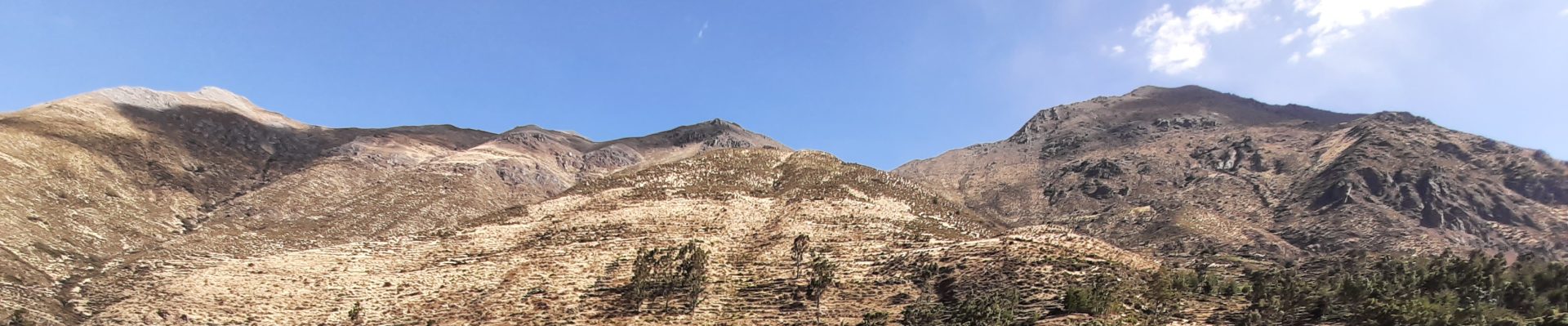
Last year, between April and June, I worked on my bachelor project on the fire history of a site in South Africa called Giant’s Castle. From the Netherlands, I analysed sediment cores by counting charcoal fragments and looking at their shape to determine whether they likely came from grass or wood. The results were largely what you would expect in a mountain grassland. Most of the charcoal came from grasses. At the same time, there were clear changes in the composition of the fuel reflected in the charcoal record. I linked the increase in fire activity to the presence of people, and also observed shifts in the types of fuel being burned over time. It felt like slowly unravelling a story from the past. But it also remained abstract. I was working with numbers, figures, and photos of a place I had never actually been to. I had a sense of it, but it did not fully feel real. A year later, I was standing there myself.
From analysis to experience
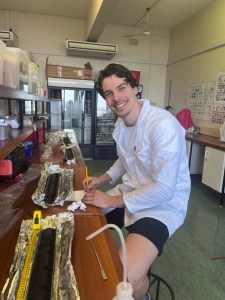
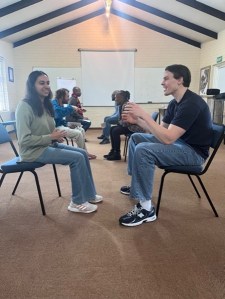
For my MSc research, I returned to the same system, but this time physically. In the meantime, I had already expanded my earlier work by looking at dung fungal spores, as an indicator for grazing animals, and pollen to reconstruct vegetation dynamics. But to describe vegetation properly, you really have to see it. After a five-day workshop, which I described in a previous blogpost, I spent a weekend at the home of Prof. Trevor Hill and Prof. Jemma Finch. That weekend turned into something like a crash course in South African life. It even included watching their son play a cricket match. What stood out most to me was how much more outdoor-oriented life felt compared to what I am used to in the Netherlands. After that, I was introduced to the University of KwaZulu-Natal in Pietermaritzburg, where I spent three weeks working in the lab. Interesting work, but I had really come for something else. The field.
 Ecology of the past