Decolonizing Biosciences

May 22, 2026
WDG

Octavio Cruces Guaderrama, currently a University of Amsterdam MSc Biological Sciences researcher, runs the “Decolonizing Biosciences” podcast. In his podcasts Octavio brings together colonialism and biology, and aims to understand how colonialism has shaped – and still shapes – biological sciences, by discussing issues such as the misuse of medicine in the colonies, parachute science, and the nature/culture dichotomy.  

In his current mini-series he is covering the “History of Amazonia”, with support from the Volkert van der Willigen Fund of the University of Amsterdam. You can listen to the fist Amazonian episode by clicking the link below, and check out his podcast feed here for earlier, and future, episodes.

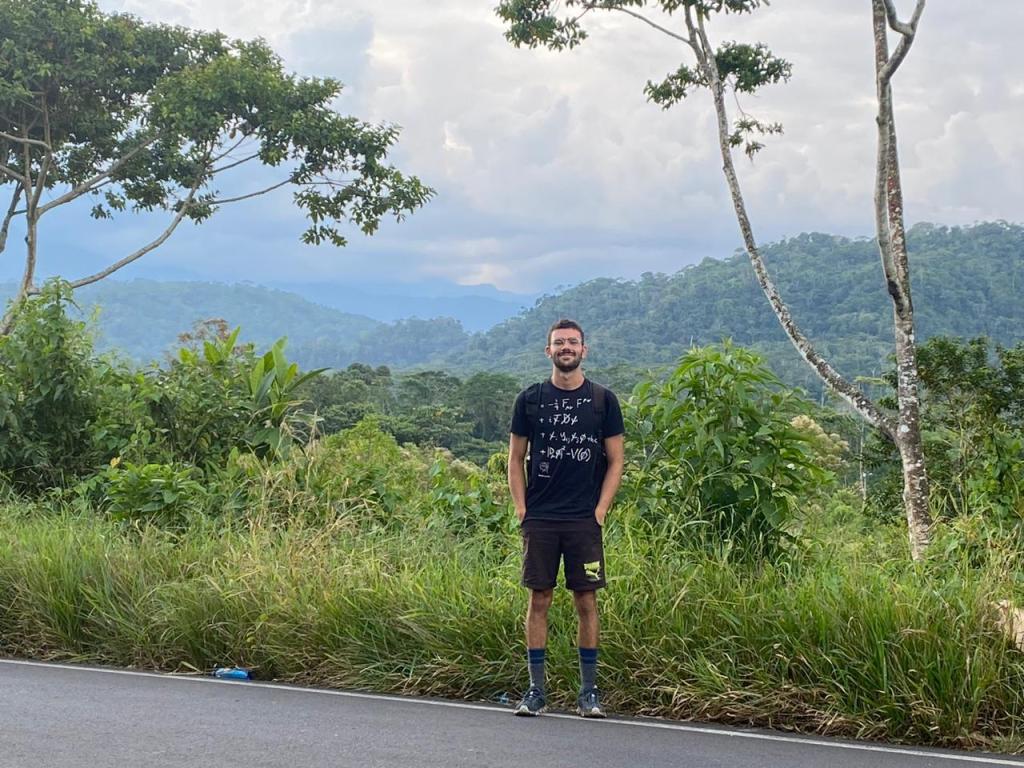
Octavio Cruces Guaderrama in Amazonia

Fieldwork in South Africa

April 27, 2026
WDG

By Bouwe Groeneveld (MSc Biological Sciences, track Ecology & Evolution, University of Amsterdam)

From data to reality

Last year, between April and June, I worked on my bachelor project on the fire history of a site in South Africa called Giant’s Castle. From the Netherlands, I analysed sediment cores by counting charcoal fragments and looking at their shape to determine whether they likely came from grass or wood. The results were largely what you would expect in a mountain grassland. Most of the charcoal came from grasses. At the same time, there were clear changes in the composition of the fuel reflected in the charcoal record. I linked the increase in fire activity to the presence of people, and also observed shifts in the types of fuel being burned over time. It felt like slowly unravelling a story from the past. But it also remained abstract. I was working with numbers, figures, and photos of a place I had never actually been to. I had a sense of it, but it did not fully feel real. A year later, I was standing there myself.

From analysis to experience

For my MSc research, I returned to the same system, but this time physically. In the meantime, I had already expanded my earlier work by looking at dung fungal spores, as an indicator for grazing animals, and pollen to reconstruct vegetation dynamics. But to describe vegetation properly, you really have to see it. After a five-day workshop, which I described in a previous blogpost, I spent a weekend at the home of Prof. Trevor Hill and Prof. Jemma Finch. That weekend turned into something like a crash course in South African life. It even included watching their son play a cricket match. What stood out most to me was how much more outdoor-oriented life felt compared to what I am used to in the Netherlands. After that, I was introduced to the University of KwaZulu-Natal in Pietermaritzburg, where I spent three weeks working in the lab. Interesting work, but I had really come for something else. The field.

First fieldwork: Cathedral Peak

Continue Reading

On ceremony… twice!

March 19, 2026
WDG

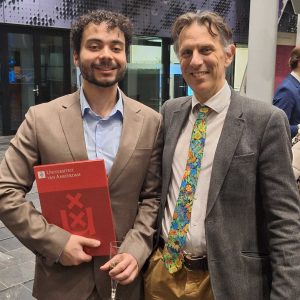
Reyan Christ graduating with an MSc in Earth Sciences

On the 18 March 2026 I had the fun challenge of speaking at two MSc graduation ceremonies that were running at the same time. Two ‘long-term’ members of the palaeoecology team at the University of Amsterdam had reached the culmination of their degree program.

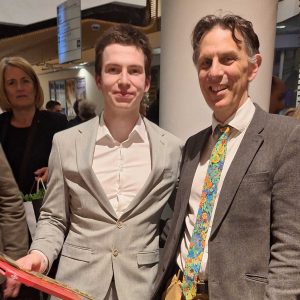
Reyan Christ graduating Cum laude in MSc Earth Sciences (track Earth System Science) and Jelle Kraak graduating in MSc Biological Sciences (track Ecology & Evolution).

Reyan was up 2nd in the Earth Sciences program, and Jelle was up 5th in Biological Sciences, giving me approximately 10 mins to get between rooms! Thankfully everything ran to time and I was able to deliver my speeches for them both. It was great to meet their friends and families and celebrate this important moment for their education.

Jelle Kraak graduating with an MSc in Biological Sciences

It was also great to celebrate the submission of a manuscript (the day before) on which they are first and second author. This manuscript is based on a combination of their, and other students, theses work on past environmental change in the Drakensberg Mountains (South Africa), and conducted in collaboration with Jemma Finch and Trevor Hill at the University of KwaZulu-Natal. We now cross our fingers that the journal editors and reviewers are as excited as we are about their findings. Fingers crossed we can be announcing the published version on here later in the year…

Time for topical ecology

March 14, 2025
WDG

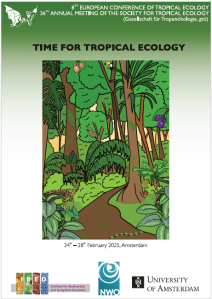
8th European Conference of Tropical Ecology

36th Annual Meeting of the Society for Tropical Ecology

24-28 February 2025, Amsterdam

The 8th European Conference of Tropical Ecology took place in Amsterdam (The Netherlands) from 24 to 28 February 2025. This meeting was organized for the Society for Tropical Ecology. The event was hosted by the Institute for Biodiversity & Ecosystem Dynamics (University of Amsterdam), held at Hotel Casa, and the main sponsor was the NWO (Dutch Science Foundation).

During the conference around 250 scientists delivered 150 oral and 69 poster presentations. The science spanned the full breadth of tropical ecology, ranging from interactions of coral dwelling crabs, through carbon cycling dynamics in forests, to the governance of hunting activity. The six keynote speakers were paired under three topics “Human legacies in the tropics”, “Tropical ecosystem dynamics”, and “Protecting tropical ecosystems”. Within each topic we invited a senior scientist and a ‘rising star’ to provide their perspective on a particularly hot-button issue. If you want to find out more about what was presented all the abstracts are now published, open access, in the Society for Tropical Ecology’s journal Ecotropica.

Abstract booklet

Open access:
Gosling, W.D. & McMichael, C.N.H., eds. (2025) Time for tropical ecology: Abstracts of the 8th European Conference of Tropical Ecology, Amsterdam, The Netherlands; 24.-28.2.2025. The Society for Tropical Ecology, Ecotropica, 26 (1-2): 1-222. https://doi.org/10.30427/ECOTROP202501

Big History

December 18, 2024
WDG

This week I will give a lecture on the University of Amsterdam, Institute for Interdisciplinary Studies, BSc Big History course. This course sets out with the large ambition of covering “How the histories of the cosmos, life, Earth and human societies influence each other and shape important aspects of the world together?” The small component of this that I am involved in relates to the understanding of past environmental change and how humans have shaped the landscapes we see around us today.

Related to the topic of past environmental change Prof. Henry Hooghiemstra (University of Amsterdam), and the Big History team, have produced a short video “How are civilizations influenced by climate change?”. In this video a introduction to how we can obtain information on past environmental change from the sedimentary record is given, and examples of changing landscapes and cultures in the Netherlands and Mexico are discussed.

You can find more Big History content in the University of Amsterdam Big History MOOC (Massive Online Open Content) by clicking here.

European Conference of Tropical Ecology: Registration Open

November 14, 2024
WDG

We are excited that more than 250 abstracts have been submitted for the 8th European Conference of Tropical Ecology “Time for Tropical Ecology” in Amsterdam. Furthermore, we are delighted to announce the NWO (the Dutch Science Foundation) as the main sponsors of the event. The conference is being organised by the Institute for Biodiversity & Ecosystem Dynamics (University of Amsterdam) on behalf of the European Society of Tropical Ecology. The conference will take place in February 2025 at a central location in the city (Hotel Casa).

We have an exciting program emerging including keynotes from three ‘rising star’ and three ‘senior’ scientists, a conference dinner (House of Watt), and a photo competition with prizes! Throughout the program we hope to create a vibrant atmosphere for the discussion of cutting edge research into the tropical regions of planet Earth.

You can be a part of this event by registering now. Early bird rate is valid until: 18 December 2024

INQUA Fellowship journey: Alfred Hougnon (field work)

October 19, 2024
WDG

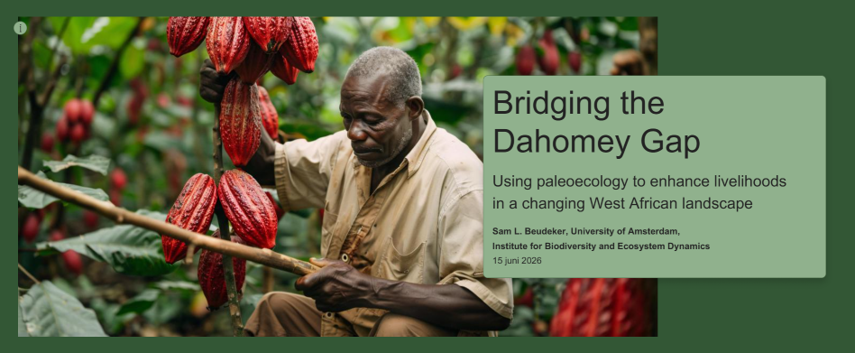
INQUA fellow Alfred Hougnon continues his research into past environmental change in the Dahomey Gap (Benin). In the fourth video documenting his progress a short background to the project, and insights into field work, are given. Field work took place near the Ewe-Adakplame forest in the south east of Benin and involved the recovery of sediments using a Russian corer. The video also shows how interactions and engagement with the local community was developed during the research expedition.

To find out more above Alfreds project read posts on:

To watch more videos about past environmental change visit the Ecology of the Past YouTube channel.

Palaeoecology Reference Collection

August 19, 2024
WDG

I am delighted to be able to report that the “Palaeoecology Reference Collection” housed at the Institute for Biodiversity & Ecosystem Dynamics (University of Amsterdam) is now listed as part of the national ecological research infrastructure of the Netherlands. It is great to get recognition for this important collection. Elements of the collection are available digitally and we continue to work to find resources to improve our physical and digital collections. To find out more about the ecological resources in the Netherlands visit the “Ecological research infrastructures in the Netherlands” or the specific “Palaeoecology Reference Collection” web pages.

MSc Earth Sciences: Peru field course 2024

July 10, 2024
WDG

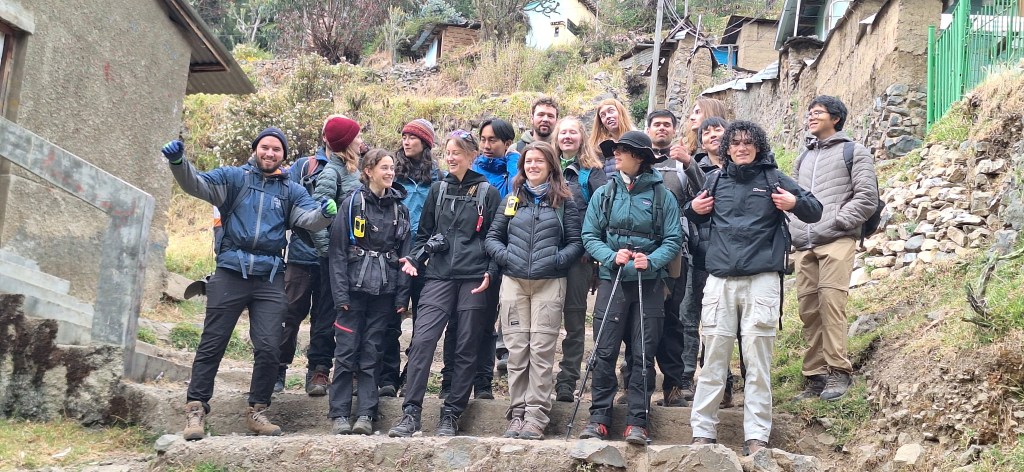
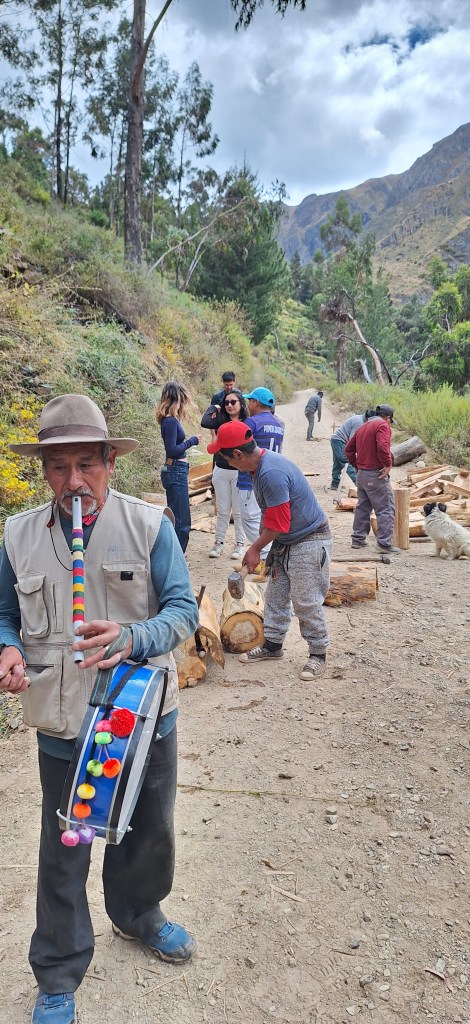
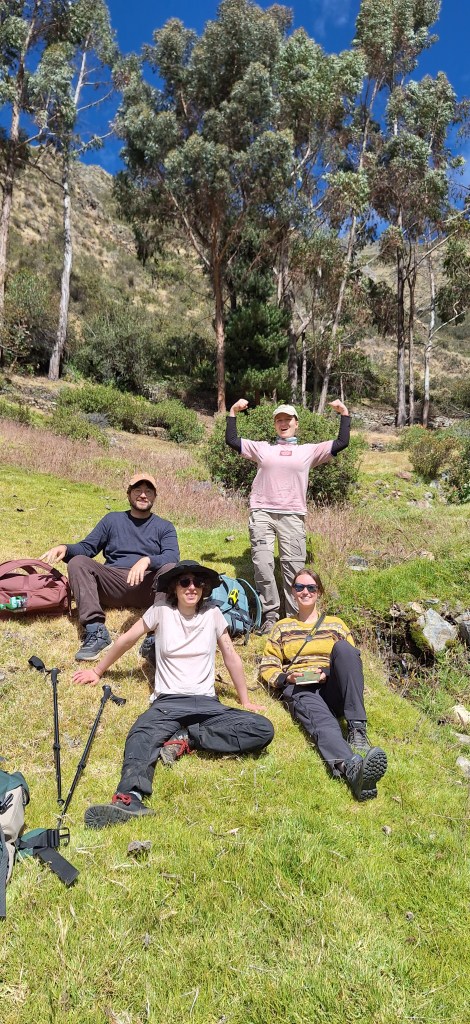
The University of Amsterdam MSc Earth Sciences “Geoecological Systems” field course took place this year in Miraflores (Peruvian Andes) during June and July. Eighteen students, including three from Peruvian institutions, spent four weeks exploring the high Andes. During this time the students developed scientific projects to address interests of the local population related to soil quality, environmental pollution, water resources and cultural heritage. Access to the area and embedding within the community was enabled by The Mountain Institute Peru. During the course the students gained extensive ‘hands on’ field experience, developed teamworking skills and discovered the benefits of a participatory approach to research.

This course runs once every two years (to find out about the 2022 expedition click here). Want to join us on a future expedition? Check out our degree program here to enroll.

Images from the University of Amsterdam Peru field course 2024

SASQUA conference

June 6, 2024
WDG

South African research trip (part 1 of 3)

By Jelle Kraak

As part of my MSc Biological Sciences (University of Amsterdam) research project entitled “Assessing the effect of human induced fire regime changes on vegetation in the Drakensberg mountains” (for further details click to see previous post). I’ve travelled to Africa, where I’ll be staying a month. During this mini blogpost series I’ll take you with me on my travels! 

In the first week of my visit here, I along with my supervisor Prof. Trevor Hill and students from the University of Kwa-Zulu Natal went to visit the biennial SASQUA (Southern African Society for Quaternary Research) congress.

During the first poster session, I presented my poster which went into detail on how we are developing a proxy to reconstruct past fire using micro-Fourier Transformed Infrared Spectroscopy (µFTIR). These reconstructed fire temperatures can then be compared with phytolith or pollen data to assess the effects of different fire temperatures on local vegetation over time. The presentation and poster were well received!

After my poster presentation there were two more congress days which were filled with interesting talks and beautiful posters.

Continue Reading
Blog at WordPress.com.