
South African research trip (part 1 of 3)
By Jelle Kraak
As part of my MSc Biological Sciences (University of Amsterdam) research project entitled “Assessing the effect of human induced fire regime changes on vegetation in the Drakensberg mountains” (for further details click to see previous post). I’ve travelled to Africa, where I’ll be staying a month. During this mini blogpost series I’ll take you with me on my travels!

In the first week of my visit here, I along with my supervisor Prof. Trevor Hill and students from the University of Kwa-Zulu Natal went to visit the biennial SASQUA (Southern African Society for Quaternary Research) congress.

During the first poster session, I presented my poster which went into detail on how we are developing a proxy to reconstruct past fire using micro-Fourier Transformed Infrared Spectroscopy (µFTIR). These reconstructed fire temperatures can then be compared with phytolith or pollen data to assess the effects of different fire temperatures on local vegetation over time. The presentation and poster were well received!
After my poster presentation there were two more congress days which were filled with interesting talks and beautiful posters.
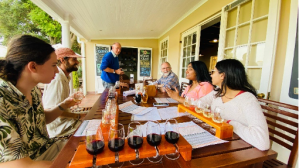
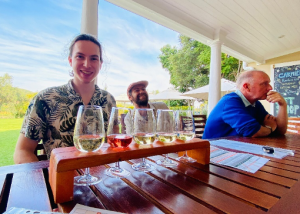
After the last presentation, Trevor (in the marine blue sweater) took us with him to do a wine tasting (apparently he is the 2x national winner of blind tasting in South-Africa), which was really fun. Trevor also directly suggested to put the second picture in saying “this is the best and most incriminating picture…”.
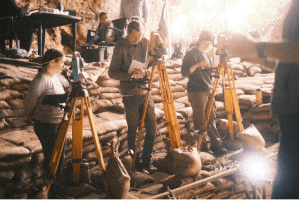
Thursday was field trip day, where we first went to the magnificent Cango dripstone caves, followed by a visit to the Boomplaas cave excavation. In the afternoon, we went to the Svartberg pass where we bumped (not literally, luckily) into some Klipspringer deer which dartled around the car and over the rocky the terrain before disappearing into the hills.
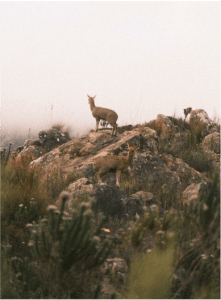
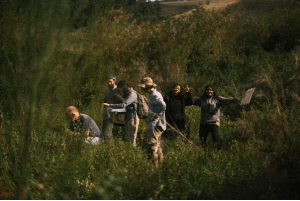
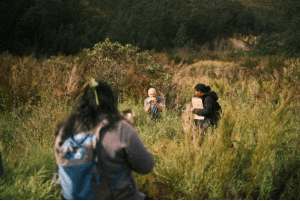
Friday was our last day in the area, which we used to visit the core site (Palmiet rivier) of one of my fellow students Zahra. My supervisor, Trevor, had obtained a 6 m core here a few years back, and Zahra, who is currently working on the core, had never seen her site before. This might have secretively been one of my favourite days here so far, as I could unleash my inner biologist by wading through the wetland and scaling the mountains to collect flowering plants for Zahra’s reference pollen collection
On Saturday we drove and flew to Pietermaritsburg, where I’ll be staying for 3 more weeks. I’ll be conducting labwork, and am going to visit my study site in the Drakensberg mountains, so stay tuned for that!


 Ecology of the past
Pingback: The University of Kwa-Zulu Natal | Ecology of the past
Pingback: Fieldwork in the Drakensberg | Ecology of the past