Encarni Montoya and Mª Carmen Trapote (CSIC research institute Geosciences Barcelona, Spain) are looking to recruit a PhD researcher to be involved with the MOMPAST (Past analogues of sustainable food production under climate change scenarios: Assessing pre-Columbian large-scale practices’ viability in flood-prone environments) project funded by the Spanish Council of Science and Innovation.
They are looking for a researcher with an enthusiasm for palaeoecological, archaeological, and environmental research, who is keen to undertake field work in remote tropical environments.
Octavio Cruces Guaderrama, currently a University of Amsterdam MSc Biological Sciences researcher, runs the “Decolonizing Biosciences” podcast. In his podcasts Octavio brings together colonialism and biology, and aims to understand how colonialism has shaped – and still shapes – biological sciences, by discussing issues such as the misuse of medicine in the colonies, parachute science, and the nature/culture dichotomy.
In his current mini-series he is covering the “History of Amazonia”, with support from the Volkert van der Willigen Fund of the University of Amsterdam. You can listen to the fist Amazonian episode by clicking the link below, and check out his podcast feed here for earlier, and future, episodes.
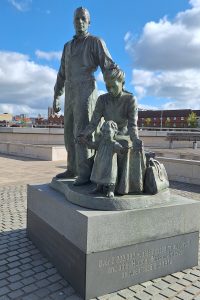
Hull was a departure point for many people across the sea, and also a departure point for me in my life and academic career!
Last weekend I returned to Hull to catch up with friends from my undergraduate days for the first time in more than 20 years! We were all based at the University of Hull “Ferens Hall” hall of residence for our first year (1995-1996), following this we shared houses in the streets around the university main campus. Over the last twenty years later we have all headed off along different an meandering paths in life, but catching up with everyone felt very normal. A testement to the solid friendships developed during those three years at Hull. The reunion was helped along by some Manchester Bitter and Yorkshire stout (not avaliable on tap in the Netherlands) and some fine locations in the redeveloped Hull marina area.
Whilst at Hull, as well as making friends, I studies for a BSc (Hons) in Physical Geography. During my degree I got my foundations and inspiration for exploring past environmental change from a range of great lecturers, memorably including:
Steve Ellis (soil science; and author of the then recently published Ellis & Mellor [1995] text book),
Barbara Rumbsy (past river systems; who – if I remember the rumour correctly – left academia to run a tea shop in the Lake District – was this true?),
Martyn Pedley (sedimentology; double carbonate sedimentology on a Friday afternoon was typically punctuated by a swift trip to the Student Union bar [but we always went back]),
James Brasington (hydrology; who I remember running after down a crowded corridor for some reason long forgotten), and
Jane Bunting (palaeoecology; who really set me on my academic path!).
As an undergraduate arriving in Hull in 1995 I could never have imagined that I would be in Amsterdam 30+ years later working as an academic. I hope that, as an academic today, I manage to convey the same energy and enthusiams for my subject as the lecturers I had at Hull did for me. Who knows where my students, staff, or I, will all be 30+ more years time, but I am sure things will change (and wierdly stay the same) just as much as they have (have not) over the last 30 years. I hope that the path is varied and interesting, and that more friendships and progress are made along the way. So on with the adventure…
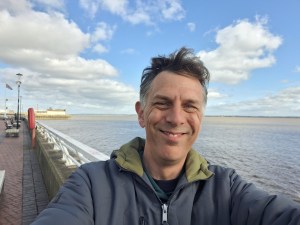
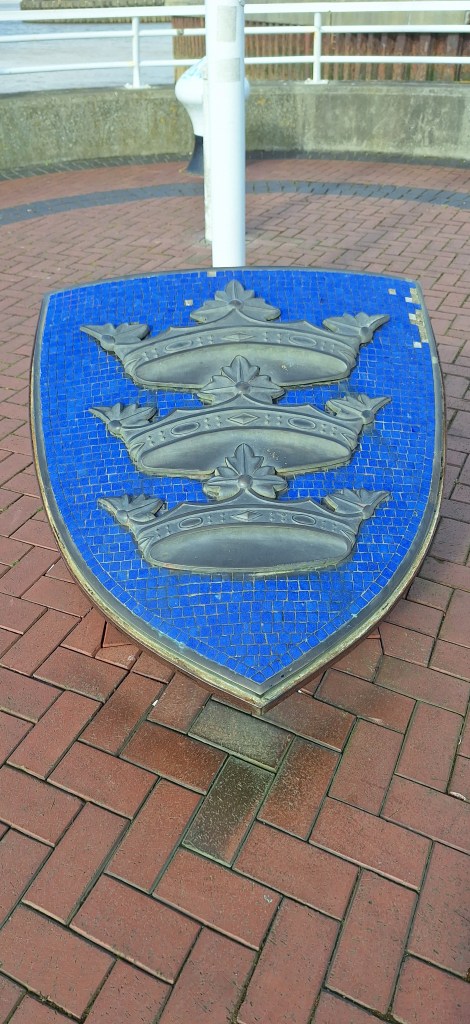
Me at Hull marine (May 2026)Hull coat of armsThe joy of shuffle board!Continue Reading
The annual PhD thesis prize from the Koninklijk Nederlandse Botanische Vereniging (Royal Dutch Botanical Association) is now open. The prize of EURO 5000 will be awarded to the best PhD thesis defended between January and December 2025 at a Dutch university. The subject matter of the thesis is broadly defined within the field of botany, and includs topics such as taxonomy, (palaeo- / macro-) ecology, and cell biology.
The call for sessions for the next edition of the Society for Tropical Ecology’s, European Conference of Tropical Ecology is open until 8 July 2025. The meeting will be held in Passau (Germany) and will cover all aspects of tropical ecological research. To make sure that your interests are well represented submit a session idea now by visiting the conference web site: https://gtoe2026-passau.de/
The next seminar series of the Palynologische Kring (Dutch palynological society) will take place on 24 January 2025, at the Auditorium of TNO Utrecht. If you would like to attend please register by emailing the society (link).
PROGRAMME
13.00-13.15 Arrival
13.15-13.45 Irene Waajen (TNO): Re-evaluation of Early Weichselian pollen zones with new insights from the North Sea.
A postdoctoral position in palynology and sedimentary DNA analysis, focused on understanding the environmental history of the Malagasy landscapes and populations over the last millennia, is now available working with Laurent Bremond (University of Montpellier, France). Funding is from the French National Research Agency (ANR) with support from CNRS.
The annual PhD thesis prize from the Koninklijk Nederlandse Botanische Vereniging (Royal Dutch Botanical Association) is now open. The prize of EURO 5000 will be awarded to the best PhD thesis defended between January and December 2024 at a Dutch university. The subject matter of the thesis is broadly defined within the field of botany, and includs topics such as taxonomy, (palaeo- / macro-) ecology, and cell biology.
COLLABORATION OPPORTUNITY: The TIP-TOP project, funded through the Dutch Research Council (NWO) and awarded to Rick Hennekam at the NIOZ Royal Netherlands Institute for Sea Research (NIOZ), is running from 2024-2029 and aims to use sediments accumulated in front of North African rivers to study environmental tipping points in North Africa. Specifically, the project focuses on available sediments from the Nile River delta, a now-dormant river system in Libya, as well as material from in front of the Senegal and Gambia rivers that will be acquired during a cruise early 2025. A multidisciplinary group of scientists is collaborating within this project, including scientists from NIOZ, GFZ Potsdam, ETH Zürich, Wageningen University, and the Utrecht University, using especially (in)organic and palynological proxies. Yet, we are keen to start new collaborations, especially with scientists based in northwest Africa. Potentially we could aim for the INQUA Fellowship Program For International Mobility (deadline 15 of September, 2024) for someone to gain international experience at one of the involved institutes for the duration of 3–6 months. If you are interested to link up with Rick please join the seminar to speak with him, or contact him directly. Note that participation in the 2025 expedition to the coasts of Gambia, Senegal, and Mauritania can be discussed too, but available places are very limited.
This video was recorded after the 19th online Mapping Ancient Africa seminar given by Solène Boisard, to watch her seminar on the past climate of north-western Africa and others in the series click here. To find out more about the Mapping Ancient Africa project click here.










 Ecology of the past