Mapping Ancient Africa: New publications by members

May 8, 2026
WDG

Although the Mapping Ancient Africa project is officially drawing to a close, researchers within the network are still actively collaborating and publishing. Periodically I will aim to collate and comment on member outputs that I come across. If you have a paper that should be highlighted here please get in contact and I will be happy to include it.
I have recently come across four papers these cover the role of disease in human evolution (Colucci et al., 2026), the identification and interpretation of charcoal fragments in sedimentary records from western Africa (Cornet et al., 2026), and archaeological evidence for past human activity in Nigeria (Omigbule et al. 2026; Orijemie et al., 2026).

  • Colucci, M., Leonardi, M., Blinkhorn, J., Irish, S. R., Padilla-Iglesias, C., Kaboth-Bar, S., Gosling, W. D., Snow, R. W., Manica, A., & Scerri, E. M. L. (2026). Malaria shaped human spatial organization for the past 74 thousand years. Science Advances, 12(17), eaea2316. https://doi.org/10.1126/sciadv.aea2316
  • Cornet, F., Montade, V., Bodin, S. C., Descloitre, J., Réjou‐Méchain, M., Viennois, G., Aleman, J. C., Assi‐Kaudjhis, C., Kenney, W. F., Oslisly, R., Tossou, M. G., Bremond, L., & Favier, C. (2026). From shape to source: Sedimentary charcoal morphology as a proxy for tropical burned biomass composition. Journal of Quaternary Science, 41(3), 490–506. https://doi.org/10.1002/jqs.70053
  • Omigbule, A. O., Akogun, M. O., Orijemie, E. A., & Ogunfolakan, A. B. (2026). Aspects of garden-based agroforestry at Igbó-Orítàá, Ìwó, southwest Nigeria (c.14th-17th centuries CE). Journal of Archaeological Science: Reports, 72, 105768. https://doi.org/10.1016/j.jasrep.2026.105768
  • Orijemie, E. A., Opadeji, O. A., & Alabi, R. A. (2026). Archaeological and palynological evidence of iron smelting and its ecological consequences in the Ijebu Forest, Nigeria. Azania: Archaeological Research in Africa, 61(1), 110–139. https://doi.org/10.1080/0067270X.2025.2594901
INQUAlogo

Fieldwork in South Africa

April 27, 2026
WDG

By Bouwe Groeneveld (MSc Biological Sciences, track Ecology & Evolution, University of Amsterdam)

From data to reality

Last year, between April and June, I worked on my bachelor project on the fire history of a site in South Africa called Giant’s Castle. From the Netherlands, I analysed sediment cores by counting charcoal fragments and looking at their shape to determine whether they likely came from grass or wood. The results were largely what you would expect in a mountain grassland. Most of the charcoal came from grasses. At the same time, there were clear changes in the composition of the fuel reflected in the charcoal record. I linked the increase in fire activity to the presence of people, and also observed shifts in the types of fuel being burned over time. It felt like slowly unravelling a story from the past. But it also remained abstract. I was working with numbers, figures, and photos of a place I had never actually been to. I had a sense of it, but it did not fully feel real. A year later, I was standing there myself.

From analysis to experience

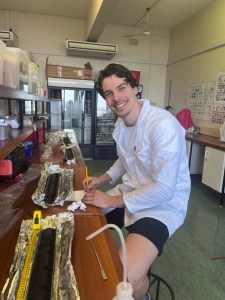
For my MSc research, I returned to the same system, but this time physically. In the meantime, I had already expanded my earlier work by looking at dung fungal spores, as an indicator for grazing animals, and pollen to reconstruct vegetation dynamics. But to describe vegetation properly, you really have to see it. After a five-day workshop, which I described in a previous blogpost, I spent a weekend at the home of Prof. Trevor Hill and Prof. Jemma Finch. That weekend turned into something like a crash course in South African life. It even included watching their son play a cricket match. What stood out most to me was how much more outdoor-oriented life felt compared to what I am used to in the Netherlands. After that, I was introduced to the University of KwaZulu-Natal in Pietermaritzburg, where I spent three weeks working in the lab. Interesting work, but I had really come for something else. The field.

First fieldwork: Cathedral Peak

Continue Reading

Herbivory and vegetation openness in a pre-farming European landscape

November 19, 2025
WDG

Plant Ecology & Diversity

Gosling, W. D., de Wolf, I. K., Witteveen, N. H., de Zwaan, S. B., Van Teulingen, C., Föllmi, D., Thissen, W., Vink, V. B., Woutersen, A., Philip, A. L., van Herk, M. J., Nascimento, M. N., Prins, M. A., & McMichael, C. N. H. (2025). Herbivory and vegetation openness in a pre-farming European landscape. Plant Ecology & Diversity, 1–22. https://doi.org/10.1080/17550874.2025.2576566

This manuscript has been developed over many years through the contributions of many MSc and BSc students based at the University of Amsterdam.

Charcoal insights on the vegetation, climate and subsistence patterns at Wonderwerk Cave

June 10, 2025
WDG

Mapping Ancient Africa Quaternary International special issue article #6

Hlophe B. & Bamford M.K. (2025) Charcoal insights on the vegetation, climate and subsistence patterns at Wonderwerk Cave. Quaternary International 728,109755. DOI: 10.1016/j.quaint.2025.109755

To find the complete list of articles in the Mapping Ancient Africa special issue of Quaternary International click here.

Drivers of vegetation change in tropical Africa

April 9, 2025
WDG

I was delighted to be invited to give a seminar as part of the Max Planck Institute for Geoanthropology “Human Palaeo-systems Research Group” series. In case you missed it the seminar is will soon be available to watch online (click here).

To see the full list of seminars in the series click here.

Heat, hydroclimate and herbivory

January 6, 2025
WDG

Mapping Ancient Africa Quaternary International special issue article #5

Kiely, R.E., Paine, A.R., McMichael, C.H. & Gosling, W.D. (2025) Heat, hydroclimate and herbivory: A late-Pleistocene record of environmental change from tropical western Africa. Quaternary International 717, 109636. DOI: 10.1016/j.quaint.2024.109636

To find the complete list of articles in the Mapping Ancient Africa special issue of Quaternary International click here.

Witteveen PhD thesis

November 8, 2024
WDG

Witteveen, N.H. (2024) Long-term forest recovery in Amazonia: Insights from phytolith analysis. PhD Thesis, University of Amsterdam, Amsterdam. ISBN: 9789493260290

Abstract

The aim of this thesis was to provide insight into past human activities in Amazonia, and the long-term forest recovery that followed, using phytolith analysis. The first part of this thesis focused on improving phytolith analysis as a proxy for vegetation changes in Amazonia. The morphological variation of 24 Amazonian palm phytoliths were assessed (Chapter 2) to improve the taxonomic resolution of palm phytolith identification, and results indicate the potential to differentiate Euterpe, Bactris, Oenocarpus, Attalea, Iriartea deltoidea, and Socratea exorrhizaChapter 3 demonstrated that phytolith assemblages (from terrestrial soil cores) varied across a gradient of (modern) human disturbance in Surinamese rainforests. In Chapters 4-6, we developed beta regression and GLM models to predict forest cover and biomass changes within 200 m and 1 km of Amazonian lakes, respectively, using grass phytoliths. Applying these innovations in Chapters 5-6 demonstrated that past human activities were on localized scales in Suriname and temporally heterogenous in Ecuador. Palm enrichment of Attalea, Oenocarpus and Astrocaryum occurred within 0 km, 1 km, and 8 km of an archaeological site in Suriname (Chapter 5). In Ecuador, forest cover and biomass ranged between 48-84% and 77-247 Mg/ha, respectively, and the largest decreases (between 1000-1255 CE) were paired with fires (Chapter 6). Overall, the type, intensity, timing, and frequency of disturbances are important factors influencing long-term forest recovery and ecological legacies in Amazonia.

Handel: https://hdl.handle.net/11245.1/7e7ef2f7-7341-4978-9d89-d23fe46f24ae

Quantifying past forest cover and biomass changes in the Ecuadorian Amazon

November 7, 2024
WDG

Open access:

Witteveen, N.H., Kleijwegt, Z.S., Geara, H., Kool, C., Blaus, A., Saenz, L.C., Gomes, B.T., Philip, A., Bush, M.B. & McMichael, C.N.H. (2024) Quantifying past forest cover and biomass changes in the Ecuadorian Amazon. New Phytologist. DOI: 10.1111/nph.20237

This paper is the latest to come from the PhD thesis of Nina Witteveen who defended at the University of Amsterdam earlier in 2024. To find out more about Nina’s PhD click here.

Highland forest dynamics across equatorial East Africa during the end ofthe African humid period

November 6, 2024
WDG

MAPPING ANCIENT AFRICA QUATERNARY INTERNATIONAL SPECIAL ISSUE ARTICLE #2

Ivory, S.J., MacDougal, E., Mason, A., Pereboom, E., Garelick, S., Ficken, K., Wooller, M.J., Nakileza, B. & Russell, J. (2024) Highland forest dynamics across equatorial East Africa during the end of the African humid period. Quaternary International. DOI: 10.1016/j.quaint.2024.10.007

INQUA Fellowship journey: Alfred Hougnon (field work)

October 19, 2024
WDG

INQUA fellow Alfred Hougnon continues his research into past environmental change in the Dahomey Gap (Benin). In the fourth video documenting his progress a short background to the project, and insights into field work, are given. Field work took place near the Ewe-Adakplame forest in the south east of Benin and involved the recovery of sediments using a Russian corer. The video also shows how interactions and engagement with the local community was developed during the research expedition.

To find out more above Alfreds project read posts on:

To watch more videos about past environmental change visit the Ecology of the Past YouTube channel.

Blog at WordPress.com.