Scientific Workshop: Getting to the bottom of the Quaternary

July 8, 2026
WDG

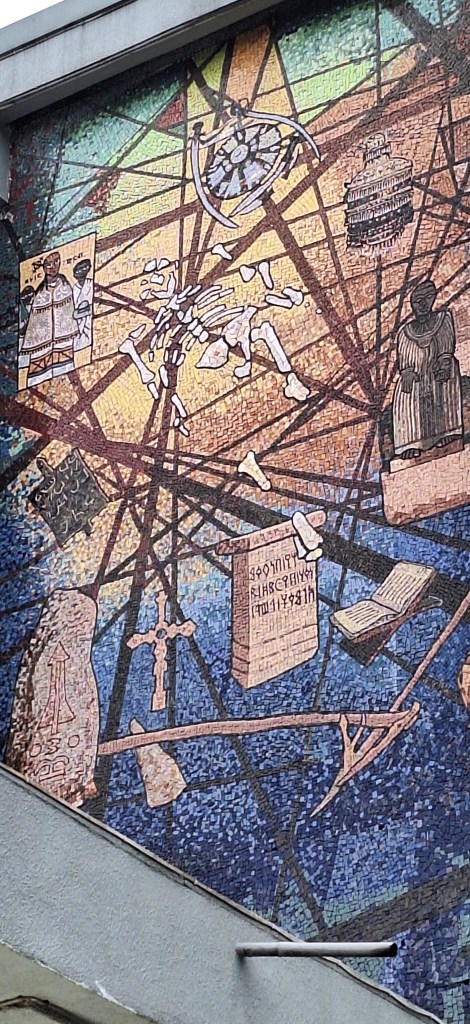
The International Continental Scientific Drilling Program (ICDP) Deep Chew Bahir (DeepCBH) drilling workshop took place in Addis Ababa (Ethiopia) between the 30 June and 3 July 2026. The workshop brought around 50 scientists to Ethiopia, with a further 30, or so, in a satellite meeting in Potsdam (Germany) and online. The workshop was lead by Asfawossen Asrat, Verena Foerster, Daniel Gebregiorgis and Stefanie Kaboth-Bahr, and included scientist from 18 different countries (including 5 African countries).
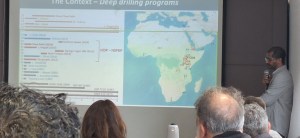
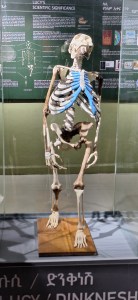
The purpose of the meeting was to, build upon the previous successful drilling of the Chew Bahir basin which raised sediments spanning the last c. 600,000 years (Foerster et al., 2026), and to discuss the opportunities, logistics and requirements to make the recovery of sediments spanning the whole of the Quaternary (last 2.6 million years) from the Chew Bahir basin possible. Obtaining such a record would provide an unprecedented insight into the environmental and climatic change that was the backdrop for the evolution of our genus, Homo.

The skill sets of those attending was as diverse as the challenges and opportunities that undertaking such an epic coring expedition would require. These included the fundamentals of what equipment would be required to recover a sediment core down to depths of 1.2 kms below the Earths surface and what to do with 1.2 kms of sediment once it was recovered; as well as the scientific motivations for doing so from perspectives of hydrology, human-environment interactions and extreme microbial ecosystems.

Over the three days, discussion of the feasibility, ambition and funding was intense, and many steps forward were made in aligning the practical and scientific considerations. It was great to meet everyone and to have a chance to chat about the potential of this exciting project. The next step is to collate the workshop outputs and submit a full proposal to the ICDP in January 2027.

To find out more about the DeepCBH project visit the ICDP web site here.

Continue Reading

MSc Earth Sciences: Peru field course 2026

July 6, 2026
WDG

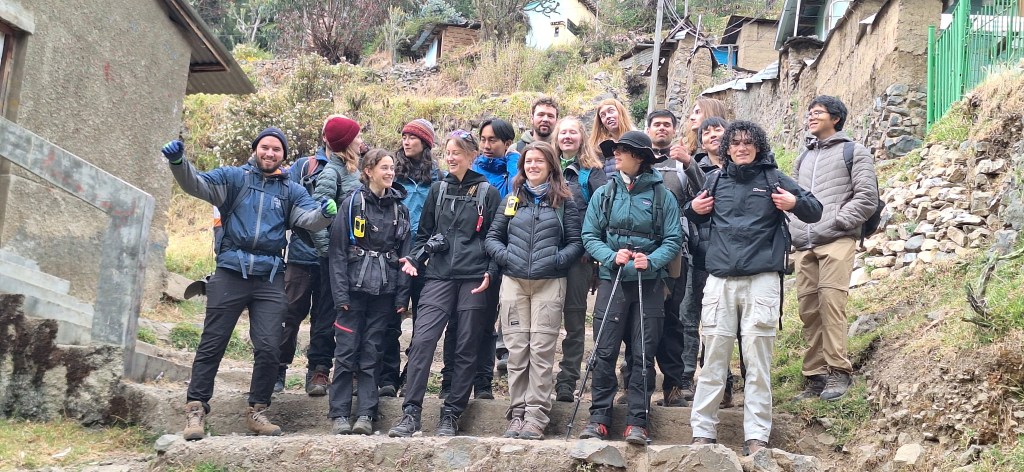
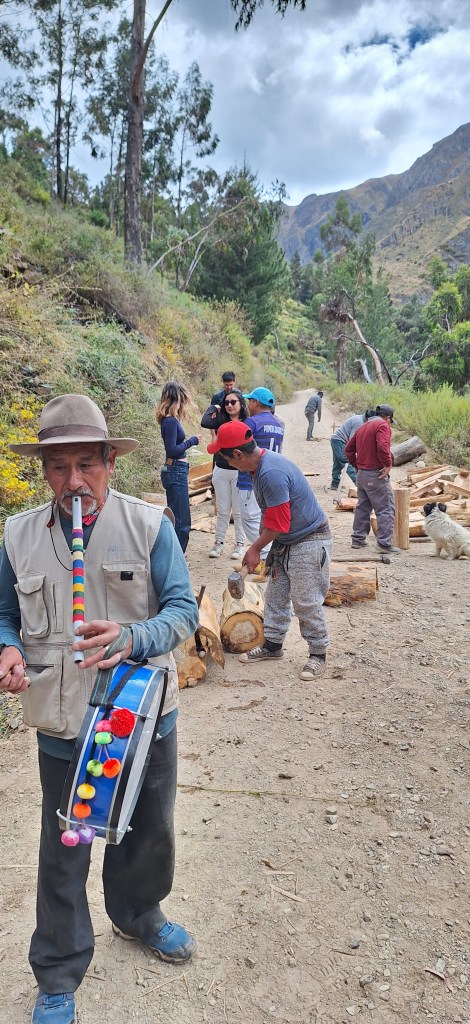
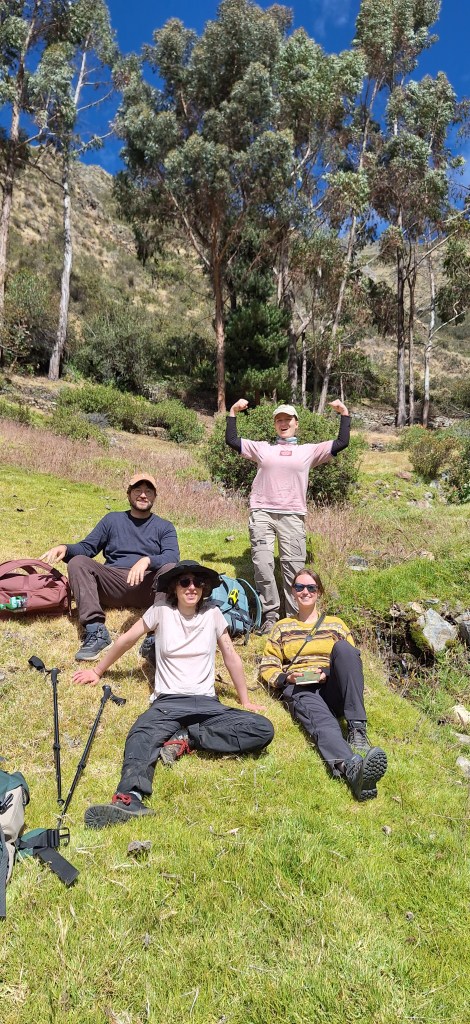
As part of the University of Amsterdam (UvA) MSc Earth Sciences we run the course “Field Course Geoecological Systems”. In 2026 we returned to the village of Miraflores in the Lima province of Peru. Partnering with the Institiuto de Montanya (Mountain Institute) in Lima students spent four weeks engaged in participatory research with the Miraflores community. The integration of students within the community was made possible by the work of Mirella Gallardo and Rafa Schmitt.

In this year’s iteration of the course, we had groups of students working on four different topics: (i) water quality, (ii) soil carbon stocks, (iii) microbes and carbon in agricultural soils, and (iv) cultural heritage. The topics of the project were established in advance in consultation of the Mountain Institute and refined during a Town Hall meeting with the Miraflores residents during the first days of the visit.

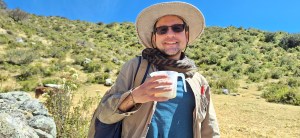
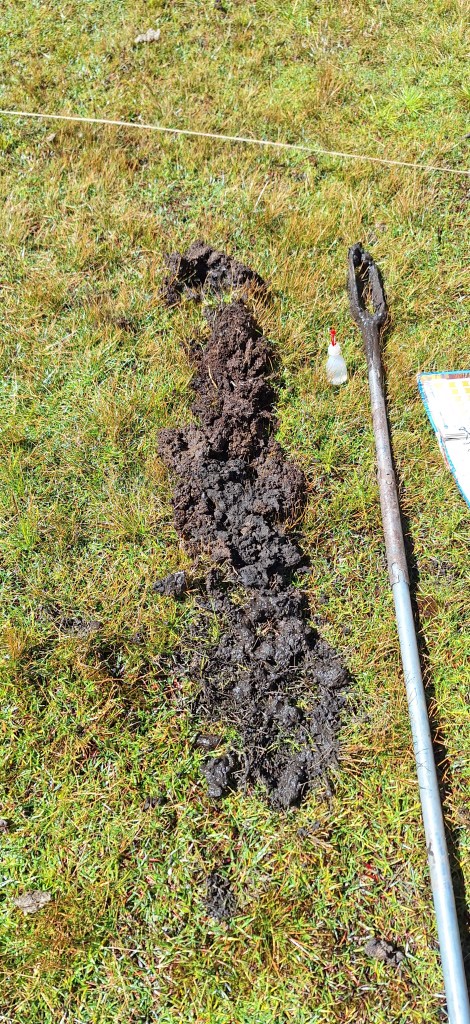
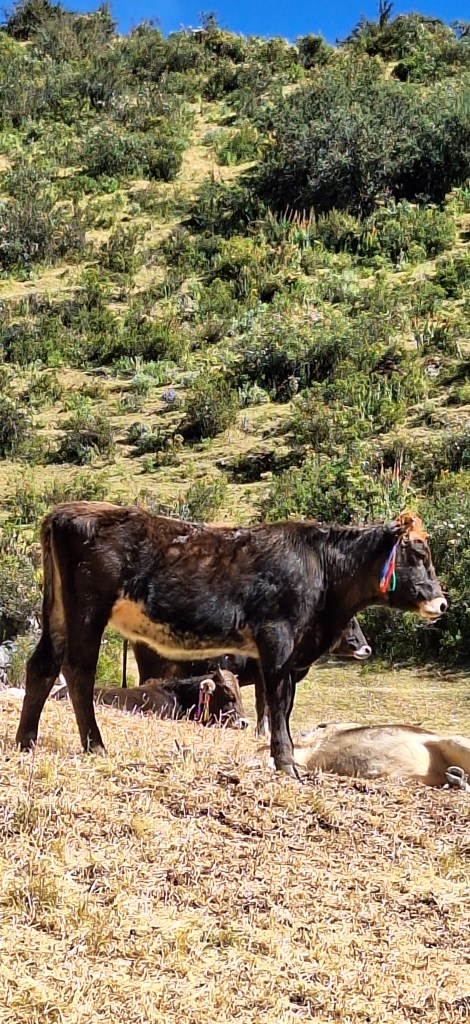
Through the four weeks of the field work students learnt how to classify soil types, monitor water quality, and read the landscapes geology and geomorphology. Traversing the rugged Andean landscape from our base at c. 3600 meters above sea level up to peaks above 4000 meters. The students also worked with the Miraflores residents to discover their perception and knowledge of the landscape. Following the visits students conducted further analysis of water and soils back in the laboratories at the UvA. Once this work is complete all results will be compiled into a report, in English and Spanish, that will be distributed to participants.

This is the third time this field course has visited Miraflores and this year we were proud to present fliers detailing the key finds of previous years investigation to the community. We would like to thank the community of Miraflores for their continued kind welcome and partnership, and the Yauyos-Cochas National Park for their permission and support to work within this area.

Want to join us for a future expedition? Click here to check out our degree program here to enrol.

Read about past field courses in Peru:

Departing from Hull

May 11, 2026
WDG

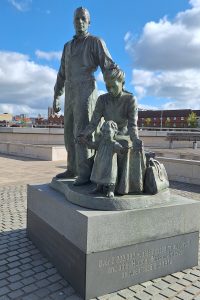
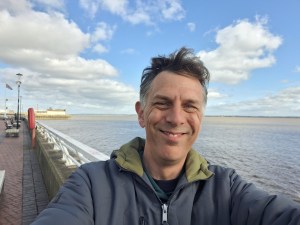
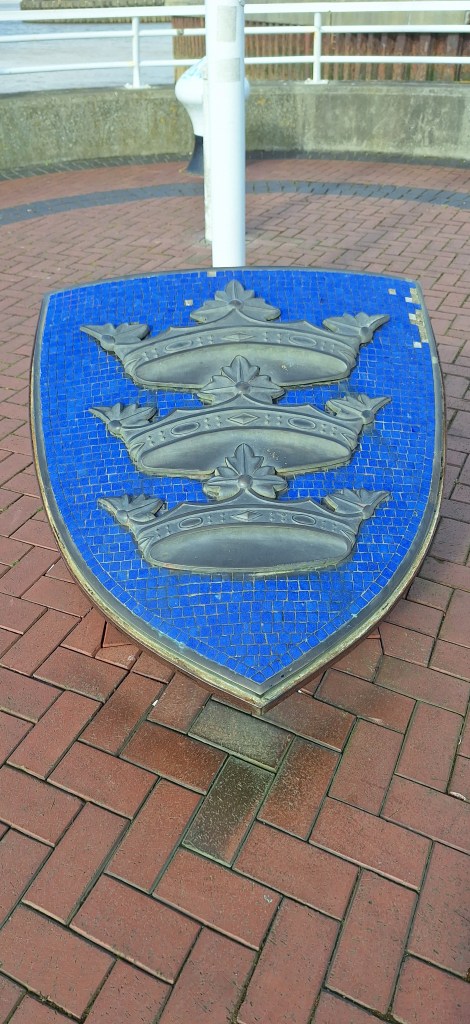
Hull was a departure point for many people across the sea, and also a departure point for me in my life and academic career!

Last weekend I returned to Hull to catch up with friends from my undergraduate days for the first time in more than 20 years! We were all based at the University of HullFerens Hall” hall of residence for our first year (1995-1996), following this we shared houses in the streets around the university main campus. Over the last twenty years later we have all headed off along different an meandering paths in life, but catching up with everyone felt very normal. A testement to the solid friendships developed during those three years at Hull. The reunion was helped along by some Manchester Bitter and Yorkshire stout (not avaliable on tap in the Netherlands) and some fine locations in the redeveloped Hull marina area.

Whilst at Hull, as well as making friends, I studies for a BSc (Hons) in Physical Geography. During my degree I got my foundations and inspiration for exploring past environmental change from a range of great lecturers, memorably including:

  • Steve Ellis (soil science; and author of the then recently published Ellis & Mellor [1995] text book),
  • Barbara Rumbsy (past river systems; who – if I remember the rumour correctly – left academia to run a tea shop in the Lake District – was this true?),
  • Martyn Pedley (sedimentology; double carbonate sedimentology on a Friday afternoon was typically punctuated by a swift trip to the Student Union bar [but we always went back]),
  • James Brasington (hydrology; who I remember running after down a crowded corridor for some reason long forgotten), and
  • Jane Bunting (palaeoecology; who really set me on my academic path!).

As an undergraduate arriving in Hull in 1995 I could never have imagined that I would be in Amsterdam 30+ years later working as an academic. I hope that, as an academic today, I manage to convey the same energy and enthusiams for my subject as the lecturers I had at Hull did for me. Who knows where my students, staff, or I, will all be 30+ more years time, but I am sure things will change (and wierdly stay the same) just as much as they have (have not) over the last 30 years. I hope that the path is varied and interesting, and that more friendships and progress are made along the way. So on with the adventure…

Continue Reading

Mapping Ancient Africa: New publications by members

May 8, 2026
WDG

Although the Mapping Ancient Africa project is officially drawing to a close, researchers within the network are still actively collaborating and publishing. Periodically I will aim to collate and comment on member outputs that I come across. If you have a paper that should be highlighted here please get in contact and I will be happy to include it.

I have recently come across four papers these cover the role of disease in human evolution (Colucci et al., 2026), the identification and interpretation of charcoal fragments in sedimentary records from western Africa (Cornet et al., 2026), and archaeological evidence for past human activity in Nigeria (Omigbule et al. 2026; Orijemie et al., 2026).

  • Colucci, M., Leonardi, M., Blinkhorn, J., Irish, S. R., Padilla-Iglesias, C., Kaboth-Bar, S., Gosling, W. D., Snow, R. W., Manica, A., & Scerri, E. M. L. (2026). Malaria shaped human spatial organization for the past 74 thousand years. Science Advances, 12(17), eaea2316. https://doi.org/10.1126/sciadv.aea2316
  • Cornet, F., Montade, V., Bodin, S. C., Descloitre, J., Réjou‐Méchain, M., Viennois, G., Aleman, J. C., Assi‐Kaudjhis, C., Kenney, W. F., Oslisly, R., Tossou, M. G., Bremond, L., & Favier, C. (2026). From shape to source: Sedimentary charcoal morphology as a proxy for tropical burned biomass composition. Journal of Quaternary Science, 41(3), 490–506. https://doi.org/10.1002/jqs.70053
  • Omigbule, A. O., Akogun, M. O., Orijemie, E. A., & Ogunfolakan, A. B. (2026). Aspects of garden-based agroforestry at Igbó-Orítàá, Ìwó, southwest Nigeria (c.14th-17th centuries CE). Journal of Archaeological Science: Reports, 72, 105768. https://doi.org/10.1016/j.jasrep.2026.105768
  • Orijemie, E. A., Opadeji, O. A., & Alabi, R. A. (2026). Archaeological and palynological evidence of iron smelting and its ecological consequences in the Ijebu Forest, Nigeria. Azania: Archaeological Research in Africa, 61(1), 110–139. https://doi.org/10.1080/0067270X.2025.2594901
INQUAlogo

Malaria shaped human spatial organization for the past 74 thousand years

April 23, 2026
WDG

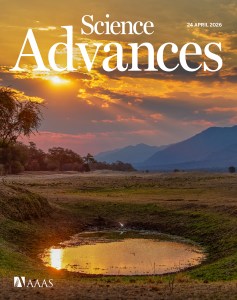
We got the cover photo!
Credit: Martin & Ondrej Pelanek, www.phototrip.cz

Open access:

Colucci, M., Leonardi, M., Blinkhorn, J., Irish, S. R., Padilla-Iglesias, C., Kaboth-Bar, S., Gosling, W. D., Snow, R. W., Manica, A., & Scerri, E. M. L. (2026). Malaria shaped human spatial organization for the past 74 thousand years. Science Advances, 12(17), eaea2316. https://doi.org/10.1126/sciadv.aea2316

Mapping Ancient Africa: Climate, vegetation & humans

April 14, 2026
WDG

The Mapping Ancient Africa (MAA) special issue in Quaternary International (QI) is now complete. Many thanks to all who contributed to the issue, and special thanks to my co-guest editors Stefanie Kaboth-Bahr and Rahab Kinyanjui, and QI editor Evdokia Tema, for their efforts in putting this together.

To wrap up the MAA special issue the guest editors have written an editorial covering the work of this multi-year project. In this we draw out key themes that have emerged from the work (vegetation dynamics, fire, and human behavior), review the project activities (including workshop photos), and highlight other publications by MAA members (lots of other exciting work going on). You can read all about it in:

The MAA multi-year project supported by INQUA is now in its final stages. We have delivered our final workshop (South Africa), our special issue, and created a body of online resources via this blog and the YouTube channel (>50 MAA videos!) that will hopefully inform and inspire researchers interested in past environmental change in Africa. Most importantly I hope that we have build a network of people (>140 members on our email list at the time of writing) who are passionate and engaged with understanding how climate, vegetation and humans have helped shape the African continent. I hope that these connections will keep building over the coming years and new projects, papers and insights will emerge.

The Ecology of the Past blog will continue, however, it will – of course – miss the regular input from the MAA project. Therefore, if anyone has suitable academic content that they wish to communicate through the blog please do not hesitate to get in contact.

A final thanks to INQUA Palaeoclimate commission (PALCOM) and Humans and Biosphere commission (HABCOM) for their support for MAA since its inception in 2021. Without this funding none of the work would have been possible.

For full list of MAA articles click here.
INQUAlogo

Dutch Earth & Environmental Science Conference 2026

April 11, 2026
WDG

“Common Ground”

NWO NAC (Dutch Earth & Environmental Sciences Conference)

9-10 April 2026

The annual Dutch Earth & Environmental Science conference took place at the NH Noordwijk Conference Centre Leeuwenhorst in Noordwijkerhout amoung some of the many Dutch flower fields.

Before the conference was a “Strategic evening” which provided an opportunity to meet scientists from other universities and organisations, and to discuss topical issues. This included a presentation of the recently completed “Earth & Environmental Science Vision” document (which can be dowloaded from the AMW Raad [Earth & Environmental Science Council] web page).

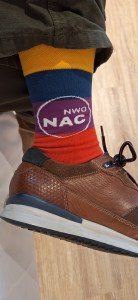
On the first day of the conference proper I was involved in chairing two sessions on “Palaeoclimate”. These sessions covered a wide range of topics, proxies and time periods, and included work on the Paleocene-Eocene Thermal Maximum, tipping points, and the Younger Dryas period. Excitingly for chairing these sessions I recieved a pair of NWO NAC socks!

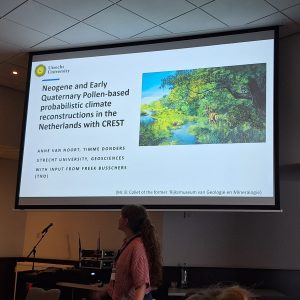
On the second day of the conference – sporting my new NAC socks – I presented our recently published work on landscape openness in the pre-farming European landscape. This was centred upon the recent publication of the palaeoecological record from Well-Aijen (Limburg, the Netherlands) which was the culmination of many years, and many students, research (Gosling et al., 2025). It was great to get positive feedback from the Dutch scientific community on this study. The session also included exciting work on reconstructing past climate from pollen data using the CREST model (Chevalier, 2022) and the extraction of biodiversity data from sedimentary pollen records.

As well as the science talks the meeting had posters, exhibitors, workshops (I attended the one of scientific drilling) and social events (pub quiz, bowling, dancing). The atmosphere was very friendly and it was very easy to meet new people. The area around is very pretty and I even managed to get out for a short run on one of the days. I would recommend this event to anyone working in Earth or environmental sciences in the Netherlands.

References

  • Chevalier, M. (2022). crestr: An R package to perform probabilistic climate reconstructions from palaeoecological datasets. Climate of the Past, 18(4), 821–844. https://doi.org/10.5194/cp-18-821-2022
  • Gosling, W. D., de Wolf, I. K., Witteveen, N. H., de Zwaan, S. B., van Teulingen, C., Föllmi, D., Thissen, W., Vink, V. B., Woutersen, A., Philip, A. L., van Herk, M. J., Nascimento, M. N., Prins, M. A., & McMichael, C. N. H. (2025). Herbivory and vegetation openness in a pre-farming European landscape. Plant Ecology & Diversity, 1–22. https://doi.org/10.1080/17550874.2025.2576566

Mapping Ancient Africa: Scientists

March 31, 2026
WDG

The Mapping Ancient Africa (MAA) research and writing workshop took place in South Africa during March 2026 (click here for more details). During the workshop four of the scientists participating were interviewed by MAA leader Stefanie Kaboth-Bahr to find out more about them, what they are focused on, and their aspirations for the future. These are now avaliable on the Mapping Ancient Africa YouTube playlist along with all the other videos from the project.

Participants

Zahra Omarjee (University of KwaZulu-Natal, South Africa)

Continue Reading

On ceremony… twice!

March 19, 2026
WDG

Reyan Christ graduating with an MSc in Earth Sciences

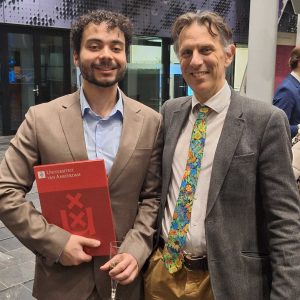
On the 18 March 2026 I had the fun challenge of speaking at two MSc graduation ceremonies that were running at the same time. Two ‘long-term’ members of the palaeoecology team at the University of Amsterdam had reached the culmination of their degree program.

Reyan Christ graduating Cum laude in MSc Earth Sciences (track Earth System Science) and Jelle Kraak graduating in MSc Biological Sciences (track Ecology & Evolution).

Reyan was up 2nd in the Earth Sciences program, and Jelle was up 5th in Biological Sciences, giving me approximately 10 mins to get between rooms! Thankfully everything ran to time and I was able to deliver my speeches for them both. It was great to meet their friends and families and celebrate this important moment for their education.

Jelle Kraak graduating with an MSc in Biological Sciences

It was also great to celebrate the submission of a manuscript (the day before) on which they are first and second author. This manuscript is based on a combination of their, and other students, theses work on past environmental change in the Drakensberg Mountains (South Africa), and conducted in collaboration with Jemma Finch and Trevor Hill at the University of KwaZulu-Natal. We now cross our fingers that the journal editors and reviewers are as excited as we are about their findings. Fingers crossed we can be announcing the published version on here later in the year…

Mapping Ancient Africa: Research & writing workshop

March 6, 2026
WDG

The third Mapping Ancient Africa (MAA) workshop took place in South Africa during March 2026. This workshop was supported by the International Union for Quaternary Research as part of the MAA multi-year project. The aim of this work shop was to provide specialist training in developing research projects and writing of scientific articles. During the workshop each participant developed, and progressed, their own personal work plan. These personal programs allowed the training to be tailored to the participants needs. They included a wide range of challenged ranging from the development of project ideas through to dealing with reviewer comments on manuscripts, and inclusivity, equality and diversity issues.

In addition to the academic program, social activities and excursions were designed to help build academic networks and promote informal discussion of past environmental change issues. These included hikes to the Holley Shelter archaeological site (Bader & Conrad, 2023) and Game Pass shelter rock art site (Hoerle, 2005).

Continue Reading
Blog at WordPress.com.