Mapping Ancient Africa: Climate, vegetation & humans

April 14, 2026
WDG

The Mapping Ancient Africa (MAA) special issue in Quaternary International (QI) is now complete. Many thanks to all who contributed to the issue, and special thanks to my co-guest editors Stefanie Kaboth-Bahr and Rahab Kinyanjui, and QI editor Evdokia Tema, for their efforts in putting this together.

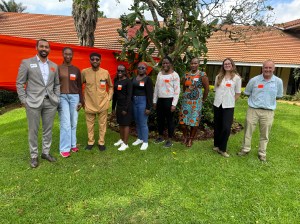
To wrap up the MAA special issue the guest editors have written an editorial covering the work of this multi-year project. In this we draw out key themes that have emerged from the work (vegetation dynamics, fire, and human behavior), review the project activities (including workshop photos), and highlight other publications by MAA members (lots of other exciting work going on). You can read all about it in:

The MAA multi-year project supported by INQUA is now in its final stages. We have delivered our final workshop (South Africa), our special issue, and created a body of online resources via this blog and the YouTube channel (>50 MAA videos!) that will hopefully inform and inspire researchers interested in past environmental change in Africa. Most importantly I hope that we have build a network of people (>140 members on our email list at the time of writing) who are passionate and engaged with understanding how climate, vegetation and humans have helped shape the African continent. I hope that these connections will keep building over the coming years and new projects, papers and insights will emerge.

The Ecology of the Past blog will continue, however, it will – of course – miss the regular input from the MAA project. Therefore, if anyone has suitable academic content that they wish to communicate through the blog please do not hesitate to get in contact.

A final thanks to INQUA Palaeoclimate commission (PALCOM) and Humans and Biosphere commission (HABCOM) for their support for MAA since its inception in 2021. Without this funding none of the work would have been possible.

For full list of MAA articles click here.

INQUAlogo

Vegetation and climate dynamics in a 16,600-year marine sequence offshore Mozambique in Delagoa Bight, south-eastern Africa

September 8, 2025
WDG

Mapping Ancient Africa Quaternary International special issue article #8

Open access:

Neumann, F. H., Finch, J., Hahn, A., Miller, C. S., Scott, L., Schefuß, E., Dupont, L., Cawthra, H. C., & Engelbrecht, F. (2025). Vegetation and climate dynamics in a 16,600-year marine sequence offshore Mozambique in Delagoa Bight, south-eastern Africa. Quaternary International, 747, 109956. DOI: 10.1016/j.quaint.2025.109956

To find the complete list of articles in the Mapping Ancient Africa special issue of Quaternary International click here.

A multi-model approach to the spatial and temporal characterization of the African Humid Period

July 25, 2025
WDG

Mapping Ancient Africa Quaternary International special issue article #7

Open access:

Gosling, W.D., Chevalier, M., Fischer, M.L., Holewijn, M., Finch, J., Gil-Romera, G., Hill, T., Houngnon, A., Leonardi, M., Manica, A., & Kaboth-Bahr, S. (2025). A multi-model approach to the spatial and temporal characterization of the African Humid Period. Quaternary International 744, 109933. https://doi.org/10.1016/j.quaint.2025.109933

Gosling, W.D., Chevalier, M., Lothar Fischer, M., Holewijn, M., Finch, J. M., Gil-Romera, G., Hill, T. R., Houngnon, A., Leonardi, M., Manica, A., & Kaboth-Bahr, S. (2025). Code from: A multi-model approach to the spatial and temporal characterization of the African Humid Period. Figshare. https://doi.org/10.6084/M9.FIGSHARE.29608400.V1

To find the complete list of articles in the Mapping Ancient Africa special issue of Quaternary International click here.

Mapping Early Holocene to contemporary surface processes and human landscapes west of the lower White Nile (central Sudan)

December 3, 2024
WDG

MAPPING ANCIENT AFRICA QUATERNARY INTERNATIONAL SPECIAL ISSUE ARTICLE #3

Costanzo, S., Zerboni, A., Cremaschi, M. & Usai, D. (2025) Mapping Early Holocene to contemporary surface processes and human landscapes west of the lower White Nile (central Sudan). Quaternary International 715, 109592. https://doi.org/10.1016/j.quaint.2024.109592

To find the complete list of articles in the Mapping Ancient Africa special issue of Quaternary International click here.

Past fire dynamics in sub-Saharan Africa during the last 25,000 years: Climate change and increasing human impacts

July 31, 2024
WDG

Mapping Ancient Africa Quaternary International Special Issue article

Open access link (50 days limit) here

Bremond, L., Aleman, J.C., Favier, C., Blarquez, O., Colombaroli, D., Connor, S.E., Cordova, C.E., Courtney-Mustaphi, C., Dabengwa, A.N., Gil-Romera, G., Gosling, W.D., Hamilton, T., Montade, V., Razafimanantsoa, A.H.I., Power, M.J., Razanatsoa, E., Yabi, I. & Vannière, B. (2024) Past fire dynamics in sub-Saharan Africa during the last 25,000 years: Climate change and increasing human impacts. Quaternary International. DOI: 10.1016/j.quaint.2024.07.012

Mapping Ancient Africa: Writing workshop videos

July 15, 2024
WDG

During the Mapping Ancient Africa (MAA) workshop in Kenya (3-6 June 2024) the session delivered by Rahab Kinyanjui (National Museums of Kenya) was recorded for those that could not make it. The seminar was focused on how to deal with reviewer comments. While this was targeted for participants focused on developing their manuscripts for the MAA special issue of Quaternary International (for full details click here). This seminar is relevant to all those facing reviewer comments on their scientific manuscripts.

Dealing with reviewer comments (Rahab Kinyanjui, National Museums of Kenya)

For further information on developing scientific manuscripts you might also be interested to check out our video on how to structure a scientific article (click here). For other MAA online content visit our YouTube channel for seminars, project updates, and to meet our scientists.

INQUAlogo

Mapping Ancient Africa: Writing workshop

June 5, 2024
WDG

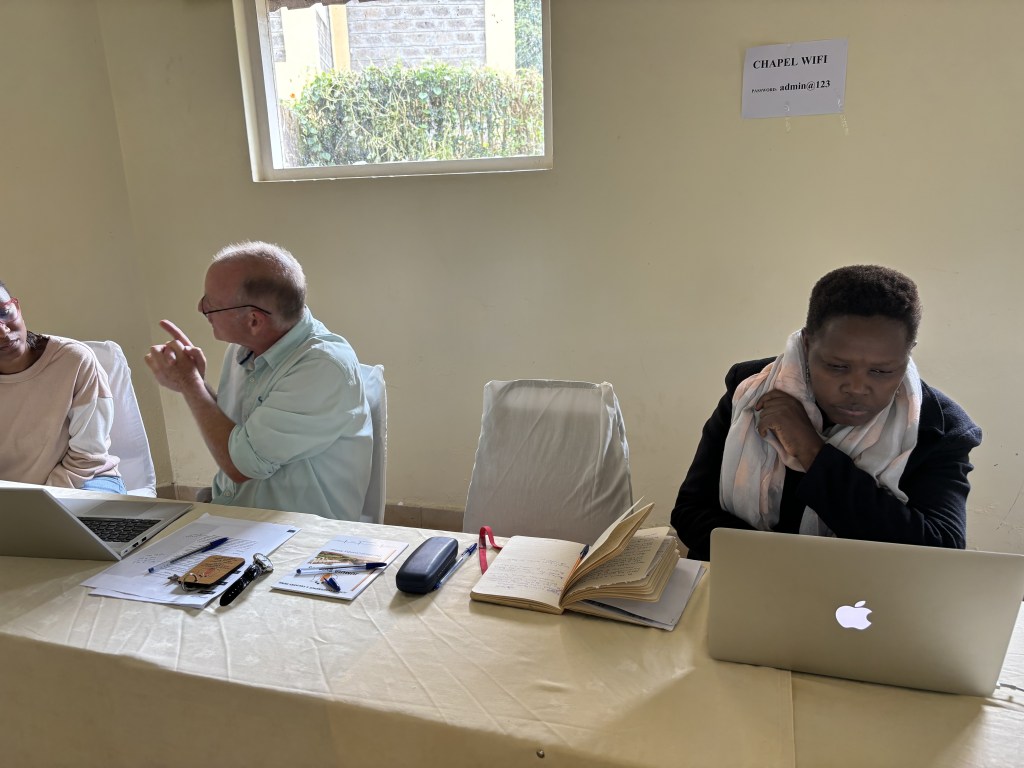
The Mapping Ancient Africa (MAA) writing workshop is currently in full swing in Kenya. Running from 3 June until the 6 June 2024 a diverse range of skills related to academic publishing is being delivered by our international team, including: structuring a scientific article, managing references and revision strategies. There is also plenty of time set aside for writing and getting feedback from more experienced academic writers. The manuscripts being developed at the workshop are being designed to be submitted to the MAA special issue of Quaternary International.

Scientific writing in action:

Continue Reading

Mapping Ancient Africa: Quaternary International special issue

April 5, 2024
WDG

The Mapping Ancient Africa (MAA) special issue of Quaternary International (QI) will open for submission on 30 April and will close 30 July 2024. To submit your article go to the QI submission portal and click “submit new article”, you will then be asked to “select article type”. From the drop down list select “SI: Mapping Ancient Africa”. This will ensure that your manuscript is directed to the guest editorial team. Submissions should follow the standard QI guideline (click here for details) and take account of the advice for submission to this special issue (click here for details).

The special issue is centered around work and papers presented in the MAA Rome workshop and sessions at the INQUA Rome congress (session 1, session 2), however, if you have a manuscript that you think would be appropriate for inclusion given the research themes of the project please also consider submitting. If you have any questions feel free to contact the editorial team in advance.

For further information on:

Presenters in the Mapping Ancient Africa session of the INQUA Rome congress 2023
INQUAlogo

Mapping Ancient Africa: Structuring a scientific article

December 19, 2023
WDG

INQUAlogo

The Mapping Ancient Africa (MAA) project is currently (late 2023 until early 2024) in the process of collecting submissions for a special issue of the INQUA (our sponsors) journal Quaternary International. The special issue will showcase research developed at the MAA workshop in Rome, and presented at the MAA sessions at the INQUA Rome congress. However, the editorial team is open to considering manuscripts relevant to the MAA goals that come from people not already involved in the project – so please contact us if you have ideas.

The process of developing articles for the special issue will be supported by the MAA community through a series of events. The first of these was a online workshop (2 October 2023) set out the frame of reference for the special issue, and included a short presentation on tips for structing a scientific article for this journal. If you missed the event and are thinking about writing an article for the special issue, or in a similar style, you can catch up with this on the Ecology of the Past YouTube channel. In person writing workshops are planned for 2024 in Africa. As full details emerge information will be published here.

Mapping Ancient Africa: Special Issue

August 31, 2023
WDG

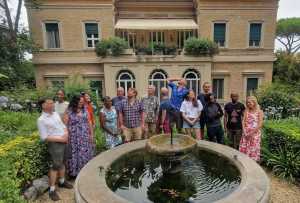
Mapping Ancient Africa participants on the Rome workshop (2023)

The Mapping Ancient Africa (MAA) project has an open call for contributions to a Special Issue of Quaternary International; the journal of our funder the International Union for Quaternary Research (INQUA). The concept for the special issue is agreed in principle with the journals editor-in-chief so now it is our task to collate a collection of manuscripts suitable to published in this international peer reviewed journal. The special issue will be based around papers discussed and presented at the MAA workshop in Rome and session at the INQUA congress in Rome in July 2023, but we are also happy to consider other manuscripts that fit within the MAA project area.

To find out if your manuscript idea might fit either explore the MAA web pages or contact a member of the editorial team:

Continue Reading
Blog at WordPress.com.