Dutch Earth & Environmental Science Conference 2026

April 11, 2026
WDG

“Common Ground”

NWO NAC (Dutch Earth & Environmental Sciences Conference)

9-10 April 2026

The annual Dutch Earth & Environmental Science conference took place at the NH Noordwijk Conference Centre Leeuwenhorst in Noordwijkerhout amoung some of the many Dutch flower fields.

Before the conference was a “Strategic evening” which provided an opportunity to meet scientists from other universities and organisations, and to discuss topical issues. This included a presentation of the recently completed “Earth & Environmental Science Vision” document (which can be dowloaded from the AMW Raad [Earth & Environmental Science Council] web page).
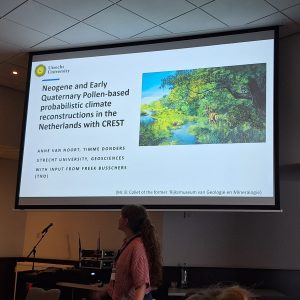
On the first day of the conference proper I was involved in chairing two sessions on “Palaeoclimate”. These sessions covered a wide range of topics, proxies and time periods, and included work on the Paleocene-Eocene Thermal Maximum, tipping points, and the Younger Dryas period. Excitingly for chairing these sessions I recieved a pair of NWO NAC socks!
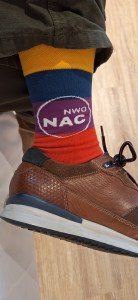
On the second day of the conference – sporting my new NAC socks – I presented our recently published work on landscape openness in the pre-farming European landscape. This was centred upon the recent publication of the palaeoecological record from Well-Aijen (Limburg, the Netherlands) which was the culmination of many years, and many students, research (Gosling et al., 2025). It was great to get positive feedback from the Dutch scientific community on this study. The session also included exciting work on reconstructing past climate from pollen data using the CREST model (Chevalier, 2022) and the extraction of biodiversity data from sedimentary pollen records.
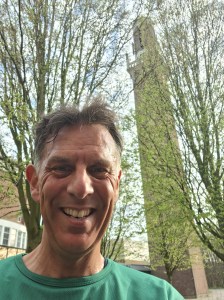
As well as the science talks the meeting had posters, exhibitors, workshops (I attended the one of scientific drilling) and social events (pub quiz, bowling, dancing). The atmosphere was very friendly and it was very easy to meet new people. The area around is very pretty and I even managed to get out for a short run on one of the days. I would recommend this event to anyone working in Earth or environmental sciences in the Netherlands.

References

  • Chevalier, M. (2022). crestr: An R package to perform probabilistic climate reconstructions from palaeoecological datasets. Climate of the Past, 18(4), 821–844. https://doi.org/10.5194/cp-18-821-2022
  • Gosling, W. D., de Wolf, I. K., Witteveen, N. H., de Zwaan, S. B., van Teulingen, C., Föllmi, D., Thissen, W., Vink, V. B., Woutersen, A., Philip, A. L., van Herk, M. J., Nascimento, M. N., Prins, M. A., & McMichael, C. N. H. (2025). Herbivory and vegetation openness in a pre-farming European landscape. Plant Ecology & Diversity, 1–22. https://doi.org/10.1080/17550874.2025.2576566

Eccentricity-driven glacial climate variability and its influence on speciation in the tropical Andes

March 12, 2025
WDG

Open access:

Chevalier, M., Gosling, W.D., Hooghiemstra, H., Cartapanis, O., Chase, B.M. & Kaboth-Bahr, S. (2025) Eccentricity-driven glacial climate variability and its influence on speciation in the tropical Andes. Quaternary Science Advances 100278. DOI: 10.1016/j.qsa.2025.100278

Mapping Ancient Africa: Rome workshop

July 14, 2023
WDG

The Mapping Ancient Africa workshop took place at the Royal Netherlands Institute in Rome on the 12 and 13 July 2023. Participants engaged with two different approaches to palaeoclimate modelling:

  • Interfacing palaeoclimate models through the “pastclim” R package. Lead by Michela Leonardi.
  • Reconstrucing palaeclimate on the basis of ancient pollen data using the CREST program. Lead by Manu Chevalier.

The aim of the workshop was to promote interaction between scientists working across Africa and across disciplines (palaeoclimate, palaeoecology, archaeology, modelling). The plenary session was joined by participants who could not make it to Italy via Zoom. This session was recorded and you can watch it below. In the plenary session outputs from the workshop, the planned special issue of Quaternary International, and the future of the Mapping Ancient Africa project were discussed.

To find out more about the workshop click here.

INQUAlogo
Continue Reading

Mapping Ancient Africa: Video of seminar 7

November 11, 2022
WDG

The seventh Mapping Ancient Africa online seminar took place on Thursday 10 November 2022. The seminar was delivered by Manu Chevalier (University of Bonn) and showcased his new publication entitled: An introduction to the Climate REconstruction SofTware (CREST) model.

Details of this seminar can be found here. You can find more Mapping Ancient Africa seminar videos on the “Ecology of the Past” YouTube channel.

INQUAlogo

Reference

  • Chevalier, M. (2022) crestr: an R package to perform probabilistic climate reconstructions from palaeoecological datasets. Climate of the Past 18, 821-844. DOI: 10.5194/cp-18-821-2022
  • crestr An R package to perform probabilistic palaeoclimate reconstructions from palaeoecological datasets https://mchevalier2.github.io/crestr/

Mapping Ancient Africa: Seminar 7

October 26, 2022
WDG

I am pleased to announce that the seventh online Mapping Ancient Africa seminar will take place on 10 November 2022 (17:00-18:00 CET – please note change of clocks from summer time) 

The seminar will be delivered via Zoom. The link for the seminar can be obtained from the MAA Slack channel or by contacting the chair of this seminar William Gosling. If you want to know more about the Mapping Ancient Africa project visit our web pages and please do not hesitate to get in contact if you want to get involved.

INQUAlogo

Blog at WordPress.com.