Scientific Workshop: Getting to the bottom of the Quaternary

July 8, 2026
WDG

The International Continental Scientific Drilling Program (ICDP) Deep Chew Bahir (DeepCBH) drilling workshop took place in Addis Ababa (Ethiopia) between the 30 June and 3 July 2026. The workshop brought around 50 scientists to Ethiopia, with a further 30, or so, in a satellite meeting in Potsdam (Germany) and online. The workshop was lead by Asfawossen Asrat, Verena Foerster, Daniel Gebregiorgis and Stefanie Kaboth-Bahr, and included scientist from 18 different countries (including 5 African countries).
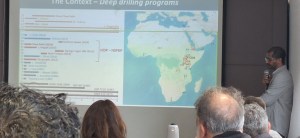
The purpose of the meeting was to, build upon the previous successful drilling of the Chew Bahir basin which raised sediments spanning the last c. 600,000 years (Foerster et al., 2026), and to discuss the opportunities, logistics and requirements to make the recovery of sediments spanning the whole of the Quaternary (last 2.6 million years) from the Chew Bahir basin possible. Obtaining such a record would provide an unprecedented insight into the environmental and climatic change that was the backdrop for the evolution of our genus, Homo.

The skill sets of those attending was as diverse as the challenges and opportunities that undertaking such an epic coring expedition would require. These included the fundamentals of what equipment would be required to recover a sediment core down to depths of 1.2 kms below the Earths surface and what to do with 1.2 kms of sediment once it was recovered; as well as the scientific motivations for doing so from perspectives of hydrology, human-environment interactions and extreme microbial ecosystems.

Over the three days, discussion of the feasibility, ambition and funding was intense, and many steps forward were made in aligning the practical and scientific considerations. It was great to meet everyone and to have a chance to chat about the potential of this exciting project. The next step is to collate the workshop outputs and submit a full proposal to the ICDP in January 2027.

To find out more about the DeepCBH project visit the ICDP web site here.

Continue Reading

Dutch Earth & Environmental Science Conference 2026

April 11, 2026
WDG

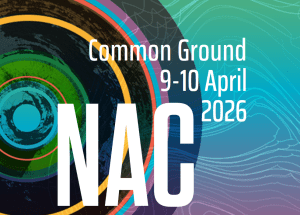
“Common Ground”

NWO NAC (Dutch Earth & Environmental Sciences Conference)

9-10 April 2026

The annual Dutch Earth & Environmental Science conference took place at the NH Noordwijk Conference Centre Leeuwenhorst in Noordwijkerhout amoung some of the many Dutch flower fields.

Before the conference was a “Strategic evening” which provided an opportunity to meet scientists from other universities and organisations, and to discuss topical issues. This included a presentation of the recently completed “Earth & Environmental Science Vision” document (which can be dowloaded from the AMW Raad [Earth & Environmental Science Council] web page).

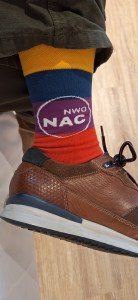
On the first day of the conference proper I was involved in chairing two sessions on “Palaeoclimate”. These sessions covered a wide range of topics, proxies and time periods, and included work on the Paleocene-Eocene Thermal Maximum, tipping points, and the Younger Dryas period. Excitingly for chairing these sessions I recieved a pair of NWO NAC socks!

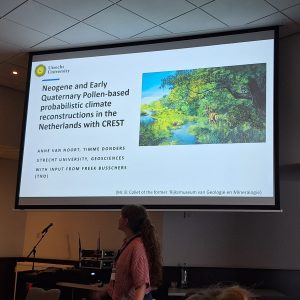
On the second day of the conference – sporting my new NAC socks – I presented our recently published work on landscape openness in the pre-farming European landscape. This was centred upon the recent publication of the palaeoecological record from Well-Aijen (Limburg, the Netherlands) which was the culmination of many years, and many students, research (Gosling et al., 2025). It was great to get positive feedback from the Dutch scientific community on this study. The session also included exciting work on reconstructing past climate from pollen data using the CREST model (Chevalier, 2022) and the extraction of biodiversity data from sedimentary pollen records.

As well as the science talks the meeting had posters, exhibitors, workshops (I attended the one of scientific drilling) and social events (pub quiz, bowling, dancing). The atmosphere was very friendly and it was very easy to meet new people. The area around is very pretty and I even managed to get out for a short run on one of the days. I would recommend this event to anyone working in Earth or environmental sciences in the Netherlands.

References

  • Chevalier, M. (2022). crestr: An R package to perform probabilistic climate reconstructions from palaeoecological datasets. Climate of the Past, 18(4), 821–844. https://doi.org/10.5194/cp-18-821-2022
  • Gosling, W. D., de Wolf, I. K., Witteveen, N. H., de Zwaan, S. B., van Teulingen, C., Föllmi, D., Thissen, W., Vink, V. B., Woutersen, A., Philip, A. L., van Herk, M. J., Nascimento, M. N., Prins, M. A., & McMichael, C. N. H. (2025). Herbivory and vegetation openness in a pre-farming European landscape. Plant Ecology & Diversity, 1–22. https://doi.org/10.1080/17550874.2025.2576566

Blog at WordPress.com.