Fieldwork in South Africa

April 27, 2026
WDG

By Bouwe Groeneveld (MSc Biological Sciences, track Ecology & Evolution, University of Amsterdam)

From data to reality
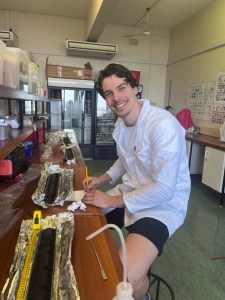
Last year, between April and June, I worked on my bachelor project on the fire history of a site in South Africa called Giant’s Castle. From the Netherlands, I analysed sediment cores by counting charcoal fragments and looking at their shape to determine whether they likely came from grass or wood. The results were largely what you would expect in a mountain grassland. Most of the charcoal came from grasses. At the same time, there were clear changes in the composition of the fuel reflected in the charcoal record. I linked the increase in fire activity to the presence of people, and also observed shifts in the types of fuel being burned over time. It felt like slowly unravelling a story from the past. But it also remained abstract. I was working with numbers, figures, and photos of a place I had never actually been to. I had a sense of it, but it did not fully feel real. A year later, I was standing there myself.

From analysis to experience

For my MSc research, I returned to the same system, but this time physically. In the meantime, I had already expanded my earlier work by looking at dung fungal spores, as an indicator for grazing animals, and pollen to reconstruct vegetation dynamics. But to describe vegetation properly, you really have to see it. After a five-day workshop, which I described in a previous blogpost, I spent a weekend at the home of Prof. Trevor Hill and Prof. Jemma Finch. That weekend turned into something like a crash course in South African life. It even included watching their son play a cricket match. What stood out most to me was how much more outdoor-oriented life felt compared to what I am used to in the Netherlands. After that, I was introduced to the University of KwaZulu-Natal in Pietermaritzburg, where I spent three weeks working in the lab. Interesting work, but I had really come for something else. The field.
First fieldwork: Cathedral Peak

Continue Reading

Dung fungal spores at the zoo?

February 20, 2026
WDG

Dung fungal spores (or spores of coprophilous fungi) are often used to track herbivore presence or abundance in the past (e.g. van Geel, 2001; Lee et al., 2022). While the animals are not preserved evidence of them is through the type and quantity of the fungal spores preserved in the sedimentary record.

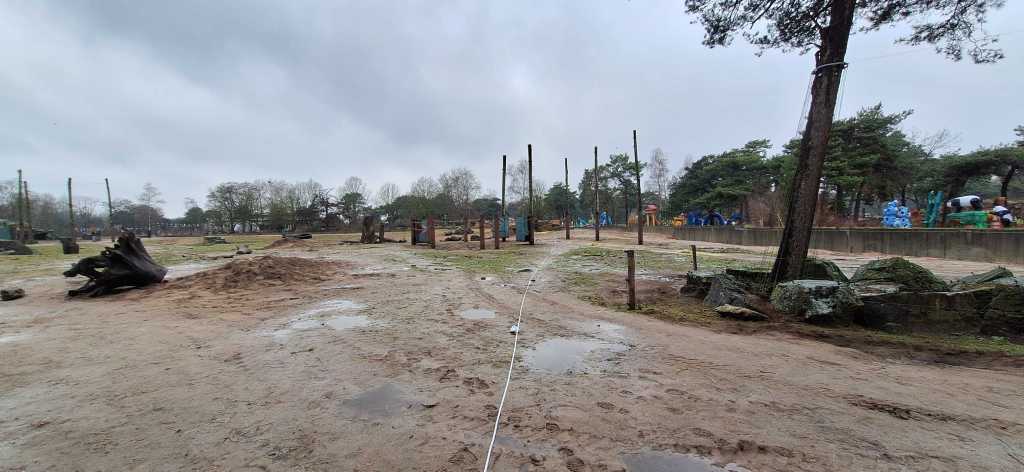
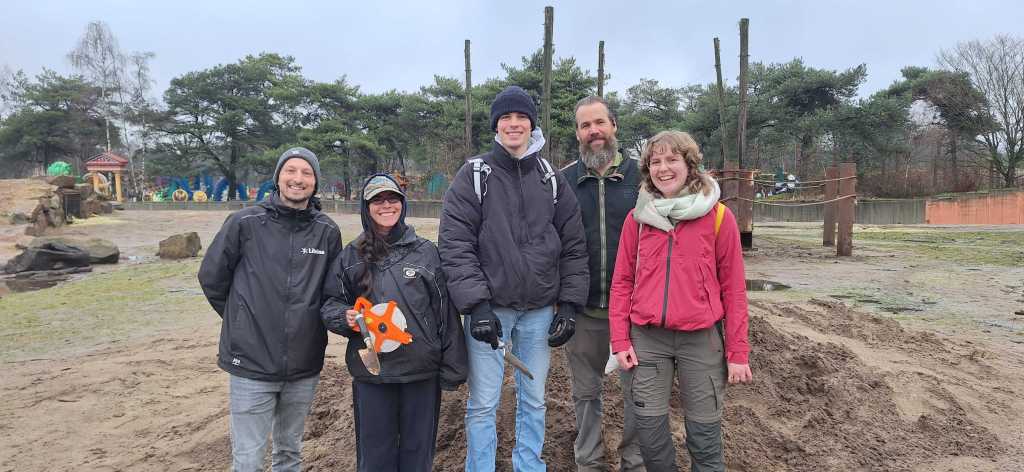
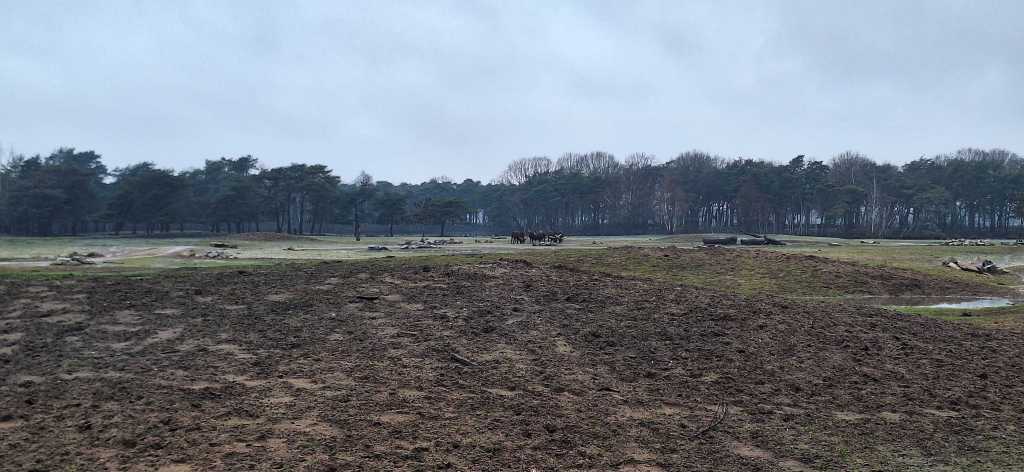
On 12 February 2026, along with University of Amsterdam MSc researchers Chiara Raino, Sarah Main and Bouwe Groeneveld, I travelled to Beekse Bergen zoo in the south of the Netherlands to collect samples to see if we could related specific animal types to particular dung fungal spore assemblages.

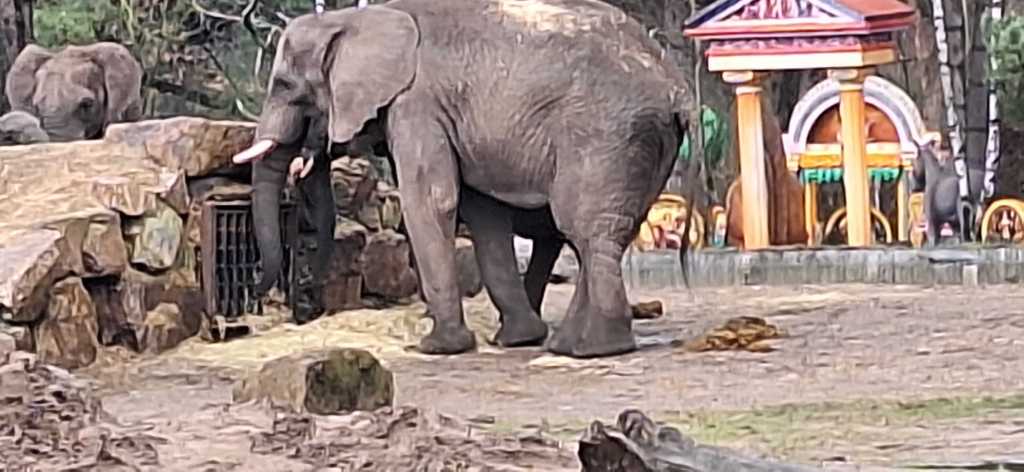
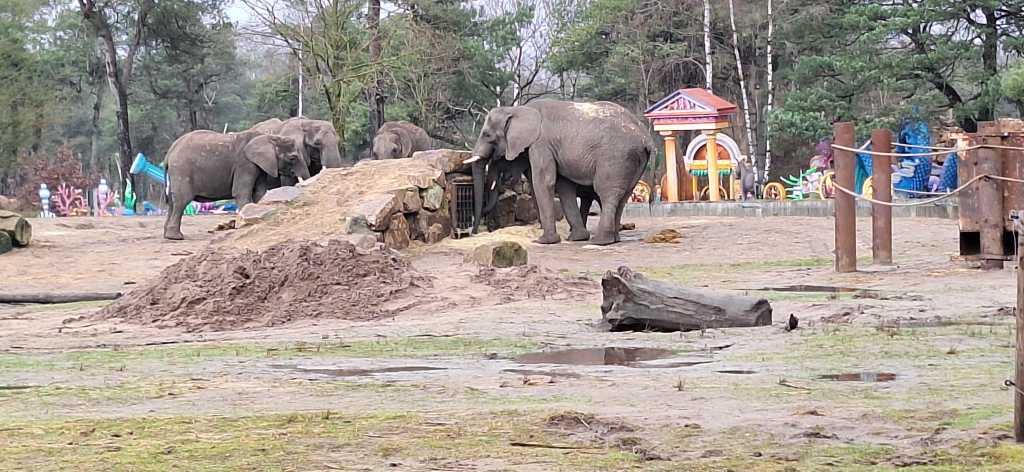
At the zoo we met with Stijn Berger who coordinates scientific collaboration for Beekse Bergen. Stijn kindly arranged for us to visit a number of enclosures before the animals were let out for the day. We collected samples from areas containing elephants, spring bok and rhinos. We new wait for the samples processing, and the students analysis, to see if there is any relationship between the animal and fungal spore types.

References

  • van Geel, B. van. (2001). Non-pollen palynomorphs. In S. J.P., H. J. B. Birks, & W. M. Last (Eds.), Tracking environmental change using lake sediments. Vol. 3 (pp. 99–119). Kluwer.
  • Lee, C. M., van Geel, B., & Gosling, W. D. (2022). On the use of spores of coprophilous fungi preserved in sediments to indicate past herbivore presence. Quaternary, 5(3), 30. https://doi.org/10.3390/quat5030030

Drivers of vegetation change in tropical Africa

April 9, 2025
WDG

I was delighted to be invited to give a seminar as part of the Max Planck Institute for Geoanthropology “Human Palaeo-systems Research Group” series. In case you missed it the seminar is will soon be available to watch online (click here).

To see the full list of seminars in the series click here.

The Ecology of the Past: Inagueral lecture

January 12, 2023
WDG

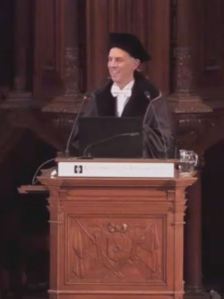
William Gosling giving his oratie “The Ecology of the Past” at the Aula (University of Amsterdam), 22 December 2022.

On the 22 December I gave my oratie (inaugural lecture), entitled “The Ecology of the Past”, related to my appointment as Professor of Palaeoecology & Biogeography at the University of Amsterdam. I really enjoyed the opportunity to mark this personal milestone with some many colleagues, friends and family. In case you missed the event you can watch it online via the universities portal by clicking here (or on the photo).

Note: (1) to flip between seeing the slides and the video feed just click on the screen, (2) running time of lecture until 50 minutes.

Reference

Gosling, W.D. (2022) The Ecology of the Past
Inaugural speech, University of Amsterdam.

Blog at WordPress.com.