Fieldwork in South Africa

April 27, 2026
WDG

By Bouwe Groeneveld (MSc Biological Sciences, track Ecology & Evolution, University of Amsterdam)

From data to reality
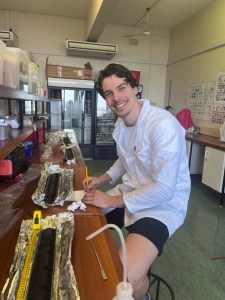
Last year, between April and June, I worked on my bachelor project on the fire history of a site in South Africa called Giant’s Castle. From the Netherlands, I analysed sediment cores by counting charcoal fragments and looking at their shape to determine whether they likely came from grass or wood. The results were largely what you would expect in a mountain grassland. Most of the charcoal came from grasses. At the same time, there were clear changes in the composition of the fuel reflected in the charcoal record. I linked the increase in fire activity to the presence of people, and also observed shifts in the types of fuel being burned over time. It felt like slowly unravelling a story from the past. But it also remained abstract. I was working with numbers, figures, and photos of a place I had never actually been to. I had a sense of it, but it did not fully feel real. A year later, I was standing there myself.

From analysis to experience

For my MSc research, I returned to the same system, but this time physically. In the meantime, I had already expanded my earlier work by looking at dung fungal spores, as an indicator for grazing animals, and pollen to reconstruct vegetation dynamics. But to describe vegetation properly, you really have to see it. After a five-day workshop, which I described in a previous blogpost, I spent a weekend at the home of Prof. Trevor Hill and Prof. Jemma Finch. That weekend turned into something like a crash course in South African life. It even included watching their son play a cricket match. What stood out most to me was how much more outdoor-oriented life felt compared to what I am used to in the Netherlands. After that, I was introduced to the University of KwaZulu-Natal in Pietermaritzburg, where I spent three weeks working in the lab. Interesting work, but I had really come for something else. The field.

First fieldwork: Cathedral Peak

Continue Reading

Vegetation responses to late Holocene climate changes in an Andean forest

May 31, 2019
Candurill

Vegetation responses to late Holocene climate changes in an Andean forest
By Klaas Land (currently studying MSc Biological Sciences (Ecology & Evolution) at the University of Amsterdam.

The discussion during the APC meeting on the 19th of March was on the paper by Schiferl et al. (2018), a very recent study on the climatic shifts in the late Holocene and their effects on the South American tropics. The study had analysed a core going back about 3800 years from Lake Palotoa, which was in the Andean foothills (1370m elevation). They found that subtle changes to the fossil pollen record could be identified around the estimated periods for the Little Ice Age (LIA) and Medieval Climate Anomaly (MCA). The focus in the paper Continue Reading

Off to the tropics!!

December 26, 2017
cmcmicha

On Jan 1, 2018 I (Crystal McMichael) get to ring in the New Year in the best way possible by heading off to the tropics to do fieldwork! And this time I get to take two students with me. Britte Heijink and Veerle Vink are both in the Biological Sciences MSc program (Ecology and Evolution track), and they are going to work on research projects that are associated with a recent grant that I was awarded through the Smithsonian Tropical Research Institute CTFS-ForestGEO Research Grants Program.

Continue Reading

Environments Through Time – week 1

November 3, 2017
WDG

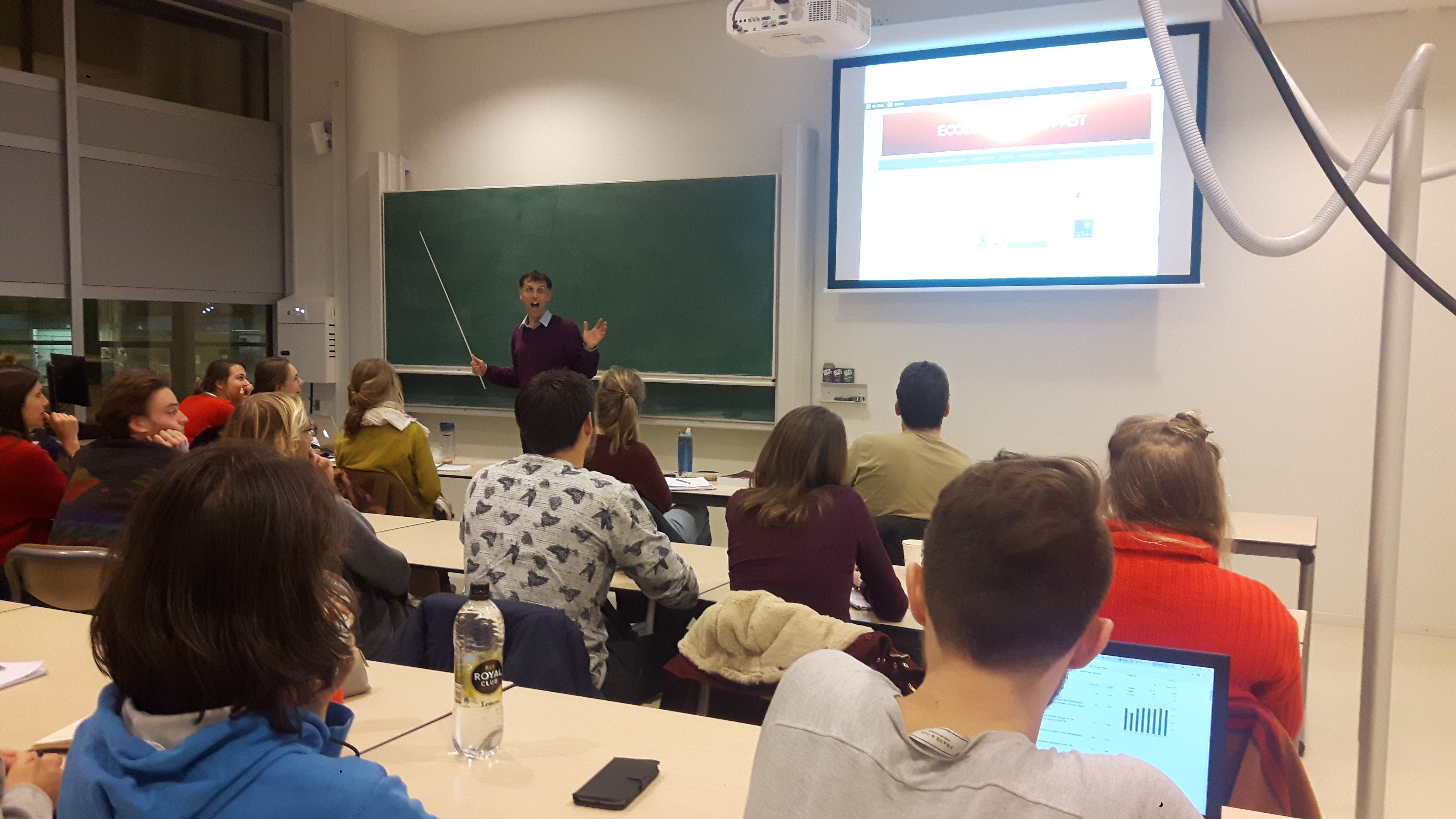
Me teaching human impacts on environmental change...

Me teaching human impacts on environmental change…

The first, ever, week of the Environments Through Time course at the University of Amsterdam has just finished. The course sits within the MSc Biological Sciences (Ecology & Evolution) and MSc Earth Sciences (Geo-ecosystem Dynamics) but is also avaliable to other masters students. In the first week we have thought about four main topics:

  1. Scales of change (ecological, geological, and human).
  2. Humans as drivers of environmental change.
  3. Extra-terrestrial forcing of environmental change.
  4. Earth system feedbacks.

The week was completed with each student giving a three (3) minute presentation of their favourite paper. The papers presented ranged from the extinction of giant sharks, through forest-savannah transitions, to how climate change thwarted Ghengis Kahn. Next week we continue by disecting how chronologies are constructed.

This slideshow requires JavaScript.

The Enviornments Through Time course is taught by: William Gosling, Crystal McMichael, and Milan Teunissen van Manen.

Continue Reading

Blog at WordPress.com.