Departing from Hull

May 11, 2026
WDG

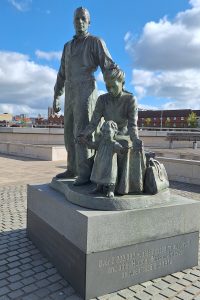
Hull was a departure point for many people across the sea, and also a departure point for me in my life and academic career!

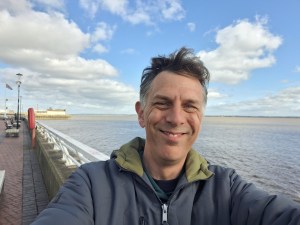
Last weekend I returned to Hull to catch up with friends from my undergraduate days for the first time in more than 20 years! We were all based at the University of HullFerens Hall” hall of residence for our first year (1995-1996), following this we shared houses in the streets around the university main campus. Over the last twenty years later we have all headed off along different an meandering paths in life, but catching up with everyone felt very normal. A testement to the solid friendships developed during those three years at Hull. The reunion was helped along by some Manchester Bitter and Yorkshire stout (not avaliable on tap in the Netherlands) and some fine locations in the redeveloped Hull marina area.

Whilst at Hull, as well as making friends, I studies for a BSc (Hons) in Physical Geography. During my degree I got my foundations and inspiration for exploring past environmental change from a range of great lecturers, memorably including:

  • Steve Ellis (soil science; and author of the then recently published Ellis & Mellor [1995] text book),
  • Barbara Rumbsy (past river systems; who – if I remember the rumour correctly – left academia to run a tea shop in the Lake District – was this true?),
  • Martyn Pedley (sedimentology; double carbonate sedimentology on a Friday afternoon was typically punctuated by a swift trip to the Student Union bar [but we always went back]),
  • James Brasington (hydrology; who I remember running after down a crowded corridor for some reason long forgotten), and
  • Jane Bunting (palaeoecology; who really set me on my academic path!).

As an undergraduate arriving in Hull in 1995 I could never have imagined that I would be in Amsterdam 30+ years later working as an academic. I hope that, as an academic today, I manage to convey the same energy and enthusiams for my subject as the lecturers I had at Hull did for me. Who knows where my students, staff, or I, will all be 30+ more years time, but I am sure things will change (and wierdly stay the same) just as much as they have (have not) over the last 30 years. I hope that the path is varied and interesting, and that more friendships and progress are made along the way. So on with the adventure…
Continue Reading

Palaeoecology course 2023

September 6, 2023
WDG

The pollen and phytolith identification quiz! Is that an Asteraceae phytolith I see…???

The University of Amsterdam “Palaeoecology” course commenced this week with lectures getting students up to speed with the fundamental principles and approaches to the subject, and laboratory practicals training students in the identification of micro- and macro-fossils. Once students have gained a basic understanding of pollen and phytolith identification – and demonstrated this by passing the ‘dreaded’ identification quiz – it is time to commence the group project work.

This year the students are trying to identify from which study site their ‘mystery slides’ come from on the basis of the micro-fossil assemblages (pollen and phytoliths) that they contain. The study sites all come from the area around Hilversum (Netherlands) and (could) include: heathland, pine forest, mix-deciduous forest, and birch woodlands. In addition, just to make it more interesting, one group has samples taken from the medieval palaeosol that is found locally.

Next week is field work week and the students will then need to parameterise the vegetation around the Hilversum area in such a way that they: (i) get a representative sample the variation across the landscape, and (ii) can compare the vegetation data with their micro-fossil data. Then, following the number crunching in the third week of the course, we will find out if the different groups can identify the correct study site from which there samples came…

The Palaeoecology course at the University of Amsterdam is part of the BSc Biology program, it is also frequently taken by students on the BSc Future Planet Studies degree. We also welcome students from other programs, such as BSc Béta-Gamma, and international exchange students.

An interview with Adele Julier

May 26, 2014
philjardine

Following on from Wes Fraser’s insightful and revealing interview, cactus-hugger Adele Julier tells us about her academic background and her role on the Lake Bosumtwi pollen chemistry project.


For more videos check out the “Ecology of the past” YouTube channel.

Blog at WordPress.com.