

South African research trip (part 3 of 3)
by Jelle Kraak
As part of my MSc Biological Sciences research project at the University of Amsterdam I travelled to Africa, where I first presented the early findings of my research at the SASQUA congress (blog post 1) in Oudtshoorn (Western cape), before heading to the University of Kwa-Zulu Natal (blog post 2). Here I met up with local experts and prepared for the upcoming fieldwork, which the previous parts of this blog series covered. Now, the time has come for the final and best part, about my fieldwork in the absolutely gorgeous Drakensberg mountains.
Aims: As the samples for my research had already been collected earlier by my supervisors Prof. Dr. Jemma Finch & Prof. Dr. Trevor Hill for the University of Kwa-Zulu Natal, our initial goal was to collect various samples (charcoal, sediment cores, etc) for the next students. During my time at the university of Kwa-Zulu natal, however, we realized that it would be great to collect a bunch of C3 and C4 grass species, to extract phytoliths (amorphous silica particles formed in plant tissues) from, which would help with the interpretation of our data. This then became our new focus. To achieve this goal we visited the Drakensberg twice, one day trip in the weekend, and one trip with an overnight stay.
Day 1
After a night of utterly terrible sleep (I was alone on the AirBnB property, the gate did not lock due to the cold, and our dogs started barking at something (someone!?) at 2AM), I woke up at 6AM to get ready for the long day ahead of us. Jemma came to pick me up at the, bringing coffee with her, which I really appreciated. We then picked up Trevor at their place and began our drive towards the mountains. I had not seen much of the landscape in the Kwa-Zulu Natal province, which turned out to be very compared to the Western Cape. Whereas the western cape had fynbos vegetation (very similar to the Mediterranean, KZN was more savanna like. There was grass everywhere the eye could see, except for the patches of spruce, planted by humans. Halfway through the drive the Drakensberg mountains came into view, which was stunning. We then drove through some small villages, until we finally arrived at the Berg.

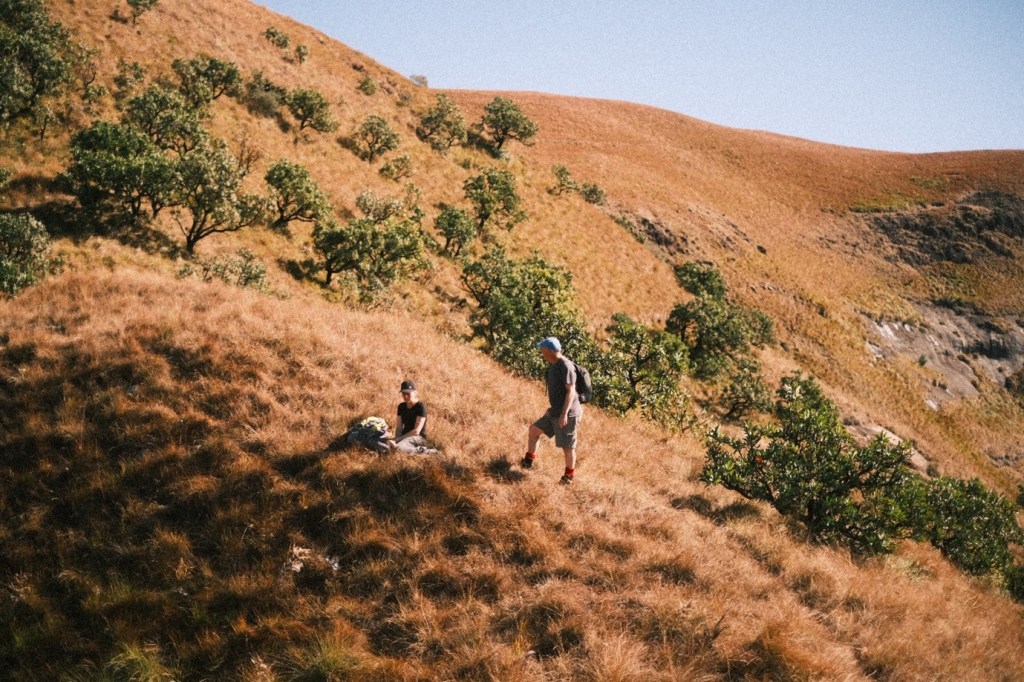
During this first day our priority was to just collect as many different grass species as possible. Which we did! We hiked up the mountain above one of my sites, Elandvlei, all the while collecting samples of every grass (and some shrubs and trees) that were unique. By going up in elevation, I could see all the different vegetational zones and deepen my understanding of the environment.
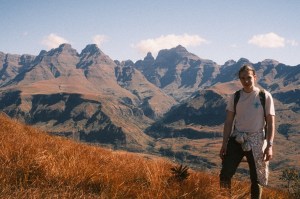
Of these zones, the protea belt (which contains most of the woody vegetation in the form of protea trees, was the most notable. The protea belt can be seen in one of the images, featuring my supervisors Jemma and Trevor.
Getting here was already quite the challenge, not because the slopes was steep, or the path unsteady (even though those factors did not contribute to making the route easier), but because the local fauna had already decided it did not like me. So, I got stung by a solitary wasp species. It wasn’t that bad as it could have also been a snake bite + helicopter ride to the hospital. After applying some anti-wasp ointment we resumed our hike.

At the top of the mountain, which was surprisingly flat, we took a picture that I can now show to everyone as proof that I’ve actually been to the Drakensberg:
As a reward for reaching the summit, we treated ourselves to lunch: chutney crisps on white buns. I was told, and can now confirm, that this is in fact the best food for South-African fieldwork. With a full belly we then hiked down the mountain again towards the Elandvlei wetland where I took some surface sediment samples on all surrounding slopes, to see how sediment influx from the different slopes, contributes to the overall assemblage in the wetland.
Having collected over 40 (!) different grass species, we then headed back to the car, and back to Pietermaritzburg.
Day 2
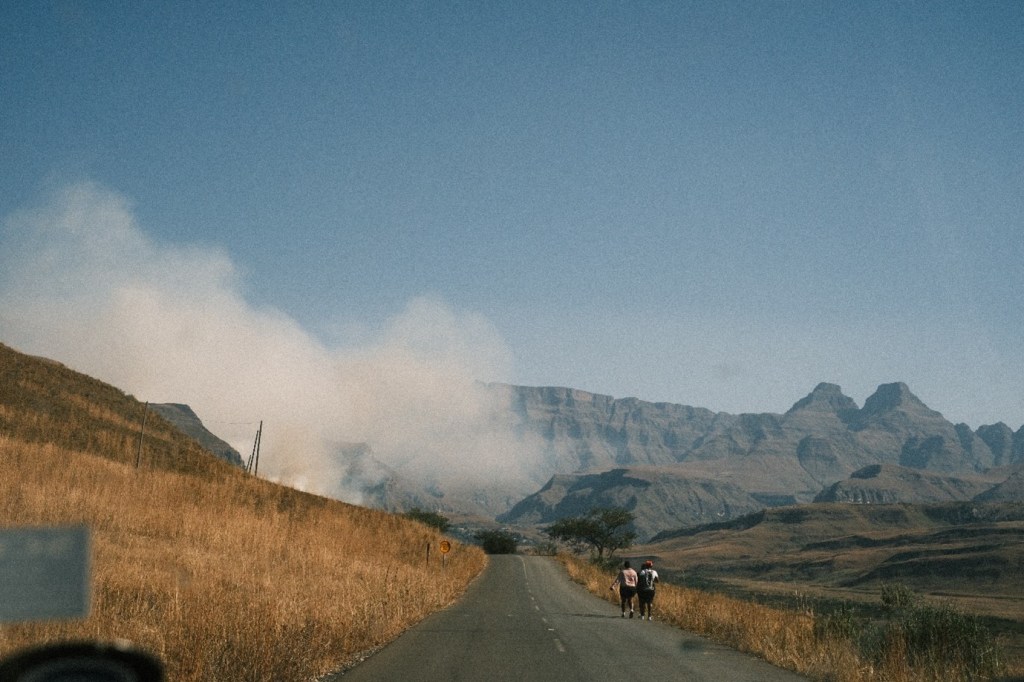
When we stepped into the car to make our way to the Berg, we knew some busy days were ahead of us. When we approached mountains this time, something was different: there were big clouds coming from the valley.
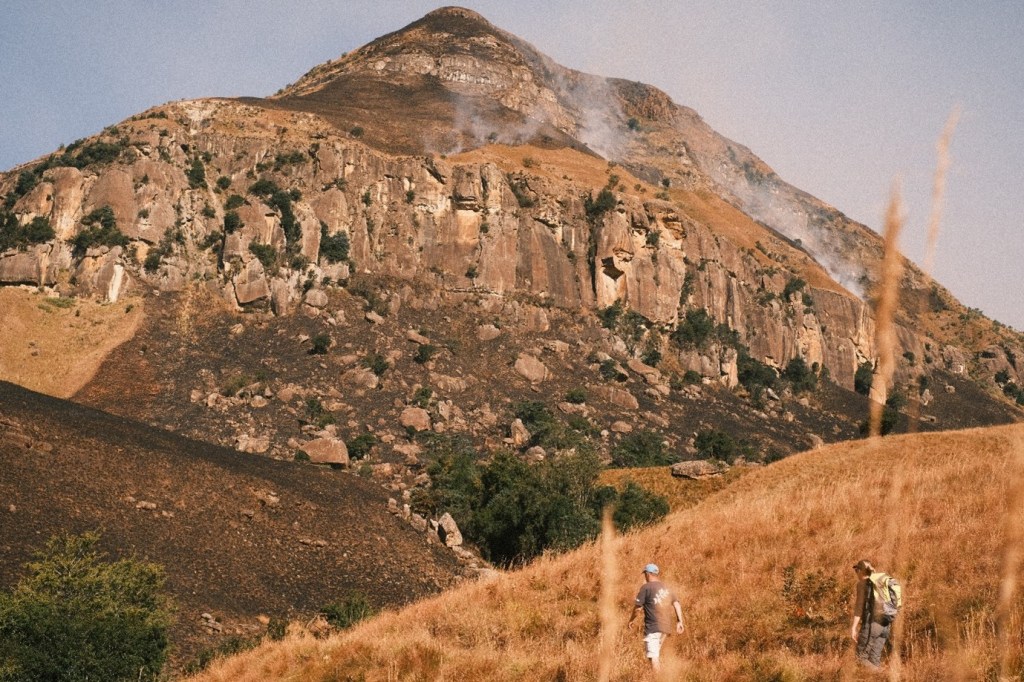
It turns out that the KZN wildlife management was performing controlled burns! This was great news, as we were now presented with the opportunity to collect fresh charcoal from the area. We took charcoal and surface sediment samples along transects in the freshly burned (some burns less than two hours old!) plots. These samples are highly valuable as, we can now compare the “fresh” charcoal with sedimentary charcoal and look at how variables such as morphology change throughout time.
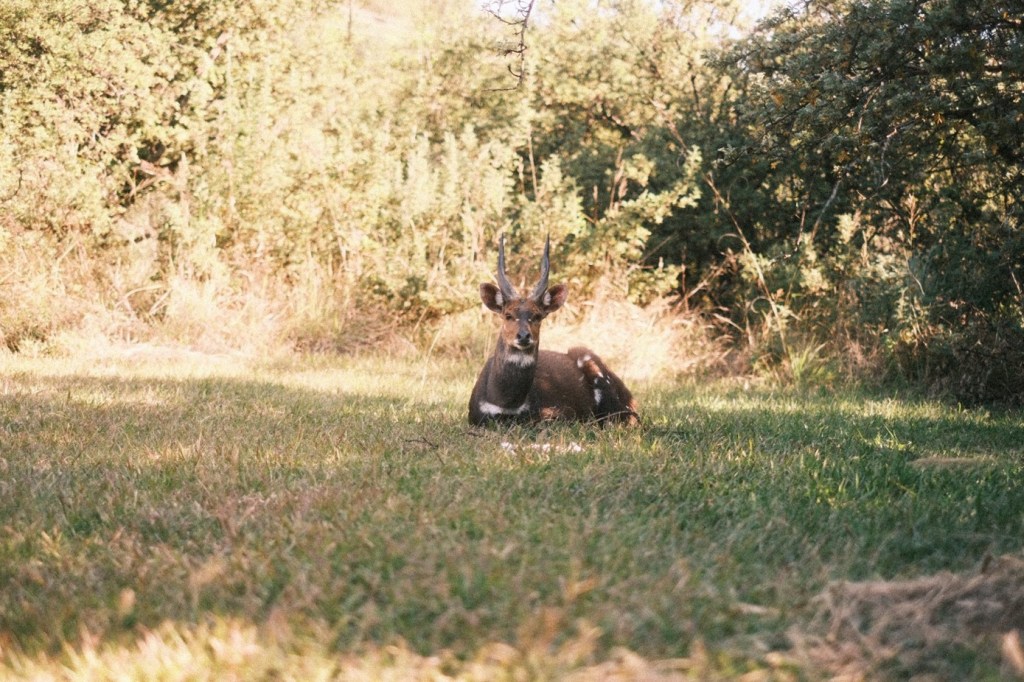
When we arrived back at the car, we were greeted by a very tame buschbuck. Although quite tame, the buschbuck was not interested in having a close-up portrait taken, and eventually scurried away when I approached him a bit too much…
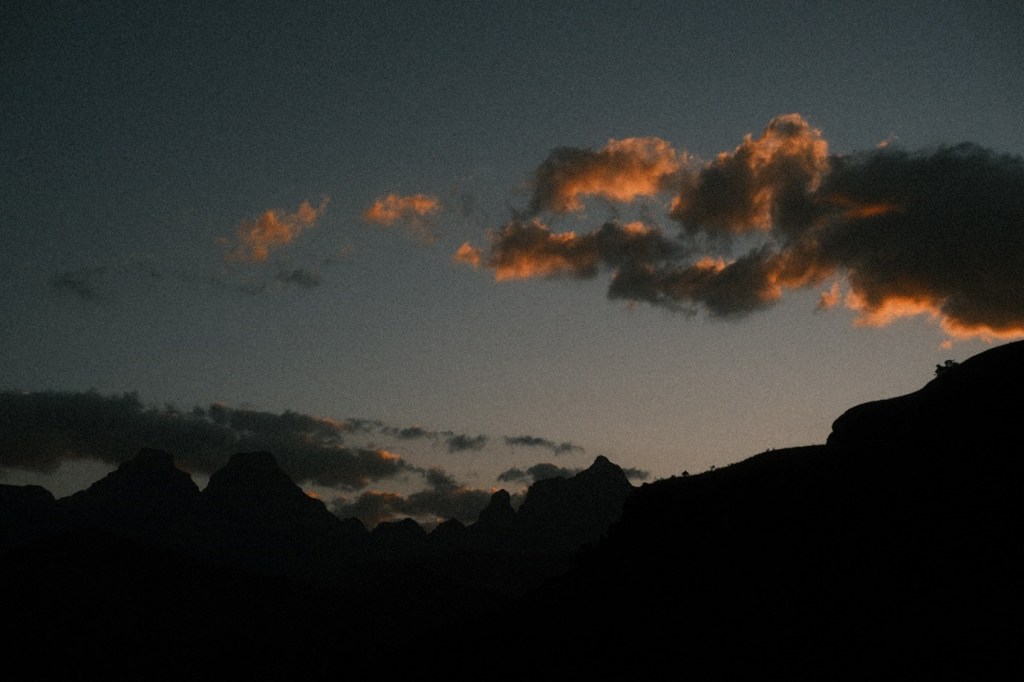
In the afternoon, we hiked up the other side of the valley to the Baboon Swamp wetlands (my second research site). Here we collected grasses again, as well as surface soil samples of the surrounding slopes, which had more woody vegetation compared to Elandvlei. As it was winter, the sun set quite early and we had to walk down the mountain whilst it was getting dark already, which provided us with the opportunity to pictures of the beautiful clouds. We walked the last part in almost complete darkness, this was fine for the most part. I say for the most part, because there was a Reedbuck (a different antelope species) close to us, that scared the sh*t out of me. Apparently, this species of Antelope makes a whistling sound, but to me it sounded more like a screaming person… At the car, we had some post field work hot chocolate milk before making our way to our lodge.
Day 3
We woke up to the stunning site of Cathedral peak in the morning sun, before making our way to the car and starting our most adventurous trip yet. Today, we were going off-road to go up higher into the mountains in the hopes of collecting more grass species, and perhaps a sediment core or two. Specifically, we were on the hunt for C3 grasses, which tend to prefer a colder environment compared to C4 grasses and would hopefully be more abundant higher up in the mountains.


The offroad experience was very cool for me, but maybe less for Trevor, who was driving. We saw a lot of wildlife, including different vulture species, and a serval! After succesfully collecting many other grass samples, surface soil samples and charcoal samples, we headed back to PMD.
Final days at UKNZ
I spent the last few days at the University of Kwa-Zula Natal extracting all the phytoliths from our grasses, before packing them, along with some charcoal in my suitcase and flying home after almost 6 amazing weeks in South-Africa
Overall, I had a great experience in South Africa and would strongly advise every Master student to go abroad for their research, even if it were just for a week or two. What I especially liked from my visit here was that I got the chance to present my work at the SASQUA congress, meet experts in my field and that I got to see my research site in real life. All of which really helped my understanding of the environment I was working in and improved my research project overall.
I would like to thank everyone involved in my project dearly. Firstly, my supervisor Prof. Dr. William Gosling, who suggested this project to me and helped me daily from the start to the end of my project. Secondly, Prof. Dr. Jemma Finch and Prof. Dr. Trevor Hill who helped me immensely: Before my stay by collecting my samples in the Drakensberg and sending them to the Netherlands; during my stay by making sure everything from accommodation to travelling went smoothly; and after my stay by helping me with interpreting my data and giving feedback on my thesis (which we will hopefully be publishing in 2025). Lastly, I’d also like to thank the students at the UKZN: Talia Enoch for showing me around Pietermaritzburg, and bringing me a power bank and battery-powered lights just before my phone died when there was a 48 hour energy fallout in our neighbourhood, Joshua van Schalkwyk for sharing his knowledge on phytoliths with me and taking me on a great hike in a different part of the Drakensberg and showing me around the province and lastly Zahra Omarjee & Nozizwe Mtshali for being there to answer all my questions and helping me with finding lab materials. You all made me feel very welcome, and it was great to have some people to hang around with in a foreign country where I did not know anyone!
 Ecology of the past