

Dung fungal spores (or spores of coprophilous fungi) are often used to track herbivore presence or abundance in the past (e.g. van Geel, 2001; Lee et al., 2022). While the animals are not preserved evidence of them is through the type and quantity of the fungal spores preserved in the sedimentary record.
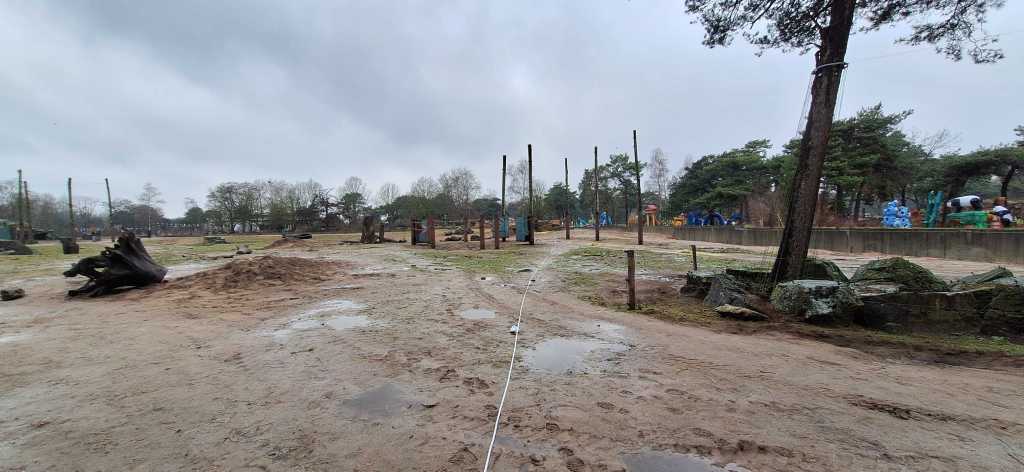
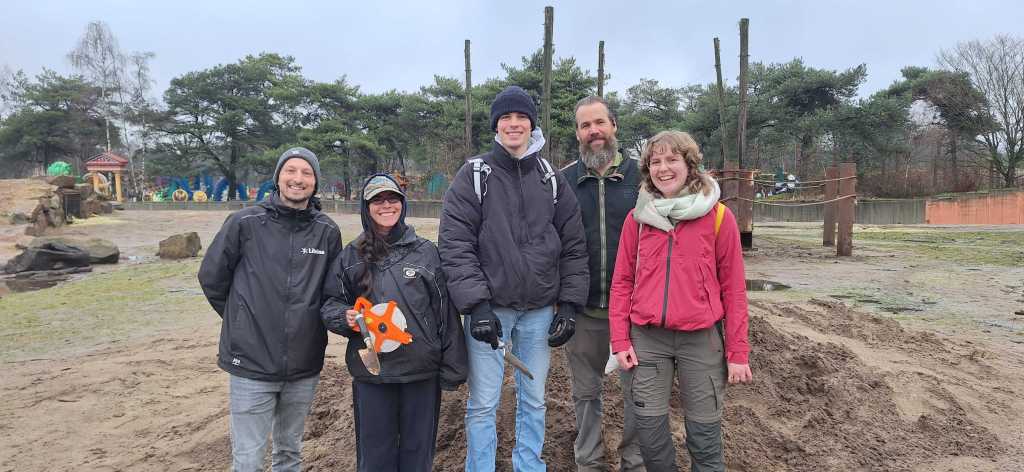
On 12 February 2026, along with University of Amsterdam MSc researchers Chiara Raino, Sarah Main and Bouwe Groeneveld, I travelled to Beekse Bergen zoo in the south of the Netherlands to collect samples to see if we could related specific animal types to particular dung fungal spore assemblages.
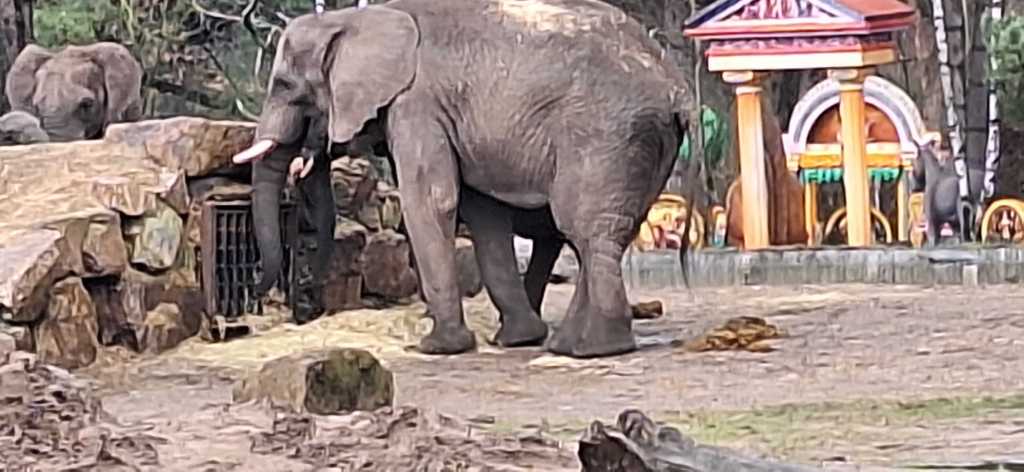
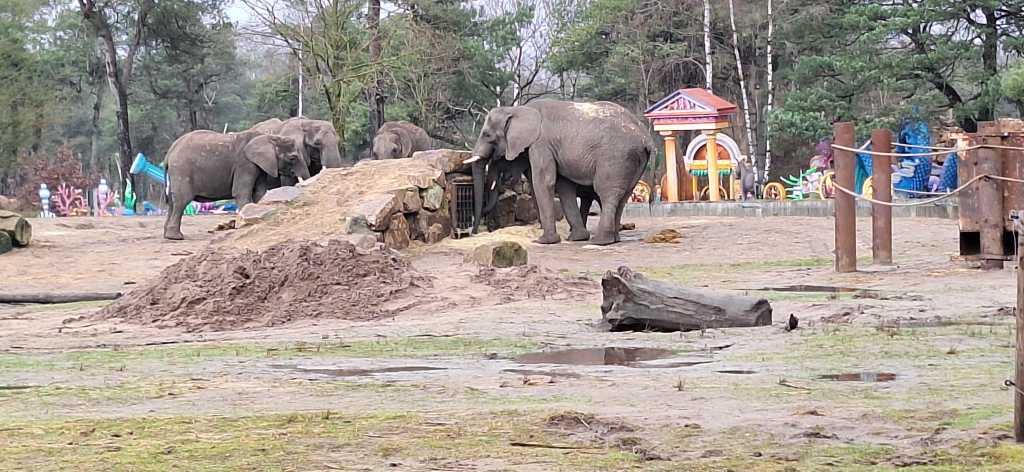
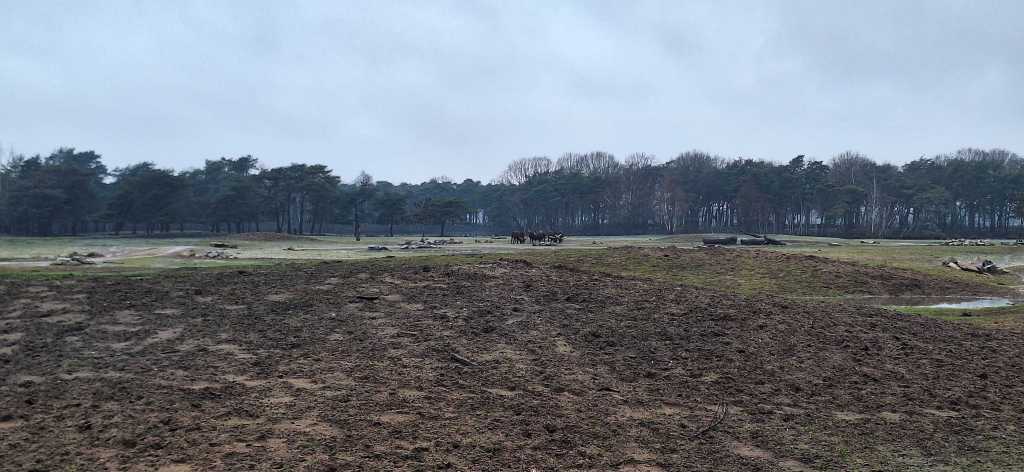
At the zoo we met with Stijn Berger who coordinates scientific collaboration for Beekse Bergen. Stijn kindly arranged for us to visit a number of enclosures before the animals were let out for the day. We collected samples from areas containing elephants, spring bok and rhinos. We new wait for the samples processing, and the students analysis, to see if there is any relationship between the animal and fungal spore types.
References
- van Geel, B. van. (2001). Non-pollen palynomorphs. In S. J.P., H. J. B. Birks, & W. M. Last (Eds.), Tracking environmental change using lake sediments. Vol. 3 (pp. 99–119). Kluwer.
- Lee, C. M., van Geel, B., & Gosling, W. D. (2022). On the use of spores of coprophilous fungi preserved in sediments to indicate past herbivore presence. Quaternary, 5(3), 30. https://doi.org/10.3390/quat5030030
 Ecology of the past