

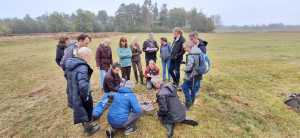
During the seminar afternoon (17 October) we heard four talks. The first from Harm Smeenge and Ariët Kieskamp (both Bosgroep) introduced the sites we were to visit on the excursion the next day. This focused on the landscape ecology and ecological history of the bogs on the eastern slopes of the Veluwe. The second talk, by Roy van Beek (Wageningen University & Research), focused on the Celtic field systems around the Veluwe. He explained the latest archaeological and archaeobotaincal work investigating the age and origins of these field systems. The third presentation was by Jasper Candel (Wageningen University & Research) and focused on the geomorphological features from glacial activity in the Veluwe region and how this has effected the development of mire ecosystems. I (William Gosling) gave the final talk, presenting the outputs of the research theses of Sanna Wessel, Chiara Raino and Roos Dik who all completed projects at the University of Amsterdam and worked together to investigate how different mega-herbivore populations in the Dutch landscape were represented by the dung fungal spores preserved in the soil.
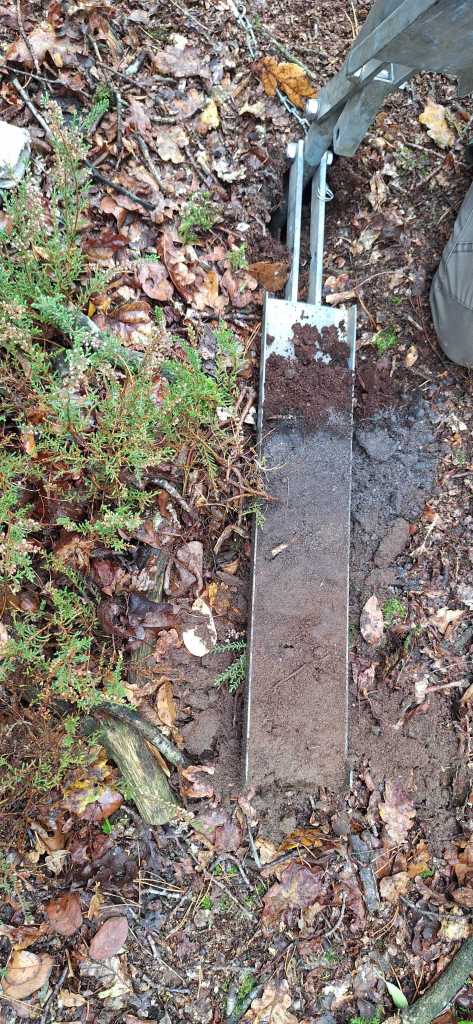
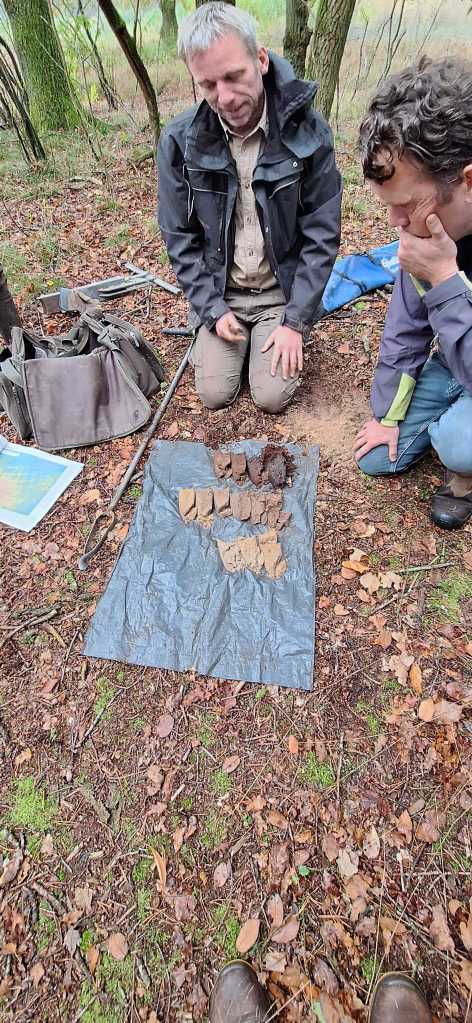
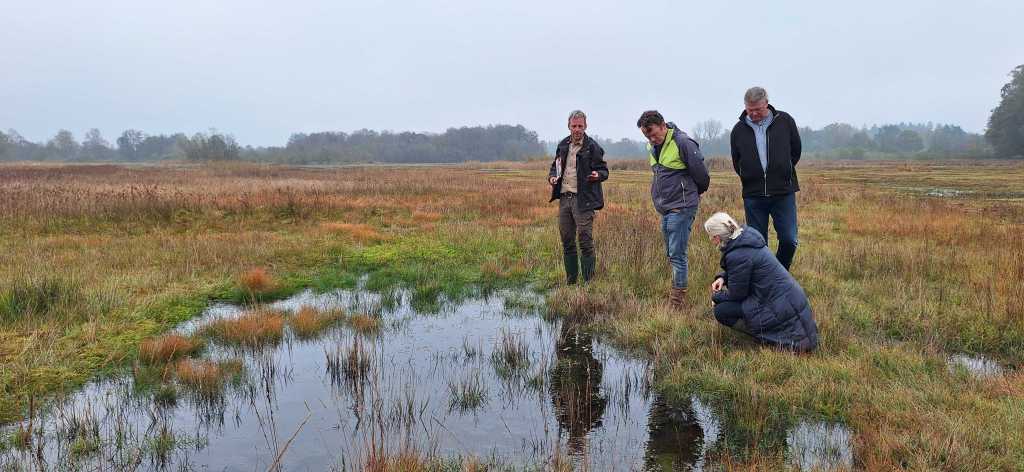
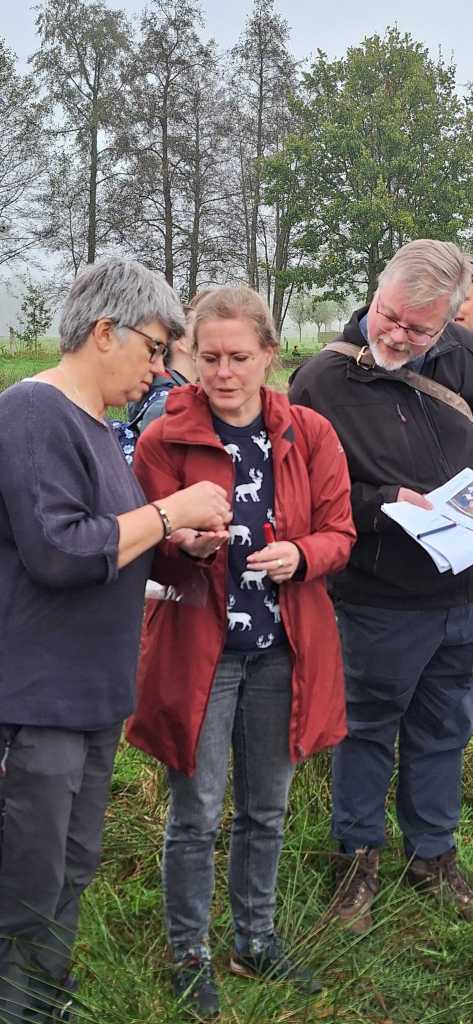
On the 18 October we visited four sites around the Veluwe. At each location we examined sedimentary sequences using a variety of coring devices. Deposits spanned the Holocene (last 11.7 thousand years) and, at some sites, back into the last glacial period. It was great to see participants discussing deposits, comparing analytical approaches, and planning potential new projects inspired by the day. Below are a sequence of some of the photos from the excursion.






Special thanks to Harm and Ariët for organising the field excursion, all those that drove vehicles, and the team at the Palynologische Kring for making this happen.
To find out more about the Palynologische Kring and upcoming activities visit the societies web pages to get involved: Palynologische Kring.
 Ecology of the past