One short story and five scientific papers thinking about different aspects of ecological change through time.
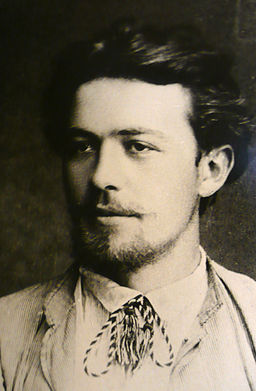
Chekhov in 1889

Chekhov in 1889 (http://tinyurl.com/ny2msd9)

Short story:

Checkhov, A. (1889) The Pipe

SUMMARY (Will): People have long been concerned about environmental change. Observations of phenological shifts, degradation of ecosystem services and climate change are clearly presented in Checkhov’s “The Pipe” (1889).The key difference is today we have a better idea of why these things are happening!?

Scientific papers:

Garcia, R.A., Cabeza, M., Rahbek, C. & Araújo, M.B. (2014) Multiple dimensions of climate change and their implications for biodiversity. Science 344 1247579
SUMMARY (Phil): This review highlights the alternative metrics used to quantify climate change at different spatial scales, each with its own set of threats and opportunities for biodiversity. It’s a very relevant paper for palaeoecologists, with implications for how we think about climatic estimates we generate, how we interpret ecological shifts in the assemblages we study, and for demonstrating the importance thinking spatially as well as temporally. It also shows how important palaeoecological data is for setting baselines and putting projected climatic change into context.

Garzón-Orduña, I.J., Benetti-Longhini, J.E. & Brower, A.V.Z. (2014) Timing the diversification of the Amazonian biota: butterfly divergences are consistent with Pleistocene refugia. Journal of Biogeography, early online.
SUMMARY (Will): Butterfly species diverged in the Neotropics during the Pleistocene (probably).

Mitchard, E.T.A. et al. (2014) Markedly divergent estimates of Amazon forest carbon density from ground plots and satellites. Global Ecology and Biogeography, early online.
SUMMARY (Will): It is difficult to work out how much carbon is in a tropical forest.

Stansell, N.D., Polissar, P.J., Abbott, M.B., Bezada, M., Steinmann, B.A. and Braun, C. (2014) Proglacial lake sediment records reveal Holocene climate changes in the Venezuelan Andes. Quaternary Science Reviews. 89, 44 – 55.
SUMMARY (Hayley): A study of three lake sediment records in the Venezuelan Andes to look at patterns of glacial variability, and how glaciers might have responded to changing climatic conditions during the last c. 12,000 years.

Still, C.J., Foster, P.N. & Schneider, S.H. (1999) Simulating the effects of climate change on tropical montane cloud forests. Nature, 398, 608–610.
SUMMARY (Nick): The paper attempts to model the impact of climate change on a number of cloud forests around the world by simulating atmospheric parameters at the last glacial maximum (LGM) and at twice today’s CO2 level. The models agrees with palaeoecological data of a downslope migration of the cloud forest at the LGM, while the 2xCO2 model shows reduced cloud cover and increased evapotranspiration, which results in a significant reduction in cloud forest supporting land area.

Highlights of articles members of the group read recently.

Newspaper articles:

The natural historian faces extinction: Overspecialism and funding cuts could end a vital scientific tradition, claim experts by Joe Kavanagh in The Independent

Fires could turn Amazon rainforest into a desert as human activity and climate change threaten ‘lungs of the world’, says study by Steve Connor in The Independent.

Linked to this article:

Scientific papers:

Giesecke, T., Ammann, B. and Brande, A. (2014) Palynological richness and evenness: insights from the taxa accumulation curve. Vegetation history and archaeobotany. 32, 217 – 228.

SUMMARY (Hayley): “A new method is presented on splitting the log – transformed taxa accumulation curve into sections (natural breaks where the curve deviates from a linear trend), with the hypothesis that breaks in the curve could indicate shifts in abundance between high (e.g. wind pollinated taxa) and low producers of pollen (e.g. insect pollinated taxa), this hypothesis is tested on pollen diagrams from three separate pollen diagrams from varying landscapes.”

Katifori, E., Alben, S., Cerda, E., Nelson, D.R. & Dumais, J. (2010) Foldable structures and the natural design of pollen grains. Proceedings of the National Academy of Sciences of the United States of America, 107, 7635-7639.

SUMMARY (Adele): “This elegant paper highlights the changeability of pollen grains and their responses to their environment, giving those of us who identify pollen based on morphological characteristics plenty to think about.”

The geology of mankind

April 8, 2014
adelecmj

Adele Julier on:

Malm, A. & Hornborg, A. (2014) The geology of mankind? A critique of the Anthropocene narrative. The Anthropocene Review, 1, 62-69.

Malm and Hornborg’s paper ‘The geology of mankind? A critique of the Anthropocene narrative’ raises some important points about the terminology of climate science and how this not only affects perceptions of who or what is to blame, but also of what can be done to address  it and by who. The main thrust of their argument is that the use of the term Anthropocene distances people from the effects of man-made climate change through the argument that human nature inescapably led to large CO2 emissions and therefore the havoc being wreaked upon ecosystems is essentially inevitable. They go on to discuss that this ignores the fact that a tiny percentage of humanity actually set into motion the huge changes which we are only now beginning to address, that humanity as a whole at no point decided to take this path and that the use of the term Anthropocene is actually counter-productive, in that it removes the onus of solving environmental problems from the small group of humans that actually caused them, instead spreading it out so thinly that it loses its power.

The argument that Anthropocene is perhaps not the best term to use for the present situation is persuasive, but the idea that it apportions blame too widely does not take into consideration the fact that developing countries are now largely following in the footsteps of developed countries in terms of both habitat destruction and carbon emissions. Although all of humanity may not have started global change, the practices initiated by the few are now being endlessly replicated. The reasons behind this are economic; currently, and largely in the short term, it pays countries and large corporations to continue unsustainable practices. They ignore pressure to change if it undermines economic growth or affects profit margins, not because they do not think they are part of the problem. Academics could choose to call this the ‘Anthropocene’ the ‘OnePercentocene’ or the ‘ThisIsYourFault,Sir,Yes,YouInTheGreySuit,StopPlayingWithYour PhoneAndListen-ocene’, but it will not make the slightest difference until these basic problems are addressed.

Problem solving in the Anthropocene

April 3, 2014
WDG

DSCN3814William Gosling on:

Barnosky, A.D. & Hadly, E.A. (2014) Problem solving in the Anthropocene. The Anthropocene Review, 1, 76-77.

The short communication by Barnosky & Hadly examines the current fundamental environmental ‘problem’ for human populations  through the lens of the “Anthropocene” concept, i.e. will some human populations:

  1. continue to develop using a “business as usual” model that has been shown to elevate environmental risk to all human populations, or
  2. alter societal practice in an attempt to reduce the environmental risks now and for future generations.

Barnosky & Hadly straightforwardly and succinctly present the case that, based on the weight of evidence from the collective scientific endeavour of the global community, humans are now fundamental altering the functioning of planet Earth; a view further supported by the recently published Intergovernmental Panel on Climate Change report (IPCC, 2014).Throughout the period of anatomically modern human existence (Homo sapiens sapiens, the last c. 200,000 years) populations have experienced a variety of environmental changes. Exposure to environmental change has had both positive and negative impacts on societal development (e.g. Gosling & Williams, 2013; Hodell et al., 1995).

Continue Reading

Anthropogenic climate change and the nature of Earth System science

April 2, 2014
Fray

Core teddyFrazer Bird on:

Oldfield, F., Steffen, W. 2014. Anthropogenic climate change and the nature of Earth System Science. The Anthropocene Review,1, 70-75.

This paper is a very interesting read for anyone working in the field of palaeoecology. It briefly discusses some of the key criticism of earth systems science research and demonstrates how a good understanding of our past is critical to our future projections.

 “Nature of the Science”

Often Earth System Science is described as being “fuzzy”. It doesn’t always fit the model Popperian approach to science whereby refutable hypothesis are defined and tested. The authors point out however that this is somewhat an unfair criticism. The Earth system is complex, non-linear and often there are no cause-consequence relationships. The scientific method involved is much more complex and often we are trying to understand phenomena that occur over immense timescales. To demonstrate this a little further the authors use the example of freshwater acidification.

“By choosing a variety of field-based case studies with or without key characteristics, each of which was a putative cause of acidification, it proved possible to isolate past variables such as land-use change or catchment afforestation and thereby home in on the only remaining hypothesis not rejected by the evidence, namely the dissemination of industrially generated SO2.”

Rather than testing and refuting or accepting whether industrial generated S02 was causing acidification, cumulative research showed it to be the universal variable across multiple examples. Often when we make inferences about environmental change we have multiple working hypotheses which stand until more and more evidence arises to support one over the others.

 “Toward Projective science”

Projecting the future consequences of climate change is of vital importance for society and critical to policy and mitigation strategies. Climate models are really the only tools at our disposal in trying to understand future scenarios. However models alone cannot provide us with all the answers, the paper demonstrates that the only evidence we ever have is from the past.

“All the evidence we have regarding environmental change comes from the past, whether of the previous few seconds as changes are logged continuously, or of the more remote past revealed through the study of environmental archives.”

If we want to refine our models and have better projections in the future then these tools must have the ability to capture the empirical evidence we have from the past. Future projections are based on data-model comparisons; this is an interactive relationship that is ever refined as each side gains in knowledge and skills.


Population health in the Anthropocene

April 1, 2014
encarnimontoya

HumanHealthMcMichael, AJ. 2014. Population health in the Anthropocene: Gains, losses and emerging trends. The Anthropocene Review, vol. 1, 1: pp. 44-56.

Last week we changed our regular lab meeting, when we all normally discuss a particular paper, to each presenting a general view on the articles published in the first issue of the new journal The Anthopocene Review (SAGE publication). In this lab meeting each member presented and lead discussion of issues within a different paper.

In my case, I had a very interesting paper by Anthony J McMichael about changes in life expectancy (Human population health) related to the human impact caused at global scale during the Anthropocene (defined in the paper as the last 200 yr). Here is a brief summary of the main topics discussed in the paper:

The paper deals with life expectancy trends during the human history on Earth, understood not as the individual health care but as a population or community collective (the “herd” effect), being this two independent topics.

The first section is a nice trip for human evolution and its relationship with the environment, distinguishing three different phases of environment-climate-human relationship:

  1. The Pleistocene (c. 2.6 million – 11,000 years ago): characterised by environment-driven changes;
  2. The Holocene (c. 11,000 – 200 years ago): with cultural-driven changes promoted by the potential of farming. Survival, although relying in culture changes, was still dependent on climatic stability (survival changes caused or amplified by adverse conditions); and
  3. The Anthropocene (last 200 year, as defined in this paper): when humans have become a dominant force on the world stage, being nowadays the major contributor to climatic change.

Then, in the second part of the paper, McMichael explains through several examples how the longer (time) and larger (spatial) consequences of current anthropogenic climatic change are crucial for human survival. The discussion is driven through a wide range of topics, such as the epidemiological transition (or), the environmentalist’s paradox (or), the distributive justice (or), urban sustainability and ecological footprint, or the coming famine.

Finally, the author shows several direct and indirect pathways by which changes in climatic conditions will affect the human health, encouraging the urgent need of an environmentally sustainable way of living.

If you are interested to find out what your ecological footprint might be try these online tests:

The Anthropocene: A governance perspective

March 31, 2014
nicholasloughlin

EarthSystemGovernanceNick Loughlin on:

Biermann, F. (2014) The Anthropocene: A governance perspective. The Anthropocene Review, 1, 57-61.

This comment piece looks at the Anthropocene as a political construct and a tool to constrain the concept of ‘Earth System Governance’ within the social sciences. To quote the author ‘the Anthropocene is political’ and this is indeed the case when attempting to organise disparate and often conflicting bodies into a global community that can guide society to a way of working within nature, but it is also a biological, ecological and geological term and as such a scientific rational to understanding our Anthropocene is required not just a political one.

The writer succinctly demonstrates the interdependence of countries, social groups and global organisations within the modern era along with the intergenerational aspect of a range of social and environmental issues. However it places the Anthropocene as a marketing tool targeted at a political audience rather than a scientific term that denotes a currently unverified chronostratigraphic unit.

It is in no doubt that humans are a significant driving force behind changes to the biosphere and the concept of ‘Earth System Governance’ as described within this paper demonstrates the wide ranging global issues that require consensus.

A sociometabolic reading of the Anthropocene

March 28, 2014
philjardine


Human impacts on environments

Human impact on environments takes many forms and varies in space and time

Phil Jardine on:

Fischer-Kowalski, M., Krausmann, F. & Pallua, I. (2014) A sociometabolic reading of the Anthropocene: Modes of subsistence, population size and human impact on Earth. The Anthropocene Review, 1(1), 8 – 33.

Regardless of whether it’s worthwhile designating the “Anthropocene” as a new geological epoch (I have my doubts), determining the trajectory of human impact upon the Earth system is important. It provides context for how people see their relationship with natural systems and resources, and can help shape environmental policy and its acceptance by the public. But where to put the onset of this impact – where does the Anthropocene start? The authors of this paper belong to the Institute of Social Ecology at Klagenfurt University, Austria, and take a social sciences approach to the problem. Rather than focusing on physical evidence in the environment, as a geologist might do to delimit a geological epoch, Fischer-Kowalski et al. use a model where human impact is measured as the product of population size, affluence (= energy available per person) and technology, summed over three modes of subsistence: hunter-gatherers, agrarian and industrial. This avoids problems of time lags between human activity and the signature it leaves, and allows the authors to pull apart different driving factors across different societal types.

Using this approach shows a definite shift at around AD 1500: human impact was gradually increasing prior to this, but there is a sharp upturn at ~AD 1500, energy use becomes more important for amplifying the impact of population growth, and a shift from biomass to fossil fuel driven energies enhances this further. While there are problems with this approach – determining energy throughput for long-dead societies will always involve a lot of extrapolation from modern patterns – the authors are careful in stating their assumptions, and going through possible issues with the model itself. It would have been nice to see a comparison between the model output and the empirical evidence though, to help bridge the gap between these two different takes on the same question.

The technofossil record of humans

March 27, 2014
HayleyKeen


Can you spot the techno fossil?

Can you spot the technofossil?

Hayley Keen on:

Zalasiewicz, J., Williams, M., Waters, C.N., Barnosky, A.D. & Haff, P. (2014) The technofossil record of humans. The Anthropocene Review, 1, 34-43.

An interesting research article introducing a stratigraphy (technostratigraphy) for and within the Anthropocene, stratigraphic markers are defined as “fossils” left behind by humans (technofossils); for example Iron Age tools from around 1000 BC. The article is driven by the need to:

  1. characterise the deposits, and
  2. date and correlate strata,

of (and within) the Anthropocene in a similar manner to other periods of geological time. By using technofossils from the different stages of homonid technological development Zalasiewicz et al. argue that a chronology can be developed and applied to the Anthropocene concept. Furthermore, Zalasiewicz et al. provide examples of how technofossils, such as pottery and mobile phones, could be used to produce a high resolution (sub-centennial) dating and correlation of strata; so far an unreachable target for other periods of geological time. The paper provides a thought provoking insight the definition of strata throughout geological time, and a novel technique into how this could be done in the Anthropocene.


The Anthropocene Review – reviewed

March 26, 2014
WDG

AnthropoceneReviewThe Anthropocene Review is a new journal focusing on the impact of humans on planet Earth through time; information on the latest publications can be found on the associated blog.

Given that much of the research we are interested in relates human-environment interactions in the past we decided to take a closer look at the range of articles being covered by this journal. Our thoughts on seven articles published in the first issue of The Anthropocene Review will appear in a series of blog posts soon. To get started here are a list of the papers we will be covering:

Full Anthropocene Review table of contents here.


Blog at WordPress.com.