
The Palynology Specialist Group Meeting

November 6, 2014
WDG

Linnean Society of LondonThe Palynology Specialist Group Meeting
13th November 2014
Burlington House, Piccadilly, London W1J 0BF, UK

Program

Phillip Jardine 10:30 – 10:55
Recovering sporopollenin chemical information from processed palynological samples

Luke Mander 10:55 – 11:20
On the taxonomic resolution of pollen and spore records of Earth’s vegetation.

Hugh Dickinson 11:20 – 11:45
Asymmetry in pollen mitosis 1; how does it work and is it important

Mark Grosvenor 11:45 – 12:10
Human-landscape interactions during the Mesolithic-Neolithic Transition in Cumbria

Guy Harrington 12:10 – 12:35
The fate of pollen in soils in the Paleocene-Eocene Thermal Maximum (PETM): The terrestrial response to global warming

– Lunch (not provided) at various locations around Burlington House –

Barry Lomax 14:00 — 14:25
Episodic perturbations of end Permian atmosphere recorded in plant spore chemistry

Matthew Pound 14:25 – 14:50
Global vegetation record indicates no atmospheric pCO2 decline at the Eocene-Oligocene transition

Peter Mark 14:50 – 15:15
The effect of heat stress on wheat pollen development: a multi-faceted approach to a better understanding of a potentially serious issue

Sam Salter 15:15 – 1540
Micro vs. Mega: A quantitative comparison of dispersed spores/pollen and plant megafossil assemblages from a Middle Jurassic plant bed from Yorkshire, UK.

– Tea in Linnean Society Library –

Carina Hoorn 16:00 — 16:25
Evidence of past marine conditions in Amazonia

Wes Fraser 16:25 – 16:50
Towards a unified cross-taxa sporopollenin composition

Ghana 2014 – Day 14 (29/10)

November 1, 2014
WDG

wfraser2013's avatarghana2014fieldwork

Today we were based back at FORIG getting export permits, sorting out import licenses, Lottie was running through her presentation for a final time and catching up with the Oxford group who returned from a 10-day field campaign at Kogyae. We celebrated the end of the our respective fieldwork with dinner out at the Noda hotel – always a treat!

View original post

Media articles

Relics discovered in Mexico’s Teotihuacan, BBC News

Tree of the year finalists announced, BBC News

Journal articles

Kessler, M., Toivonen, J.M., Sylvester, S.P., Kluge, J. & Hertel, D. (2014) Elevational patterns of Polylepis tree height (Rosaceae) in the high Andes of Peru: role of human impact and climatic conditions. Frontiers in Plant Science: Functional Plant Ecology 5, Article 194.

Sylvester, S.P., Sylvester, M.D.P.V. & Kessler, M. (2014) Inaccessible ledges as refuges for the natural vegetation of the high Andes. Journal of Vegetation Science 25, 1225-1234.

Keller, A., Danner, N., Grimmer, G., Ankenbrand, M., von der Ohe, K., von der Ohe, W., Rost, S., Härtel, S. & Steffan-Dewenter, I. (2014) Evaluating multiplexed next-generation sequencing as a method in palynology for mixed pollen samples. Plant Biology online.

Ghana 2014 – Day 13 (28/10)

October 31, 2014
WDG

wfraser2013's avatarghana2014fieldwork

Ghana 2014 – Day 13 (28/10)

Cascades of vivid green ferns flowing down steep-sided banks on both sides (image below), branchless tree trunks extending upwards through a dense canopy to a point beyond sight – this can mean only one thing, we are in a tropical rainforest.

image

The morning started in a typical fashion for a rainforest – visibility down to approximately 20m due to a thick mist engulfing everything (image below). We had a big day ahead of us, so a very early start was necessary; 05:30 rise for a 06:30 breakfast and in the truck and rolling by 07:00 heading for Ankasa Game Reserve less than 100km from the border with Cote d’Ivoire. Having never been to a rainforest before, I was not entirely sure what to expect other than lots of lush green vegetation and high humidity, and the vague hope of catching a glimpse of a…

View original post 451 more words

Ghana 2014 – Day 12 (27/10)

October 31, 2014
WDG

wfraser2013's avatarghana2014fieldwork

And so the journey to Ankasa begins…

image

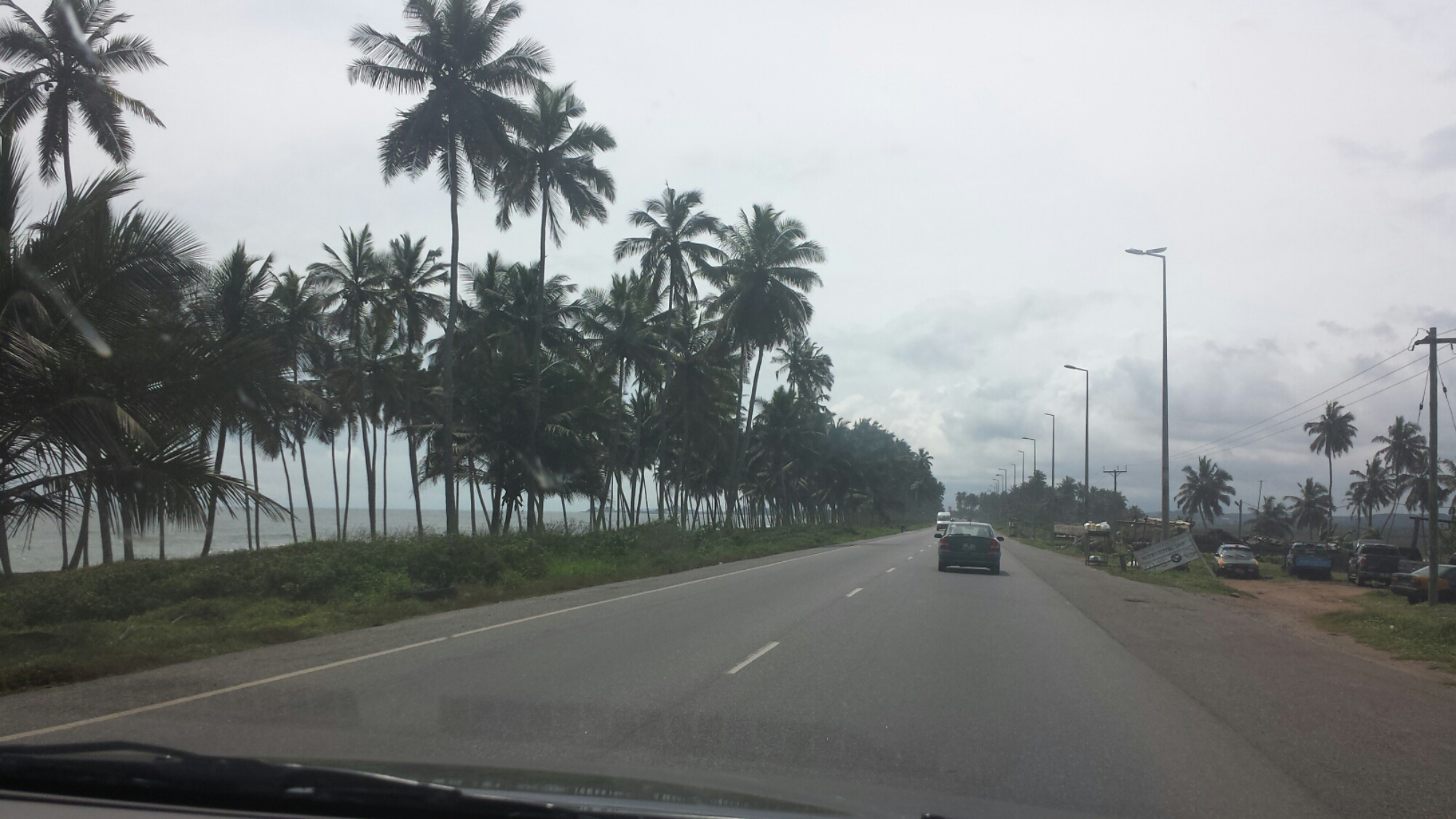
And 5 hours later we have arrived at the Cape Coast. Still a while to go yet though….

image

Finally arrived at the Ankasa national park at 17:30 after enjoying some of delights of the trans-African highway (work in progress). What a drive! Just time for our evening meal then early to bed for a 07:00 start in the morning.
image

View original post

INQUA 2015: Climate change in the tropical South Pacific during the Late Quaternary

October 27, 2014
WDG


inqua-JPPosted on behalf of Prof. David Sear (University of Southampton)

The next INQUA Congress will be held in Nagoya (Japan) on July 27 – August 2, 2015

This is a call for contributions to session P05 on ‘Climate change in the tropical South Pacific during the Late Quaternary’.

The session abstract is as follows:
Establishing well dated, quantitative, highly resolved palaeoclimate data for the major climate systems of the tropical south Pacific has become a research priority owing to the paucity of instrumental data from this critical region of the Earth. Whilst the quantity of proxy climate data for this region is increasing rapidly, compared to records from the Northern Hemisphere there is a surprising paucity especially when considering the importance of this region to global climate. Such information is vital for fully understanding inter-hemispheric climate linkages, global energy fluxes and the long-term evolution of natural climate variability such as the El Nino-Southern Oscillation. The dearth of pre-industrial climate records from this region contributes to large uncertainties associated with future climate change impacts far beyond the south Pacific. This session aims to bring together researchers working on Late Quaternary ocean/climate proxies with those whose research lies in modelling ocean-climate processes and dynamics in the tropical south pacific region, and their implications for global climate.

We hope this session will be of interest to you. If you plan to contribute to this session, please submit your abstract before December 20, 2014 click here.

We hope to see you at INQUA 2015.

Best Wishes,

David Sear, Julian Sachs, Kim Cobb, John Chiang, Peter Langdon – session conveners.

Professor David Sear
Geography & Environment
University of Southampton

Ghana 2014 – Day 11

October 27, 2014
WDG

wfraser2013's avatarghana2014fieldwork

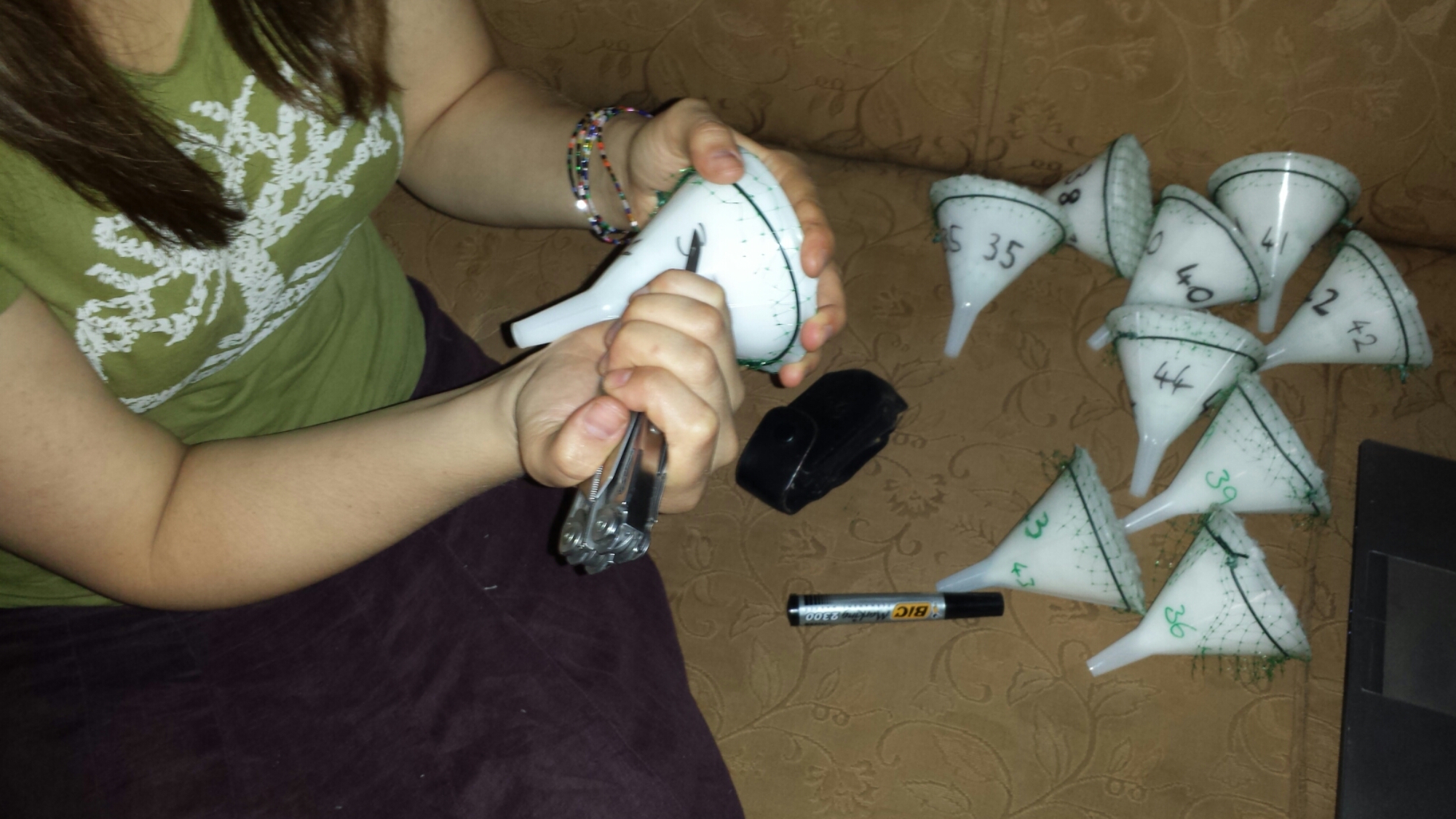
Today is a day back at base preparing for the week ahead. The countdown to the end of this years fieldwork has begun with just the rainforest plots at Ankasa remaining. Ankasa will be a three day stint away from FORIG, thus will require us to fully pack up and leave FORIG, returning on Wednesday evening. Preparation work entails the labelling and sorting of new pollen traps (image below), the cleaning up of used pollen traps that are going to be deposited with workers at FORIG for re-use, and general planning of finer itinerary points.

image

Lottie is busy polishing her presentations for next Thursday (image below), and I am busy, well, writing this!

image

Adele has been assisting Lottie by dissecting flowers too.
image
image

Hopefully will have internet connection over the next couple of days to continue updating this blog, if not, I will post on Day 14.

View original post

Ghana 2014 – Day 10

October 27, 2014
WDG

wfraser2013's avatarghana2014fieldwork

Lake Bosumtwi. An impact crater created by the collision of a meteorite with Earth nearly 1.1 million years, and subsequently filled with water to form the lake that exists today. The lake is hydrologically isolated, fed only by precipitation falling on the lake and within the crater catchment. Along with the filling with water comes weathering, erosion and resultant sedimentation of the surrounding landscape depositing into the lake.
image

The lake and its sediment is the focus of the main NERC-funded project (NE/K005294/1) we are working on, was the basis of Lotties PhD (2013), and underpins Adeles current doctoral work. For her doctoral research Lottie used palynological evidence locked within the lake sediment to reconstruct the past 540,000 years of vegetation in and around the Lake Bosumtwi cathcment, providing a framework for our NERC project that is investigating past vegetation transitions in relation to climatic change and attempting to reconstruct past…

View original post 324 more words

Ghana 2014 – Day 09

October 24, 2014
WDG

Great to hear that the workshop is about to take place. Would be great if you could record any comments or thoughts on the activity from participants. Would also be good to see some photos of Lottie in action 🙂

wfraser2013's avatarghana2014fieldwork

Today we are based at FORIG. Lottie is preparing for her workshop delivery next week on the Palaeoecology of Lake Bosumtwi and outreach activities in local communities. Adele is updating some spreadsheets that quantify an estimate of percentage basal area within the study plots. Sadly for me, I have a backlog of emails that need addressing.

View original post

Blog at WordPress.com.