One short story and five scientific papers thinking about different aspects of ecological change through time.

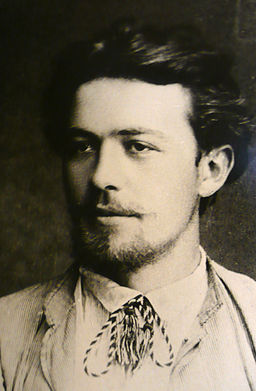
Chekhov in 1889

Chekhov in 1889 (http://tinyurl.com/ny2msd9)

Short story:

Checkhov, A. (1889) The Pipe

SUMMARY (Will): People have long been concerned about environmental change. Observations of phenological shifts, degradation of ecosystem services and climate change are clearly presented in Checkhov’s “The Pipe” (1889).The key difference is today we have a better idea of why these things are happening!?

Scientific papers:

Garcia, R.A., Cabeza, M., Rahbek, C. & Araújo, M.B. (2014) Multiple dimensions of climate change and their implications for biodiversity. Science 344 1247579
SUMMARY (Phil): This review highlights the alternative metrics used to quantify climate change at different spatial scales, each with its own set of threats and opportunities for biodiversity. It’s a very relevant paper for palaeoecologists, with implications for how we think about climatic estimates we generate, how we interpret ecological shifts in the assemblages we study, and for demonstrating the importance thinking spatially as well as temporally. It also shows how important palaeoecological data is for setting baselines and putting projected climatic change into context.

Garzón-Orduña, I.J., Benetti-Longhini, J.E. & Brower, A.V.Z. (2014) Timing the diversification of the Amazonian biota: butterfly divergences are consistent with Pleistocene refugia. Journal of Biogeography, early online.
SUMMARY (Will): Butterfly species diverged in the Neotropics during the Pleistocene (probably).

Mitchard, E.T.A. et al. (2014) Markedly divergent estimates of Amazon forest carbon density from ground plots and satellites. Global Ecology and Biogeography, early online.
SUMMARY (Will): It is difficult to work out how much carbon is in a tropical forest.

Stansell, N.D., Polissar, P.J., Abbott, M.B., Bezada, M., Steinmann, B.A. and Braun, C. (2014) Proglacial lake sediment records reveal Holocene climate changes in the Venezuelan Andes. Quaternary Science Reviews. 89, 44 – 55.
SUMMARY (Hayley): A study of three lake sediment records in the Venezuelan Andes to look at patterns of glacial variability, and how glaciers might have responded to changing climatic conditions during the last c. 12,000 years.

Still, C.J., Foster, P.N. & Schneider, S.H. (1999) Simulating the effects of climate change on tropical montane cloud forests. Nature, 398, 608–610.
SUMMARY (Nick): The paper attempts to model the impact of climate change on a number of cloud forests around the world by simulating atmospheric parameters at the last glacial maximum (LGM) and at twice today’s CO2 level. The models agrees with palaeoecological data of a downslope migration of the cloud forest at the LGM, while the 2xCO2 model shows reduced cloud cover and increased evapotranspiration, which results in a significant reduction in cloud forest supporting land area.

Problem solving in the Anthropocene

April 3, 2014
WDG

DSCN3814William Gosling on:

Barnosky, A.D. & Hadly, E.A. (2014) Problem solving in the Anthropocene. The Anthropocene Review, 1, 76-77.

The short communication by Barnosky & Hadly examines the current fundamental environmental ‘problem’ for human populations  through the lens of the “Anthropocene” concept, i.e. will some human populations:

  1. continue to develop using a “business as usual” model that has been shown to elevate environmental risk to all human populations, or
  2. alter societal practice in an attempt to reduce the environmental risks now and for future generations.

Barnosky & Hadly straightforwardly and succinctly present the case that, based on the weight of evidence from the collective scientific endeavour of the global community, humans are now fundamental altering the functioning of planet Earth; a view further supported by the recently published Intergovernmental Panel on Climate Change report (IPCC, 2014).Throughout the period of anatomically modern human existence (Homo sapiens sapiens, the last c. 200,000 years) populations have experienced a variety of environmental changes. Exposure to environmental change has had both positive and negative impacts on societal development (e.g. Gosling & Williams, 2013; Hodell et al., 1995).

Continue Reading

Population health in the Anthropocene

April 1, 2014
encarnimontoya

HumanHealthMcMichael, AJ. 2014. Population health in the Anthropocene: Gains, losses and emerging trends. The Anthropocene Review, vol. 1, 1: pp. 44-56.

Last week we changed our regular lab meeting, when we all normally discuss a particular paper, to each presenting a general view on the articles published in the first issue of the new journal The Anthopocene Review (SAGE publication). In this lab meeting each member presented and lead discussion of issues within a different paper.

In my case, I had a very interesting paper by Anthony J McMichael about changes in life expectancy (Human population health) related to the human impact caused at global scale during the Anthropocene (defined in the paper as the last 200 yr). Here is a brief summary of the main topics discussed in the paper:

The paper deals with life expectancy trends during the human history on Earth, understood not as the individual health care but as a population or community collective (the “herd” effect), being this two independent topics.

The first section is a nice trip for human evolution and its relationship with the environment, distinguishing three different phases of environment-climate-human relationship:

  1. The Pleistocene (c. 2.6 million – 11,000 years ago): characterised by environment-driven changes;
  2. The Holocene (c. 11,000 – 200 years ago): with cultural-driven changes promoted by the potential of farming. Survival, although relying in culture changes, was still dependent on climatic stability (survival changes caused or amplified by adverse conditions); and
  3. The Anthropocene (last 200 year, as defined in this paper): when humans have become a dominant force on the world stage, being nowadays the major contributor to climatic change.

Then, in the second part of the paper, McMichael explains through several examples how the longer (time) and larger (spatial) consequences of current anthropogenic climatic change are crucial for human survival. The discussion is driven through a wide range of topics, such as the epidemiological transition (or), the environmentalist’s paradox (or), the distributive justice (or), urban sustainability and ecological footprint, or the coming famine.

Finally, the author shows several direct and indirect pathways by which changes in climatic conditions will affect the human health, encouraging the urgent need of an environmentally sustainable way of living.

If you are interested to find out what your ecological footprint might be try these online tests:

PCRG publications 2011

February 15, 2013
WDG

Bush, M.B., Flenley, J.R. & Gosling, W.D. (2011) Tropical rainforest responses to climatic change, 2nd edn. Springer/Praxis, Chichester.

Bush, M.B., Gosling, W.D. & Colinvaux, P.A. (2011) Climate and vegetation change in the lowlands of the Amazon basin. Tropical rainforest responses to climatic change (second edition) (ed. by M.B. Bush, J.R. Flenley and W.D. Gosling), pp. 61-84. Springer/Praxis, Chichester, UK.

Cárdenas, M.C., Gosling, W.D., Sherlock, S.C., Poole, I., Pennington, R.T. & Mothes, P. (2011) Response to comment on “The response of vegetation on the Andean flank in western Amazonia to Pleistocene climate change”. Science, 333, 1825

Cárdenas, M.L., Gosling, W.D., Sherlock, S.C., Poole, I., Pennington, R.T. & Mothes, P. (2011) The response of vegetation on the Andean flank in western Amazonia to pleistocene climate change. Science, 331, 1055-1058

Gosling, W.D. & Holden, P.B. (2011) Precessional forcing of tropical vegetation carbon storage. Journal of Quaternary Science, 26, 463-467

Hanselman, J.A., Bush, M.B., Gosling, W.D., Collins, A., Knox, C., Baker, P.A. & Fritz, S.C. (2011) A 370,000-year record of vegetation and fire history around Lake Titicaca (Bolivia/Peru). Palaeogeography, Palaeoclimatology, Palaeoecology, 305 201-214

Williams, J.J., Gosling, W.D., Brooks, S.J., Coe, A.L. & Xu, S. (2011) Vegetation, climate and fire in the eastern Andes (Bolivia) during the last 18,000 years. Palaeogeography, Palaeoclimatology, Palaeoecology, 312, 115-126

Williams, J.J., Gosling, W.D., Coe, A.L., Brooks, S.J. & Gulliver, P. (2011) Four thousand years of environmental change and human activity in the Cochabamba Basin, Bolivia. Quaternary Research, 76, 58-69

PCRG publications 2010

February 15, 2013
WDG


Bush, M.B., Hanselman, J.A. & Gosling, W.D. (2010) Non-linear climate change and Andean feedbacks: An imminent turning point? Global Change Biology, 16, 3223-3232

Gosling, W.D. (2010) Evolutions Atlas. Fragile web: What’s next for nature (ed. by J.A. Slivertown). Natural History Museum & University of Chicago Press, London.

PCRG publications 2007

February 15, 2013
WDG

Bush, M.B., Gosling, W.D. & Colinvaux, P.A. (2007) Climate change in the lowlands of the Amazon Basin. Tropical rainforest responses to climatic change (ed. by M.B. Bush and J.R. Flenley), pp. 55-79. Springer/Praxis, Chichester. [NOW 2ND EDITION]

Bush, M.B., Silman, M.R., De Toledo, M.B., Listopad, C., Gosling, W.D., Williams, C., De Olivera, P.E. & Krisel, C. (2007) Holocene fire and occupation in Amazonia: Records from two lake districts. Philosophical Transactions of the Royal Society of London (B), 362, 209-218

Blog at WordPress.com.