In person attendees (left to right): William Gosling (University of Amsterdam), Busisiwe Hlophe (University of Witwatersrand), Michela Leonardi (University of Cambridge), Soléne Boisard (University of Montréal), Rahab Kinyanjui (National Museums of Kenya), Trevor Hill (University of KwaZulu-Natal), Mathias Vinnepand (Johannes Gutenberg-University of Mainz), Tom Johnson (University of Massachusetts Amherst), Manu Chevalier (University of Bonn), Brian Chase (CNRS: Montpellier), Stefanie Kaboth-Bahr (Free University of Berlin), Markus Fischer (University of Potsdam), Bahru Zinaye Asegahegn (University of Cologne), Alfred Houngnon (AGIR), and Jemma Finch (University of KwaZulu-Natal); present but not in photo Angela Effion (University of Witswatersrand).
A further nine participants were anticipated to attend the workshop but, due to a combination of the non-issue of visas, logistical difficulties and ill health, they were not able to attend at the last moment. These were: Aliyu Adamu Isa (Ahmadu Bello University), George Biddulph (University of St Andrews), Olugbenga Boboye (University of Ibadan), Husna Mashaka (University of Nairobi), Emma Mbua (National Museums of Kenya), Aissatou Thiam Ndong (University of Cheikh Diop, Dakar), Adisa Ogunfolakan (Leventis Museum of Natural History), Alice Paine (University of Oxford), and Lynne Quick (Nelson Mandela University). Some people were able to attend partly online. Some have now made it to Rome and we hope to catch up at the INQUA Rome congress (Session 64) if not before. We hope that all will continue to be involved with the Mapping Ancient Africa project.
The transition from Early Career Researcher (ECR) to head of a new laboratory
When you are in the midst of working on your PhD you feel that this must surely be the toughest challenge you’ll ever face, only to emerge on the other side and realise that it was a holiday in comparison to the academic journey post-PhD.
I completed my PhD at the University of Cape Town (South Africa) and immediately launched myself into a postdoctoral fellowship embedded in a relatively large international research initiative. Building on the expertise and knowledge I gained from my postgraduate work, I generated new pollen and microcharcoal records from the southern Cape and west coast regions of South Africa in order to reveal details about how climate and associated environmental conditions have changed during the Holocene. I found the transition from working almost entirely independently on my PhD to collaborating within the context of a large multidisciplinary and multinational team equally very exciting, and very challenging. At this time imposter syndrome hit me hard and I had a bit of an existential crisis (I’m overqualified, too specialized and not earning enough, what the hell am I doing with my life? – I know we’ve all been there!). Just as I was about to give up on academia, I was approached by Nelson Mandela University, one of the smaller, lesser known, public universities in South Africa, situated in Port Elizabeth in the Eastern Cape Province. After a lot of soul searching, I accepted a research fellowship at NMU, moved out of my home in Cape Town (where I had lived my entire life) and relocated to a new city – by myself, with no contacts, friends or family there.
The primary focus of the new state-of-the-art palaeoecology laboratory at Nelson Mandela University is to conduct palynological studies, with a strong geographic emphasis on the Cape south coast and the Cape Floristic Region in general. While our initial and primary focus will be on pollen analysis, our overarching goal is to establish a highly versatile open science resource-base for palaeoscience research at Nelson Mandela University.
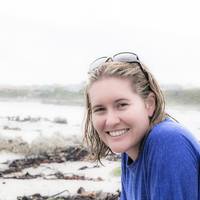
Head of Laboratory: Dr Lynne Quick
Lynne Quick is a Senior Research Fellow associated with the African Centre for Coastal Palaeoscience at Nelson Mandela University. She is a palynologist with interests in palaeoecology and palaeoclimatology. She is working on the development of new palaeoenvironmental records in southern Africa and has a key focus on the vegetation history and past climate dynamics of the Cape Floristic Region. Lynne is the President of the Southern African Society for Quaternary Research (SASQUA), a Vice President of the International Union for Quaternary Research (INQUA) and a member of the scientific steering committee of the AFQUA (African Quaternary: Environments, Ecology and Humans) initiative. [Email: lynne.j.quick@gmail.com |Twitter: @drljquick]
Senior Laboratory Technician: Ms Erin Hilmer
Erin Hilmer completed an undergraduate BSc degree at Nelson Mandela University followed by an honours in geology at the University of Stellenbosch. In addition to her role as the Senior Laboratory Technician of the new palaeolab, she manages Port Elizabeth’s only pollen and spore trap and generates weekly pollen and spore data for the city. This work forms part of a national monitoring network (www.pollencount.co.za). She also has expertise in geochronology and scanning electron (SEM) microscopy.





 Ecology of the past