Past environments of the Veluwe

October 20, 2024
WDG

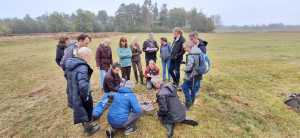
On the 17 and 18 October 2024 the Palynologische Kring (Dutch Palynological Society) held a seminar afternoon and excursion near Apeldoorn in the Netherlands.

During the seminar afternoon (17 October) we heard four talks. The first from Harm Smeenge and Ariët Kieskamp (both Bosgroep) introduced the sites we were to visit on the excursion the next day. This focused on the landscape ecology and ecological history of the bogs on the eastern slopes of the Veluwe. The second talk, by Roy van Beek (Wageningen University & Research), focused on the Celtic field systems around the Veluwe. He explained the latest archaeological and archaeobotaincal work investigating the age and origins of these field systems. The third presentation was by Jasper Candel (Wageningen University & Research) and focused on the geomorphological features from glacial activity in the Veluwe region and how this has effected the development of mire ecosystems. I (William Gosling) gave the final talk, presenting the outputs of the research theses of Sanna Wessel, Chiara Raino and Roos Dik who all completed projects at the University of Amsterdam and worked together to investigate how different mega-herbivore populations in the Dutch landscape were represented by the dung fungal spores preserved in the soil.

Continue Reading
Palynologische Kring:  Palynologendagen 2024 

August 15, 2024
WDG

The Dutch Palynology society (Palynologische Kring) will hold a two day excursion to the Veluwe in the autumn (17-18 October 2024).

Preliminary program

Thursday 17 October (Hotel Wipselerberg, Beekbergen)

  • 13.00-13.30: Ontvangst met koffie / Arrival with coffee
  • 13.30-14.00: Harm Smeenge & Ariet Kieskamp (Bosgroepen): Landscape ecological/historical ecological characteristics of bogs in the eastern slopes of the Veluwe 
  • 14.00-14.30: Roy van Beek (WUR): Archeological, archeobotanical and morphological aspects of the Celtic Field complex of Vaassen (Veluwe) 
  • 14.30-15.00: Koffiepauze / Coffee break
  • 15.00-15.30 Jasper Candel (WUR): Geophysical research in the push moraine of the Veluwe and relation with peat development in valley mires 
  • 15.30-16.00: William Gosling (UvA): On the use of spores of coprophilous fungi in characterizing herbivory past and present in Dutch landscapes 
  • 16.00-17.30: Borrel / Social event

Friday 18 October

Fietsexcursie rondom Emst, Vaassen (totale afstand ca. 35 km). Fietshuur bij De Weerdt Rijwielen. / Bike tour around Emst, Vassen (total distance c. 35 km). Bike hire from De Weerdt Rijwielen.

Excursiepunten / excusion points:

  • Nijmolense Beek
  • Wisselse Veen
  • Gulbroek

Voor mensen die slecht ter been zijn, is er beperkte mogelijkheid om met eigen auto deel te nemen aan de excursie (max. 2 auto’s kunnen parkeren bij de excursiepunten). / For people with walking or cycling difficulties there is a limited opportunity to come in a car on the trip (maximum 2 cars can park at the excursion points).

For further information and costs please email Nelleke van Asch (secretary of the Palynologische Kring). Contact details can be found at: https://www.palynologischekring.nl/contact/

Palynologendagen 2015

October 13, 2015
WDG

Palynologendagen
“Een historisch-ecologische benadering van het landschap in noord-oost Twente”
(“A historical-sociological approach to understanding landscapes in north-east Twente”)
8-9 October 2015
Organized by: Harm Smeenge, Bas van Geel & Stefan Engels
For the: Palynologische Kring

Last week I took part in my first “palynologendagen” (pollen days) with the Palynologische Kring (Dutch palynology society). Unfortunately, due to a prior commitment (Chairing a British Ecological Society careers webinar) I was only able to take part on the second day.

Day two of the pollen days was “op de fiets” (on bikes) in true Dutch style. We met at Twente Fiets to pick up 36 bicycles and one tandem and headed out into the countryside!

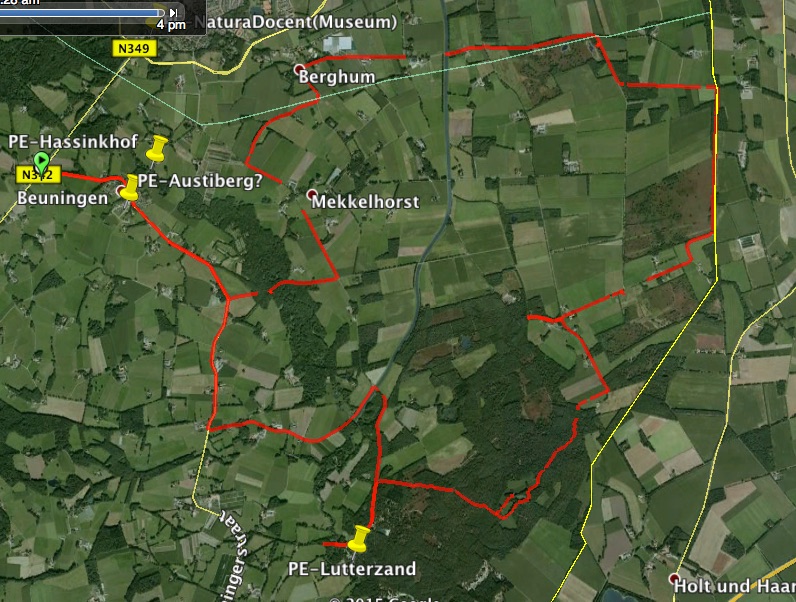
Figure 1: Route of the bicycle tour (max speed 21.8 kmph, distance 23.24 km)

Figure 1: Route of the bicycle tour (max speed 21.8 kmph, distance 23.24 km)

Our route (Fig. 1) took in around 14 point of interest. At each point Harm provided interesting insights into the landscape history and how humans had interacted and shaped it. The presentations were in Dutch so I had to concentrate hard to get 50% of the information.

Two particularly nice sites (which I think I understood) were:

  1. the site of an old toll house at the split in the old road to Germany (east) and Scandinavia (north), and
  2. a sedimentary cross section, revealed by river down cutting, which showed the impact of cart wheels on the sediment along the site of an old road.

In addition to the tour it was also fantastic to meet many other fellow palynologists based in the Netherlands. I looking forward to being able to participate in many future Palynologische Kring events, and I am also pleased to say attending this years event has inspired me again to try and push on with learning Dutch again!


This slideshow requires JavaScript.


Blog at WordPress.com.