The SASQUA congress will kick off next week (19-24 May 2024) in Cango Valley (South Africa). Sessions cover many aspects of Quaternary science and range from archaeology through palaeoclimate to geological topics. The full program is now available to download.
Quick, L.J & Asithandile, N. (2024) Proceedings of the XXIV Biennial Congress of the Southern African Society for Quaternary Research (SASQUA), Cango Valley, South Africa, 19-24 May 2024. DOI: 10.5281/zenodo.11125697
To find out more about the meeting and other SASQUA activities you can also visit the organizations web pages: https://sasqua.co.za/
The Southern African Society for Quaternary Research (SASQUA) is hosting its 24th congress 19-24 May 2024 in the Cango Valley, South Africa. The congress will bring together scientists working on all aspects of the Quaternary in southern Africa. Poster and oral presentations possible.
Abstract submission and student support application deadline: 31 March 2024
The primary focus of the new state-of-the-art palaeoecology laboratory at Nelson Mandela University is to conduct palynological studies, with a strong geographic emphasis on the Cape south coast and the Cape Floristic Region in general. While our initial and primary focus will be on pollen analysis, our overarching goal is to establish a highly versatile open science resource-base for palaeoscience research at Nelson Mandela University.
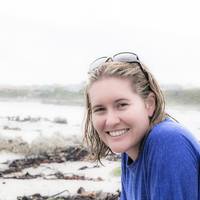
Head of Laboratory: Dr Lynne Quick
Lynne Quick is a Senior Research Fellow associated with the African Centre for Coastal Palaeoscience at Nelson Mandela University. She is a palynologist with interests in palaeoecology and palaeoclimatology. She is working on the development of new palaeoenvironmental records in southern Africa and has a key focus on the vegetation history and past climate dynamics of the Cape Floristic Region. Lynne is the President of the Southern African Society for Quaternary Research (SASQUA), a Vice President of the International Union for Quaternary Research (INQUA) and a member of the scientific steering committee of the AFQUA (African Quaternary: Environments, Ecology and Humans) initiative. [Email: lynne.j.quick@gmail.com |Twitter: @drljquick]
Senior Laboratory Technician: Ms Erin Hilmer
Erin Hilmer completed an undergraduate BSc degree at Nelson Mandela University followed by an honours in geology at the University of Stellenbosch. In addition to her role as the Senior Laboratory Technician of the new palaeolab, she manages Port Elizabeth’s only pollen and spore trap and generates weekly pollen and spore data for the city. This work forms part of a national monitoring network (www.pollencount.co.za). She also has expertise in geochronology and scanning electron (SEM) microscopy.



 Ecology of the past