Uncovering Ecuador’s landscapes and cultures: A student adventure

August 16, 2023
Bianca Tacoronte Gomes

By: Lina Cabrera Sáenz and Bianca Gomes

We invite you to join us on an incredible journey through the heart of Ecuador, where a group of adventurous students from Florida Institute of Technology embarked on a life-changing experience as part of the Neotropical Archaeoecology summer field course. Buckle up as we delve into the marvels of nature, indigenous cultures, and unforgettable experiences. Let’s dive right in!

Unveiling the Andes

Our adventure began with a breath-taking visit to the Paramo at Cayambe-Coca National Park. Paramos are high altitude (3000-4000 metres) wet grasslands above the tree line and below the snow line within the equatorial Andes. Our tour guides Patricio and Byron gave us information about the local vegetation, focusing on the Polylepis tree (locally known as “paper tree”), which is unique to this sort of habitat. They also told us about some of the fascinating wildlife that can be seen here, such as the Andean Bear (Tremarctos ornatus) and the Andean Puma (Puma concolor).

We then descended through the cloud forest (3,600–3,400 meters) and lower montane rainforest (3,400–2,500 meters). Across these various habitats, we documented changes in hummingbird abundance and recorded their behaviour at four different feeder points: Guango Lodge, La Brisa, San Isidro Lodge, and Cascada el Hollin. The sheer diversity of hummingbird species left us in awe, and we marvelled at their iridescent feathers and incredible agility. 

We explored a waterfall near San Isidro Lodge (https://cabanasanisidro.com), and we were able to observe pre-Inca pottery. At the lodge we also saw a diverse array of bird species, which was delightful! The forest’s nightlife brought us close encounters with a group of nocturnal monkeys, and to our surprise, we stumbled upon a very rare mountain tapir. The following morning we saw a small agouti (a small rodent) prowling around the lodge, and ended our adventures in the cloud forest on a high note. 
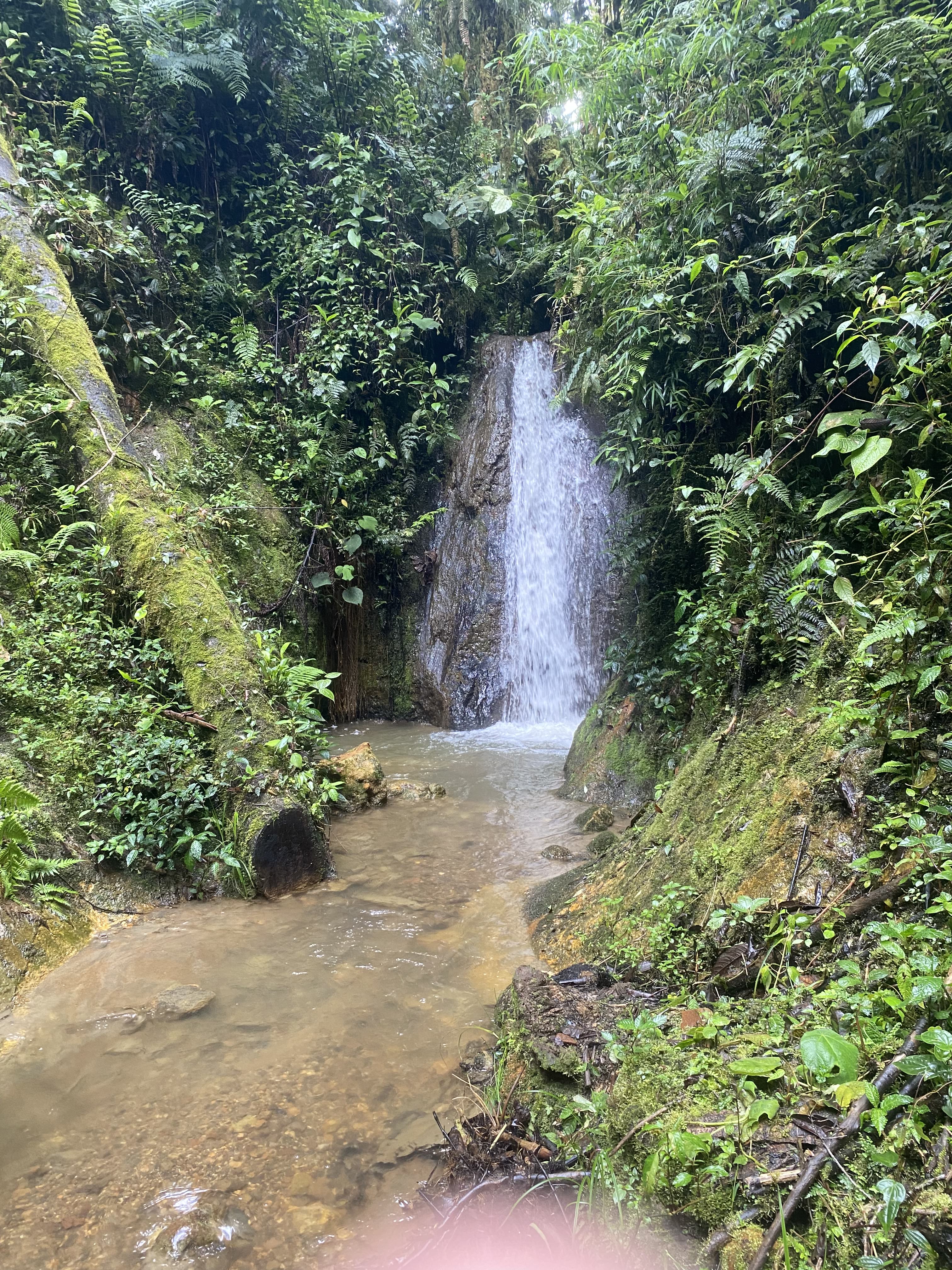
San Isidro waterfall and some of the animal diversity we observed

Continue Reading
Introducing ANSIS BLAUS

June 26, 2023
ablaus

Ansis Blaus is a Latvian postdoctoral research associate exploring patterns of climatic and anthropogenic change in the Neotropical Paleoecology Research Group led by Mark Bush at Florida Institute of Technology. He earned his Ph.D. in Earth Sciences from Tallinn University of Technology, Estonia. Supervised by Dr. Triin Reitalu he worked on modern pollen-plant relationships and palaeoecological reconstructions of peatlands and calcareous spring fens with an emphasis on biodiversity and plant functional trait reconstructions.

Currently, at Florida Tech, Ansis works on pollen data and other proxies from the sediment cores collected in the tropical Amazon. He investigates the tropical forest changes in relation to the global climate from a historical perspective, particularly during the Last Glacial Period and the Last Interglacial ca. 130 thousand years ago. His work will shed light on the history of dynamics and climate tipping points in the Amazonian rainforest. This research is particularly important in the face of the current global climate crisis and could help to anticipate the tropical forest response to the changing climate in the future.

Another objective of Ansis’s work is to study the pollen signature of human disturbance in the Amazon Basin as a means to model and interpret human presence and activities in the past and to understand human-nature interactions in tropical forest ecosystems in different spatial and temporal scales. For that, he is collaborating with the University of Amsterdam, Institute for Biodiversity and Ecosystem Dynamics, and working on a project aiming to quantify tropical pollen assemblages led by Crystal McMichael.

Ansis is fascinated by the potential revelations that come with the intersection of neoecology and paleoecology and human interactions. His interest in paleoecology, biodiversity, and various natural processes comes through the sense of pursuing a higher purpose for society and the well-being of our planet, and from the concern that humans have altered tropical forests and most other ecosystems in the world to the level of a negative rebound effect. Ansis believes that we must study and understand these ecosystems from different perspectives to decrease the current damage, predict future scenarios and to develop conservation strategies for both nature and human well-being.

Job: PhD Palaeoecology & Community Ecology

March 24, 2021
WDG

Mark BushMark Bush is looking to recruit a PhD researcher to the “Neotropical Palaeoecology Research Group” at Florida Institute of Technology.

Applications are invited from qualified and highly-motivated students for an exciting PhD studentship in the areas of paleoecology and community ecology of South American lowland rainforests.

Continue Reading

A Study in Green

July 5, 2019
WDG

By Rachel Sales (Florida Institute of Technology, USA)

My bike is angry at me.

I’m rattling down an unpaved road in the Ecuadorian Amazon. The brakes screech at every turn, and the chain is close to falling off. Unsurprisingly, the rain is pouring, turning the road into a maze of puddles and mud. The road follows the Anzu River, and I can hear its roar off to my right.

I’m forcing a perfectly innocent bike to brave the Amazon because this road leads to the Herbario Amazónico of the Universidad Estatal Amazónica (ECUAMZ). ECUAMZ (an acronym for “Ecuador Amazon”) is the only herbarium in the Amazon, and contains a repository of plant specimens for preservation and help with field identifications. It was established by Dr. David Neill, a specialist in the Fabaceae (legume) family and world-renowned expert in tropical botany, and Dr. Mercedes Asanza, the coordinator of the herbarium. They have agreed to mentor me over the summer and teach me about tropical plants. The Herbario Amazónico, which contains over 17,000 vascular plant species, is the perfect place to learn.

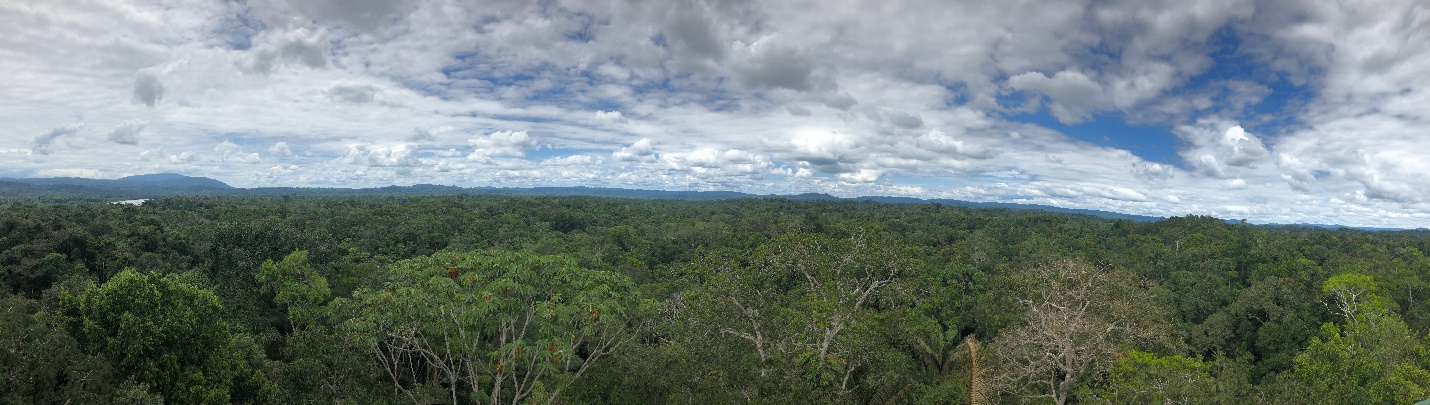
The view from the top of the tower at Jatun Sacha.

Continue Reading

An undergraduate eye-view of an Andean lake-coring expedition

August 25, 2017
WDG

Part 2: Progresso
by Molly Kingston (a BSc Biological Sciences student at Florida Institute of Technology, taking part in an expedition lead by Prof. Mark Bush)

With a fresh set of clothes and a shower after almost a week without one, it was time to set off for the next lake, Progresso.

Continue Reading

An undergraduate eye-view of an Andean lake-coring expedition

August 23, 2017
WDG

Part 1: Huayabamba
by Molly Kingston (a BSc Biological Sciences student at Florida Institute of Technology, taking part in an expedition lead by Prof. Mark Bush)

When I first heard about this class in Peru, I had no idea that I was going to experience so much in such a short period. Our goal was to visit two lakes in Peru and raise sediment cores for paleoecology. The first lake that we went to was Laguna Huayabamba, which sits at about 3250 m elevation in the La Libertad region of the Peruvian Andes.

However, getting to this lake was no easy task. Before the hike even started, we had to obtain the necessary permits and permission from the local people. After several days of visiting different town officials and waiting for approval, we could set out on our adventure.

Continue Reading

Rubicon project to link fossil pollen with plant traits

July 20, 2017
WDG

Dear Ecology of the past blog readers,

This time you are reading a message from a non-expert in paleoecology. My name is Masha and I will spend the next two years on a very exciting postdoctoral fellowship funded by NWO (Dutch National Science Foundation) under their Rubicon scheme in close collaboration with William Gosling (University of Amsterdam).

Continue Reading

Blog at WordPress.com.