Introducing ANSIS BLAUS

June 26, 2023
ablaus

Ansis Blaus is a Latvian postdoctoral research associate exploring patterns of climatic and anthropogenic change in the Neotropical Paleoecology Research Group led by Mark Bush at Florida Institute of Technology. He earned his Ph.D. in Earth Sciences from Tallinn University of Technology, Estonia. Supervised by Dr. Triin Reitalu he worked on modern pollen-plant relationships and palaeoecological reconstructions of peatlands and calcareous spring fens with an emphasis on biodiversity and plant functional trait reconstructions.

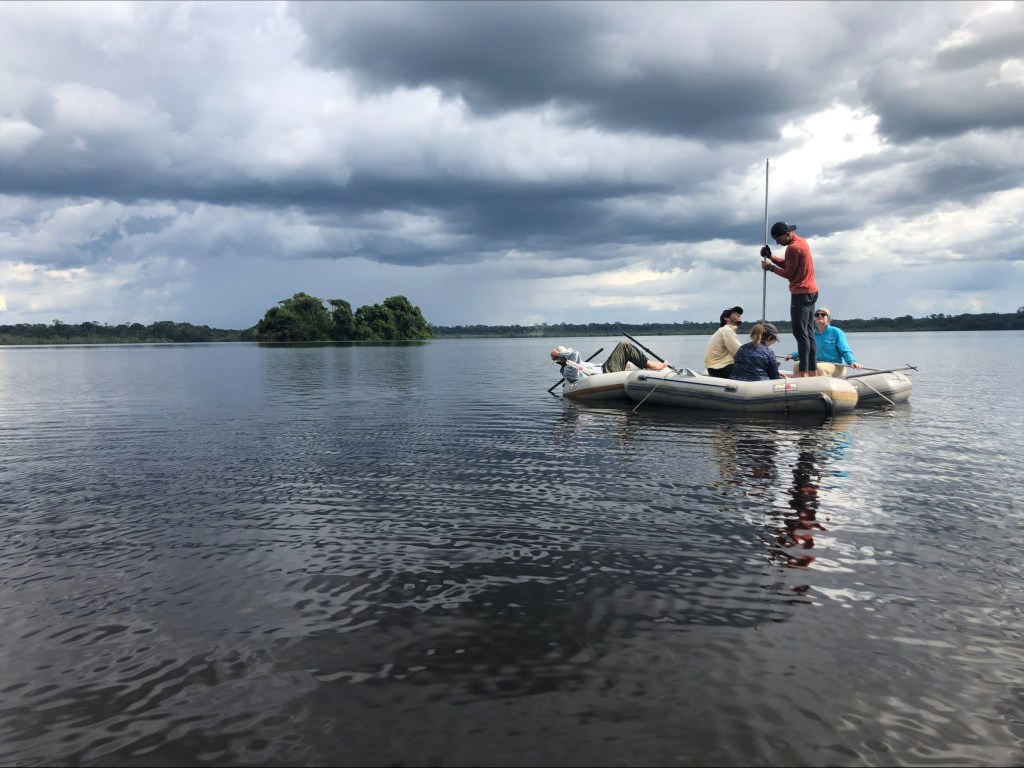
Currently, at Florida Tech, Ansis works on pollen data and other proxies from the sediment cores collected in the tropical Amazon. He investigates the tropical forest changes in relation to the global climate from a historical perspective, particularly during the Last Glacial Period and the Last Interglacial ca. 130 thousand years ago. His work will shed light on the history of dynamics and climate tipping points in the Amazonian rainforest. This research is particularly important in the face of the current global climate crisis and could help to anticipate the tropical forest response to the changing climate in the future.

Another objective of Ansis’s work is to study the pollen signature of human disturbance in the Amazon Basin as a means to model and interpret human presence and activities in the past and to understand human-nature interactions in tropical forest ecosystems in different spatial and temporal scales. For that, he is collaborating with the University of Amsterdam, Institute for Biodiversity and Ecosystem Dynamics, and working on a project aiming to quantify tropical pollen assemblages led by Crystal McMichael.

Ansis is fascinated by the potential revelations that come with the intersection of neoecology and paleoecology and human interactions. His interest in paleoecology, biodiversity, and various natural processes comes through the sense of pursuing a higher purpose for society and the well-being of our planet, and from the concern that humans have altered tropical forests and most other ecosystems in the world to the level of a negative rebound effect. Ansis believes that we must study and understand these ecosystems from different perspectives to decrease the current damage, predict future scenarios and to develop conservation strategies for both nature and human well-being.
Human impact on forest cover in Europe during the last glaciation

February 27, 2019
riannevduinen

This is the first is a series of blog posts based on papers discussed at our “Amsterdam Palaeoecology Club” meetings. The APC meetings are organized to promote palaeoecological discussion and to help the scientific development of our MSc and BSc research students. At each meeting we discuss a paper and the progress of individual projects. Short summaries of the papers and discussions are then made by the student introducing the paper. First up is MSc researcher Rianne van Duinen with her thoughts on Kaplan et al. (2016).

Monkey on a stick

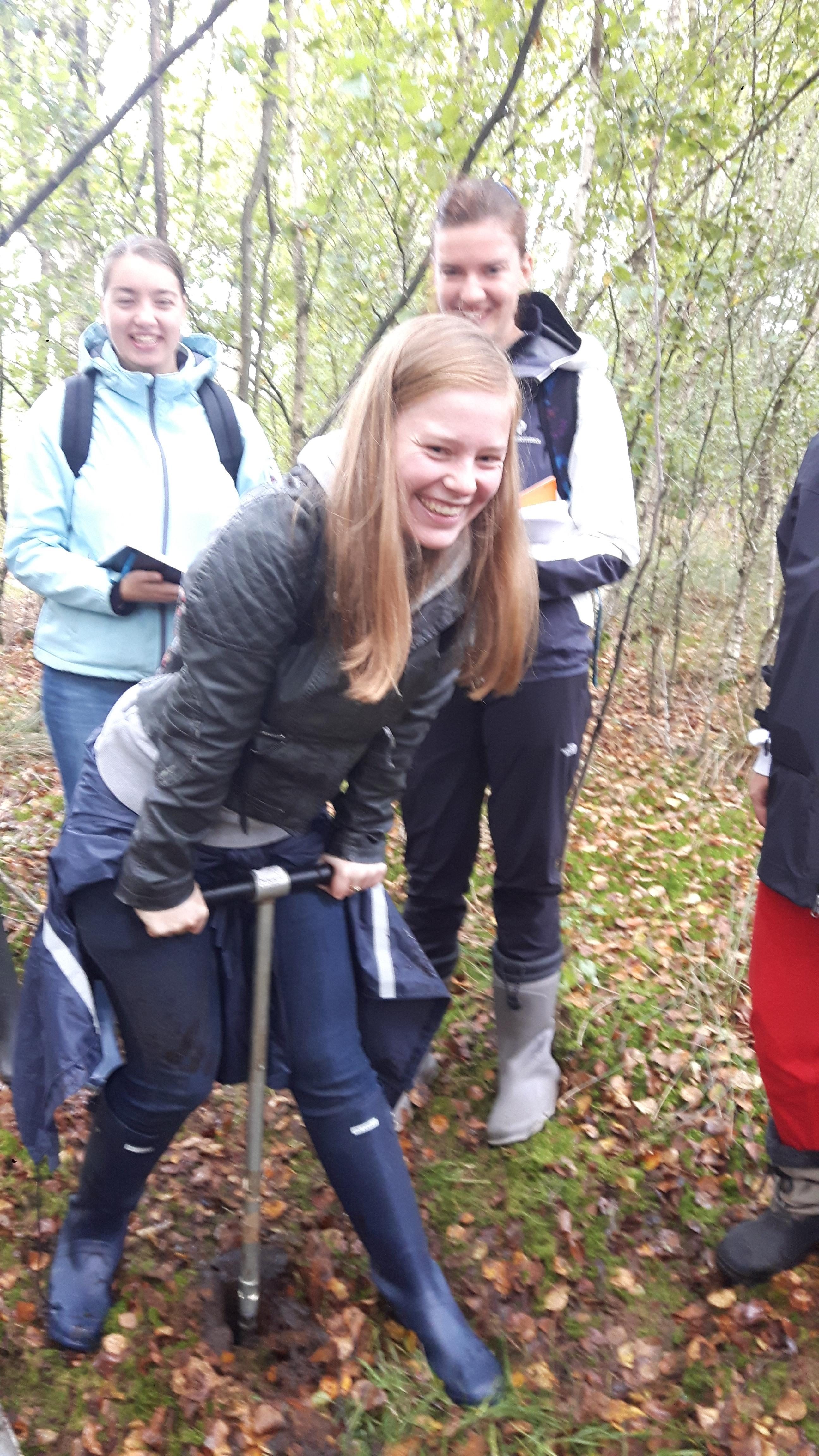
Rianne on field work in Twente during the 2017 edition of the BSc Palaeoecology course at University of Amsterdam

Human impact on forest cover in Europe during the last glaciation
By Rianne van Duinen
(currently studying for MSc Biological Sciences, Ecology & Evolution track at the University of Amsterdam)

We discussed the paper Large scale anthropogenic reduction of forest cover in Last Glacial Maximum Europe by Kaplan et al. (2016) which was found by the group to be super interesting and it incited a lot of discussion. The paper was mostly concerned with the anthropogenic influences and past vegetation of Europe. The main conclusion was that humans had a very big impact on forests during the last glacial period through the use of fire. The authors suggest that human actions are the explaining factor for the low amount of forests cover suggested by pollen records during the last glacial maximum (c. 21,000 years ago). The suggestion from Kaplan et al. that human modification of forest cover through fire during the glacial links with a recent study from Sevink et al. (2018) that suggests, based on pollen and charcoal data from the Netherlands, that human use of fire altered forest cover into the Holocene. In our discussion it was also noted that animals (mega-herbivores) were not really taken into account or discussed, even though animals probably had a big impact on the vegetation (e.g. see Bakker et al., 2016). Furthermore, another discussion point was the charcoal records that were used in the Kaplan et al. study, more specifically the number of cores. Kaplan et al. only used three cores to map out the effect of charcoal. It would be interesting to see what happens when more data from more cores is used. The Global Charcoal Database has a lot of data on European cores (c. 38% of the cores are from Europe) so there is a lot of potential for this.  All in all, the article by Kaplan et al. raised a lot of questions and opened up a nice discussion.

Reference

Continue Reading

Past and future global transformation of terrestrial ecosystems under climate change

August 30, 2018
WDG

Nolan, C., Overpeck, J.T., Allen, J.R.M., Anderson, P.M., Betancourt, J.L., Binney, H.A., Brewer, S., Bush, M.B., Chase, B.M., Cheddadi, R., Djamali, M., Dodson, J., Edwards, M.E., Gosling, W.D., Haberle, S., Hotchkiss, S.C., Huntley, B., Ivory, S.J., Kershaw, A.P., Kim, S., Latorre, C., Leydet, M., Lézine, A., Liu, K., Liu, Y., Lozhkin, A.V., McGlone, M.S., Marchant, R.A., Momohara, A., Moreno, P.I., Müller, S., Otto-Bliesner, B.L., Shen, C., Stevenson, J., Takahara, H., Tarasov, P.E., Tipton, J., Vincens, A., Weng, C., Xu, Q., Zheng, Z. & Jackson, S.T. (2018) Past and future global transformation of terrestrial ecosystems under climate change. Science 361, 920-923. DOI: 10.1126/science.aan5360

One short story and five scientific papers thinking about different aspects of ecological change through time.

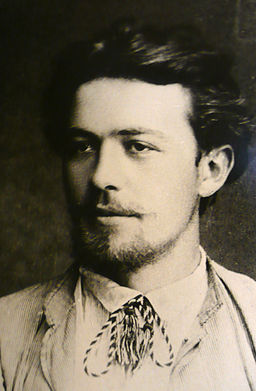
Chekhov in 1889

Chekhov in 1889 (http://tinyurl.com/ny2msd9)

Short story:

Checkhov, A. (1889) The Pipe

SUMMARY (Will): People have long been concerned about environmental change. Observations of phenological shifts, degradation of ecosystem services and climate change are clearly presented in Checkhov’s “The Pipe” (1889).The key difference is today we have a better idea of why these things are happening!?

Scientific papers:

Garcia, R.A., Cabeza, M., Rahbek, C. & Araújo, M.B. (2014) Multiple dimensions of climate change and their implications for biodiversity. Science 344 1247579
SUMMARY (Phil): This review highlights the alternative metrics used to quantify climate change at different spatial scales, each with its own set of threats and opportunities for biodiversity. It’s a very relevant paper for palaeoecologists, with implications for how we think about climatic estimates we generate, how we interpret ecological shifts in the assemblages we study, and for demonstrating the importance thinking spatially as well as temporally. It also shows how important palaeoecological data is for setting baselines and putting projected climatic change into context.

Garzón-Orduña, I.J., Benetti-Longhini, J.E. & Brower, A.V.Z. (2014) Timing the diversification of the Amazonian biota: butterfly divergences are consistent with Pleistocene refugia. Journal of Biogeography, early online.
SUMMARY (Will): Butterfly species diverged in the Neotropics during the Pleistocene (probably).

Mitchard, E.T.A. et al. (2014) Markedly divergent estimates of Amazon forest carbon density from ground plots and satellites. Global Ecology and Biogeography, early online.
SUMMARY (Will): It is difficult to work out how much carbon is in a tropical forest.

Stansell, N.D., Polissar, P.J., Abbott, M.B., Bezada, M., Steinmann, B.A. and Braun, C. (2014) Proglacial lake sediment records reveal Holocene climate changes in the Venezuelan Andes. Quaternary Science Reviews. 89, 44 – 55.
SUMMARY (Hayley): A study of three lake sediment records in the Venezuelan Andes to look at patterns of glacial variability, and how glaciers might have responded to changing climatic conditions during the last c. 12,000 years.

Still, C.J., Foster, P.N. & Schneider, S.H. (1999) Simulating the effects of climate change on tropical montane cloud forests. Nature, 398, 608–610.
SUMMARY (Nick): The paper attempts to model the impact of climate change on a number of cloud forests around the world by simulating atmospheric parameters at the last glacial maximum (LGM) and at twice today’s CO2 level. The models agrees with palaeoecological data of a downslope migration of the cloud forest at the LGM, while the 2xCO2 model shows reduced cloud cover and increased evapotranspiration, which results in a significant reduction in cloud forest supporting land area.

Blog at WordPress.com.