Menu

  • Home
  • About this blog
  • Who we are
  • On film
  • Palaeo research
    • Student research projects
  • Mapping Ancient Africa
    • Background and goals
    • Regional hubs
    • Participants
    • Schedule
    • Past events
    • Literature

Ecology of the past

PhD: When was the South Pacific colonised?

October 19, 2017
WDG

Title: When was the South Pacific colonised? A lake sediment approach to understanding climate:human drivers of ecosystem change on remote Pacific Islands
Location: University of Soithampton (Geography & Environment)

Supervsiory team: Dr. Sandra Nogué, Prof Mary Edwards, Prof. David Sear, Dr. William Gosling (University of Amsterdam), Prof. Inger (Tromso University), Prof. Janet Wilmshurst (Landcare research and University of Auckland)

Rationale: The Pacific islands of Polynesia were among the last places on earth to be colonised by humans. The precise dates of colonisation are debated – a situation which arises from the different sources of evidence (1, 2). New lake sediment records from the Cook Islands (Atiu, Mangaia) and Samoa (Upolu) and Tonga show very clear evidence of disturbance, but what is unclear is to what extent the signal represents the arrival of humans or a change in climate (2). A key question for the analysis of sedimentary records is the ability to distinguish natural variability in the environment of Pacific Islands from that arising from the arrival of humans in a temporal and spatial context. We aim to use a multi-proxy approach based on SedDNA, lipid biomarkers, fossil charcoal, and pollen preserved in lake sediments to identify: a) the presence of humans and/or livestock that were brought with them, and b) the related environmental change. Multiproxy approaches supported by statistical analysis, will be deployed to four sites where we already have good chronological controls and high resolution records of palaeoclimate. We are well placed to apply new methods and higher resolution analyses to address fundamental questions about the response of remote pacific islands to climate and human forcings.

Continue Reading

Categories: News, William Gosling • Tags: Colonisation, Pacific Island, PhD, Polynesia, University of Southampton • Permalink

PhD: Stress in Paradise

October 19, 2017
WDG

Title: Stress in Paradise: Quantifying the frequency and impacts of ENSO driven droughts in tropical Pacific Island Nations

Location: University of Soithampton (Geography & Environment)

Supervisory team: Prof. David Sear, Prof. Justin Sheffield, Prof Ian Croudace (National Oceanographic Centre, Southampton).

Rationale: Because of their small size and isolation, islands in the Pacific have limited and fragile natural resources, making them more vulnerable to climate hazards and stresses than are continents1. Pacific Island Nations (PINS) also occupy the region of the earth’s surface most immediately impacted by ENSO events. The impacts of El Nino events are felt across 3,975 islands, 13 island nations, affecting a population of 12.9 million who rely on rainfall for freshwater and food security. To date our understanding of the mechanisms of drought, their frequency and duration, and their biophysical effects in PINs remain poorly quantified. In addition island types experience droughts differently, varying according to their location, topography, geological history and ecology. Droughts are also thought to have been important drivers of the human colonization of the Pacific2. Drought frequency is likely to increase in the tropical pacific but again its specific impacts are largely unknown. This PhD seeks to develop a step change in our understanding of droughts based on novel coupling of long term data on drought frequency with process based drought modelling.

Continue Reading

Categories: News • Tags: David Sear, Job, Pacific Island, PhD, University of Southampton • Permalink

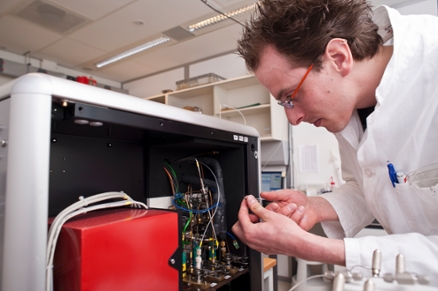
Job: Physical-chemical research technician with management skills

October 5, 2017
WDG

Vacancy: Physical-chemical research technician with management skills (salary scale 10)
Institute for Biodiversity & Ecosystem Dynamics
University of Amsterdam
Closing date: 22 October 2017

This position will link strongly with the IBED Department of Ecosystem & Landscape Dynamics which aims to improve our understanding of the functioning and dynamics of abiotic and biotic components of (geo-)ecosystems across landscapes through time. To achieve this aim we make use of a wide range of state-of-the-art research facilities provided by IBED (for more information on facilities click here).

For full details of the vacancy and how to apply click here, or visit Academic Transfer.


Categories: News, William Gosling • Permalink

Ancient monsoons on the Roof of the World

August 21, 2017
WDG

Natasha Barbolini

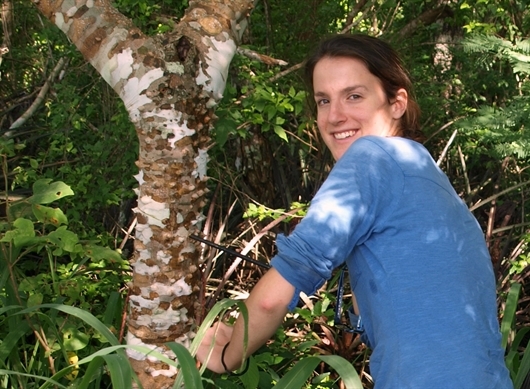
Natasha Barbolini getting a free mud treatment after some heavy rain.

Recent findings of monsoonal activity in Asia as old as 45 million years raises the fascinating possibility that these Monsoons may have triggered a global shift from the warm ice-free Greenhouse world, to the bi-polar Icehouse conditions the Earth still experiences today. Increased erosion and weathering of the uplifted Tibetan Plateau and Himalayas is currently advocated as the primary trigger for the enigmatic pCO2 drawdown that led to global cooling and rapid growth of the Antarctic ice sheet.

I am Natasha Barbolini, a new postdoctoral researcher in the Department of Ecosystem & Landscape Dynamics. Hosted by Dr Carina Hoorn, I joined the University of Amsterdam working on the MAGIC research project: (Monsoons of Asia caused Greenhouse to Icehouse Cooling). This ERC-funded project is headed by Dr Guillaume Dupont-Nivet at the University of Potsdam, Germany.

Xining Basin

A playa lake in the Xining Basin, surrounded by Oligocene red beds.

Continue Reading

Categories: News • Tags: Asia, Asian monsoon, Comsolidator, Eocene-Oligocene Transition, ERC, Greenhouse world, Ice house, MAGIC, Middle Eocene Climatic Optimum, monsoon, Paleocene-Eocene Thermal Maximum, palynology, pCO2, pollen, Qinghai-Tibet Plateau, Tibetan Plateau • Permalink

Field work in Ecuador

July 27, 2017
WDG

IBEDs Crystal McMichael hard at work sampling sediments in the Andes

IBEDs Crystal McMichael hard at work sampling sediments in the Andes

Insights into recent field work in Ecuador by a team lead by Crystal McMichael can be found in a recent blog from our collaborators at the Instituto Geofisico, Escuela Politecnica Nacional, Quito (Ecuador).

Trabajo colaborativo entre Volcanólogos y Palenólogos potenciará el conocimiento sobre el Paleoclima en el Valle de Latacunga en los últimos 20 mil años by Patricia Mothes

Categories: Field work, News, Reports, William Gosling • Tags: comunidad, ecosystem, Ecuador, Escuela Politecnica Nacional, IBED, IGEPN, Institute for Biodiversity & Ecosystem Dynamics, Instituto Geofisico, Landscape, palaeoecology, palenología, sediments, University of Amsterdam, UvA • Permalink

Connecting Two Realms

July 25, 2017
WDG

Article from: Archaeology a publication of the Archaeological Institute of America

Archaeologists rethink the early civilizations of the Amazon
By ROGER ATWOOD
Monday, June 12, 2017

Categories: News, William Gosling • Tags: Amazon, archaeology, Archeaologists, civilization, Peru, pre-Columbian • Permalink

Rubicon project to link fossil pollen with plant traits

July 20, 2017
WDG

Dear Ecology of the past blog readers,

This time you are reading a message from a non-expert in paleoecology. My name is Masha and I will spend the next two years on a very exciting postdoctoral fellowship funded by NWO (Dutch National Science Foundation) under their Rubicon scheme in close collaboration with William Gosling (University of Amsterdam).

Continue Reading

Categories: Masha van der Sande, News • Tags: Amazon, Amazonia, Biodiversity and the functioning of tropical forests, Brazil, Dutch National Science Foundation, Ecological Monographs, Florida Institute of Technology, Florida Tech, Mark Bush, Masha van der Sande, Netherlands, NWO, Old-growth Neotropical forests are shifting in species and trait composition, palaeoecology, PFT, Plant functional traits, Rubicon, South America, tropics, UK, University of Amsterdam, USA, UvA • Permalink

A fortnight of palaeoecology at the University of Amsterdam!

June 27, 2017
cmcmicha

BSc student Henk Cornelissen presents his thesis work on identifying charcoal characteristics that represent specific fire parameters, such as burn temperature. Photo: C. McMichael

BSc student Henk Cornelissen presents his thesis work on identifying charcoal characteristics that represent specific fire parameters, such as burn temperature. Photo: C. McMichael

by Crystal McMichael

Wimbledon tennis fortnight is on its way, but we’ve had our own palaeoecology fortnight here at the Institute for Biodiversity & Ecosystem Dynamics at the University of Amsterdam. We’ve seen seminars on reconstructing past landscapes and climates on timescales of decades to millions of years, and on spatial scales ranging from single sites to the entire Earth. Our presenters included our BSc students, MSc students, PhD candidates, faculty members, guest researchers, and even an internationally known palaeoclimatologist and contributor to the IPCC (Intergovernmental Panel on Climate Change) reports!

BSc student Isa Mulder presents her thesis on reconstructing glacial-aged fire histories from the Andes. Photo: C. McMichael

BSc student Isa Mulder presents her thesis on reconstructing glacial-aged fire histories from the Andes. Photo: C. McMichael

We began with a three-day series of presentations from our BSc students in the Future Planet studies program. William Gosling and I had four students that presented their final theses. We continued with a seminar series organized by the Palynologische Kring (the Dutch palynology society). Eric Grimm, a guest researcher at UvA, presented a high resolution record of hydrological variability, vegetation, and fire from the Great Plains of the United States. Guest researcher Carina Hoorn showed us how the Amazon River formed, and the associated plant turnover that occurred during the Neogene. PhD student Keith Richards explained to us why the Arctic seal became land-locked in the Caspian Sea over 2.6 million years ago. PhD student Suzette Flantua presented a multi-proxy approach to exploring the biogeographic history of the Andes Mountains. She came back the following day to present her PhD thesis entitled, “Ecosystems in Pleistocene Latin America”. And we are happy to report that Suzette is now Dr. Flantua!!

Suzette Flantua highlights the work in her PhD thesis. Congratulations Suzette! Photo: C. McMichael

Suzette Flantua highlights the work in her PhD thesis. Congratulations Suzette! Photo: C. McMichael

Dr. William Gosling and Prof. Jonathan Overpeck discuss the future of palaeoecology and upcoming collaborations. Photo: C. McMichael

Dr. William Gosling and Prof. Jonathan Overpeck discuss the future of palaeoecology and upcoming collaborations. Photo: C. McMichael

Professor Jonathan Overpeck from the University of Michigan also delivered a seminar entitled “New paleoclimatic perspectives on the future of terrestrial systems: bigger change, higher confidence?” Our society faces serious challenges involving current and future rates of climate change, and this seminar highlighted the importance of palaeoecology for assessing how the planet will respond to these changes.

Our presenters included males and females from multiple countries at an array of career stages. I am glad to have been a part of this fortnight, and I am glad that our current students got to see such a diverse integration of people and palaeoecology. My hope is at least one of these students has been inspired by these seminars, and will develop the same passion for palaeoecology as what we’ve seen here over the last two weeks.


Categories: Crystal McMichael, Meeting, News, Reports • Tags: BSc, BSc Biology, BSc Future Planet Studies, global warming, Intergovernmental Panel on Climate Change, IPCC, Jonathan Overpeck, palaeoclimate, palaeoecology, PhD defence, research projects, seminars, Suzette Flantua, tennis, University of Amsterdam, Wimbledon • Permalink

Past climate change seminars

June 15, 2017
WDG

Palynologische Kring presents four seminars focus on past climate change

Date: Thursday 22 June
Time: Starts 14:10
Location: University of Amsterdam, Institute for Biodiversity & Ecosystem Dynamics, Science Park

  • Eric Grimm: A high-resolution record of hydrologic variability, vegetation, and fire from the Northern Great Plains, North America
  • Suzette Flantua: Assembling the biogeographic history of the Northern Andes – A multi-proxy approach
  • Carina Hoorn: The Amazon at sea: Onset and stages of the Amazon River from a marine record, with special reference to Neogene plant turnover in the drainage basin
  • Keith Richards: Why did the Arctic seal, Phoca hispida, become land-locked in the Caspian Sea 2.6 million years ago? : Palynology and foraminifera explain how

For percise details of location and time please contact the organiser Prof. dr. Henry Hooghiemstra.

The meeting will be followed by the IBED seminar given by Prof. Jonathan Overpeck, click here for more details.

Categories: News, William Gosling • Tags: Amazon, Amazon River, Andes, Arctic seal, biogeography, Carina Hoorn, Caspian Sea, Climate change, Eric Grimm, Great Plains North America, Keith Richards, Neogene, Palynologische Kring, palynology, Phoca hispida, pollen, Suzette Flantua, University of Amsterdam • Permalink

New paleoclimatic perspectives on the future of terrestrial systems: bigger change, higher confidence?

June 14, 2017
WDG

Institute for Biodiversity & Ecosystem Dynamics seminar
University of Amsterdam
22 June 2017 (for details click here)

New paleoclimatic perspectives on the future of terrestrial systems: bigger change, higher confidence?
Jonathan Overpeck
The University of Arizona

Numerous assessments of future freshwater and terrestrial system change have highlighted the potential for unprecedented change in the 21st century given continued emissions of greenhouse gases (GHGs) to the atmosphere; the risk to biodiversity is also believed to be high. The basis for these assertions are strengthened by recent observed ecosystem change, as well as by a new global compilation of climate and vegetation change over the last deglaciation indicating that most, if not all, dominantly natural landscapes on the planet are at high risk of significant transformation given the projected magnitude of warming that is likely in the future absent major reductions in global GHG emissions. At the same time, new paleoclimatic results indicate that the Amazon forests may be more resilient to future change than previously thought, whereas the risk of human deforestation associated with multi-year “megadrought” might be higher than previously believed.  A growing body of literature highlight that drought and megadrought risk around the globe is going to be a bigger problem than widely thought. We know with great confidence that warming will continue as long as GHG emissions continue, and this means more drying of terrestrial systems is likely over much of the planet. As a result, droughts will become more severe, longer and frequent as long as GHG emissions are not reduced significantly. The ability of precipitation increases to mitigate the ecological and hydrological impacts of continued warming is especially diminished in the many regions of the globe where multi-decadal megadrought is likely, an assessment made more challenging by the growing realization that that state-of-the-art climate models may underestimate the risk of future megadrought. Existing global climate change assessments may thus be underestimating the challenges to terrestrial water and ecoystems under continued climate change.

Hosted by: William Gosling

Categories: News, William Gosling • Tags: Climate change, climate models, deglaciation, ecological, emissions, greenhouse gasses, hydrological, Jonathan Overpeck, landscapes, megadrought, palaeoclimate, Paleoclimate, percipitation, terrestrial ecosystems, terrestrial water • Permalink

← Older posts
Newer posts →
Blog at WordPress.com.
Ecology of the past
Blog at WordPress.com.
  • Subscribe Subscribed
    • Ecology of the past
    • Join 171 other subscribers
    • Already have a WordPress.com account? Log in now.
    • Ecology of the past
    • Subscribe Subscribed
    • Sign up
    • Log in
    • Report this content
    • View site in Reader
    • Manage subscriptions
    • Collapse this bar

Loading Comments...