On Wednesday I attended my first Netherlands Annual Ecology Meeting (NAEM) unfortunately, due to prior commitments, I was not able to attend the whole event, but I still managed to get a nice insight into the vibrant Dutch Ecological research community. Particularly exciting for me was the “Biodiversity in Space and Time” theme. Plenary sessions by Alexandre Anotonelli (University of Gothenburg) and Hans ter Steege (Naturalis Biodiversity Center, Leiden) focused on the Amazon ecology past and present. The subsequent session on the same theme, organized by Daniel Kissling (University of Amsterdam) and Niels Raes (Naturalis Biodiversity Center), was also excellent and ranged from species richness patterns past and present in Gabon (Andre van Proosdij, Naturalis Biodiversity Center), through soil microbes (Kelly Ramirez, Netherlands Institute of Ecology) to the role of sea level change on island biodiversity (Kenneth Rijsdijk, University of Amsterdam). I am looking forward to attending more of these meetings in the future and getting involved with the NERN community.
Getting back to the UK after fieldwork is always jarring and this time is certainly no different, the change from 32°C days walking through the savanna and lowland forests of Belize to the -2°C early mornings walking through snow in Milton Keynes is an abrupt transition. I have recently returned from a 2 week field course in tropical botany run by the Royal Botanic Garden Edinburgh (RBGE) in conjunction with their MSc course on the ‘Biodiversity and Taxonomy of Plants’. The field course allowed for 10 NERC funded PhD students in relevant fields to accompany the MSc students out to Belize to learn a host of valuable skills in tropical botany and ecology. During our time in Belize we visited 2 main locations, Las Cuevas Research Station within the Chiquibul forest reserve and the Rio Bravo Conservation and Management Area (RBCMA), in my next two posts I will briefly cover the places we visited and the botany we learned.
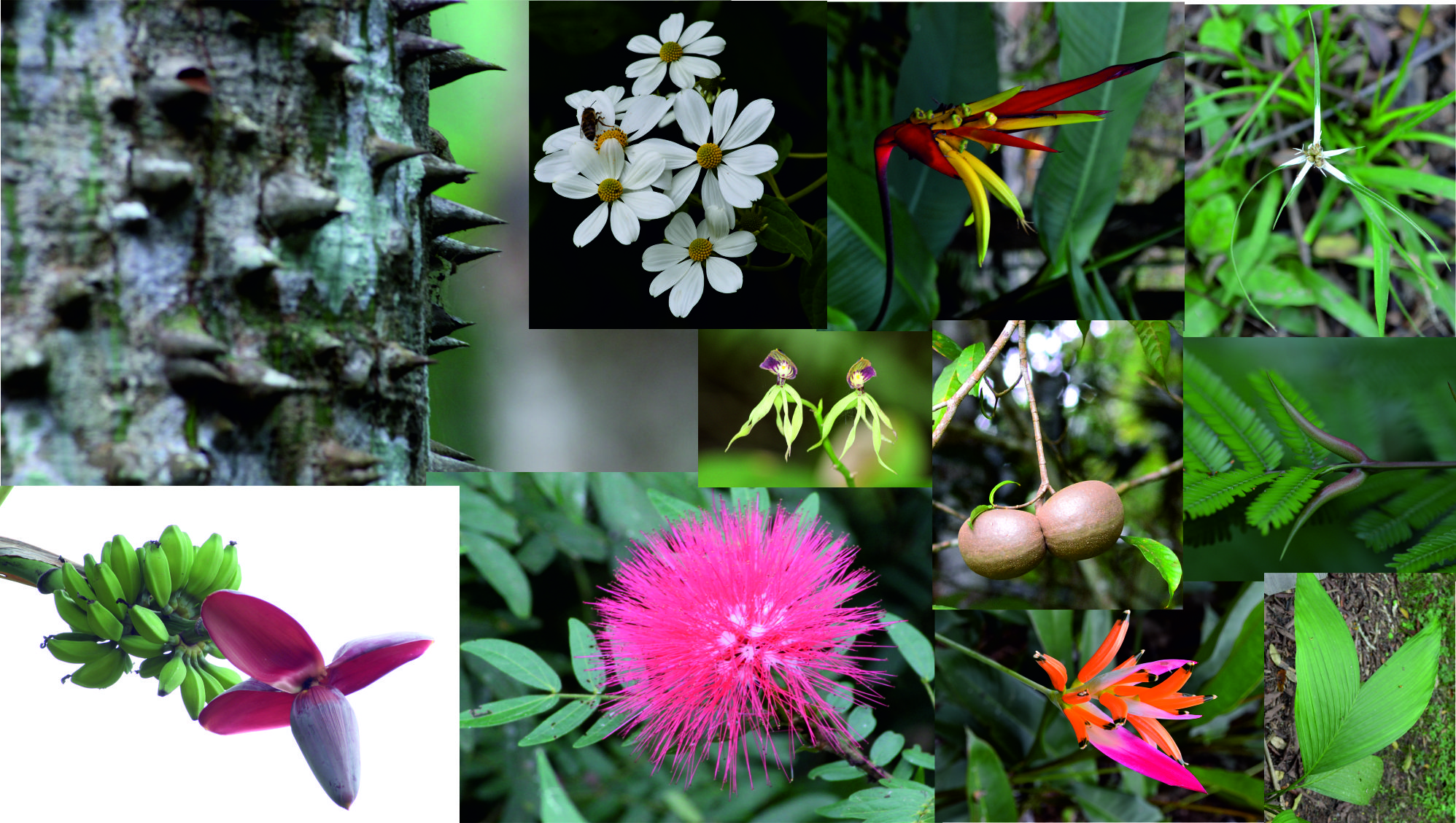
A very small selection of the plants we sampled and identified during the course (Photographs by Anna Turbelin and Nick Loughlin)
Before I get going I would just like to thank all of the staff from the RBGE who led the field course, (David, Louis, Tiina, Becky, Chris and Helen) their ability to teach the major characteristics of 70+ tropical families to many of us who are not botanists or taxonomists in an engaging way was astounding, although I don’t believe I will ever be able to identify a Euphorbiaceae from its vegetative characteristics. Also thanks to the students from the MSc course who were great fun, if any of you move away from botany and taxonomy and want more of an idea about the world of tropical palaeoecology, give me a shout.
On our way to see the Mayan ruins at Xunantunich (Photograph by Anna Turbelin)
Two weeks ago I attended the biannual International Biogeography Society (IBS) conference in Bayreuth, together with 600+ other people from more than 50 different countries. This IBS conference, my first IBS meeting, proved to be an exciting event during which I met scientists from many different disciplines and heard talks on cutting-edge biogeographical research.
The IBS conference was held in the Bavarian city of Bayreuth, in the middle of the biodiverse landscape of Upper Franconia. This landscape provided the training ground for Alexander von Humboldt, the founder of the field of biogeography. The 4-day conference included a wide variety of symposia and many, many posters. The conference dinner in the German Steam Train Museum was highly memorable. The conference was closed by a lecture from Daniel Simberloff, once a doctorate student of Edward O. Wilson, who received the Wallace Award for his outstanding contributions to invasion ecology.
I had a talk in the plenary symposium of ‘Ecosystem response to past climate change’, organized by David Nogués-Bravo and Francisco Rodríguez-Sánchez. The symposium covered the dangers of climate change to biodiversity and tried to assess if the range and rate of adaptation, migration, persistence, or extirpation, that are registered in deep-time records, palaeorecords, and the recent past, are adequate responses for predicted climate change in the future. I addressed this issue from the point of view of a small remote island, where migration is obviously a limiting factor. I showed how I reconstructed climate and its effect on island biota during the last 40,000 years using long-term palaeoecological records from Mauritius (de Boer et al, 2013 & 2014). These records show that different climate regimes result in different ecosystem response to climate change in the past. Local extirpation or population collapse of larger vertebrates was a natural phenomenon in the lowlands of Mauritius due to frequent climate extremes (I will discuss this in more detail in my next blog; de Boer, 2015). Despite these population collapses, island biota have always (in the timeframe of my records) survived natural climate change. Therefore, my take home message was not to focus on the effects of (future) climate change alone. Other key components of global change, such as invasive species and habitat destruction, are more imminent threats to the biodiversity of many islands. For more information on my research, including publications, click here.
More information on the IBS read on (below) or visit the IBS website or blog. All abstracts and other details of the IBS conference in Bayreuth can be found here. The next IBS meeting will take place in Salvador, Bahia (Brazil) in March 2017.
Today we were based back at FORIG getting export permits, sorting out import licenses, Lottie was running through her presentation for a final time and catching up with the Oxford group who returned from a 10-day field campaign at Kogyae. We celebrated the end of the our respective fieldwork with dinner out at the Noda hotel – always a treat!
Cascades of vivid green ferns flowing down steep-sided banks on both sides (image below), branchless tree trunks extending upwards through a dense canopy to a point beyond sight – this can mean only one thing, we are in a tropical rainforest.
The morning started in a typical fashion for a rainforest – visibility down to approximately 20m due to a thick mist engulfing everything (image below). We had a big day ahead of us, so a very early start was necessary; 05:30 rise for a 06:30 breakfast and in the truck and rolling by 07:00 heading for Ankasa Game Reserve less than 100km from the border with Cote d’Ivoire. Having never been to a rainforest before, I was not entirely sure what to expect other than lots of lush green vegetation and high humidity, and the vague hope of catching a glimpse of a…
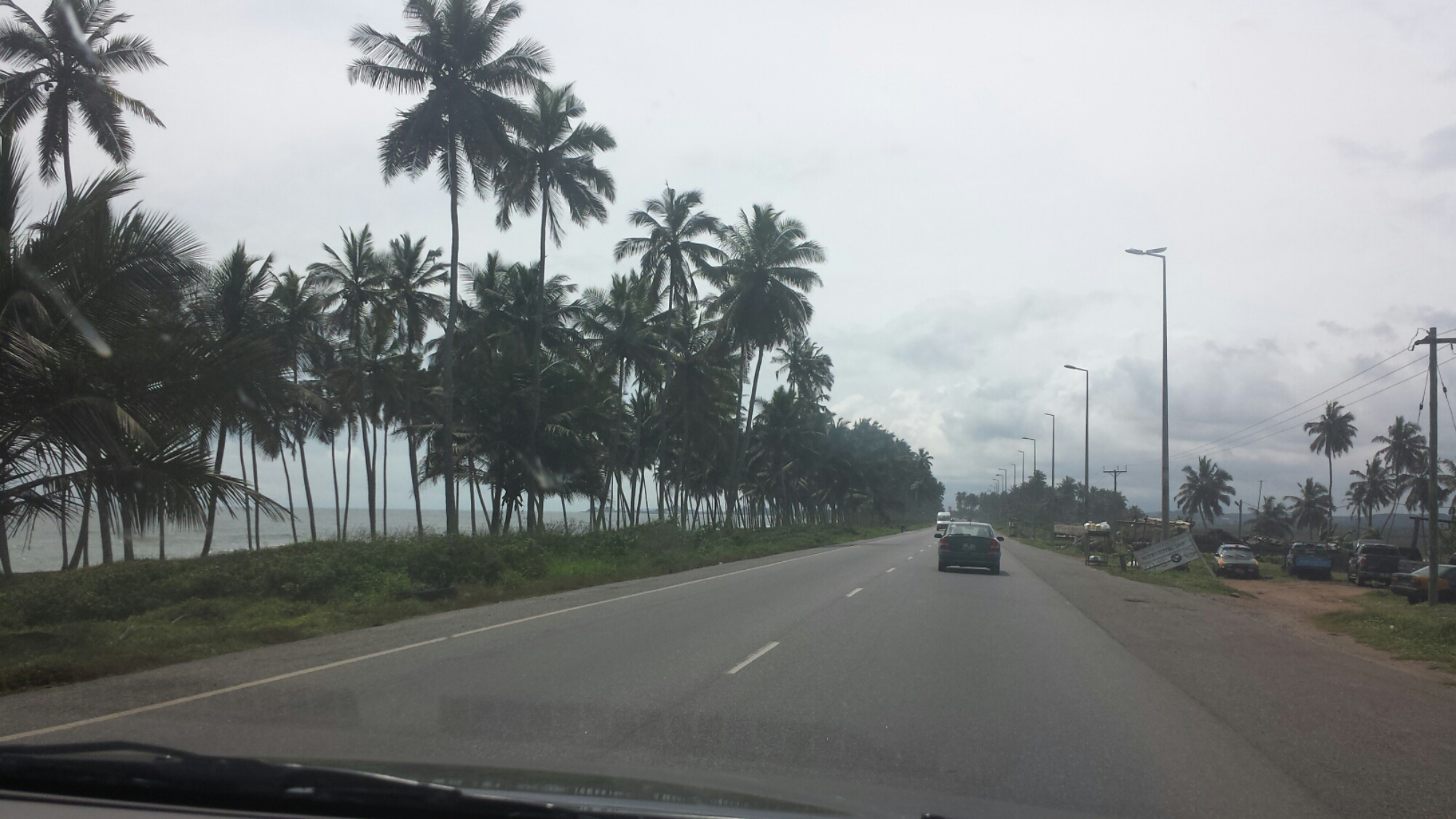
And 5 hours later we have arrived at the Cape Coast. Still a while to go yet though….
Finally arrived at the Ankasa national park at 17:30 after enjoying some of delights of the trans-African highway (work in progress). What a drive! Just time for our evening meal then early to bed for a 07:00 start in the morning.
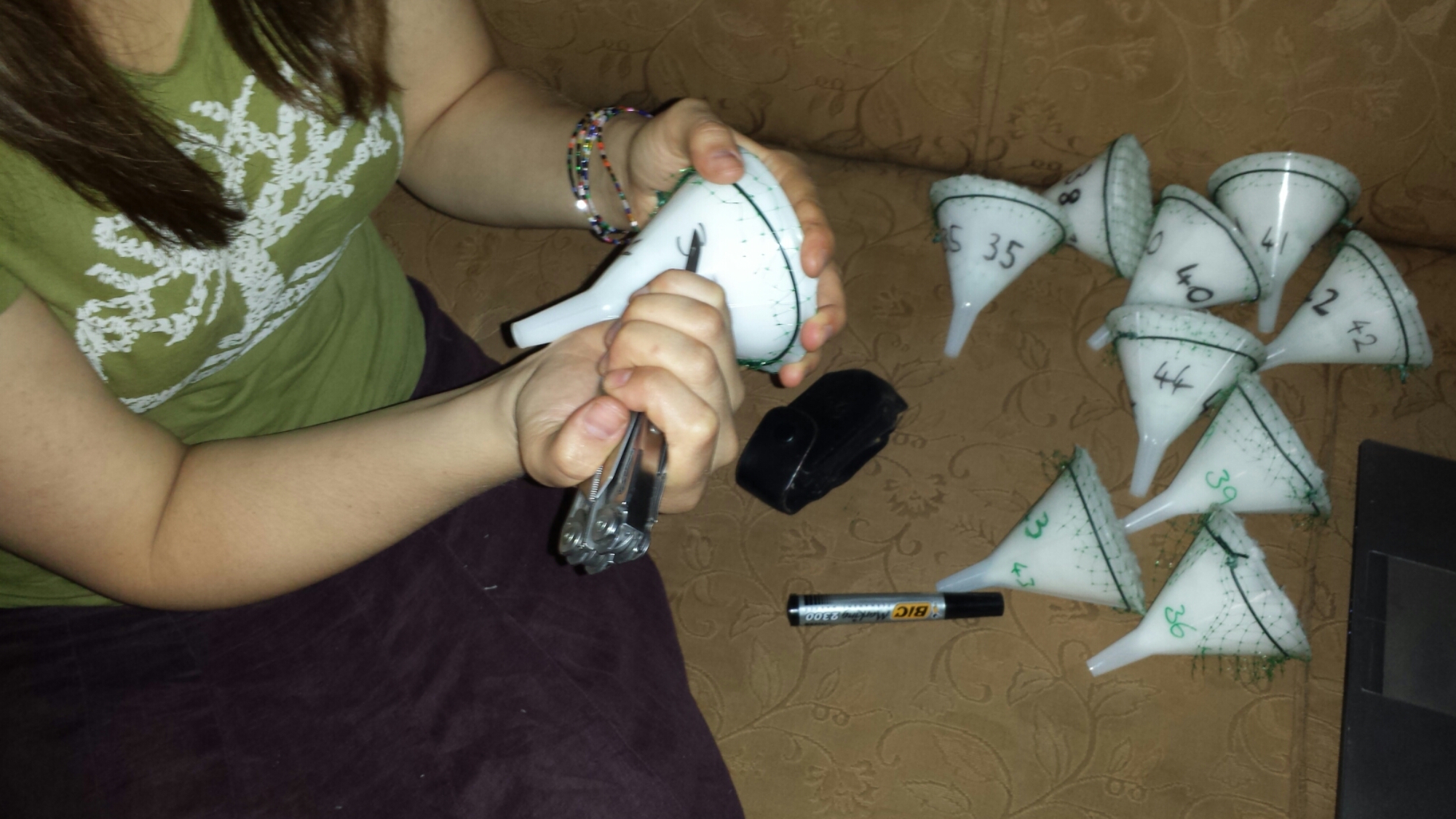
Today is a day back at base preparing for the week ahead. The countdown to the end of this years fieldwork has begun with just the rainforest plots at Ankasa remaining. Ankasa will be a three day stint away from FORIG, thus will require us to fully pack up and leave FORIG, returning on Wednesday evening. Preparation work entails the labelling and sorting of new pollen traps (image below), the cleaning up of used pollen traps that are going to be deposited with workers at FORIG for re-use, and general planning of finer itinerary points.
Lottie is busy polishing her presentations for next Thursday (image below), and I am busy, well, writing this!
Adele has been assisting Lottie by dissecting flowers too.
Hopefully will have internet connection over the next couple of days to continue updating this blog, if not, I will post on Day 14.
Lake Bosumtwi. An impact crater created by the collision of a meteorite with Earth nearly 1.1 million years, and subsequently filled with water to form the lake that exists today. The lake is hydrologically isolated, fed only by precipitation falling on the lake and within the crater catchment. Along with the filling with water comes weathering, erosion and resultant sedimentation of the surrounding landscape depositing into the lake.
The lake and its sediment is the focus of the main NERC-funded project (NE/K005294/1) we are working on, was the basis of Lotties PhD (2013), and underpins Adeles current doctoral work. For her doctoral research Lottie used palynological evidence locked within the lake sediment to reconstruct the past 540,000 years of vegetation in and around the Lake Bosumtwi cathcment, providing a framework for our NERC project that is investigating past vegetation transitions in relation to climatic change and attempting to reconstruct past…
Great to hear that the workshop is about to take place. Would be great if you could record any comments or thoughts on the activity from participants. Would also be good to see some photos of Lottie in action 🙂
Today we are based at FORIG. Lottie is preparing for her workshop delivery next week on the Palaeoecology of Lake Bosumtwi and outreach activities in local communities. Adele is updating some spreadsheets that quantify an estimate of percentage basal area within the study plots. Sadly for me, I have a backlog of emails that need addressing.
Yesterdays visit to Kogyae was a long day, but we made it back to FORIG in the evening so today is somewhat of a ‘spare’ day. The day has mostly been spent collating data from yesterday, rehydrating and resting after a long and tiring day.
Passing through some of local villages was really interesting; a mix of traditional living with a modern lifestyle. Many villages consisted only of houses that were constructed in a traditional manner, but most had a Chinese-made motorcycle or TATA pickup truck parked outside and the latest Samsung mobile phones dotted around. Also, I don’t think I have seen so many goats just strolling freely around as I have in these rural villages.
 Netherlands Annual Ecology Meeting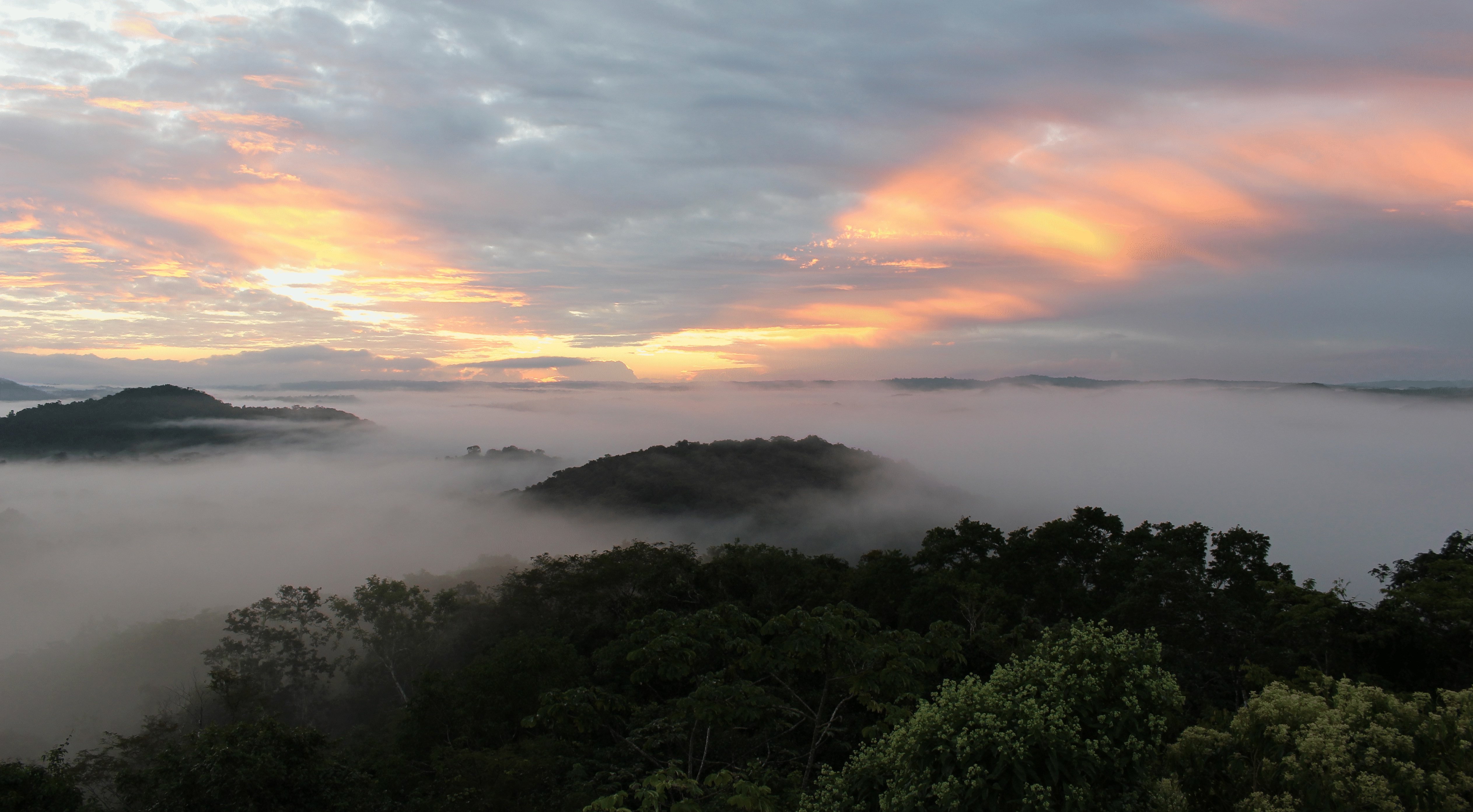







 Ecology of the past