Published open access:

Hoogakker, B.A.A., Smith, R.S., Singarayer, J.S., Marchant, R., Prentice, I.C., Allen, J.R.M., Anderson, R.S., Bhagwat, S.A., Behling, H., Borisova, O., Bush, M., Correa-Metrio, A., de Vernal, A., Finch, J.M., Frechette, B., Lozano-Garcia, S., Gosling, W.D., Granoszewski, W., Grimm, E.C., Gruger, E., Hanselman, J., Harrison, S.P., Hill, T.R., Huntley, B., Jimenez-Moreno, G., Kershaw, P., Ledru, M.-., Magri, D., McKenzie, M., Muller, U., Nakagawa, T., Novenko, E., Penny, D., Sadori, L., Scott, L., Stevenson, J., Valdes, P.J., Vandergoes, M., Velichko, A., Whitlock, C. & Tzedakis, C. (2016) Terrestrial biosphere changes over the last 120 kyr. Climate of the Past 12, 51-73. DOI: 10.5194/cp-12-51-2016


In the news:

Jonathan Amos (2016) ‘Case is made’ for Anthropogenic Epoch. BBC News: Science & Environment.

Scientific publications:

Sarmiento, F.O. (2002) Anthropogenic change in the landscapes of highland Ecuador. Geographical Review 92, 213-234. doi: 10.1111/j.1931-0846.2002.tb00005.x

Swindles, G.T., Lamentowicz, M., Reczuga, M. & Galloway, J.M. (online)  Palaeoecology of testate amoebae in a tropical peatland. European Journal of Protistology. doi: 10.1016/j.ejop.2015.10.002

Tellkamp, M.P. (2014) Habitat change and trade explain the bird assemblage from the La Chimba archaeological site in the northeastern Andes of Ecuador. Ibis 156, 812-825. doi: 10.1111/ibi.12179

Waters, C.N., Zalasiewicz, J., Summerhayes, C., Barnosky, A.D., Poirier, C., Galuszka, A., Cearreta, A., Edgeworth, M., Ellis, E.C., Ellis, M., Jeandel, C., Leinfelder, R., McNeill, J.R., Richter, D.d., Steffen, W., Syvitski, J., Vidas, D., Wagreich, M., Williams, M., Zhisheng, A., Grinevald, J., Odada, E., Oreskes, N. & Wolfe, A.P. (2016) The Anthropocene is functionally and stratigraphically distinct from the Holocene. Science 351, . doi: 10.1126/science.aad2622

2015 in review

December 30, 2015
WDG

The WordPress.com stats helper monkeys prepared a 2015 annual report for this blog.

Here’s an excerpt:

The concert hall at the Sydney Opera House holds 2,700 people. This blog was viewed about 11,000 times in 2015. If it were a concert at Sydney Opera House, it would take about 4 sold-out performances for that many people to see it.

Click here to see the complete report.

Past environmental change on Mauritius: Unknown macro-fossils

December 18, 2015
WDG

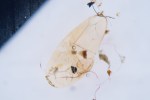
Unknown macro-fossil JdK-type2

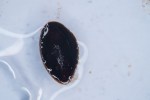
Unknown macro-fossil JdK-type2

Past environmental change on Mauritius has been the focus of research with the Palaeoecology & Landscape Ecology group at the University of Amsterdam (UvA) for a number of years. This research has been lead by Erik de Boer and Henry Hooghiemstra and has already resulted in a number of key publications on the environmental history of the island (de Boer et al., 2013, 2014, 2015). One current past environmental change research project working on Mauritius is being undertaken by Jona de Krui; a student within the UvA BSc Biology program supervised by myself and Erik. Jona’s is working on a study site (modern day swamp) on the north-east of the island and is focused on improving our understanding changes in the:

  • depositional environment (loss-on-ignition analysis),
  • fire activity (macro-charcoal analysis), and
  • vegetation (macro-fossils) over the last c. 1000 years.

Jona has now completed the analysis of all his samples and we are currently collating the data sets; however, a number of the macro-fossils which he has discovered remain unidentified. Below are images of the unknown macro-fossils if you have any suggestions on identifications please comment, or get in touch directly.

Continue Reading

Online, open access:

McMichael, C., Piperno, D., Neves, E., Bush, M., Almeida, F. & Mongelo, G. (2015) Phytolith assemblages along a gradient of ancient human disturbance in western Amazonia. Frontiers in Ecology and Evolution 3. DOI: 10.3389/fevo.2015.00141

BES annual meeting: Top talks

December 17, 2015
WDG

I am just back from a fabulous British Ecological Society (BES) annual meeting in Edinburgh. Both the city and the science were interesting and exciting. The Science Slam was certainly my highlight “fringe” event and I believe all the slams will be avaliable to view soon on the BES Youtube channel. But you can watch the winner, Rosie Woodroffe, now…

Of the many great science talks I would like to highlight just four here which I found particulalry interesting, by: Stephen Prentice (Queen’s University Belfast), Althea Davies (University of St. Andrews), Tom August (Cente for Ecology & Hydrology), and Kimberly Simpson (University of Sheffield).

Continue Reading

Open access online:

Matthews-Bird, F., Gosling, W.D., Coe, A.L., Bush, M., Mayle, F.E., Axford, Y. & Brooks, S.J. (2015) Environmental controls on the distribution and diversity of lentic Chironomidae (Insecta: Diptera) across an altitudinal gradient in tropical South America. Ecology and Evolution. DOI: 10.1002/ece3.1833


Brown, J.H. (2014) Why are there so many species in the tropics? Journal of Biogeography 41, 8-22. DOI:  10.1111/jbi.12228

Matamoro-Vidal, A., Prieu, C., Furness, C.A., Albert, B. & Gouyon, P. (2016) Evolutionary stasis in pollen morphogenesis due to natural selection. New Phytologist 209, 376-394. DOI: 10.1111/nph.13578

McMichael, C., Piperno, D., Neves, E., Bush, M., Almeida, F. & Mongelo, G. (2015) Phytolith assemblages along a gradient of ancient human disturbance in western Amazonia. Frontiers in Ecology and Evolution 3, 141. DOI: 10.3389/fevo.2015.00141

ter Steege, H. et al. (2015) Estimating the global conservation status of more than 15,000 Amazonian tree species. Science Advances 1. DOI: 10.1126/sciadv.1500936


Bakker, E.S., Gill, J.L., Johnson, C.N., Vera, F.W.M., Sandom, C.J., Asner, G.P. & Svenning, J. (2015) Combining paleo-data and modern exclosure experiments to assess the impact of megafauna extinctions on woody vegetation. Proceedings of the National Academy of Sciences. DOI: 10.1073/pnas.1502545112

Bakker, E.S., Pagès, J.F., Arthur, R. & Alcoverro, T. (2015) Assessing the role of large herbivores in the structuring and functioning of freshwater and marine angiosperm ecosystems. Ecography DOI:10.1111/ecog.01651

Dillehay, T.D., Ocampo, C., Saavedra, J., Sawakuchi, A.O., Vega, R.M., Pino, M., Collins, M.B., Scott Cummings, L., Arregui, I., Villagran, X.S., Hartmann, G.A., Mella, M., Gonzalez, A. & Dix, G. (2015) New Archaeological Evidence for an Early Human Presence at Monte Verde, Chile. PLoS ONE 10, e0141923. DOI: 10.1371/journal.pone.0141923

Göldel, B., Kissling, W.D. & Svenning, J. (2015) Geographical variation and environmental correlates of functional trait distributions in palms (Arecaceae) across the New World. Botanical Journal of the Linnean Society. DOI: 10.1111/boj.12349

Pardi, M.I. & Smith, F.A. (2015) Biotic responses of canids to the terminal Pleistocene megafauna extinction. Ecography.  DOI: 10.1111/ecog.01596

Roy, N., Woollett, J. & Bhiry, N. (2015) Paleoecological perspectives on landscape history and anthropogenic impacts at Uivak Point, Labrador, since AD 1400. The Holocene 25, 1742-1755. DOI: 10.1177/0959683615591350

Blog at WordPress.com.