Palynologische Kring:  Palynologendagen 2024 

August 15, 2024
WDG

The Dutch Palynology society (Palynologische Kring) will hold a two day excursion to the Veluwe in the autumn (17-18 October 2024).

Preliminary program

Thursday 17 October (Hotel Wipselerberg, Beekbergen)

  • 13.00-13.30: Ontvangst met koffie / Arrival with coffee
  • 13.30-14.00: Harm Smeenge & Ariet Kieskamp (Bosgroepen): Landscape ecological/historical ecological characteristics of bogs in the eastern slopes of the Veluwe 
  • 14.00-14.30: Roy van Beek (WUR): Archeological, archeobotanical and morphological aspects of the Celtic Field complex of Vaassen (Veluwe) 
  • 14.30-15.00: Koffiepauze / Coffee break
  • 15.00-15.30 Jasper Candel (WUR): Geophysical research in the push moraine of the Veluwe and relation with peat development in valley mires 
  • 15.30-16.00: William Gosling (UvA): On the use of spores of coprophilous fungi in characterizing herbivory past and present in Dutch landscapes 
  • 16.00-17.30: Borrel / Social event

Friday 18 October

Fietsexcursie rondom Emst, Vaassen (totale afstand ca. 35 km). Fietshuur bij De Weerdt Rijwielen. / Bike tour around Emst, Vassen (total distance c. 35 km). Bike hire from De Weerdt Rijwielen.

Excursiepunten / excusion points:

  • Nijmolense Beek
  • Wisselse Veen
  • Gulbroek

Voor mensen die slecht ter been zijn, is er beperkte mogelijkheid om met eigen auto deel te nemen aan de excursie (max. 2 auto’s kunnen parkeren bij de excursiepunten). / For people with walking or cycling difficulties there is a limited opportunity to come in a car on the trip (maximum 2 cars can park at the excursion points).

For further information and costs please email Nelleke van Asch (secretary of the Palynologische Kring). Contact details can be found at: https://www.palynologischekring.nl/contact/
Phytolith assemblages reflect variability in human land use and the modern environment

June 29, 2023
WDG

Vegetation History & Archaeobotany

Open access:

Witteveen NH, White C, Sanchez Martinez BA, Booij R, Philip A, Gosling WD, Bush MB, McMichael CNH. 2023. Phytolith assemblages reflect variability in human land use and the modern environment. Vegetation History and Archaeobotany. DOI: 10.1007/s00334-023-00932-2

Palaeoecology course 2022 goes archaeology…

September 16, 2022
WDG

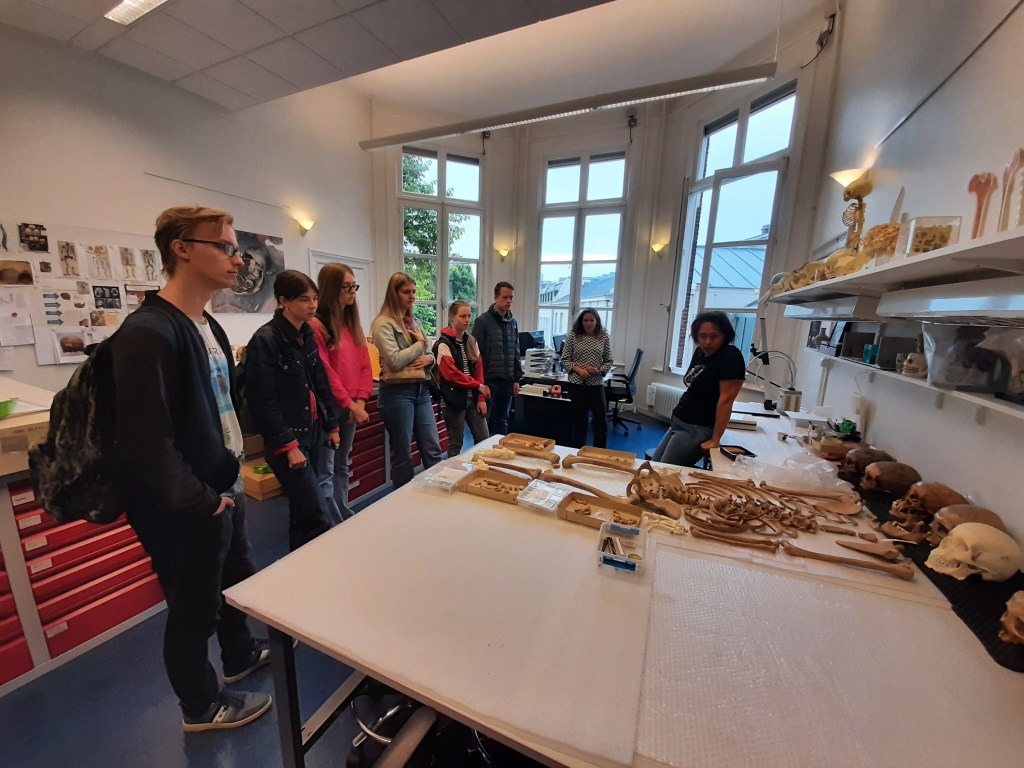
As part of this years BSc Palaeoecology course at the University of Amsterdam we visited the Department of Archaeology. Organised by Anja Fischer we visited the human bone collection, the animal bone collection and the archaeobotany section. Amazing collections and lots of opportunities for cross faculty projects and teaching.

In addition to explaining the physical reference collections Anja also explained how she has been developing data mining techniques to allow information to be synthesised from the thousands of archaeological reports across the Netherlands.

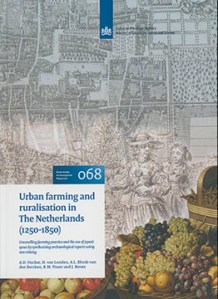
She used this approach to make new discoveries about the role of urban farming and ruralisation in Dutch history. Her findings formed a report for the Dutch national heritage organisation (Rijksdienst voor het Cultureel Erfgoed) which can be downloaded for free (in English).

Fischer, A., van Londen, H., Blonk, A., Visser, R.M. & Renes, J. (2021) Urban Farming and Ruralisation in The Netherlands (1250-1850): Unravelling farming practice and the use of (open) space by synthesising archaeological reports using text mining. Nederlandse Archeologische Rapporten 68. Download free here.

Job: PhD Caribbean Palaeoecology

September 9, 2022
WDG

The Palaeoecology Research Group within the Department of Archaeology at the Max Planck Institute for Geoanthropology, Jena, Germany is pleased to announce a new vacancy for a doctoral student exploring human-environment interactions in the Caribbean. The position will be based in Jena, Germany for a period of 3 years with the option for extensions and supervised by Dr. Yoshi Maezumi.

The Palaeoecology Research Group analyses palaeoecological and archaeobotanical proxies from sedimentary archives, including pollen, phytoliths, charcoal and stable isotopes to examine topics including the legacy of human land-use on ecosystems, spatio-temporal patterns of natural and human-driven fire activity, and the influence of natural and human disturbance regimes on the biogeographic distribution of plants and animals in past ecosystems.

Closing date: 30 September 2022

For full details and how to apply click here.

For further information contact Dr. Yoshi Maezumi.

Fields and feasts

July 28, 2017
WDG

If you have exciting new research on past ecological change similar to this please consider submitting it for consideration to be published in Vegetation History & Archaeobotany.

If you have exciting new research on past ecological change please consider submitting it to Vegetation History & Archaeobotany.

Two articles recently published on-line in the journal Vegetation History & Archaebotany (of which I am an Associate Editor) recently caught my attention.These explore:

For more detailed thoughts on these papers read on…

Continue Reading

Blog at WordPress.com.