Every picture tells a story. This one is a snapshot I took of Dan Livingstone’s African palaeolimnology group in June1984, when I spent a few months at Duke University, North Carolina, at Dan’s invitation. I had started work on the pollen analysis of a Holocene core from Cameroon that I’d collected in 1981 and Dan was keen to help me as far as possible. He was making plans for his lake coring projects a few years later in Cameroon (Barombi Mbo).
Back row (L-R) is me (Keith Richards age 24), Margaret Adebisi Sowunmi, Alice Tucker, Lida Burney, George Kling and Dan Livingstone. Front row (L-R) is David Burney, Wendy Watson, Susan Gerbeth-Jones and Patricia G. Palmer.Continue Reading
The second in my series highlighting papers in the recent volume of Palaeoecology of Africa (published entirely open access online) focuses on the research articles. The research articles make up the ‘guts’ of the volume, comprising 10 of the 24 papers. Three of these are from western Africa (Dinies et al.; Gosling et al.; Lemonnier & Lézine), two from eastern Africa (Githumbi et al.; Kinyanjui et al.), two from central Africa (Richards; Gaillard et al.), and three from southern Africa (Chevalier et al.; Hill & Finch, Hill et al.). These research articles present new data and key insights into past environmental change in Africa, which fall into two broad categories, providing information on: (i) how we can extract information from pollen data sets, and (ii) the processes operating to drive vegetation.
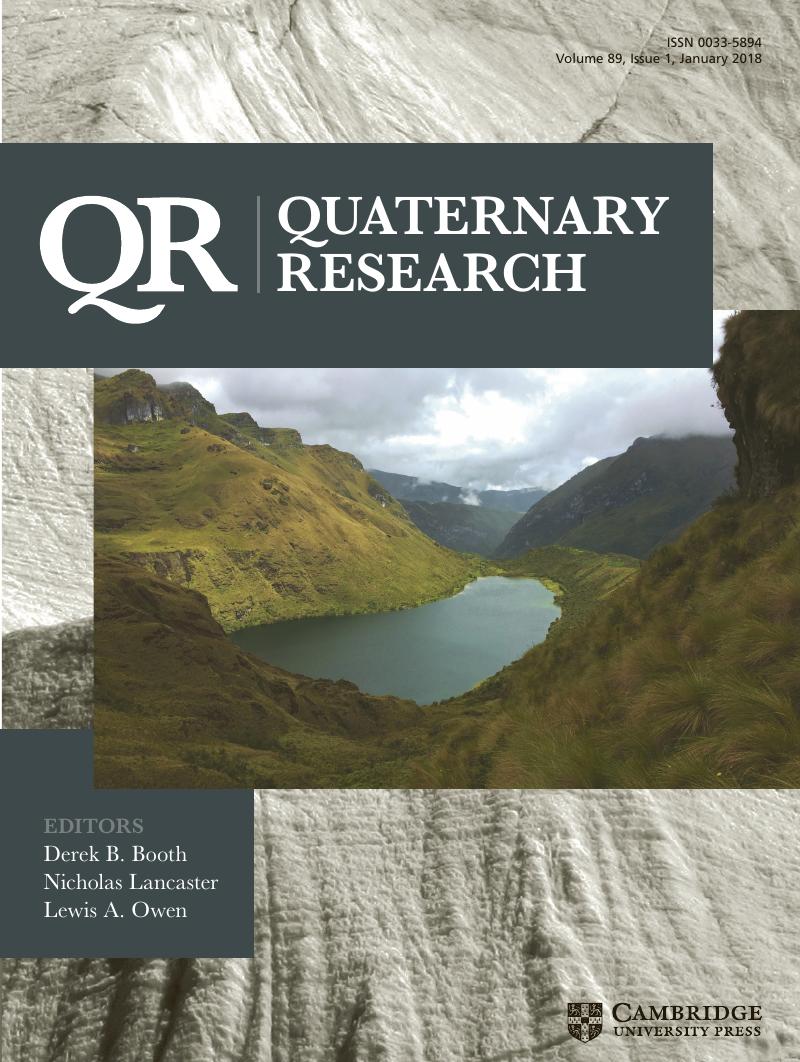
Mark Bush and I are proud to announce that a tribute to Prof. Daniel Livingston and Prof. Paul Colinvaux has recently been published in Quaternary Research. Dan and Paul were both pioneers of tropical pal(a)eoecology and both died in the spring of 2016 . To mark their passing Mark and I have guest edited ten new papers on palaeoecology drawn from researchers, and regions, of the tropics in which Dan and Paul worked (Bush & Gosling, 2018). We would like to thank Quaternary Research Senior Editor Derek Booth for giving us this opportunity and assisting greatly in the process of compiling the manuscripts. We would also like to thank all to contributing authors for their hard work and dedication to the project. We hope that you will enjoy reading the manuscripts and find them a fitting tribute to the life and work of these two great researchers.


 Ecology of the past