Williams, J.J., Brooks, S. & Gosling, W.D. (2012) Response of Chironomids to late Pleistocene and Holocene environmental change in the eastern Bolivian Andes Journal of Paleolimnology, 48: 485-501. doi: 10.1007/s10933-012-9626-1.
July 10, 2012
Williams, J.J., Brooks, S. & Gosling, W.D. (2012) Response of Chironomids to late Pleistocene and Holocene environmental change in the eastern Bolivian Andes Journal of Paleolimnology, 48: 485-501. doi: 10.1007/s10933-012-9626-1.
July 4, 2012
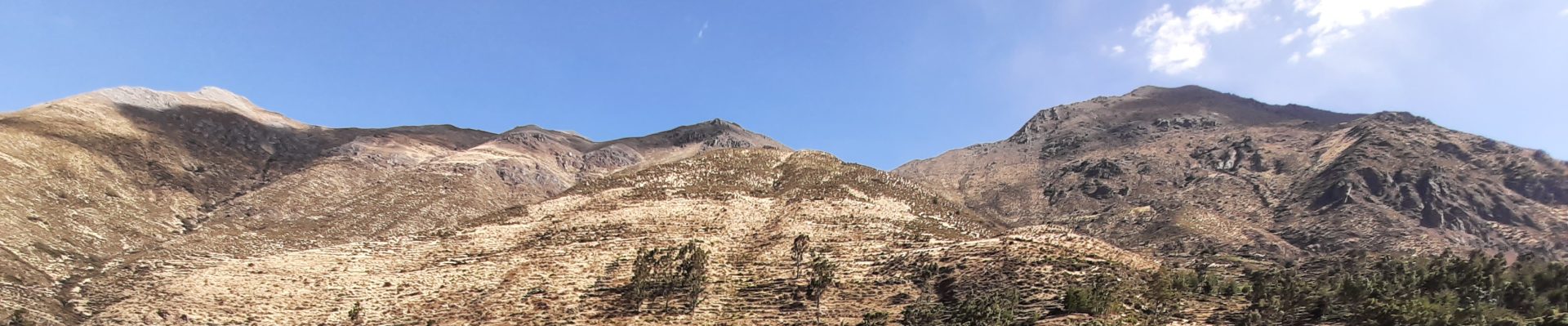
I am delighted to report that Dr Encarnacion Montoya Romo (currently of the Botanical Institute of Barcelona) has been awarded a NERC Fellowship to join the PCRG. The project is entitled “Evaluation of tropical forests sensitivity to past climate change” (FORSENS) and will examine environmental change at four study sites from different regions of the Neotropics: 1) Khomer Kotcha (Bolivia; 17oS, 4100 m above sea level [asl]) [1-3], 2) Consuelo (Peru, 13oS; 1400 m asl) [4-5], 3) Banos (Ecuador; 0oS, 4000 m asl), and 4) a new lowland site from Columbia/Ecuador to be collected during field work during the project.
The aim of the project is to explore the spatial and temporal consitance of tropical vegetation response to aridity (mid-Holocene dry period) and warming (last deglaciation). The project will use fossil pollen, chironomids, charcoal, non pollen palynomorphs and organic biomarkersto build up a comprehnsive picture of environmental change. The diversity of the project means we have a number of exciting partners, including: Steve Brooks (Natural History Museum), Prof. Mark Bush (Florida Tech), Prof. Valenti Rull (Botanical Institute of Barcelona) and the Dr. Pauline Gulliver (NERC radicarbon facility).
The fellowship will commence in October 2012. Further information will appear on is blog and group website soon.
REFERENCES
Continue Reading
May 11, 2012
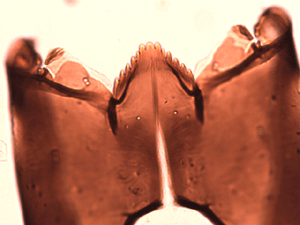
Fossil chironomid from the Andes
CHIRONOMIDAE AS A PALAEO-ECOLOGICAL TOOL
Chironomidae is a family of two-winged flies more commonly referred to as non biting midges. This diverse group of insects have been known for a long time to be sensitive environmental indicators. Early research in the field showed that the trophic status of lakes could be classified according to the characteristic chironomid assemblages found within them (Thienemann, 1922). Furthermore the head capsules of the larvae are well preserved within the sedimentary record. As a result palaeolimnological researchers became increasingly interested in the potential for using Chironomids to track the trophic development of a lake through time by examining the changing assemblages within the accumulated sediments. With geographically close lakes displaying significantly different midge faunas the potential for the insects being used as climatic indicators was dismissed and the following hypothesis became established: Chironomid assemblage composition reflects in-lake variables, e.g. lake depth, pH, dissolved oxygen, trophic status and substrate. However work by Walker and Matthews (1989) demonstrated that temperature was by far the most significant variable in controlling the broad scale distribution and abundance of midge fauna.
Walker and Matthews realised the potential for the non biting midge to be used as a palaeoclimatic indicator from two initial observations. Firstly within the fossil records, as climate began warming following the deglaciation of the northern hemisphere, the relative abundance of taxa associated with cold oligotrophic lakes (Heterotrissocladius) abruptly declined. Secondly they noticed the best analogues for late glacial assemblages were found in modern day arctic and alpine settings. Overall Walker and Matthews concluded that the northern limit of temperate taxon was controlled by cold summer air and/or water temperatures. The southern limit of Arctic species was instead driven by cold oxygenated refugia in the profundal zone of deep, temperate lakes. These temperatures were significant with respect to the insect’s life cycles as many species require critical temperature thresholds to complete pupation and emergence stages.
Since the pioneering work of Walker and Matthews (1989) and others the debate linking Chironomids to temperature has raged. Debate has centred upon what controls chironomid distribution and how suitable, if at all, the insects are in the context of palaeoecological studies. Recently Velle et al. (2010) discussed some key factors which must be considered when working on chironomid based temperature resonstructions.
Below I present some of the debate around the midge-environment-temperature debate; focusing on both midge distribution and identification and the potential of this proxy as a indicator of past environmental and climatic change.
March 5, 2012
Laboratory activity has continued through February with progress on pollen counts (Lottie and Hayley) and chironomid (non-biting midges) picking (Frazer). Hayley also managed to escape the microscope lab for a short period: 1) to commence work on selecting samples from tephras for Ar-Ar dating, and 2) to counduct loss-on-ignition analysis of organic samples to identify the constituents of her sediment. I did not make it on to the microscope 😦
I was however very pleased to welcome Macarena Cardenas back into the lab as a visiting Research Fellow. Maca will be working on the pollen reference collection, assisting with PhD student analysis and continuing to write papers during her renewed association.
Frazer, Hayley and I have also begun planning for field work in Ecuador for April-May. We will be working in collaboration with the Instituto Geophisico in Quito and the plan is to visit the Mera site which Hayley is working on, and to collect lake surface samples for Frazer to examine the midges. In preparation for the collection of midges samples expert, and project co-supervisor, Steve Brooks (Natural History Museum) visited for a day to brief us on how best to do this.
Away from research I have been working on writing exam questions and tutor marked assignments for the level 3 module The geological record of environmental change (S369, to those familliar with OU codes!). Hopefully, I have managed to set some interesting and challenging tasks for our students. . .
 Ecology of the past