Witteveen PhD thesis

November 8, 2024
WDG

Witteveen, N.H. (2024) Long-term forest recovery in Amazonia: Insights from phytolith analysis. PhD Thesis, University of Amsterdam, Amsterdam. ISBN: 9789493260290

Abstract

The aim of this thesis was to provide insight into past human activities in Amazonia, and the long-term forest recovery that followed, using phytolith analysis. The first part of this thesis focused on improving phytolith analysis as a proxy for vegetation changes in Amazonia. The morphological variation of 24 Amazonian palm phytoliths were assessed (Chapter 2) to improve the taxonomic resolution of palm phytolith identification, and results indicate the potential to differentiate Euterpe, Bactris, Oenocarpus, Attalea, Iriartea deltoidea, and Socratea exorrhizaChapter 3 demonstrated that phytolith assemblages (from terrestrial soil cores) varied across a gradient of (modern) human disturbance in Surinamese rainforests. In Chapters 4-6, we developed beta regression and GLM models to predict forest cover and biomass changes within 200 m and 1 km of Amazonian lakes, respectively, using grass phytoliths. Applying these innovations in Chapters 5-6 demonstrated that past human activities were on localized scales in Suriname and temporally heterogenous in Ecuador. Palm enrichment of Attalea, Oenocarpus and Astrocaryum occurred within 0 km, 1 km, and 8 km of an archaeological site in Suriname (Chapter 5). In Ecuador, forest cover and biomass ranged between 48-84% and 77-247 Mg/ha, respectively, and the largest decreases (between 1000-1255 CE) were paired with fires (Chapter 6). Overall, the type, intensity, timing, and frequency of disturbances are important factors influencing long-term forest recovery and ecological legacies in Amazonia.

Handel: https://hdl.handle.net/11245.1/7e7ef2f7-7341-4978-9d89-d23fe46f24ae

Pre-contact and post-colonial ecological legacies shape Surinamese rainforests

April 10, 2024
WDG

Open access:

Witteveen, N.H., White, C., Sánchez-Martínez, B.A., Philip, A., Boyd, F., Booij, R., Christ, R., Singh, S., Gosling, W.D., Piperno, D.R. & McMichael, C.N.H. (2024) Pre-contact and post-colonial ecological legacies shape Surinamese rainforests. Ecology, e4272. DOI: 10.1002/ecy.4272

Pre-Columbian vegetational and fire history in western Amazonia: Terrestrial soil phytolith and charcoal evidence from three regions

March 6, 2024
WDG

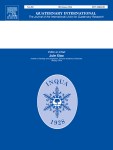
Piperno, D.R., McMichael, C.N.H., Pitman, N.C.A., Paredes, M.R., Torres-Montenegro, L.A. & Bush, M.B. (2024) Pre-Columbian vegetational and fire history in western Amazonia: Terrestrial soil phytolith and charcoal evidence from three regions. Quaternary International. DOI: 10.1016/j.quaint.2024.01.011

Ecological legacies of past fire and human activity in a Panamanian forest

February 23, 2023
WDG

Open access:

McMichael, C.N.H., Vink, V., Heijink, B.M., Witteveen, N.H., Piperno, D.R., Gosling, W.D. & Bush, M.B. (2023) Ecological legacies of past fire and human activity in a Panamanian forest. Plants, People, Planet 5, 281-291. DOI: 10.1002/ppp3.10344

Why palm fossils are important for the Amazon rainforest

March 14, 2022
ninahylkjewitteveen

With all the horror chaos in the world, science doesn’t seem like the most important thing. I forgot all about my paper, until I received an email, that… the first chapter of my PhD is published! Some positive news I would like to share with you.  

If you think about a stereotypical scientist, hidden in a lab, investigating every detail of a tiny thing…. that is great description of what I was doing! 

A snapshot of data analysis
Continue Reading

Vegetation responses to late Holocene climate changes in an Andean forest

May 31, 2019
Candurill

Vegetation responses to late Holocene climate changes in an Andean forest
By Klaas Land (currently studying MSc Biological Sciences (Ecology & Evolution) at the University of Amsterdam.

The discussion during the APC meeting on the 19th of March was on the paper by Schiferl et al. (2018), a very recent study on the climatic shifts in the late Holocene and their effects on the South American tropics. The study had analysed a core going back about 3800 years from Lake Palotoa, which was in the Andean foothills (1370m elevation). They found that subtle changes to the fossil pollen record could be identified around the estimated periods for the Little Ice Age (LIA) and Medieval Climate Anomaly (MCA). The focus in the paper Continue Reading

Blog at WordPress.com.