Netherlands Annual Ecology Meeting 2016 – day 2

February 10, 2016
WDG

NAEM_0Netherlands Annual Ecology Meeting (NAEM) 2016
10 February 2016
Conference Centre “De Werelt”, Lunteren

Day 2 of the NAEM breakfast 07:30, first lectures at 08:30… Two keynotes today thinking about ecological stoichiometry the first by Stan Harpole (Martin-Luther-Universitat-Halle-Wittenberg) focused on resource ratio theory, and then Martin Wassen (Utrecht University) thinking about N and P limitations. I also attended, parts of, three sessions today “Linkages between fire, vegetation, soil and ecosystem services”“Novel ecosystems”, and “Scaling from trait to environment and back”. My top talks for today were:

  1. Elmar Veenendaal (Wageningen University) Fire effects on tropical woody vegetation structure have been exaggerated?
    Working on long-term fire study plots (Kokondekro since 1932) suggest that for forest-savannah transition zones fire alone is insufficient to mediate a change between states; human manipulation of ecosystems is required as well to trigger the change.
  2. Frank van Langevelde (Wageningen University) Feedbacks between fire and patches of woody vegetation in tropical grassland savannah
    Examination of tree distributions and fire within the Kruger National Park shows that landscapes contain more clustered tree populations when fire frequency is higher.

Plus today I have done lots of talking and made many new contacts. I have lots of follow up emails to write and promised papers to send around! Overall this has been a super meeting for meeting people – perfect for expanding my network of Dutch based ecologists – in a nice location, with good food and beer. Looking forward to next year already.

Coring with the Livingstone Well-Aijen (The Netherlands)

February 10, 2016
WDG

Next to La Meuse river, near the villages of Welland Aijen, there is a large archaeological site with a long history of human occupation, including the remains of a large Mesolithic hunter gatherer community (see Marion Zijlema article for more details) The history of the site is deeply linked to the expansion and flooding of the river. In collaboration with archaeologists (Hanneke Bos) four UvA bachelor students are going to study the fossil pollen, phytoliths and charcoal from the Well-Aijen site to captured the environmental change that accompanied the human occupation. Yesterday (20 January – WDG late uploading post, sorry!) we visited the site to see what it was like, and to test out some equipment!

This slideshow requires JavaScript.

We decided to bring out the Livingstone corer (Geo-core), which is usually used from a boat in a lake (e.g. Lake Erazo), to test its capacities on terrestrial sediment. Knowing that the peat formation was not deep below and given that the corer-system gives a nice continuous record, it seemed worthy of giving it a try. We ended up learning a lot about how the corer functions and about problem solving in the field – almost everything that could go wrong, did go wrong. We really fought for every centimeter of sample! The team never suffered from low spirits though, despite it all. With jokes and hot tea on site we ended up having a very fun and insightful expedition. Any remaining low morale or cold feet quickly faded by the sight of pie at the end of the day.

(Photos: W.D. Gosling)


Netherlands Annual Ecology Meeting 2016 – day 1

February 10, 2016
WDG

NAEM_0Netherlands Annual Ecology Meeting (NAEM) 2016
9 February 2016
Conference Centre “De Werelt”, Lunteren

The annual Dutch ecology conference is being held over two days at the in “remote” Lunteren and I am pleased to be able to attend all of the conference this year. The conference was kicked off this morning with a recognition that this year is 150 years since the birth of ecology as a science (Haeckel, 1866). The opening two keynotes focused on aspects of ecology which have sometimes been overlooked firstly, parasitism (Peter Hudson, Penn State University) and secondly, immunology (Irene Tieleman, University of Groningen). Following these I focused on just two sessions in the morning “linking diversity to function”, and in the afternoon “ecosystem cascades”. From the range of excellent talks in the sessions I have picked one from each as my favourite:

  1. Masha van der Sande (Wageningen University) The role of biodiversity and environment on productivity in tropical forests; evidence across scales
    By examining long-term tropical forest monitoring data van der Sande demonstrated that through time ecosystem traits changed significantly. She hypothesised that the lack of stability in ecosystem traits was due to past disturbance; although it is unclear what caused this disturbance (climate or humans), or when it occurred.
  2. Dries Kuijper (Mammal Research Institute, Poland) Landscapes of fear in Europe: Wolves and humans shaping ungulate top-down effects
    By tracking Wolf pack distributions in the Bialowieza forest (Poland) Kuijper showed that ungulates avoided Wolf pack  “core areas” for fear of predation, that the exclusion of ungulates lead to reduced browsing of the vegetation, and so consequently forests regenerated faster in Wolf pack core areas.

The evening lecture was given by Bart Knols (in2care) who gave an impassioned talk on the importance of communicating science beyond the academic sphere. Arguing that now is the time for ecologists to have an influence on policy making, politics and business, as well as showing us how he has done this.

Great day.

Continue Reading

Quantifying late-Holocene climate in the Ecuadorian Andes using a chironomid-based temperature inference model

January 21, 2016
WDG

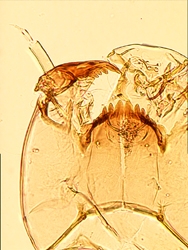
midge headOur latest manuscript has just been made available, via Climate of the Past Discussions, for comment and review. Click here to check it out. We look forward to hearing what people think.

Quantifying late-Holocene climate in the Ecuadorian Andes using a chironomid-based temperature inference model
Matthews-Bird, F., Brooks, S.J., Holden, P.B., Montoya, E. & Gosling, W.D.

Abstract below

Continue Reading

Published open access:

Hoogakker, B.A.A., Smith, R.S., Singarayer, J.S., Marchant, R., Prentice, I.C., Allen, J.R.M., Anderson, R.S., Bhagwat, S.A., Behling, H., Borisova, O., Bush, M., Correa-Metrio, A., de Vernal, A., Finch, J.M., Frechette, B., Lozano-Garcia, S., Gosling, W.D., Granoszewski, W., Grimm, E.C., Gruger, E., Hanselman, J., Harrison, S.P., Hill, T.R., Huntley, B., Jimenez-Moreno, G., Kershaw, P., Ledru, M.-., Magri, D., McKenzie, M., Muller, U., Nakagawa, T., Novenko, E., Penny, D., Sadori, L., Scott, L., Stevenson, J., Valdes, P.J., Vandergoes, M., Velichko, A., Whitlock, C. & Tzedakis, C. (2016) Terrestrial biosphere changes over the last 120 kyr. Climate of the Past 12, 51-73. DOI: 10.5194/cp-12-51-2016


In the news:

Jonathan Amos (2016) ‘Case is made’ for Anthropogenic Epoch. BBC News: Science & Environment.

Scientific publications:

Sarmiento, F.O. (2002) Anthropogenic change in the landscapes of highland Ecuador. Geographical Review 92, 213-234. doi: 10.1111/j.1931-0846.2002.tb00005.x

Swindles, G.T., Lamentowicz, M., Reczuga, M. & Galloway, J.M. (online)  Palaeoecology of testate amoebae in a tropical peatland. European Journal of Protistology. doi: 10.1016/j.ejop.2015.10.002

Tellkamp, M.P. (2014) Habitat change and trade explain the bird assemblage from the La Chimba archaeological site in the northeastern Andes of Ecuador. Ibis 156, 812-825. doi: 10.1111/ibi.12179

Waters, C.N., Zalasiewicz, J., Summerhayes, C., Barnosky, A.D., Poirier, C., Galuszka, A., Cearreta, A., Edgeworth, M., Ellis, E.C., Ellis, M., Jeandel, C., Leinfelder, R., McNeill, J.R., Richter, D.d., Steffen, W., Syvitski, J., Vidas, D., Wagreich, M., Williams, M., Zhisheng, A., Grinevald, J., Odada, E., Oreskes, N. & Wolfe, A.P. (2016) The Anthropocene is functionally and stratigraphically distinct from the Holocene. Science 351, . doi: 10.1126/science.aad2622

Past environmental change on Mauritius: Unknown macro-fossils

December 18, 2015
WDG

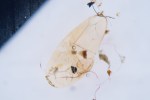
Unknown macro-fossil JdK-type2

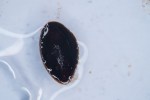
Unknown macro-fossil JdK-type2

Past environmental change on Mauritius has been the focus of research with the Palaeoecology & Landscape Ecology group at the University of Amsterdam (UvA) for a number of years. This research has been lead by Erik de Boer and Henry Hooghiemstra and has already resulted in a number of key publications on the environmental history of the island (de Boer et al., 2013, 2014, 2015). One current past environmental change research project working on Mauritius is being undertaken by Jona de Krui; a student within the UvA BSc Biology program supervised by myself and Erik. Jona’s is working on a study site (modern day swamp) on the north-east of the island and is focused on improving our understanding changes in the:

  • depositional environment (loss-on-ignition analysis),
  • fire activity (macro-charcoal analysis), and
  • vegetation (macro-fossils) over the last c. 1000 years.

Jona has now completed the analysis of all his samples and we are currently collating the data sets; however, a number of the macro-fossils which he has discovered remain unidentified. Below are images of the unknown macro-fossils if you have any suggestions on identifications please comment, or get in touch directly.

Continue Reading

BES annual meeting: Top talks

December 17, 2015
WDG

I am just back from a fabulous British Ecological Society (BES) annual meeting in Edinburgh. Both the city and the science were interesting and exciting. The Science Slam was certainly my highlight “fringe” event and I believe all the slams will be avaliable to view soon on the BES Youtube channel. But you can watch the winner, Rosie Woodroffe, now…

Of the many great science talks I would like to highlight just four here which I found particulalry interesting, by: Stephen Prentice (Queen’s University Belfast), Althea Davies (University of St. Andrews), Tom August (Cente for Ecology & Hydrology), and Kimberly Simpson (University of Sheffield).

Continue Reading

Open access online:

Matthews-Bird, F., Gosling, W.D., Coe, A.L., Bush, M., Mayle, F.E., Axford, Y. & Brooks, S.J. (2015) Environmental controls on the distribution and diversity of lentic Chironomidae (Insecta: Diptera) across an altitudinal gradient in tropical South America. Ecology and Evolution. DOI: 10.1002/ece3.1833


Blog at WordPress.com.