Brown, J.H. (2014) Why are there so many species in the tropics? Journal of Biogeography 41, 8-22. DOI: 10.1111/jbi.12228
Matamoro-Vidal, A., Prieu, C., Furness, C.A., Albert, B. & Gouyon, P. (2016) Evolutionary stasis in pollen morphogenesis due to natural selection. New Phytologist 209, 376-394.DOI: 10.1111/nph.13578
McMichael, C., Piperno, D., Neves, E., Bush, M., Almeida, F. & Mongelo, G. (2015) Phytolith assemblages along a gradient of ancient human disturbance in western Amazonia. Frontiers in Ecology and Evolution 3, 141. DOI: 10.3389/fevo.2015.00141
ter Steege, H. et al. (2015) Estimating the global conservation status of more than 15,000 Amazonian tree species. Science Advances 1.DOI: 10.1126/sciadv.1500936
Bakker, E.S., Gill, J.L., Johnson, C.N., Vera, F.W.M., Sandom, C.J., Asner, G.P. & Svenning, J. (2015) Combining paleo-data and modern exclosure experiments to assess the impact of megafauna extinctions on woody vegetation. Proceedings of the National Academy of Sciences. DOI: 10.1073/pnas.1502545112
Bakker, E.S., Pagès, J.F., Arthur, R. & Alcoverro, T. (2015) Assessing the role of large herbivores in the structuring and functioning of freshwater and marine angiosperm ecosystems. Ecography DOI:10.1111/ecog.01651
Dillehay, T.D., Ocampo, C., Saavedra, J., Sawakuchi, A.O., Vega, R.M., Pino, M., Collins, M.B., Scott Cummings, L., Arregui, I., Villagran, X.S., Hartmann, G.A., Mella, M., Gonzalez, A. & Dix, G. (2015) New Archaeological Evidence for an Early Human Presence at Monte Verde, Chile. PLoS ONE 10, e0141923. DOI: 10.1371/journal.pone.0141923
Göldel, B., Kissling, W.D. & Svenning, J. (2015) Geographical variation and environmental correlates of functional trait distributions in palms (Arecaceae) across the New World. Botanical Journal of the Linnean Society.DOI: 10.1111/boj.12349
Pardi, M.I. & Smith, F.A. (2015) Biotic responses of canids to the terminal Pleistocene megafauna extinction. Ecography. DOI: 10.1111/ecog.01596
Roy, N., Woollett, J. & Bhiry, N. (2015) Paleoecological perspectives on landscape history and anthropogenic impacts at Uivak Point, Labrador, since AD 1400. The Holocene 25, 1742-1755. DOI: 10.1177/0959683615591350
Posted on behalf of Barry Lomax Linnean Society Palynology Specialist Group meeting Tuesday 24 November 2015
Provisional program
10:30 – 11:00 Barry Thomas (Aberystwyth University). Ecological interpretations of Asturian and Cantabrian lycophyte microspore floras of the Variscan Foreland and the Appalachian Province of the Central Coalfields of the U.S.A
11:00 – 11:30 Adele Julier (Open University). Can FTIR spectroscopy be used to identify grass pollen?
14:00 – 14:30 Viktória Baranyi1 (Oslo Universiy). Morphology and wall-ultrastructure of Froelichsporites traversei, an enigmatic sporomorph from the Late Triassic in North America.
14:30 – 15:00 Hannah Banks (Royal Botanic Gardens Kew). Functional and phylogenetically useful structures in Caesalpinioid legume pollen.
15:00 – 15:30 Sam Slater (Sheffield University). A quantitative analysis of Middle Jurassic vegetation dynamics based on dispersed spore/pollen assemblages from the Ravenscar Group, North Yorkshire, UK.
Afternoon tea 15:30 – 16:00
16:00 – 16:30 Alex Askew (Sheffield University). A palynological investigation of the Middle Devonian of northern Spain: hunting for the Kačák event.
16:30 – 17:00 Phil Jardine (Open University). A new use for old pollen: reconstructing past solar irradiance using pollen chemistry.
Wine reception
To register please contact Barry Lomax (Group secretary)
Mackenzie, G., Boa, A.N., Taboada, A.D., Atkin, S.L. & Sathyapalan, T. (2015) Sporopollenin, the least known yet toughest natural biopolymer. Frontiers in Materials 2. DOI: 10.3389/fmats.2015.00066
Nelson, B.W., Ferreira, C.A.C., da Silva, M.F. & Kawasaki, M.L. (1990) Endemism centers, refugia and botanial collection density in Brazilian Amazonia. Nature 345, 714-716. DOI: 10.1038/345714a0
Souto, C.P., Kitzberger, T., Arbetman, M.P. & Premoli, A.C. (2015) How do cold-sensitive species endure ice ages? Phylogeographic and paleodistribution models of postglacial range expansion of the mesothermic drought-tolerant conifer Austrocedrus chilensis. New Phytologist 208, 960-972. DOI: 10.1111/nph.13508 COMMENT: Variation in genetic diversity used to infer the location of glacial refugia.
Open access online:
Flantua, S.G.A., Hooghiemstra, H., Grimm, E.C., Behling, H., Bush, M.B., González-Arango, C., Gosling, W.D., Ledru, M., Lozano-García, S., Maldonado, A., Prieto, A.R., Rull, V. & Van Boxel, J.H. Updated site compilation of the Latin American Pollen Database. Review of Palaeobotany and Palynology 223, 104-115. DOI: 10.1016/j.revpalbo.2015.09.008
Last week I took part in my first “palynologendagen” (pollen days) with the Palynologische Kring (Dutch palynology society). Unfortunately, due to a prior commitment (Chairing a British Ecological Society careers webinar) I was only able to take part on the second day.
Day two of the pollen days was “op de fiets” (on bikes) in true Dutch style. We met at Twente Fiets to pick up 36 bicycles and one tandem and headed out into the countryside!
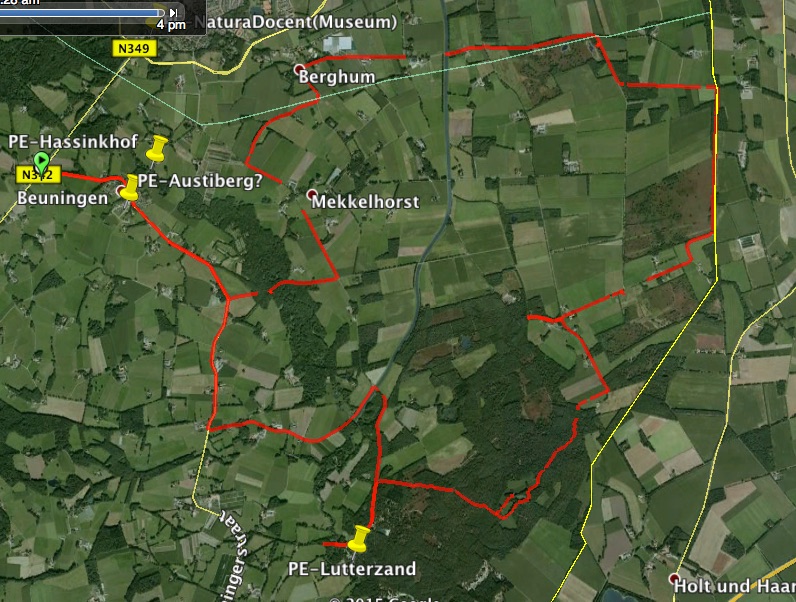
Figure 1: Route of the bicycle tour (max speed 21.8 kmph, distance 23.24 km)
Our route (Fig. 1) took in around 14 point of interest. At each point Harm provided interesting insights into the landscape history and how humans had interacted and shaped it. The presentations were in Dutch so I had to concentrate hard to get 50% of the information.
Two particularly nice sites (which I think I understood) were:
the site of an old toll house at the split in the old road to Germany (east) and Scandinavia (north), and
a sedimentary cross section, revealed by river down cutting, which showed the impact of cart wheels on the sediment along the site of an old road.
In addition to the tour it was also fantastic to meet many other fellow palynologists based in the Netherlands. I looking forward to being able to participate in many future Palynologische Kring events, and I am also pleased to say attending this years event has inspired me again to try and push on with learning Dutch again!
This slideshow requires JavaScript.
Journal articles
Clement, C.R., Denevan, W.M., Heckenberger, M.J., Junqueira, A.B., Neves, E.G., Teixeira, W.G. & Woods, W.I. (2015) The domestication of Amazonia before European conquest. Proceedings of the Royal Society of London B: Biological Sciences 282. DOI: 10.1098/rspb.2015.0813
Oliver, T.H., Heard, M.S., Isaac, N.J.B., Roy, D.B., Procter, D., Eigenbrod, F., Freckleton, R., Hector, A., Orme, C.D., Petchey, O.L., Proenca, V., Raffaelli, D., Suttle, K.B., Mace, G.M., Martin-Lopez, B., Woodcock, B.A. & Bullock, J.M. Biodiversity and Resilience of Ecosystem Functions. Trends in Ecology & Evolution. DOI: 10.1016/j.tree.2015.08.009
Watkins, C. (2015) Oliver Rackham OBE FBA 1939–2015. Landscape History 36, 5-8. DOI: 10.1080/01433768.2015.1044280
COMMENT: One of the books that inspired me to enter this field of research was Rackham’s Trees and woodlands in the British landscape; published the year I was born…
Bush, M.B. (1995) Neotropical plant reproductive strategies and fossil pollen representation. American Naturalist 145, 594-609. Stable URL: http://www.jstor.org/stable/2462970
Cárdenas, M.L., Gosling, W.D., Sherlock, S.C., Poole, I., Pennington, R.T. & Mothes, P. (2011) The response of vegetation on the Andean flank in western Amazonia to Pleistocene climate change. Science 331, 1055-1058. DOI: 10.1126/science.1197947
Logan, A.L. & D’Andrea, A.C. (2012) Oil palm, arboriculture, and changing subsistence practices during Kintampo times (3600–3200 BP, Ghana). Quaternary International 249, 63-71. DOI: 10.1016/j.quaint.2010.12.004
Characterization of Neotropical ecosystems by their modern pollen spectra and organic chemical composition
Develop skills in pollen identification, pollen chemical characterization, and the analysis of organic biomarkers.
Examine ecological variation across an altitudinal gradient of nearly 4000 meters on the tropical western Andean flank.
Improve understanding of how ecosystems function in a biodiversity hotspot, and how they might be identified in the fossil record.
The considerable biodiversity of Neotropical ecosystems is under pressure from projected climate change and human activity. Modern ecosystems can be characterized by their pollen rain and organic chemistry, which can in turn provide information about ecosystem health and functioning. However, little is known about how pollen assemblage and chemical composition (of pollen and plants) vary along environmental gradients. Altitudinal transects provide an opportunity to study a range of environments and ecosystems with a relatively small geographic area. By improving our understanding of modern ecosystems we can improve our interpretation of fossil records, and consequently better understand how modern ecosystems came into being.
The main objectives of this PhD project are to:
Generate the first modern pollen assemblage and chemical data set for the Neotropics,
Characterize the landscape-scale variation in pollen assemblage and chemistry composition, and
Identify the key environmental drivers that determines pollen assemblage and chemistry composition variation.
Publication date: 27 July 2015 Closing date: 18 September 2015
Level of education: University (Masters)
Hours: 38 hours per week
Salary indication: €2,125 to €2,717 gross per month
Vacancy number: 15-286
Applications should be emailed to application-science@uva.nl, with in the subject line the position you are applying for and vacancy number (15-286). Please make sure all your material is attached in only one pdf. Applications should include a detailed CV including educational experiences, a list of research projects and/or publications, a letter of motivation, relevant work experience, and the names and contact addresses of two academic referees from whom a reference for the candidate can be obtained.
For more details, including information on how to apply, click here (UvA), or here (via academic transfer).




 Ecology of the past