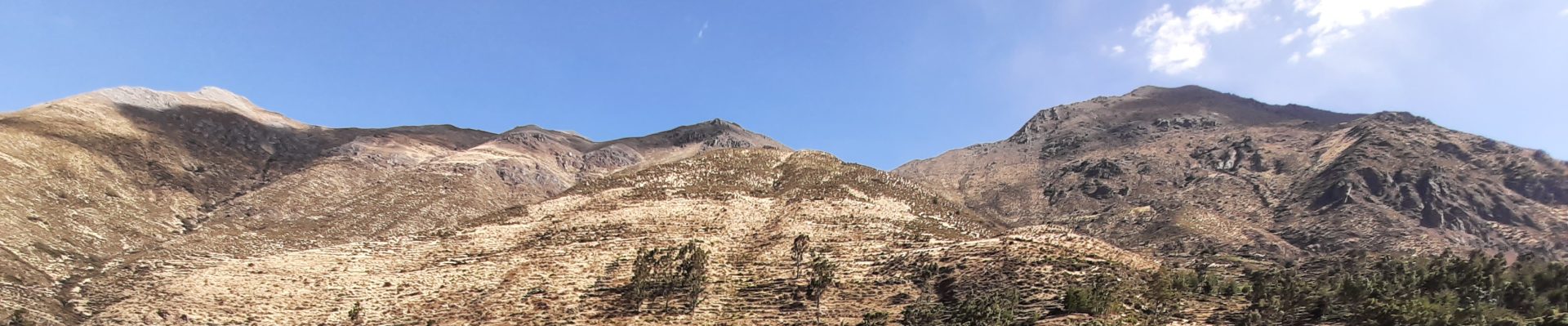
Teunissen van Manen, Milan L, Jansen, B., Cuesta, F., León-Yánez, S. & Gosling, W.D. (2020) From leaf to soil: n-alkane signal preservation, despite degradation along an environmental gradient in the tropical Andes. Biogeosciences Discussions 17, 5465–5487. https://doi.org/10.5194/bg-17-5465-2020
Prof. dr. Willem Renema Special Chair in Marine Palaeobiodiversity
Willem Renema, head of the Marine Biodiversity research group at Naturalis, has been appointed as a Special Chair in Marine Palaeobiodiversity within the Department of Ecosystem & Landscape Dynamics at the University of Amsterdam. I am delighted that Willem has joined the team coupling his expertise in marine tropical systems with our existing focus on terrestrial tropical settings will, I am sure, provide many new avenues of scientific endeavour. Catalysing collaboration between Naturalis and UvA will be five PhD researchers, employed on the Marie Skłodowska-Curie Innovative Training Network, who will be jointly supervised by Naturalis and UvA staff.
To find out more about Willem and his appointment click here.
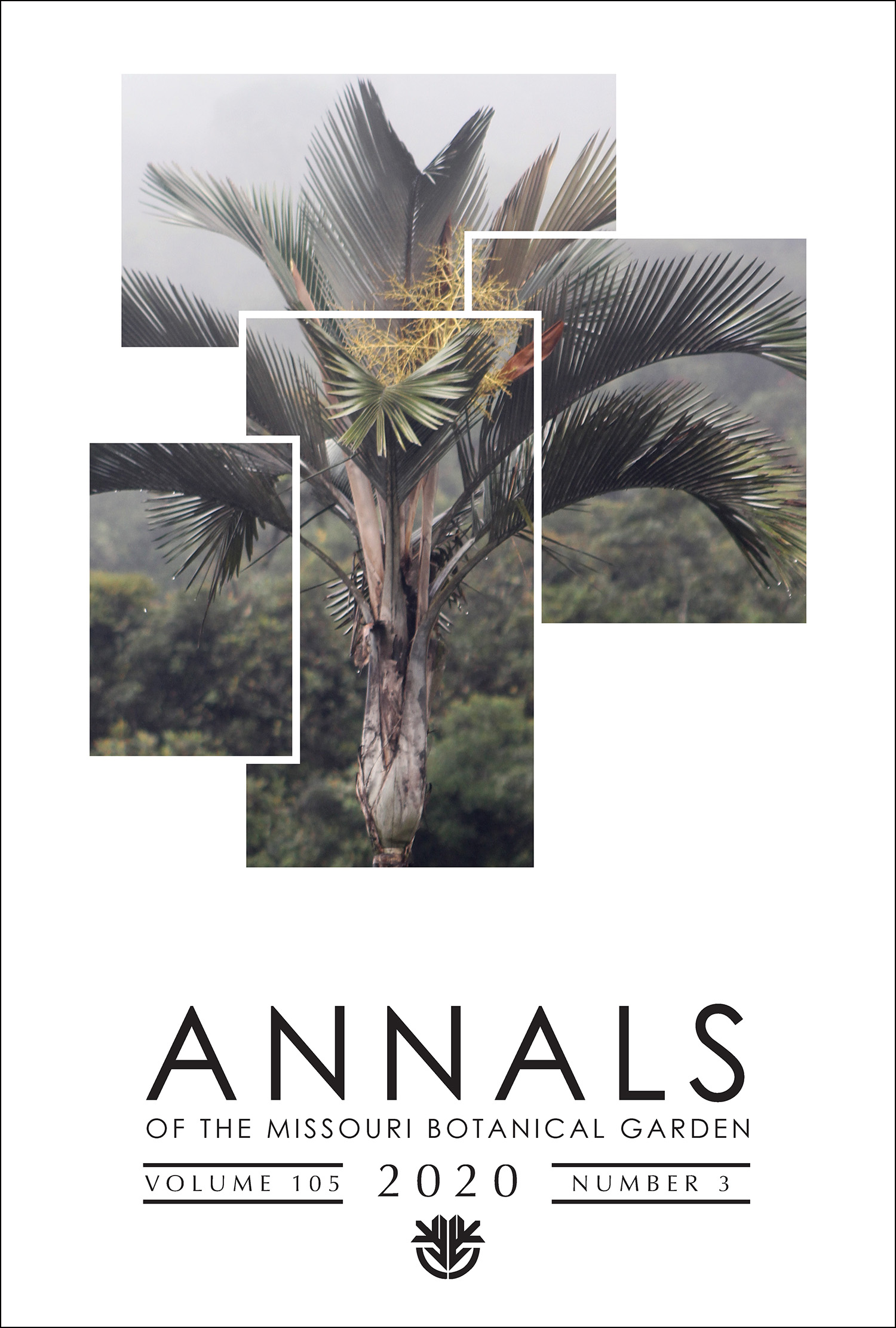
Bush MB. 2020. New and repeating tipping points: The interplay of fire, climate change, and deforestation in Neotropical ecosystems. Annals of the Missouri Botanical Garden 105:393-404. DOI: 10.3417/2020565
Do you have a PhD in Physical Geography, Environmental Sciences, Landscape Ecology or Soil Ecology? Have you got educational and research experience working with digital data to contribute to climate, geographic or biodiversity science? If so please consider applying for the 4-year post-doctoral position “Digital Environmental Sustainability” currently available within the Department of Ecosystem & Landscape Dynamics (Institute for Biodiversity & Ecosystem Dynamics, University of Amsterdam).
In search for the historical roots of grasses: A review of Neogene grass history in the Amazon drainage basin
Corresponding article: Kirschner, J. A., & Hoorn, C. (2019). The onset of grasses in the Amazon drainage basin, evidence from the fossil record. Frontiers of Biogeography. DOI: 10.21425/F5FBG44827
Within the overarching context of Plant Ecology & Diversity the “Global change & vegetation dynamics” subject area aims to place a temporal component on key themes such as biodiversity, conservation and ecosystem function. Manuscripts are welcome that use long-term (palaeo-) ecological approaches, modern field observations and laboratory experiments, and computational modelling to explore change and dynamics within ecosystems. We welcome all formats of manuscripts to this section (original research articles, rapid communication articles, review articles, and perspectives articles). If you have any questions about the potential suitability of your research in the journal please do not hesitate to get in contact.
The editorial team handling this section of the journal currently comprises myself as Subject Editor and six Associate Editors. To find out more about us, our research interests and expertise read on…
My name is Majoi Nascimento, I just started a new job as a postdoc researcher at the University of Amsterdam working on an ERC project named ALPHA (Assessing Legacies of Past Human Activities in Amazonia with Crystal McMichael). The main focus of ALPHA is to investigate the role of human disturbance and recovery processes that have occurred over the past few millennia in Amazonia, and their effects on the biodiversity and carbon dynamics that are observed there today. To do a good job, it is important that we understand the concepts of disturbance and recovery, but also the processes that underlie forest resilience. That is the reason why we decided to read and discuss this work from Adolf et al. 2020 “Identifying drivers of forest resilience in long-term records from the Neotropics”, published in the journal Biology Letters, during one of our lab meetings.
van der Sande, M.T., Bush, M.B., Urrego, D.H., Silman, M., Farfan-Rios, W., García Cabrera, K., Shenkin, A., Malhi, Y., McMichael, C.H. & Gosling, W.D. (2020) Modern pollen rain predicts shifts in plant trait composition but not plant diversity along the Andes-Amazon elevational gradient. Journal of Vegetation Science DOI: 10.1111/jvs.12925.
Hi everyone, and welcome to the ALPHA project: Assessing Legacies of Past Human Activities in Amazonia!
This project will increase our understanding of how past disturbances have influenced the biodiversity and structure of Amazonian rainforests. The coming years, we will work on reconstructing past fire and vegetation history of forest plots in Amazonia, and how that history relates to modern biomass and modern carbon dynamics. ALPHA is important for forest conservation, because results can be used to prioritize land for conservation. ALPHA results will also give an estimation of the Amazonian rainforests’ ability to sequester carbon, which is important for global carbon models. dr. C.N.H. McMichael received an ERC grant to research ALPHA in Amazonia together with 2 PhD students, 1 post-doc, 2 technicians and a senior-staff. At the beginning of March, the positions were filled, and our team was complete. But then COVID-19 happened… and our team was spread over continents!
To keep ALPHA going, we started with weekly virtual lab meetings. Because these fruitful discussions are online, other researchers soon joined from the US, UK and Jamaica. It is not your average “vrijmibo”, but very fun and a nice way to stay connected! One of the papers we have discussed is the “Asynchronous carbon sink saturation in African and Amazonian tropical forests” from Hubau et al (2020).
In 2015, Brienen et al. published an article about the growth and mortality of trees in Amazonian rainforests for the period of 1985 to 2015. Their results showed a decline of the carbon sink in Amazonian forests.
Now, Hubau et al. (2020) added results from African forest plots and compared the net carbon sink of the African and Amazonian forests. Instead of a long-term decline, African forests showed a stable carbon sink. The difference in their carbon sink was because more trees died in Amazonia, but not in African forests. But since 2010, a decline is also visible in the carbon sink of African forests. This suggests that the two forests have a different ‘saturation’ point in the carbon they can storage.
A statistical model with CO2, temperature, drought and forest dynamics was created to predict the carbon changes of the forests over time. This model predicts that the carbon sink of African forests will show a gradual decline and the carbon sink of Amazonian forests will decline fast.
Overall, this paper highlights that our rainforests may not be the carbon sink we had thirty years ago. We will need to reduce greenhouse gas emissions sooner, if we want to limit global warming. Also, this paper showed how important forest dynamics are to accurately model and predict the carbon storage of Amazonia. Hopefully, the ALPHA research project will make a contribution to this!
 Open access:






 Ecology of the past