Introducing Nina Witteveen

April 6, 2018
WDG

My name is Nina Witteveen and I’m doing a research project for my master (Biological Science) with Crystal McMichael and William Gosling. I’m analyzing phytoliths to reconstruct the vegetation changes of Campo Libre (Napo, Ecuador) of the past 30,000 years. It is so exciting to count phytoliths of such an old age!

Simon Scholz is currently doing a charcoal analysis and two years ago, Maaike Zwier performed a physical analysis in the sediment. With all these results combined, I will investigate how climate changes and human influence have changed the vegetation of Campo Libre. Hopefully this research will give more insight into the effect of a changing climate on this biodiversity hotspot!

I’ve completed my thesis for the Biology bachelor at the UvA under the supervision of Crystal and Will. Together with other students we performed phytoliths, pollen and charcoal analysis from sediment of Well-Aaijen (Limburg, the Netherlands). More specifically, I’ve looked at the vegetational changes during the transition from hunter-gatherers to farmers through pollen and phytolith analysis. I’m very happy to be working with Crystal and Will again, this time in a more tropical setting!

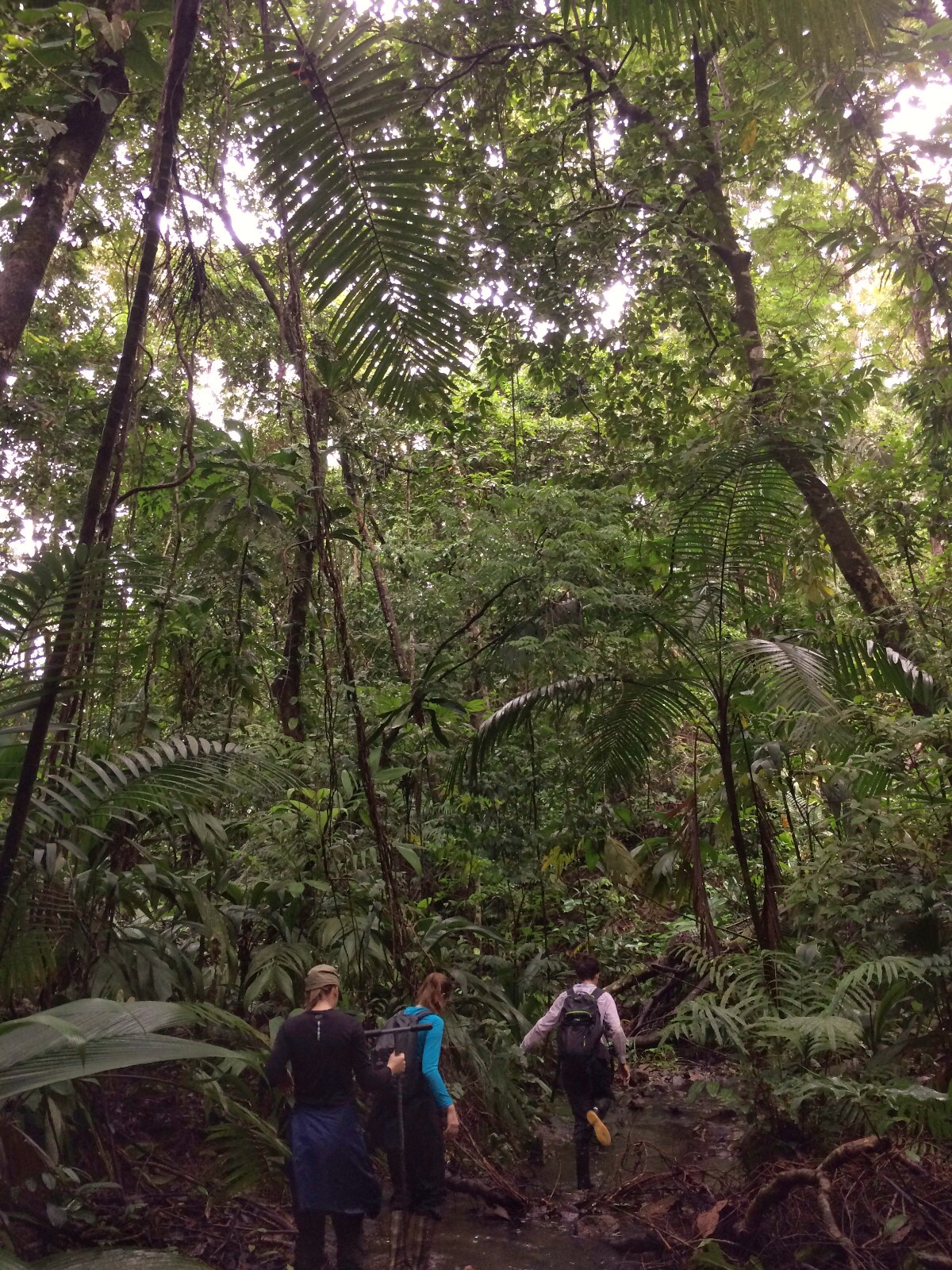
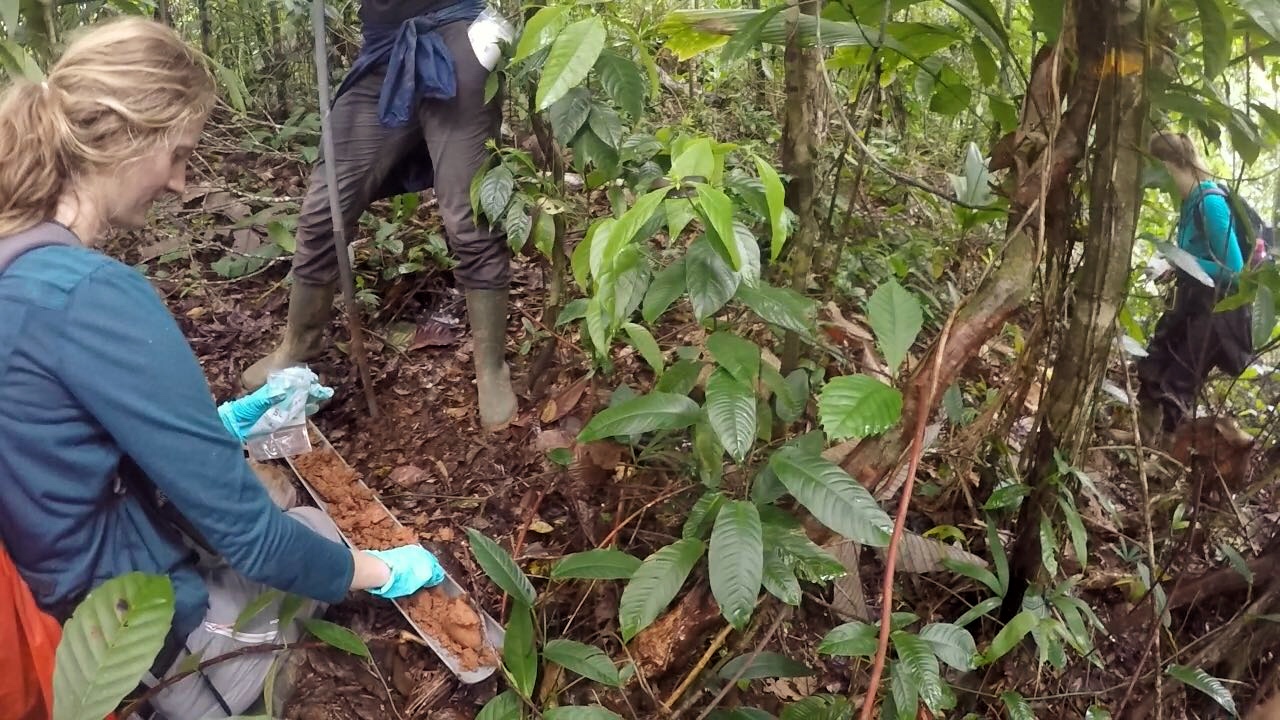
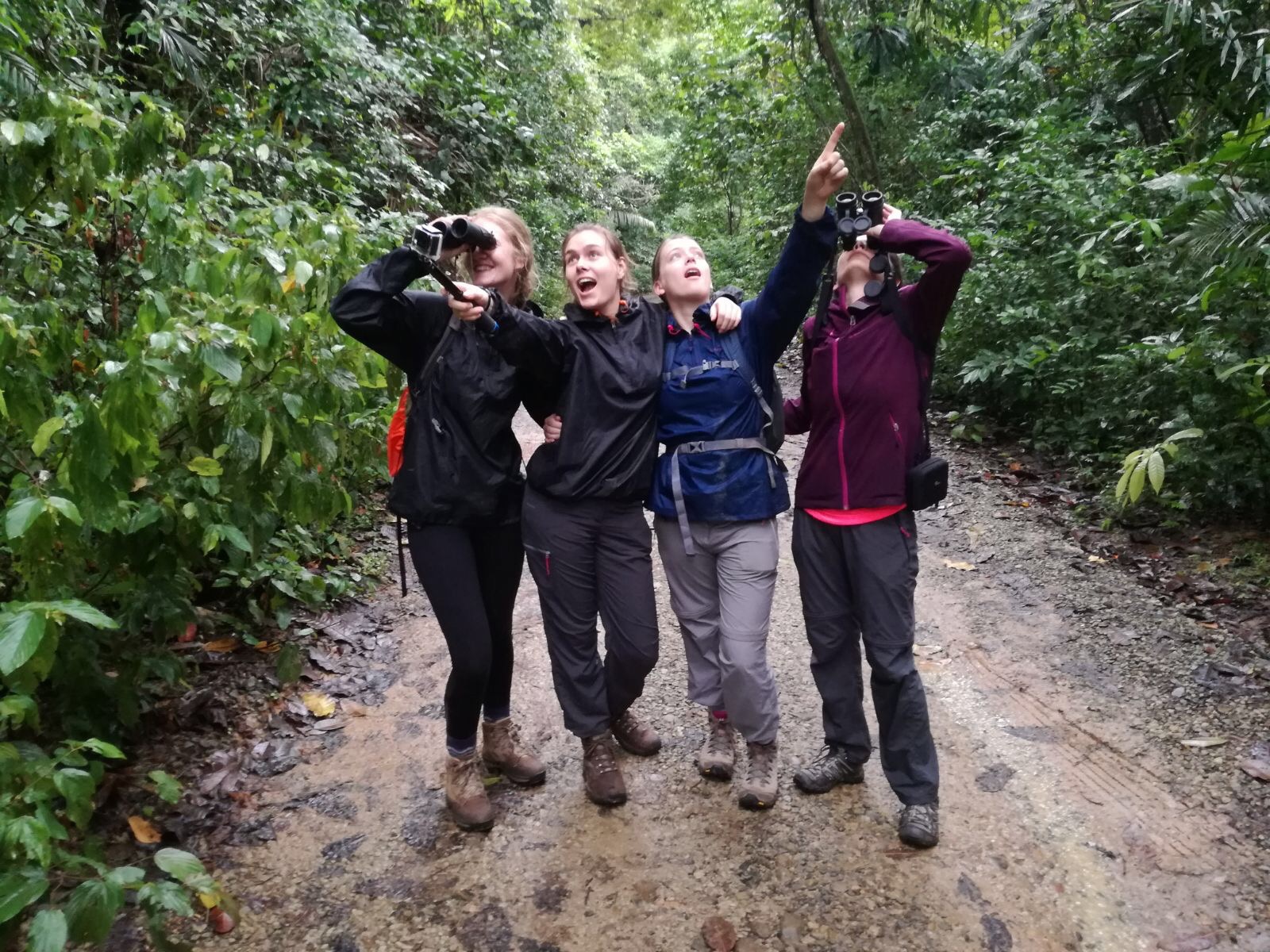
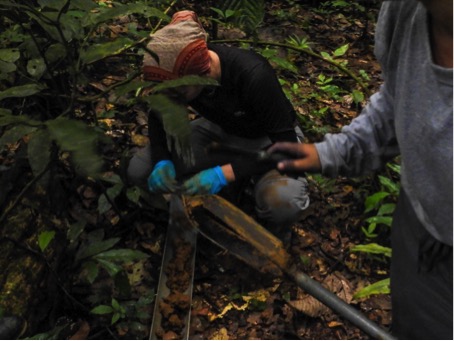
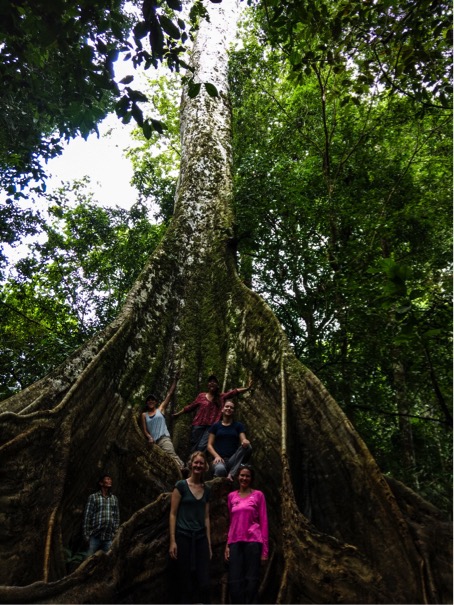
In January of this year, I travelled to Panama with Veerle Vink, Britte Heijink and Crystal McMichael. It was a great experience! Surrounded by Howler Monkeys, we made our way through streams and Geonoma palms to collect soil surface samples for future phytolith analysis. Definitely a highlight of my fieldwork so far! I am now back in the microscope lab, and always up for a (paleo)chat 🙂


Polylepis woodland dynamics during the last 20,000 years

March 23, 2018
WDG

Valencia, B.G., Bush, M.B., Coe, A.L., Elizabeth, O. & Gosling, W.D. (2018) Polylepis woodland dynamics during the last 20,000 years. Journal of Biogeography online. DOI: 10.1111/jbi.13209

Introducing Britte Heijink

March 2, 2018
WDG

Veerle and I trying to protect ourselves from the mosquitos.

Veerle and I trying to protect ourselves from the mosquitos.

Hi all!

My name is Britte Heijink and I’m doing my MSc Biological Science thesis research project with Crystal McMichael and William Gosling. I travelled with Veerle Vink and Crystal to the Colombian part of Amazonia to collect samples for my project. At Amacayacu National Park, we collected soil cores from different locations in the plot. Now that we’re back in Amsterdam, I’m analysing the soils to reconstruct the fire and vegetation history from the plot using charcoal and phytoliths. I am specifically looking to see if humans have been present in the system and how they potentially affected the vegetation at Amacayacu.

 Here I’m Sampling pieces of soil cored by Louisa and checking for large pieces of charcoal

Here I’m Sampling pieces of soil cored by Louisa and checking for large pieces of charcoal

I’ve completed my bachelor thesis for Bèta-Gamma (Liberal Arts and Sciences) under the supervision of Crystal and Will here at the UvA. I’m really excited to work with them again, and already looking forward to our meetings at the Oerknal 😉  I will be finished by the end of September, and then possibly return for a literature study.

One of the most wonderful experiences in my academic career so far has been the fieldwork to Panama and Colombia with Crystal, Veerle, and Nina. It was a lot of hard work, and 90% of our time was spent covered in mud, sweat, and insect repellant, but the experience of working in a tropical rainforest was completely worth it! Veerle and I will write another blog about our fieldwork soon. Come see us in the microscope lab if you want to hear our dangerous and amazing stories before that!

Cheers,

Britte

Our last day in the Amazon was spend with some of the local students, Louisa Fernando Gomez Correa and Mariana Gutierrez Munera.

Our last day in the Amazon was spend with some of the local students, Louisa Fernando Gomez Correa and Mariana Gutierrez Munera.

Job: Assistant/Associate Professor in Palaeoecology & Vegetation Dynamics

February 27, 2018
WDG

New Assistant/Associate Professor position advertised for the Palaeoecology group “down the road” at Utrect University.

Closing data: 31/03/2018
To find out more and apply click here.
Find out about Palaeoecology in Utrecht click here.


Long-Term Vegetation Dynamics in a Megadiverse Hotspot

February 20, 2018
WDG

Open access:

Montoya, E., Keen, H.F., Luzuriaga, C.X. & Gosling, W.D. (2018) Long-term vegetation dynamics in a megadiverse hotspot: The Ice-Age record of a pre-montane forest of central Ecuador. Frontiers in Plant Science 9, 196. doi: 10.3389/fpls.2018.00196

Netherlands Annual Ecology Meeting 2018 – day 2

February 15, 2018
WDG

Having fun with bingo at #NAEM2018 #NAEMbingo

Having fun with bingo at #NAEM2018 #NAEMbingo

Yesterday was the second, and final, day of the Netherlands Annunal Ecology Meeting (NAEM) for 2018. Having stayed up rather later than I would normally for a Tuesday night, due to the  the gezellig atmosphere, the scrambled eggs and coffee were very welcome for breakfast. We were then on with the conference with parallel sessions starting at 08:30.

First up I opted for the session on “Monitoring biodiversity change: Essential biodiversity variables and beyond” organised by Daniel Kissiling (University of Amsterdam) and Rob Jongman (Wageningen University & Research). In the session new IBED PhD research Zsofia Koma presented a nice talk on the potential of LiDAR for evaluating ecosystem change, and Franziska Schrodt (University of Nottingham) looked at how we can link biodiversity and geodiversity. I found the talk by Franziska highlighting the importance of linking the abiotic and biotic components of the landscape particulalry stimulating as it links very well with much ongoing work within both the Department of Theoretical & Computational Ecology (Biogeography & Macroecology) and Ecosystem & Landscape Dynamics (Biodiversity & Geodiversity in the tropics) here at IBED.

Having fun online at #NAEM2018

Having fun online at #NAEM2018

To take us to lunch were two plenary lectures on the theme of these were given by Katja Poveda (Cornell University) and Erik Polman (replacing Marchel Dicke; Wageningen University). Both talks illustrated the complexity of natural systems and landscapes.

After lunch I chose the “Animal Ecology” session charied by Chris Smit (University of Groningen) and Patrick Jansen (Wageningen Research & University). I really enjoyed the first two talks in this session which highlighted the complexity that animals add to ecosystems. First up Esther Rodriguez (PWN) showed the differential impact of European bison and wild horses on vegetation (Cromsigt et al., 2017). Then Annelies van Grinkel (University of Groningen) presented her work trying to discover if deer in the Netherlands are still scared of wolves after the absence of wolves from the Netherlands for the last 150 years; this included some nice camera trap footage of deer running away from hand soap!

Overall a fun meeting, I met lots of new people, and saw lots of great talks so will definatly be back next year. Thanks to all the organisers for putting on such as show.

Netherlands Annual Ecology Meeting – bingo

February 14, 2018
WDG

This year at the Netherlands Annual Ecology Meeting participants have been challenged to draw a pictire about a talk that they see as part of the science bingo event 

Netherlands Annual Ecology Meeting 2018 – day 1

February 13, 2018
WDG

Today the Dutch ecological community has convened at the Netherlands Annual Ecology Meeting (NEAM) in the forest near Lunteren. The meeting was kicked off by plenary lectures by Trisha Atwood and Han Olff who talked to the theme of “Ecosystem functioning in a changing world”. Trisha highlighted the importance of animals in modifying plant communities and their consequent importance for understanding changes in carbon storage. Han illustrated the complexity of ecological networks and posed the significant challenge of understanding changes in competing networks. Following the plenaries I chose two sessions to follow. The first on “Plant Ecology” and the second on “Ecosystem Resilience”. There were many exciting talks in both sessions, two of which grabbed my attention. Mara Baudena (Utrecht University) highlighted the complexity of modelling forest-grassland interactions in Africa, while Sofia Gomes (Naturalis Biodiversity Centre) showed surprising (to me) variation in mychorizal fungi across the globe.Furthermore four talks were presented by researchs at my home, the Institute for Biodiversity & Ecosystem Dynamics (University of Amsterdam):

  • Crystal McMichael “Ancient human disturbances may be skewing our understanding of Amazonian ecology”
  • Milan Teunissen van Manan “Species specific responses in leaf wax n-alkane composition from six tropical tree species”
  • Kenneth Rijsdijk “Assessing the resiliance of insular species to past climate change”
  • Seringe Huisman “Characterization of phytoliths in premontance western Amazonian forests”

So an exciting day, now for food and beer, and back on it tomorrow! Follow live on Twitter 

Impact of mid- to late Holocene precipitation changes on vegetation across lowland tropical South America: A paleo-data synthesis

February 8, 2018
WDG

Tribute to Daniel Livingstone and Paul Colinvaux in Quaternary Research

  • Smith, R.J. & Mayle, F.E. (2018) Impact of mid- to late Holocene precipitation changes on vegetation across lowland tropical South America: A paleo-data synthesis. Quaternary Research 89, 134-155. DOI: 10.1017/qua.2017.89
Blog at WordPress.com.