
Shining a light on fossil sunshine

December 15, 2016
WDG

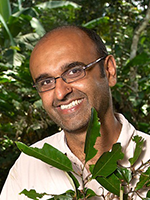
Dr. Phil Jardine

Dr. Phil Jardine

An international team of scientists have reconstructed the longest ever record of past sunshine using pollen trapped in lake sediments collected in Ghana, Africa. The study published today in Scientific Reports enables us to understand past changes in solar input to the global system over the past 140,000 years. Previously we have had to rely upon computer models to mathematically determine past solar inputs to the Earth. “This work really is a first; being able to peer back in time to understand how the Sun has driven our global system over many of thousands of years is a very exciting prospect” said joint-lead author Dr. Phillip Jardine of The Open University.

The Sun is a key component of our natural environment, driving a multitude of processes at Earth’s surface, from photosynthesis generating energy within plants, through to global-scale circulation patterns in our oceans and atmosphere. Understanding more about how the Sun has behaved in the past, and the influence this had on Earth’s environment, will help scientists predict future climate change.

Dr. Jardine used a technique pioneered by one of his co-authors, Dr. Wesley Fraser of Oxford Brookes University, to determine past changes in solar input, specifically changes in ultraviolet (UV) radiation. Plants protect themselves from the harmful nature of ultraviolet radiation by incorporating a number of specific chemical compounds into their tissues that absorb and dissipate the energy of UV radiation. Pollen grains of flowering plants are also provided protection by these UV-absorbing chemicals, thus act as a long-term recorder of ultraviolet radiation from the Sun.

Pollen grains are readily trapped in lake sediments, where they can be preserved for millions of years. By extracting material from Lake Bosumtwi, Ghana, the pollen that was released by flowering plants thousands of years ago can be separated from the lake sediment and chemically analysed for UV-absorbing chemical compounds. It is this chemical signature within the ancient pollen grains that provides us with information about past levels of solar ultraviolet radiation.

“What we present here is a new opportunity to explore how the Earth has changed” said Dr. William Gosling (University of Amsterdam). “I am particularly excited about this because it will means that we can gain a better understanding of why vegetation changed in the past, and consequently this will allow us to anticipate better what the likely impacts of projected future climate change will be.”

This study is available now at www.nature.com/articles/srep39269

Jardine PE, Fraser WT, Lomax BH, Sephton MA, Shanahan TM, Miller CS & Gosling WD (2016) Pollen and spores as biological recorders of past ultraviolet irradiance. Scientific Reports. DOI: 10.1038/srep39269

Tropical forests in the Anthropocene

November 8, 2016
WDG

Yadvinder MalhiSeminar
Institute for Biodiversity & Ecosystem Dynamics
University of Amsterdam

Tropical forests in the Anthropocene
by Prof. Yadvinder Malhi (University of Oxford)

16:00-17:00, 24 November 2016
Science Park, Amsterdam
If you want to attend please click here for full details.

ABSTRACT: Continue Reading

Biodiversity and global change in the tropics

November 7, 2016
WDG

Treub Maatschappij – Society for the Advancement of Research in the Tropics
&
Institute for Biodiversity and Ecosystem Dynamics (IBED),University of Amsterdam

“Biodiversity and global change in the tropics”

Coordinators: Carina Hoorn & W. Daniel Kissling
Time: Thursday 17 November 2016, 13:30-17:00
Location: University of Amsterdam, Science Park (click here for link to registration)

PROGRAMME Continue Reading

Hall, S.A. (2010) Early maize pollen from Chaco Canyon, New Mexico, USA. Palynology 34, 125-137. DOI: 10.1080/01916121003675746

Janzen, D.H. (1967) Why mountain passes are higher in the tropics. The American Naturalist 101, 233-249. DOI: 10.1086/282487

Tovar, C., Arnillas, C.A., Cuesta, F. & Buytaert, W. (2013) Diverging responses of tropical Andean biomes under future climate conditions. PLoS ONE 8, e63634. DOI: 10.1371/journal.pone.0063634

Shanahan, T.M., Hughen, K.A., McKay, N.P., Overpeck, J.T., Scholz, C.A., Gosling, W.D., Miller, C.S., Peck, J.A., King, J.W. & Heil, C.W. (2016) CO2 and fire influence tropical ecosystem stability in response to climate change. Scientific Reports 6, 29587. DOI: 10.1038/srep29587

Bush, M.B. & McMichael, C.N.H. (2016) Holocene variability of an Amazonian hyperdominant. Journal of Ecology online. DOI: 10.1111/1365-2745.12600

Tropical palynology meeting

July 8, 2016
WDG

PalykringThe Palynologische Kring (Palynological Association)
Tropical palynology meeting
14 July 2016

Hosted by: Palaeoecology & Landscape Ecology, Institute for Biodiversity & Ecosystem Dynamics, University of Amsterdam
Located: Science Park 904
Organised: Carina Hoorn (if you want to attend please contact Carina for further details)


Speakers

  • 14.00-14.30 Suzette Flantua (University of Amsterdam) – Thriving palynological research in Latin America: What has been done and what’s next.
  • 14.30-15.00 Dunia Urrego (University of Exeter, UK)- Tropical and subtropical vegetation dynamics over orbital and millennial timescale
  • 15.00-15.30 Coffee break
  • 15.30-16.00 William Gosling (University of Amsterdam) – Long-term solar and ultraviolet-B irradience detected using sporopollenin chemistry
  • 16.00-16.30 Kim Hagemans (Utrecht University) – High Andean vegetation responses to changes in palaeo-ENSO

Climate change and precipitation in past present and future: Mini symposium

June 13, 2016
WDG

Research Group of Palaeoecology & Landscape Ecology
Institute for Biodiversity & Ecosystem Dynamics
University of Amsterdam

Date: 17/06/2016
Time: 13:30-16:00
Location: Amsterdam Science Park 904
For registration & full details please contact: Dr. John van Boxel

When addressing climate change the focus often is on temperature. However precipitation is a climate variable that is at least as important, but much more difficult to assess. This mini symposium will address several aspects of the changes in the precipitation climate. William Gosling shows how climates in the far past can be reconstructed using proxies. One of these proxies, biomarkers, will be discussed by Susanna Mölkänen, who uses them to reconstruct altitudinal gradients. John van Boxel discusses 20th century climate change in the Netherlands focussing on changes in precipitation extremes. The models that are used to study climate change are the topic of the presentation by Geert Lenderink from KNMI. Some of these models were also used by Emma Daniels (WUR) to study the effect of urbanisation on precipitation in the Netherlands. For anyone involved in climate change and precipitation this should be an interesting afternoon.

Outline program below:

Continue Reading

New literature review published open access:

Flantua, S.G.A., Hooghiemstra, H., Vuille, M., Behling, H., Carson, J.F., Gosling, W.D., Hoyos, I., Ledru, M.P., Montoya, E., Mayle, F., Maldonado, A., Rull, V., Tonello, M.S., Whitney, B.S. & Gonzalez-Arango, C. (2016) Climate variability and human impact in South America during the last 2000 years: Synthesis and perspectives from pollen records. Climate of the Past 12, 483-523. doi: 10.5194/cp-12-483-2016

Bakker, E.S., Gill, J.L., Johnson, C.N., Vera, F.W.M., Sandom, C.J., Asner, G.P. & Svenning, J. (2015) Combining paleo-data and modern exclosure experiments to assess the impact of megafauna extinctions on woody vegetation. Proceedings of the National Academy of Sciences. DOI: 10.1073/pnas.1502545112

Bakker, E.S., Pagès, J.F., Arthur, R. & Alcoverro, T. (2015) Assessing the role of large herbivores in the structuring and functioning of freshwater and marine angiosperm ecosystems. Ecography DOI:10.1111/ecog.01651

Dillehay, T.D., Ocampo, C., Saavedra, J., Sawakuchi, A.O., Vega, R.M., Pino, M., Collins, M.B., Scott Cummings, L., Arregui, I., Villagran, X.S., Hartmann, G.A., Mella, M., Gonzalez, A. & Dix, G. (2015) New Archaeological Evidence for an Early Human Presence at Monte Verde, Chile. PLoS ONE 10, e0141923. DOI: 10.1371/journal.pone.0141923

Göldel, B., Kissling, W.D. & Svenning, J. (2015) Geographical variation and environmental correlates of functional trait distributions in palms (Arecaceae) across the New World. Botanical Journal of the Linnean Society. DOI: 10.1111/boj.12349

Pardi, M.I. & Smith, F.A. (2015) Biotic responses of canids to the terminal Pleistocene megafauna extinction. Ecography.  DOI: 10.1111/ecog.01596

Roy, N., Woollett, J. & Bhiry, N. (2015) Paleoecological perspectives on landscape history and anthropogenic impacts at Uivak Point, Labrador, since AD 1400. The Holocene 25, 1742-1755. DOI: 10.1177/0959683615591350

Blog at WordPress.com.