Julier, A.C.M., Jardine, P.E., Coe, A.L., Gosling, W.D., Lomax, B.H. & Fraser, W.T. (2016) Chemotaxonomy as a tool for interpreting the cryptic diversity of Poaceae pollen. Review of Palaeobotany and Palynology 235, 140-147. DOI: 10.1016/j.revpalbo.2016.08.004
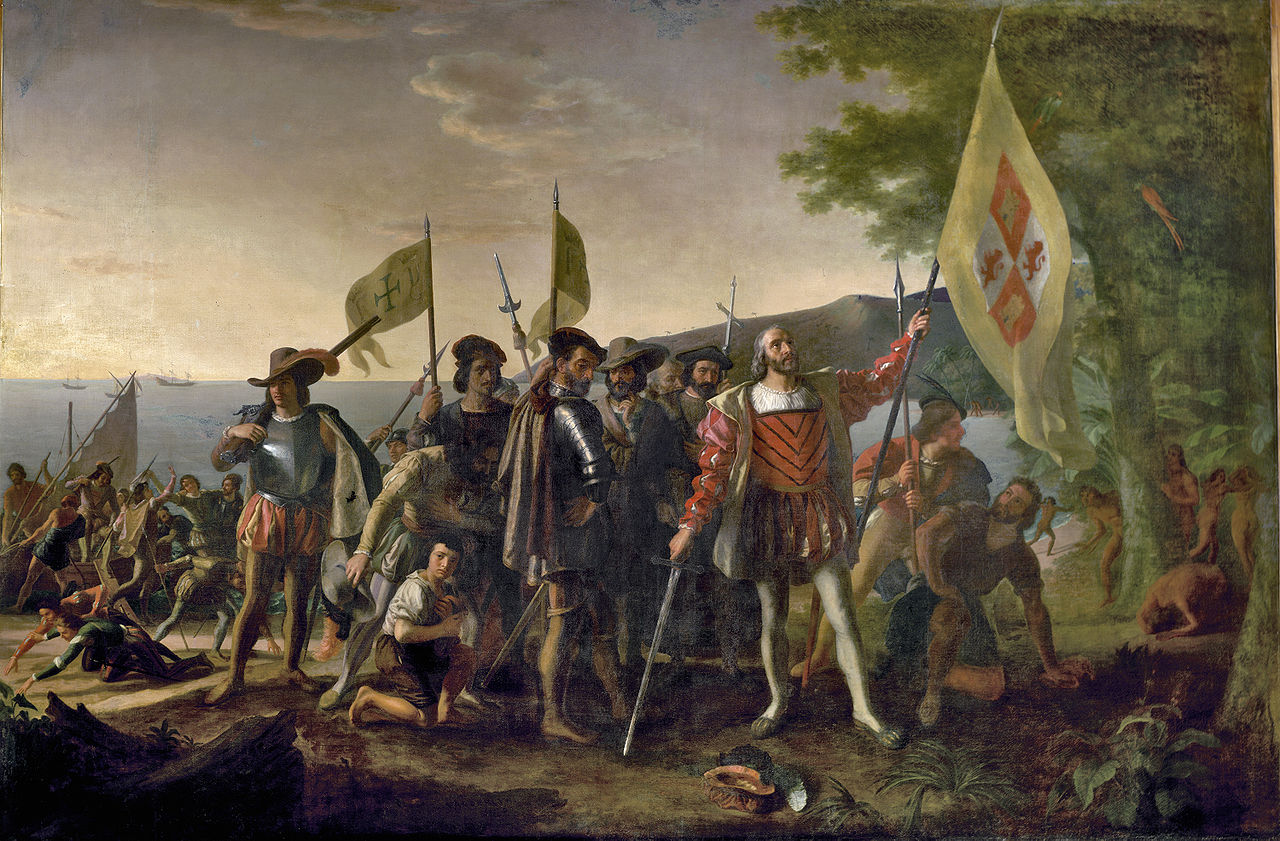
Title: Environmental change in the Yaque river area, northwestern Dominican Republic: Human impact before and after Columbus’ arrival in the New World
Date: Wednesday 26 October, 11:00-12:00
Location: Science Park 904 (please contact Henry Hooghiemstra for details if you want to attend)
Abstract: Multiproxy analysis of the 225-cm long sediment core Los Indios from the Yaque river valley in northwestern Dominican Republic (Hispaniola) shows environmental changes during the last 1150 cal yr BP. The observed changes show a period of little human distubance, followed by increasing human activity and a rapid intensification of these changes after Columbus’ arrival in AD 1492. The fastest changes on the landscape can be observed at 307 cal yr BP, when agricultural development in the Dominican Republic intensified.
When addressing climate change the focus often is on temperature. However precipitation is a climate variable that is at least as important, but much more difficult to assess. This mini symposium will address several aspects of the changes in the precipitation climate. William Gosling shows how climates in the far past can be reconstructed using proxies. One of these proxies, biomarkers, will be discussed by Susanna Mölkänen, who uses them to reconstruct altitudinal gradients. John van Boxel discusses 20th century climate change in the Netherlands focussing on changes in precipitation extremes. The models that are used to study climate change are the topic of the presentation by Geert Lenderink from KNMI. Some of these models were also used by Emma Daniels (WUR) to study the effect of urbanisation on precipitation in the Netherlands. For anyone involved in climate change and precipitation this should be an interesting afternoon.
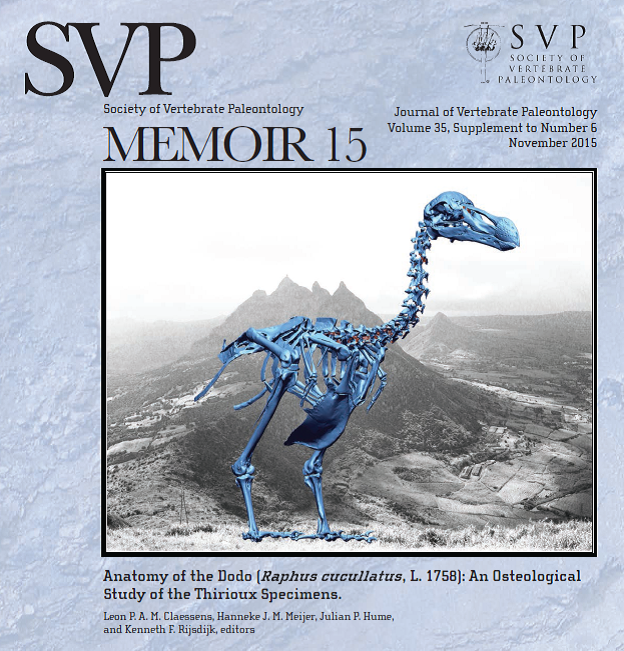
Leon P. A. M. Claessens, Hanneke J. M. Meijer, Julian P. Hume, and Kenneth F. Rijsdijk (Editors) Society of Vertebrate Paleontology Memoir 15, Journal of Vertebrate Paleontology Vol. 35, Supplement to No. 6, 187 pages.
15:00-15:30 Frank Wesselingh & the PRIDE team How high can you get? Mountain uplift driving diversification in Pontocaspian lakes before humans bring down the unique aquatic biota?
15:30-16:00 Christiaan van Baak Mediterranean-Paratethys connectivity during the late Miocene to recent
– 16:00-16:15 tea/coffee break –
16:15-17:15 Keith Richards Studies in Caspian palynology: Vegetation, climate and sea level change
Zoe and William just after the graduation ceremony (UvA)
Two students (Zoe van Kemenade and Tessa Driessen) have recently completed projects looking at past environmental change on Samoa working in the Research Group of Palaeoecology & Landscape Ecology at the University of Amsterdam (UvA). Zoe’s project, part of her BSc Future Planet Studies (major Earth Sciences) at UvA, was entitled “A multi‐proxy analysis on the effect of climate and human activity on the environment of Samoa during the Holocene” and investigated charcoal, macro-fossils, and algae. Tessa’s project, “Biodiversity, fire and human dynamics on Samoa over the last 9200 years”, was completed as an internship during her MSc in Environmental Biology at Utrecht University (UU) that was co-supervised by Rike Wagner-Cremer. Tessa focused on the fossil pollen record to reconstruct past vegetation change. Both projects were conducted in cooperation with Jon Hassel and David Sear (both University of Southampton) who provided access to the Samoan sediments; for more on the Southampton Pacific Islands projects check out their blog Palaeoenvironmental Laboratory at the University of Southampton.
The results from both projects, and work by the University of Southampton team, will be presented at this years GTO conference (European conference of tropical ecology) in Gottingen next week.
William giving his personal view on the work of Tessa at her gradation ceremony (UU)
Next to La Meuse river, near the villages of Welland Aijen, there is a large archaeological site with a long history of human occupation, including the remains of a large Mesolithic hunter gatherer community (see Marion Zijlema article for more details) The history of the site is deeply linked to the expansion and flooding of the river. In collaboration with archaeologists (Hanneke Bos) four UvA bachelor students are going to study the fossil pollen, phytoliths and charcoal from the Well-Aijen site to captured the environmental change that accompanied the human occupation. Yesterday (20 January – WDG late uploading post, sorry!) we visited the site to see what it was like, and to test out some equipment!
This slideshow requires JavaScript.
We decided to bring out the Livingstone corer (Geo-core), which is usually used from a boat in a lake (e.g. Lake Erazo), to test its capacities on terrestrial sediment. Knowing that the peat formation was not deep below and given that the corer-system gives a nice continuous record, it seemed worthy of giving it a try. We ended up learning a lot about how the corer functions and about problem solving in the field – almost everything that could go wrong, did go wrong. We really fought for every centimeter of sample! The team never suffered from low spirits though, despite it all. With jokes and hot tea on site we ended up having a very fun and insightful expedition. Any remaining low morale or cold feet quickly faded by the sight of pie at the end of the day.
My undergraduate studies were interdisciplinary in nature: I did a BSc Beta-Gamma (Institute for Interdisciplinary Studies (IIS), UvA) where students are taught to collaborate between different disciplines. Ecology has always been an interest of mine, so I was quick to specialize in that field. In my final year of my bachelor I came in contact with paleoecology and did not hesitate to make sure my first master’s project (MSc Biological Science, IBED, UvA) would be with the P&L research group (IBED) – a worked on a project on tropical rainforest dynamics in Miocene Amazonia. After that I got the chance to test my skills outside research institutes: during the Tesla consultancy Minor (IIS) I got firsthand practical experience in developing urban green areas from start to finish for the municipality of Amsterdam. The focus of that project was to increase the ecologic, educational, scientific, and social value of the natural areas on Amsterdam Science Park. It was great to see my scientific background put to good use outside the research community. The project is still active today.
After a short period of working in education and sustainability consultancy I seized the opportunity to, once more, join the P&L research group – this time as a Ph.D. student under the watchful eyes of William Gosling and Boris Jansen. My project revolves around characterizing biomarker and modern pollen-rain signals across the altitude of the Ecuadorian Andes vegetation. A great opportunity at the frontier of tropical research!
If the first week is any indication, I foresee to a lot of collaboration, hard work, exploration and adventure in the coming years!