To facilitate the our ability to identify pollen in the fossil record we have been building a searchable digital tropical pollen database. Our work builds upon the architecture provided by Bush & Weng (2007) for their Neotropical pollen database (Palaeoecology lab, Florida Institute of Technology). We have used Bush & Weng’s freeware tool and expanded it to include an additional 364 pollen and spore types from tropical Africa. The images are of pollen reference material collected over the career of Prof. Dan Livingstone and curated in the Department of Biology, Duke University; full collection details of each specimen are indicated on each individual electronic record. In conjunction with the open access publication “Atlas of the tropical West African pollen flora” (Gosling et al., 2013) we have made the entire updated pollen database available. We hope that this will prove to be a useful tool for palynologists working in Africa and the wider tropics and that it will encourage others to develop the database further.
Miller, C.S. (2014) 520,000 years of environmental change in West Africa. PhD Thesis, Department of Environment, Earth & Ecosystems, The Open University.
CSM (2014)
Abstract:
Global temperatures are predicted to rise by 2–2.5°C by 2065, profoundly affecting the Earth’s environment. The response of ecosystems to past climate fluctuations can inform on how systems will respond in the future. This thesis focuses on Quaternary environmental changes in West Africa, a region important because of its high ecological value and role in the global carbon cycle.
In 2004, the International Continental Drilling Program recovered c. 291m of sediments spanning the last c. 1 Myr from Lake Bosumtwi (Ghana). Pollen, charcoal and nitrogen isotopes (d15N) were analysed from the most recent c. 150m (c. 520 kyr). The latitudinal position and long duration of this core makes it unique for understanding West African monsoon dynamics and vegetation change.
To aid characterisation of the Bosumtwi pollen succession, an atlas of present-day pollen was constructed for 364 pollen and spore taxa.
The pollen record from Bosumtwi reveals dynamic vegetation change over the last c. 520 kyr, characterized by eleven biome shifts between savannah and forest. Savannah vegetation is dominated by Poaceae (>55%) associated with Cyperaceae, Chenopodiaceae-Amaranthaceae and Caryophyllaceae. Forest vegetation is palynologically diverse, but broadly characterised by Moraceae, Celtis, Uapaca, Macaranga and Trema. Low d15N values correspond to forest expansion and these are driven by high lake levels. The timescale indicates that the six periods of forest expansion correspond to global interglacial periods. The record indicates that the wettest climate occurred during the Holocene, and the driest during Marine Isotope Stage 7.
The vegetation and d15N records show a strong response to glacial-interglacial variability between c. 520–320 kyr and 130–0 kyr. Between c. 320–130 kyr there is a weaker response to glacial-interglacial cycles probably related to high eccentricity during the peak of the 400-kyr component of eccentricity, with high eccentricity resulting in greater seasonality and ultimately drier conditions.
The PDRA project will descover more about past vegetation and climate change in Lake Bosumtwi (Ghana)
We are seeking a PDRA to study past climate and vegetation change in tropical West Africa as part of the NERC-funded “500,000 years of solar irradiance, climate and vegetation changes” project. You will join a multidisciplinary collaborative research team and will work with an international network of project partners. The project will utilise cutting-edge organic geochemical techniques to generate the longest continuous record of fossil pollen chemistry change. The study will build upon previous research into the sediments recovered from Lake Bosumtwi (Ghana). The data generated will shed new light on the role of climate in driving vegetation change in the tropics.
You will already hold a PhD, or be near to completing your PhD, in a relevant scientific discipline with a background in the Earth or Environmental sciences. You must have substantial experience of organic geochemistry or tropical palynology, with well-developed self-management skills and the ability to prioritise effectively.
The PDRA will work with an associated PhD student looking at modern pollen-vegetation relationships in the same region.
The PDRA will be part of an international team; partners based at University of Nottingham, Oxford Brooks University, Imperial College London, Oxford University, University of Texas at Austin and the Forestry Research Institute of Ghana
Understanding how vegetation responded to past climate change requires the development of well constrained relationships between living floras, environment and climate. This project will help constrain the great uncertainty which exists as to how tropical ecosystems are represented in the fossil record by examining the relationship between modern vegetation and the pollen it produces. The project will analyse modern pollen rain using a combination of traditional microscopic analysis [1] and cutting edge geochemical techniques [2]. We anticipate that the findings will provide new insight into past vegetation and climatic change.
For further information on the project and how to apply see the full advert: NERC PhD advert. Prior to applying please check eligibility for NERC funding by clicking here.
Closing date: 25th April, interviews will be held at The Open University during May.
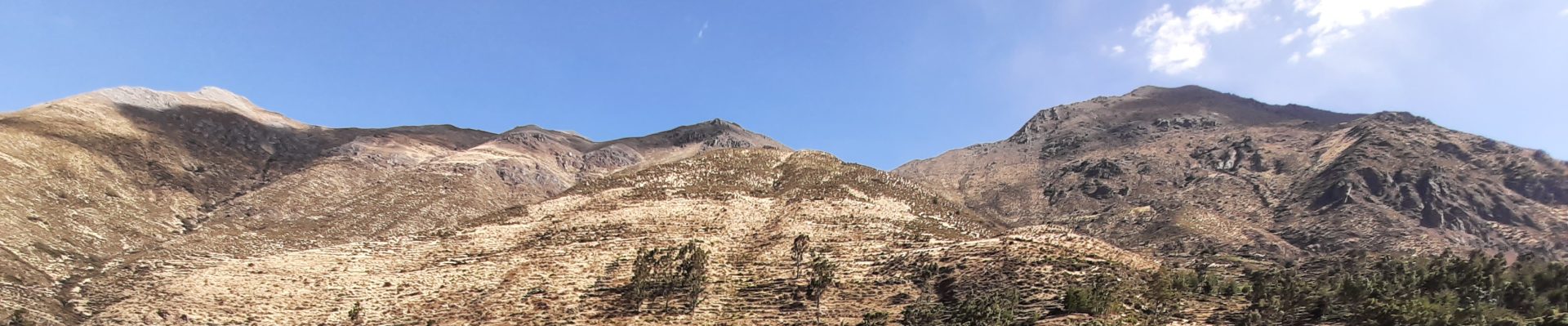
 To facilitate the our ability to identify pollen in the fossil record we have been building a searchable digital tropical pollen database. Our work builds upon the architecture provided by Bush & Weng (2007) for their Neotropical pollen database (Palaeoecology lab, Florida Institute of Technology). We have used Bush & Weng’s freeware tool and expanded it to include an additional 364 pollen and spore types from tropical Africa. The images are of pollen reference material collected over the career of Prof. Dan Livingstone and curated in the Department of Biology, Duke University; full collection details of each specimen are indicated on each individual electronic record. In conjunction with the open access publication “Atlas of the tropical West African pollen flora” (Gosling et al., 2013) we have made the entire updated pollen database available. We hope that this will prove to be a useful tool for palynologists working in Africa and the wider tropics and that it will encourage others to develop the database further.


 Ecology of the past