The 21st The Open University Les Irvine Memorial Relay was held yesterday (29/02/2012) and four teams from the Environment, Earth & Ecosystems department were entered amoung the 40 which took part. Run over four legs and covering a 1.1 mile course at Walton Hall it was another fun event.
For the third year running a team of palaeoecologists took part. This year “Team Palaeo” comprised Hayley Keen, myself, Frazer Bird and Lottie Miller (left to right on photo) and we were the fastest finishing team from the department!
COMMENT ON THE USE OF NITROGEN ISOTOPES IN PALAEOLIMOLOGICAL STUDIES As a component of my doctoral research, I am examining nitrogen (N) isotopes within sediments obtained from Lake Bosumtwi (West Africa). Below I review and comment on the key uses and limitations of using N isotopes to interpret past environmental change with particular reference to lake sediments. Discussion is based on the key text by Talbot (2001).
REFERENCE
Talbot, M.R. 2001. Nitrogen isotopes in palaeolimnology. Tracking environmental change using lake sediments. Volume 2. Physical and geochemical methods (ed. by W.M. Last and J.P. Smol), pp. 401-439. Kluwer Academic Press, Dordrecht.
I am currently a member of the British Ecological Society (BES) council. The BES is a ‘learned society’ based at Charles Darwin House in London which publishes four academic journals, has thousands of members and is open to anyone with an interest in ecology. As part of my role on council I serve on two committees which run different aspects of the societies activity: 1) meetings, and 2) education, training and careers. This month we have had meetings of both these committees. Two highlights of the societies activity related to these committees were:
COMMENT ON DISCUSSION OF PROXIES IN HUNTLEY (2012) All areas of research have strengths and limitations which are readily acknowledged by the scientists involved. The reconstruction of past climates (palaeoclimates) from biological indicators contained within the fossil record (proxies) presents some specific challenges; for example key limitations might be gaps in a sedimentary sequence or post-depositional degradation of samples. Understanding and interpreting data sets in the face of these challenges require the researcher to develop a wide range of skills. Huntley (2012) focuses upon the uncertainties within palaeoclimate reconstruction which he considers to be “frequently overlooked” (p. 2) by scientists making climate reconstructions from proxy records. Specifically Huntley urges researchers to consider carefully:
What a given proxy is actually capable of reconstructing, i.e. what climate variables controls its distribution?
What other variables might be influencing the proxy, i.e. could there be multiple influences, might these vary through time?
What is the spatial relevance of the proxy, i.e. macro versus micro scale?
Can multiple proxies be compared, either within or between sites?
In other words: which and how many climatic variables can be reconstructed form any one aspect of the fossil record?
Below I review and comment on some key arguments made by Huntley (2012) related to the use of proxies in reconstructing palaeoclimates.
January 2012 has been a busy one for the Palaeoenvironmental Change Research Group members we have been getting out and about (attending three research meetings), there has been activity in the labs (pollen, chironomids and geochemical analysis all being undertaken) and developments with the publication of our research (book chapter published and two papers moved along in the publication process).
JUST PUBLISHED
Bush, M.B. & Gosling, W.D. (2012) Environmental change in the humid tropics and monsoonal regions. The SAGE handbook of environmental change: Volume 2. Human Impacts and Response (ed. by J.A. Matthews, P.J. Bartlein, K.R. Briffa, A.G. Dawson, A. De Vernal, T. Denham, S.C. Fritz and F. Oldfield), pp. 113-140. SAGE, London. ISBN: 978-0-857-02360-5
Last Saturday (21st January) the West Midlands Open University Geological Society held a day of lectures at the Department of Earth Sciences, University of Birmingham. I was one of five invited speakers who covered a wide range of topics related to geology: Snowball Earth (McMillan, Birmingham), earthquakes in Chile (Ryder, Liverpool), salt mines of Cheshire (Carlon), Icelandic eruptions (Watson, Bristol) and myself on glacial-interglacial cycles in the tropics. The Dome lecture theater was full and it was exciting to be able to engage OUGS members directly with reaserch being conducted in the Palaeoenvironmental Change Research Group at The OU. Therefore, many thanks to Ron Whitfield for inviting me and organising the event. I will certainly be recommending attending and speaking at these events to my departmental collegues.
Visit the OUGS website to find out about other activities and events like this.
On Friday I had the privilege of presenting research from the Palaeoenvironmental Change Research Group to the Hutton Club at the University of Edinburgh (Institute of Geography). My talk, entitled “Assessing the impact of Quaternary glacial-interglacial cycles in the tropics”, drew on: 1) empirical data on past vegetation change from sedimentary records spanning multiple glacial-interglacial cycles; Lake Titicaca (370,000 years), Erazo (middle Pleistocene) and Lake Bosumtwi (500,000 years), and 2) model climate-vegetation data from the GENIE-1 model. The combination of these new long tropical records with model data strongly suggests that the long-term pattern of vegetation response to global glacial-interglacial cycles is differently structured at low-latitudes when compared with mid-latitudes. The different pattern of change suggested in response to past global climate variation might suggest that the response of tropical vegetation change to predicted future climate change could be different to that anticipated for mid- and high-latitudes.
This small (about 30 attendees) workshop brought together academic researchers mainly working in the field of past environmental change to discuss the use, and potential use, of data sets in understanding the key environmental challenges facing society. The bulk of the discussion took place with reference to ‘ecosystem services’. Three types of ecosystem service were mentioned early on for which it was thought that the fossil record can provide a unique long term perspective (beyond historical records): 1) provisioning services (e.g. food, timber, biofuels), 2) regulating services (e.g. carbon), and 3) cultural services (e.g. national parks, tourism).
Below I will summarize some of the issues discussed. Please note that this does not cover the full range of discussion or all of the many high quality contributions. For further information click here to visit the workshop web page.
Quaternary – the last 2.6 million years of Earth history (click here for more detailed definition) Hindsight – knowing what to do after the event
The 2012 Annual Discussion Meeting of the Quaternary Research Association, entitled Quaternary Science & Society, focused upon:
The way in which observations of past environmental change can serve as “hindsight” with regard to the consequences of ongoing and predicted environmental and climatic change, and
How scientists might best communicate scientific method and research findings effectively beyond academia, e.g. for policy makers, geoscience professionals and the general public.
Given the nature of this meeting it seems like an ideal subject for the first report on this blog. I will not cover details of all the talks here; however I hope to capture the key themes and highlight a range of interesting examples from this wide ranging and high quality scientific meeting. I will also try and provide links to external sites with further information on projects/researchers where appropriate.

 The 21st The Open University Les Irvine Memorial Relay was held yesterday (29/02/2012) and four teams from the Environment, Earth & Ecosystems department were entered amoung the 40 which took part. Run over four legs and covering a 1.1 mile course at Walton Hall it was another fun event.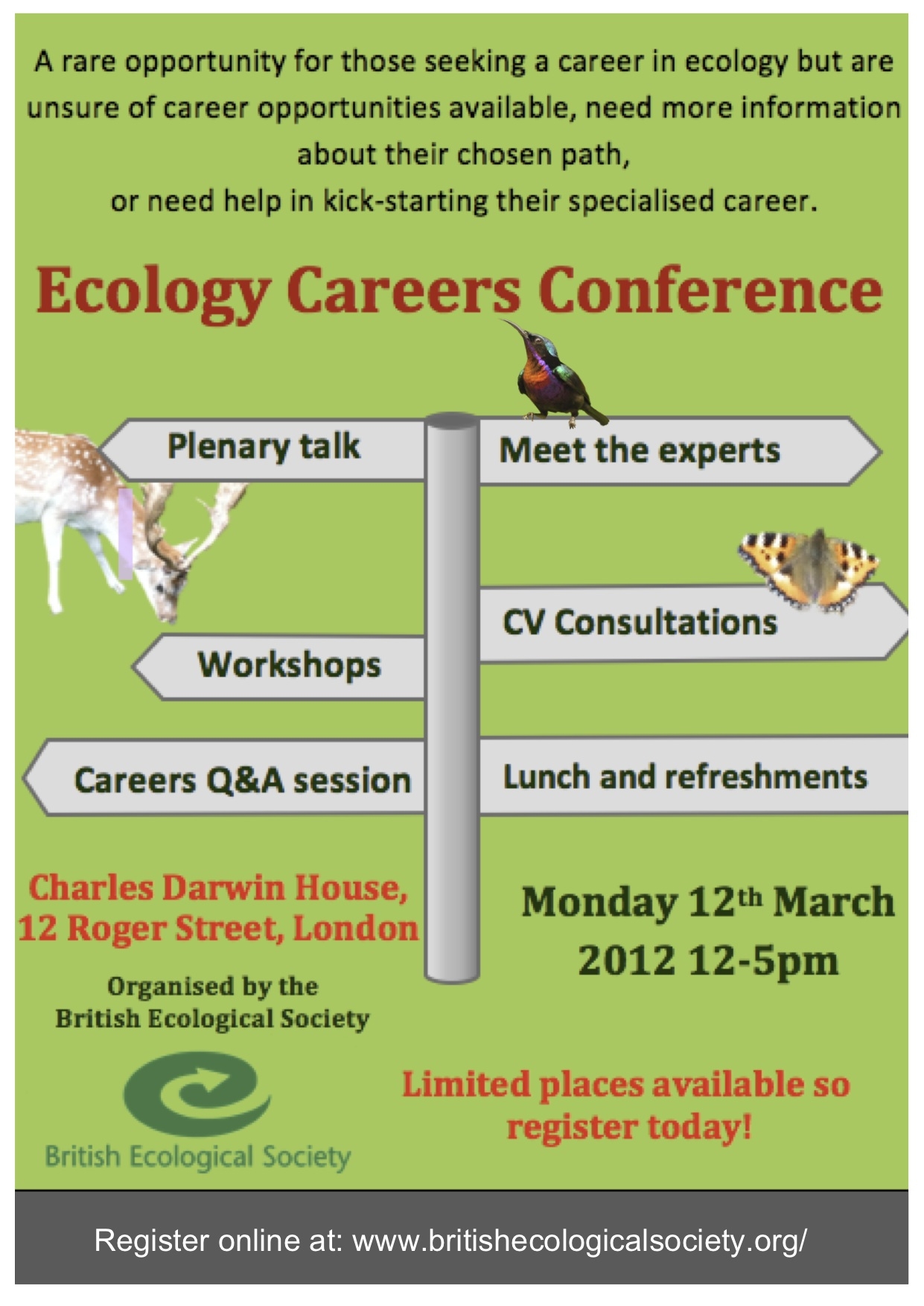
 Ecology of the past