I am pleased to announce two new vacancies within the Department of Ecosystem & Landscape Dynamics at the University of Amsterdam. These position are part of a recruitment drive across the Institute for Biodiversity & Ecosystem Dynamics triggered by new funding from the Dutch government (Earth & Environmental Science Sector Plan). Both positions will be at the Assistant Professor level (either Tenure Track, or directly tenured following a period of probation; dependent upon the experience of the successful candidate). For full detail, and how to apply, check out the below links:
These positions are designed to compliment, and strengthen, existing expertise within the department in biogeochemistry, Earth surface science, landscape ecology and palaeoecology. We are looking for scientists who are engaged with laboratory, field and/or modelling focused research, have a proven track record of publishing, and are looking for a base to build their own research group. We are looking for enthusiastic and innovative educators keen to lead and develop practical and field based courses and projects for students in our BSc Future Planet Studies and MSc Earth Sciences degree programs.
If you have any question please do not hesitate to get in contact with me directly: William D. Gosling
If you are interested to join IBED but feel you do not fit to one of these position check out our other vacancies at by clicking here.
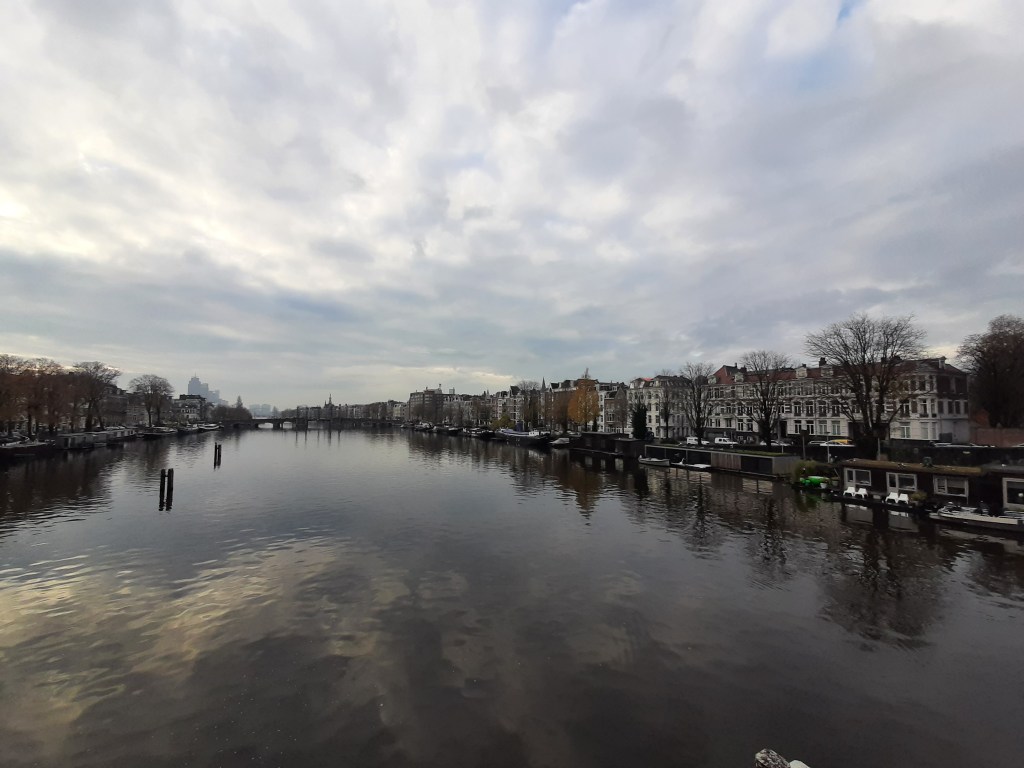
Yesterday I picked up my Professorial Toga from Togamakerij Rhebergen on the Amsteldijk in Amsterdam. For me it was quite a moment as this item symbolizes so much work over so many years, and is thanks to the help, support and training of so many people. I am looking forward to my Oratie (inaugural lecture) on the 22 December and celebrating further with friends and family. I hope that you will agree that the hard work was worth it to have the privilege to wear this gown, and personal thanks to Helen Sahin of Togamakerij Rhebergen for making such a beautiful item of clothing for me!
I am delighted to announce that the inaugural lecture for my becoming Professor of Palaeoecology & Biogeography will take place at the Aula (Lutherse kerk) of the University of Amsterdam on the 22 December 2022 (16:30). If you would like to attend this event please let me know (via email) before 1 December 2022 so that an appropriate level of catering can be organized.
For further details visit the university web site here.
For my contact details visit my university web page here.
During the delivery of this years BSc Palaeoeclogy course at the University of Amsterdam (UvA) I discussed with a number of students about the nature and purpose of understanding the ecology of the past. This lead me to highlighting the research of Nick Loughlin (@PalaeoNick) from his PhD at The Open University and the subsequent work that he has done. I though it might be interesting to also share this here…
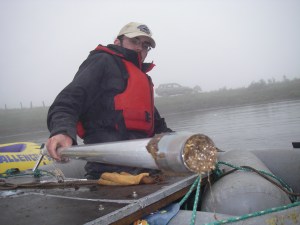
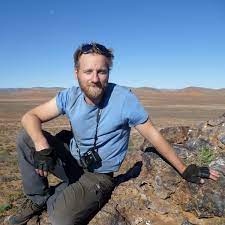
Nick Loughlin during his PhD field work in Ecuador
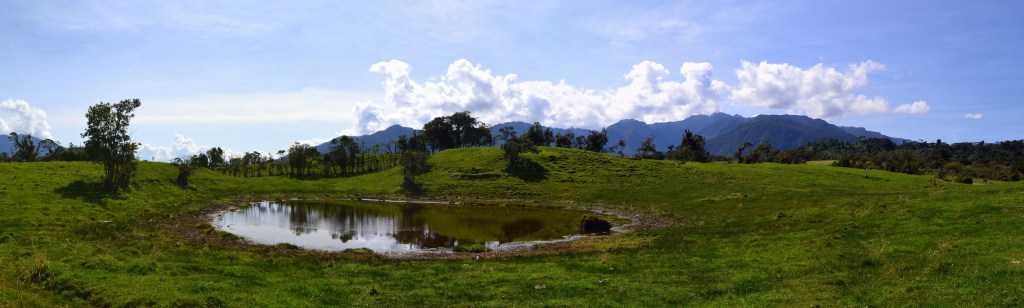
Nick’s study sought to understand better the ecological history of the biodiverse eastern Andean flank in Ecuador. To achieve this he went into the field and recovered sediments from a lake and a sedimentary section exposed by a road cutting. He analysed the sediments to reveal vegetation change (pollen analysis), fire histories (charcoal analysis), and past animals in the landscape (non-pollen palynomorphs, or NPPs). To extract extra ecological information from his samples he developed the methodological approach for examining NPPs in a tropical setting (Loughlin et al. 2018a). He then combined all the different palaeoecological approaches to reveal the drivers of vegetation change during the last glacial period (in the absence of humans; Loughlin et al. 2018b), and during the last 1000 years (when indigenous and European human populations radically altered the landscape; Loughlin et al. 2018c). The insights gained from Nicks research provided empirical evidence of how humans have been modifying this biodiversity hotspot on the timescales relevant to the lifecycles of tropical trees. These findings and ideas were collated in his PhD Thesis at The Open University which was supervised by Encarni Montoya, Angela Coe and myself (Loughlin, 2018a). Subsequently, Nick has been working to broaden the impact of his work and to communicate his findings to the broader scientific and conservation community. This has lead to two new publications focused on understanding baseline ecological function and conservation implications (Loughlin et al. 2022, Nogué et al. 2022).
Evidence of past ecological change recovered from Lake Huila (Ecuador) revealed how past peoples had modified the landscape of the eastern Andean biodiversity hotspot.
The arch of research carried out by Nick, I think, really demonstrates the important of understanding the ecology of the past – without his detailed investigation of microfossils we could not have seen the impacts of indigenous communities on the past Andean landscape, or identify the consequences of the European depopulation; or been able to estimate the timescales of the ecological change!
The Palaeoecology Research Group within the Department of Archaeology at the Max Planck Institute for Geoanthropology, Jena, Germany is pleased to announce a new vacancy for a doctoral student exploring human-environment interactions in the Caribbean. The position will be based in Jena, Germany for a period of 3 years with the option for extensions and supervised by Dr. Yoshi Maezumi.
The Palaeoecology Research Group analyses palaeoecological and archaeobotanical proxies from sedimentary archives, including pollen, phytoliths, charcoal and stable isotopes to examine topics including the legacy of human land-use on ecosystems, spatio-temporal patterns of natural and human-driven fire activity, and the influence of natural and human disturbance regimes on the biogeographic distribution of plants and animals in past ecosystems.
I am delighted to announce that there our session “Mapping Ancient Africa: Climate, Vegetation & Humans” has been accepted for the INQUA congress in Rome (14-20 July 2023).
Abstract: Great uncertainty exists surrounding the link between climate change and hominin evolution, cultural development, and dispersal in and out of Africa. Several hypotheses have been proposed about how environmental conditions in Africa might have driven important developments in human origins over the last 4 million years. These findings link important evolutionary events with environmental change including cooling, drying, and wider climate fluctuations over time. However, key questions remain on the type, speed and driver of climate variability in Africa and how it affected evolution and development, e.g., did changing environment affect resources which consequently lead humans to develop new tools, why did so many early hominin species persist, evolve and/or go extinct, why did our species (Homo sapiens) emerge and survive, and how have we shaped our own environment either intentionally or unintentionally? In this session we look to bring together researchers focused on reconstructing past environments in Africa on the basis of empirical data (palaeoclimatic, palaeoecological, archaeological records) with researchers using modelling approaches (climate, vegetation, dispersal and cultural models). We hope to stimulate research and debate on how past change (climate, ecological, behavioral) shaped modern humans and the role of human niche construction on African environments. This session is linked to the INQUA “Mapping Ancient Africa” project, but we welcome all submissions.
Title: “The potentials and pitfalls of linking climate and cultural change, with a focus on the archaeological record“
The seminar will be delivered via Zoom. The link for the seminar can be obtained from the MAA Slack page, or from seminar chair and chaired by Lynne Quick.
On behalf of Manu Chevalier, Anne Dallmeyer, Ulrike Herzschuh, Thomas Hickler, Yoshi Maezumi and Martin Claussen I would like to draw your attention to a special issue of Climate of the Past entitled: “Past vegetation dynamics and their role in past climate changes”. The call for papers for this special issue is now open (closing date: December 2024). See below for full details and how to submit.










 Ecology of the past