An early start at 06:00 this morning to get to Kogyae with sufficient time to collect and deploy all traps across three sites (30 traps in total) and return to FORIG within a single day. We arrived on site at around 10:30, and after some deliberations as to which guide knew exactly where the plots we needed to reach, we were on our way to the first site.
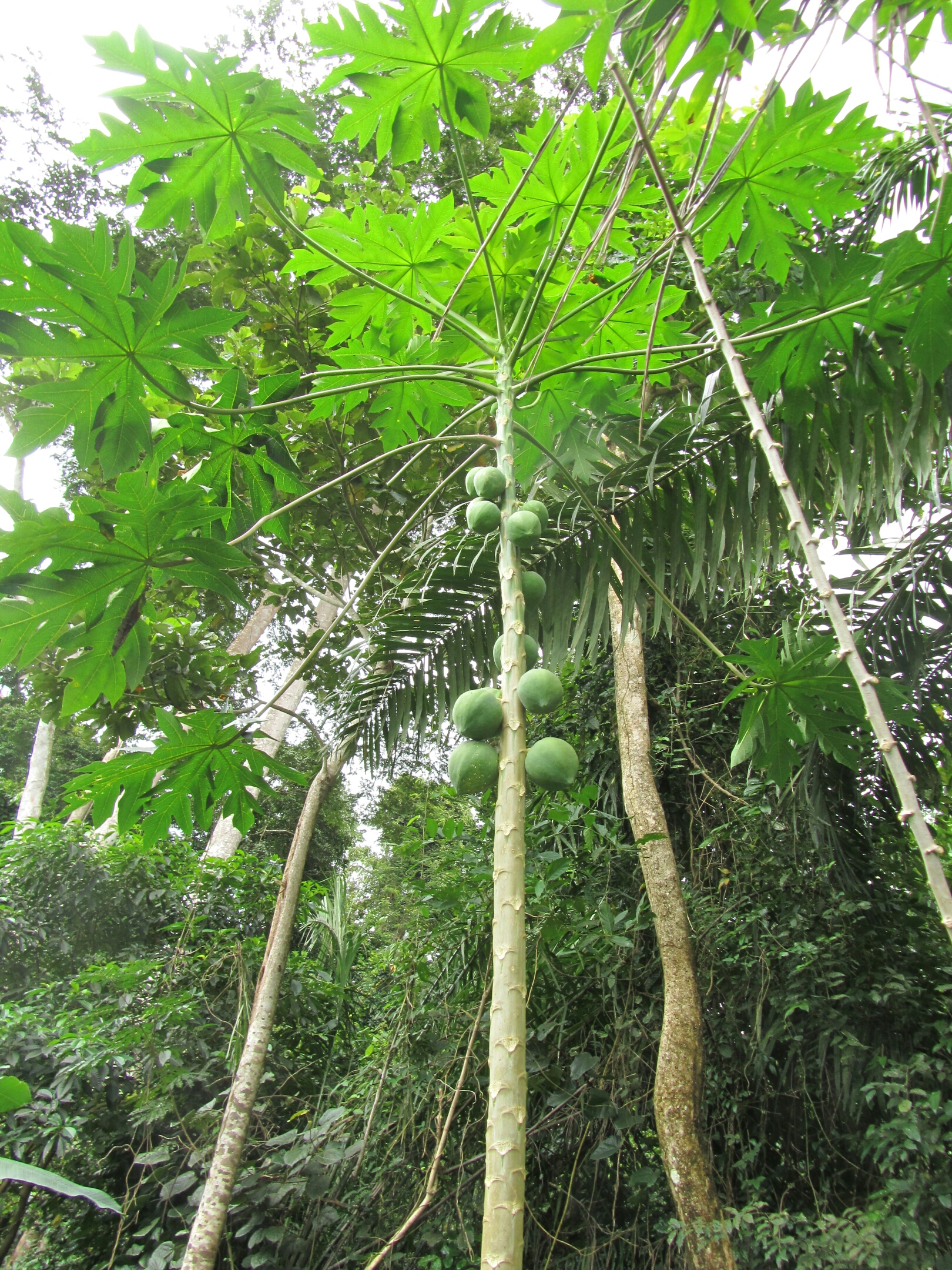
The first site was the savannah plot, with a wide open canopy and grasses above head height. Immediately the difference to the forest at Bobiri was striking (image below). All 10 traps deployed here last year were successfully located, retreived and replaced with fresh traps.
The next stop was the transition plot at Kogyae, representing a mid-point between savannah and forest habitat. Again, all 10 traps were easily located, retreived, and redployed (Image below). The grass here was noticeably shorter in height…
A fairly quiet day today back at base in FORIG. Collating field data collected during yesterdays trip to Bobiri, tidying up the collected pollen traps, and preparing kit and equipment for tomorrows trip to Kogyae. We also need to pack some supplies and clothing etc because we may need to stay overnight somewhere nearby to the field site – it is an 3 hour drive from FORIG in Fumesua, so may not be able to travel there and back in a single day. The option of staying at the field station at Kogyae is not available because a group from Oxford University who are also out here are running a 10 day campaign at Kogyae this week, so the camp is full to the brim.
Today we visited the field sites at Bobiri butterfly and nature reserve. In total we collected and redeployed 20 pollen traps; 10 at each of two separate sites (SNR and 50-year logged).
It was great to get a feel for the first of the sites on this project, and helps put the analytical results into context. These forests really are an exciting habitat to explore.
Day three of the fieldwork campaign saw us form a production line of pollen trap making: Lottie = chief sealant operator and cotton stuffer; Adele = Cap trimmed and fitter; Wes = Noose cuter and net trimmer. In total ro traps were manufactured in just one day.We rewarded ourselves with dinner out at the local hotel, watched a game of football on TV, and a beer – all in all, a pretty good day!
The second day of our fieldwork saw us; transfer from Accra to Fumesua where FORIG is located (approximately 20 km south of Kumasi); meet up with FORIGs deputy director Dr Stephen Adu-Bredu to discuss fieldwork and outreach plans; and settle in to FORIG for the next two weeks.
The next two days will involve building pollen traps ready for deployment next and finalising the detailed day-to-day plan of work.
The latest round of fieldwork in Ghana is underway. Adele and myself are travelling out to collect pollen traps deployed last year as part of Adeles PhD research. We will be revisiting the sites in Ankasa, Bobiri and Kogyae that Adele and Phil visited last year. This time we are also accompanied by Lottie who will be delivering workshops on outreach activity engagement and the palaeoecology represented in the sediment record of Lake Bosumtwi.
Flying into land at Accra in the twilight we passed over a storm cell, with some fantastic convective clouds illuminated by flashes of lightning within. Once out of the airport, we were taken through the hustle and bustle of Accra streets, alive with evening activity. Finally reaching our destination for the night, the FORIG guesthouse. All three members of our party readily made for bed to get a good nights sleep before tomorrows journey to Kumasi.
Nick and Will with Carman (director of the Pindo Mirador biological station)
Three members of the PCRG (William Gosling, Encarni Montoya and Nick Loughlin) visited Ecuador (November-December 2013) to develop collaborations with Ecuadorian institutions, recover more lake sediments, and find new potential sites for projects. Below are some photos from:
Lake Pindo,
Lake Huila, and
Lake Erazo.
Full reports on specific aspects of the fieldwork to follow.
Phil and Adele have survived field work in Ghana collecting pollen traps, looking at the vegetation, visiting Lake Bosumtwi and riding horses (!?) – hooray.
Earlier this month Rachel Gwynn (Geography, UCL) visited the PCRG to use our core splitter to reveal what was contained within two cores collected from the Carribean. She has also been kind enough to provide photos of the sediments and an insight into the story so far:
Sediments from Fresh Water Pond Barbuda (Photograph Rachel Gwynn)
Lake sediment cores covering the past few hundred to thousand years have been taken from two lakes, Wallywash Great Pond in Jamaica and Freshwater Pond in Barbuda. The sediments form part of the NERC-funded project Neotropics1k (PI Prof. Jonathan Holmes), which is concerned with climate variability in the northern Neotropics over the past millennium. The sediment cores show marked changes in composition and colour, from pale marl to dark organic mud. These colour changes, which are clearly visible in the photographs, represent changes in sediment composition that are in turn related to lake-level variations caused by long-term climate shifts. Deeper, open-water conditions under wetter climate are represented by the marls, whereas lowered lake levels, caused by direr climate, are associated with organic-rich sediments.
Wallywash Great Pond– core section W2
Thirteen separate units have been identified through the 1 m core length, varying between light coloured marl, dark organic and shelly sediments.
The abundance of preserved Ostracod valves increases throughout the marl and shell rich layers but drops significantly in the organic rich material.
Barbuda Freshwater Pond- core section FWP
This core has four distinct units. 0-23 cm is a calcareous mud with a diffused lower boundary into a shelly calcareous mud at 25-35.5 cm. 35.5-38 cm and 38-52 cm is two variations of calcareous mud.
These units, as with the W2 core, have been defined using a Munsel Soil Chart.
The Ostracod valves are thought to be abundant throughout the core due to the high marl content.
Wallywash Great Pond Jamaica (photograph Rachel Gwynn)