The third of a seminars in the Mapping Ancient African project took place on Monday 17 January 2022 and was given by Emmanuel Ndiema (National Museums of Kenya). You can watch the seminar now on the Ecology of the Past YouTube channel. Seminar details can be found here.
The kick off meeting of the INQUA funded Mapping Ancient Africa project took place on the 14 and 15 October 2021. This hybrid meeting linked up face-to-face meetings in Kenya, South Africa, Germany and the USA online. In total around 35 people participated in the meeting over the two days. It was great to start to get researchers back into rooms together, and to take advantage of the online link ups to connect people within regions who could not travel, and people in different continents. The purpose of the meeting was to introduce the researchers to each other and to start to think about how we can work together to deliver the project goals of collating and synthesising data related to past climate, vegetation and hominin activity from across the continent.
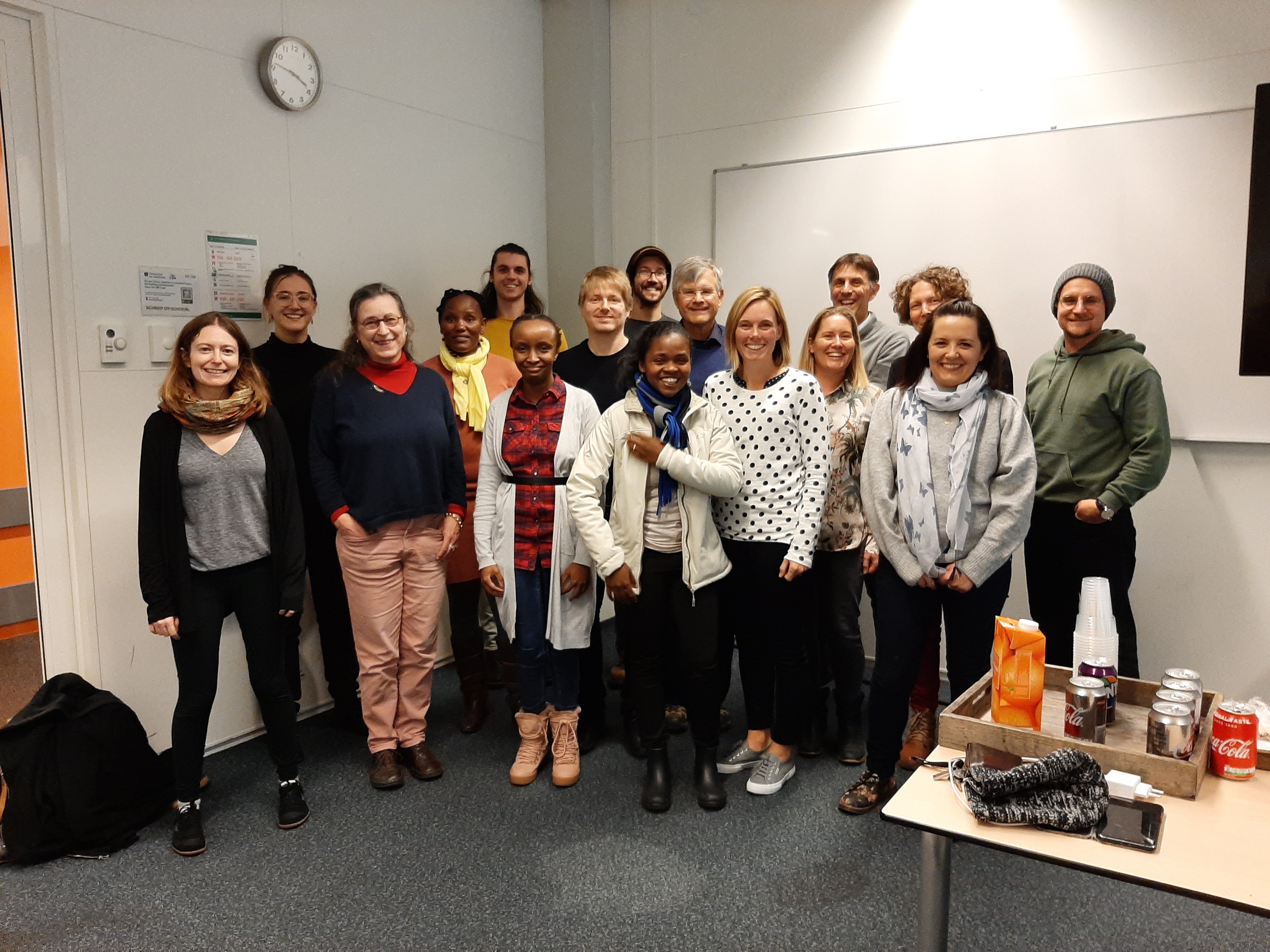
An African Pollen Database data steward training event was held at the Institute for Biodiversity & Ecosystem Dyanmics (University of Amsterdam, 27-29 January 2020) where training in the use of the Neotoma database was provided by Eric Grimm. The participants are now enabled curate and archive data within Neotoma. If you have a palaeoecological data set that you would like to contribute to Neotoma, or if you would like training as well, these people can now help you. Contact details below:
The International Conference on Past Plant Diversity, Climate Change, and Mountain Conservation was aimed to address this question, with a focus on mountain (montane) species. As climate warms, there are several outcomes for montane species. They can migrate upslope, go extinct, or adapt to the warming conditions. Given these options, we got together to discuss our most recent datasets, and the best strategies for the conservation of montane species. Effective conservation strategies are crucial for the survival of many rare and endemic montane species, because climate is indeed warming, regardless of what Trump or Fox News tries to tell people.
The Netherlands Annual Ecology Meeting (NAEM) 2019 takes place in the 12 and 13 February. This annual showcase of predominantly Dutch based ecological research will take place, as usual, at Conference Centre “De Werelt” (Lunteren). I am particularly excited this year as, along with Marielos Pena Carlos and Patrick Jansen, I am co-convening a session on “Tropical Ecology”. The first time I have contributed to the program in this way. Our session will be on the second day of the conference and contain the following exciting presentations:
15:00 Predator avoidance and prey tracking in a Neotropical forest (Constant Swinkels, Wageningen University & Research)
15:20 The role of fig volatiles in pollinator specificity and fig diversity (Aafke Oldenbeuving, Naturalis Biodiversity Center)
15:40 Mangrove Atlantis: Can mangroves keep up with extreme land-subsidence? (Celine van Bijsterveldt, Royal Netherlands Institute for Sea Research)
16:00 Break
16:10 The fate of forests in agro-forest frontier landscapes, implications for conservation (Madelon Lohbeck, Wageningen University & Research)
16:30 Trends in the variability of Specific Leaf Area of paramo vegetation during succession (Marian Cabrera, University of Amsterdam)
16:50 Succession dynamics of tree and soil fungal communities in regenerating tropical rainforests are strongly influenced by regional species pool and abiotic factors (Irene Adamo, Naturalis Biodiversity Center)
The final day of talks at AFQUA 2018 took a more applied approach in the first session “Applying the Quaternary: The role of the past in supporting the future”. This session focused on how we can focus Quaternary science to produce outputs that directly meet concerns and needs of society. Examples included the quantification of the fossil charcoal record to provide insights into the nature and impact of fires in the past (C. Adolf), how we can use information on past vegetation change and disturbance factors to anticipate how ecosystems on Madagascar might respond to future changes (E. Razanatsoa), and how climate histories can be extended through tree ring data (D. Colombaroli).




 Ecology of the past