Last week I took part in my first “palynologendagen” (pollen days) with the Palynologische Kring (Dutch palynology society). Unfortunately, due to a prior commitment (Chairing a British Ecological Society careers webinar) I was only able to take part on the second day.
Day two of the pollen days was “op de fiets” (on bikes) in true Dutch style. We met at Twente Fiets to pick up 36 bicycles and one tandem and headed out into the countryside!
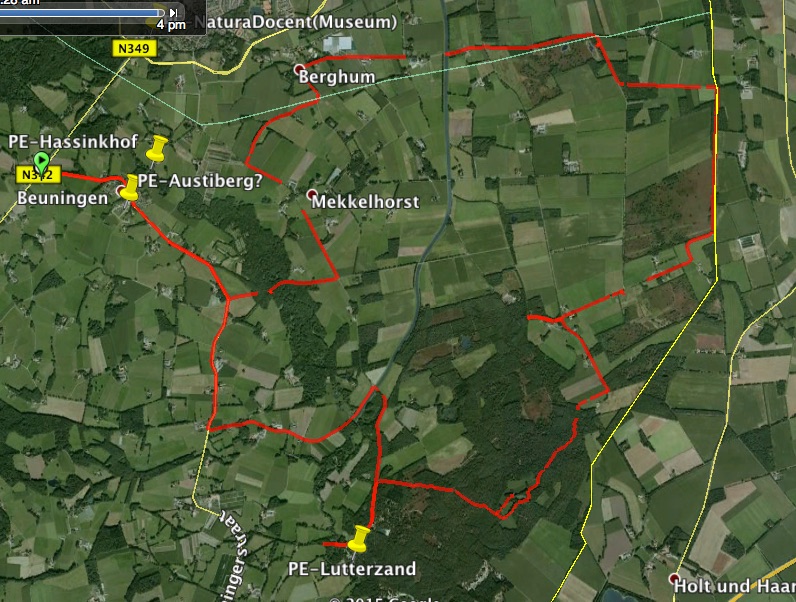
Figure 1: Route of the bicycle tour (max speed 21.8 kmph, distance 23.24 km)
Our route (Fig. 1) took in around 14 point of interest. At each point Harm provided interesting insights into the landscape history and how humans had interacted and shaped it. The presentations were in Dutch so I had to concentrate hard to get 50% of the information.
Two particularly nice sites (which I think I understood) were:
the site of an old toll house at the split in the old road to Germany (east) and Scandinavia (north), and
a sedimentary cross section, revealed by river down cutting, which showed the impact of cart wheels on the sediment along the site of an old road.
In addition to the tour it was also fantastic to meet many other fellow palynologists based in the Netherlands. I looking forward to being able to participate in many future Palynologische Kring events, and I am also pleased to say attending this years event has inspired me again to try and push on with learning Dutch again!
On Wednesday I attended my first Netherlands Annual Ecology Meeting (NAEM) unfortunately, due to prior commitments, I was not able to attend the whole event, but I still managed to get a nice insight into the vibrant Dutch Ecological research community. Particularly exciting for me was the “Biodiversity in Space and Time” theme. Plenary sessions by Alexandre Anotonelli (University of Gothenburg) and Hans ter Steege (Naturalis Biodiversity Center, Leiden) focused on the Amazon ecology past and present. The subsequent session on the same theme, organized by Daniel Kissling (University of Amsterdam) and Niels Raes (Naturalis Biodiversity Center), was also excellent and ranged from species richness patterns past and present in Gabon (Andre van Proosdij, Naturalis Biodiversity Center), through soil microbes (Kelly Ramirez, Netherlands Institute of Ecology) to the role of sea level change on island biodiversity (Kenneth Rijsdijk, University of Amsterdam). I am looking forward to attending more of these meetings in the future and getting involved with the NERN community.
Two weeks ago I attended the biannual International Biogeography Society (IBS) conference in Bayreuth, together with 600+ other people from more than 50 different countries. This IBS conference, my first IBS meeting, proved to be an exciting event during which I met scientists from many different disciplines and heard talks on cutting-edge biogeographical research.
The IBS conference was held in the Bavarian city of Bayreuth, in the middle of the biodiverse landscape of Upper Franconia. This landscape provided the training ground for Alexander von Humboldt, the founder of the field of biogeography. The 4-day conference included a wide variety of symposia and many, many posters. The conference dinner in the German Steam Train Museum was highly memorable. The conference was closed by a lecture from Daniel Simberloff, once a doctorate student of Edward O. Wilson, who received the Wallace Award for his outstanding contributions to invasion ecology.
I had a talk in the plenary symposium of ‘Ecosystem response to past climate change’, organized by David Nogués-Bravo and Francisco Rodríguez-Sánchez. The symposium covered the dangers of climate change to biodiversity and tried to assess if the range and rate of adaptation, migration, persistence, or extirpation, that are registered in deep-time records, palaeorecords, and the recent past, are adequate responses for predicted climate change in the future. I addressed this issue from the point of view of a small remote island, where migration is obviously a limiting factor. I showed how I reconstructed climate and its effect on island biota during the last 40,000 years using long-term palaeoecological records from Mauritius (de Boer et al, 2013 & 2014). These records show that different climate regimes result in different ecosystem response to climate change in the past. Local extirpation or population collapse of larger vertebrates was a natural phenomenon in the lowlands of Mauritius due to frequent climate extremes (I will discuss this in more detail in my next blog; de Boer, 2015). Despite these population collapses, island biota have always (in the timeframe of my records) survived natural climate change. Therefore, my take home message was not to focus on the effects of (future) climate change alone. Other key components of global change, such as invasive species and habitat destruction, are more imminent threats to the biodiversity of many islands. For more information on my research, including publications, click here.
More information on the IBS read on (below) or visit the IBS website or blog. All abstracts and other details of the IBS conference in Bayreuth can be found here. The next IBS meeting will take place in Salvador, Bahia (Brazil) in March 2017.
Last week I went to the University of Nottingham for the third BES Macroecology Special Interest Group annual meeting. Macroecology concerns itself with ecological patterns and processes at large spatial and/or temporal scales, and so is a natural place to link palaeoecological research with that of modern ecologists and biogeographers. The conference took place over two days, and comprised a mix of 5 minute lightning talks, longer invited talks (including two keynotes by Catherine Graham of Stony Brook University, New York) and discussion sessions.
The lightning talks covered a wide range of subjects, including maximising phylogenetic diversity in the Kew Seed Bank, outstanding problems with species distribution modelling, morphological variability in Madagascan tenrecs, and latitudinal gradients in pollination mechanism. The breakout discussion groups focused on questions inspired by Edge.org, such as ‘Which ecological concepts are ready for retirement?’ and ‘What should worry macroecologists most?’; I led a group discussing ‘Should macroecology be more interdisciplinary?’ (yes, but with caution was our rather non-committal answer).
There are plans to hold next year’s Macroecology SIG meeting at the Centre for Macroecology, Evolution and Climate (CMEC) at the University of Copenhagen, and I’d like to encourage palaeoecologists to consider attending. Chatting to the delegates at the Nottingham meeting, there certainly is a growing interest in ecological change over longer timescales and the role of history in shaping modern biotas, and so palaeoecologists have a lot to offer to these sorts of research areas. Copenhagen’s got to be a nice place for a conference as well…
Last month I had the opportunity of attending the 3-days non-pollen palynomorphs (NPP) workshop that was held at the Tallinn University, Estonia. It was perfectly organised by Tiiu Koff and Egle Avi among other members of the university, as it was a join workshop of Cladocera remains (XII Subfossil Cladocera workshop; 16-18th June) and NPP (18-20th June). Unfortunately, I was just present in the NPP workshop, so my comments will be focus on it.
With around 40 participants, we greatly enjoyed the discussions that came up about the state-of-the-art of this broad and interesting proxy and its implications for archaeology, palaeolimnology, and different aspects of ecology like human landscape management, biodiversity and conservation, or community assemblages. Current methodological problems like taxonomy, standardisation of lab techniques, etc., were also debated.
Opening and key lectures were from Bas van Geel and Emilie Gauthier, showing the development of this discipline over the last 40 years, and a great example of multi-proxy project aimed to study the human arrival and impact in Greenland respectively. Besides oral and poster presentations, last day there was a microscope session, very useful for sharing knowledge and uncertainties! In our specific case, Will, Hayley and I contributed with a poster titled “Non-pollen palynomorphs in Ecuador: starting from scratch”.
Personally, among the things I most like from the NPP meetings is the friendly and close environment, where everyone is more than glad to help others, regardless the experience. Following this feeling of small and scattered group of people dealing with the same issues, we used to do a final remark session every workshop raising the advances and inconveniences found so far, updating our NPP papers repository (managed by Antonella Miola), and addressing future directions as a group (for instance, we have now our own project in ResearchGate, thanks to Lyudmila Shumilovskikh!). In this particular workshop, I was very happy when I found out that Tallinn University has a green policy (paper free), and they replaced book abstracts etc., by iPads to follow the workshop schedule.
Although these meetings are normally biannual, next conference location and date is yet to be decided, but we hope to have the chance to join this very friendly and supporting community again. In addition, there will be a NPP session in the next European Palaeobotany and Palynology congress, tobe held in University of Padova (Italy), next August 2014. We encourage people with all kind of experience (or lack of) to attend further events.
We enjoyed so much how this one-day meeting was scheduled, with some formal approach including four plenary and lighting talks, and other informal initiatives such as speed dating and discussion groups. This way, all participants could interact with other non-directly related researchers.
The focuses of the plenary talks were related to different fields within macroecology. In this sense:
Andy Purvis opened the session with the definition of macroecology, the trends and shifts of study topics it has carried out since the discipline began and ended with what macroecology is not any longer.
David Jablonski explored through examples of bivalves studies how climate in time and space affects the studies of diversity dynamics, mainly addressed to three key questions: a) Extinctions, b) Latitudinal Diversity Gradients, and c) Geographical ranges.
Lee Hsiang Liow encouraged us to evaluate both processes and observations, and highlighted the importance of modelling both to take into account the “unobservable” or latent truth including examples of capture-recapture and occupancy methods.
Kathy Willis gave a review of the trends followed for conservation strategies since 1980s, until the development of the “ecosystems services” idea of given an economic value to biodiversity. Her main statement was focused on how palaeo-data can help in providing information to some “knowledge gaps” related to human resources including: a) trends in biomass, b) trends in nutrient cycling, c) trends in in final ecosystems services, and d) sustainability of ecosystems services.
Lighting talks were related to more specific study cases of macroecology, including specific researches about turtles, fungi, beetles, crocodiles, foraminifera or dinosaurs, in several spatial and temporal scales .
We would like to thank again Phil, Victoria, Adriana and Isabel for the great day that finished with a nice and warm wine reception sponsored by BMC Ecology. We hope to attend further events like this soon.
Palaeo-people at the RGS-IBG meeting plotting future papers and grants. Left-right: Encarni Montoya, Joe Williams, Hayley Keen and Frazer Bird.
RGS – IBG Annul International Conference 2013
27th – 30th August, London
Yesterday (29th August) four members of the Palaeoenvironmental Change Research Group (PCRG) went down to London for the third day of the Royal Geographical Society with IBG (RGS – IBG) international conference for a day of informative talks. Two of the morning sessions were of particular interest to us with the sessions entitled ‘Human – environment interactions in the Neotropics: historical impact to current challenges’organised by John Carson, Lizzy Rushton and Sarah Metcalfe.
Sex & Bugs & Rock n Roll at INTECOL: The BES sponsored tour of music festivals (http://www.besfest.org) landed at INTECOL. David Price from Science made Simple (http://www.sciencemadesimple.co.uk/) arrived on the Wednesday day afternoon to show what can be achived with professional science busking.
As a palaeoecologist when I came back to the UK from my post doc in Florida I started to get involved with the British Ecological Society (BES) so I could meet neoecologists. Eight years later I am still involved in the society and delighted that the theme of the society’s centenary celebration meeting focuses on change through time: Into the next 100 years. With 11 plenary lectures, dozens of parallel session, hundreds of posters and other activities including Pecha Kucha talks, workshops, field trips and trade stalls I will restrict my post to my thinking about the theme of timescales and the broader messages I got from the meeting.
Last week I attended the annual meeting of the British Ecological Society Macroecology Special Interest Group (or BES Macroecology SIG for something a bit more manageable) at the University of Sheffield. Macroecology deals with ecological patterns and processes that occur over large spatial and temporal scales, and so is a natural fit for a lot of palaeoecological data.
The organisers deliberately moved away from the standard conference format of back-to-back talks, and instead built in lots of time for discussions around several themes (‘provacations’) that addressed the current status of macroecology and possible future directions for it. Several areas for progress were identified here, including finding more efficient ways of generating, curating and accessing large (global scale) datasets, increasing dialogue between numerical modellers and empirical ecologists, and more statistical and computational training for undergraduate ecologists and biologists.
Sessions of presentations were also formulated to encourage discussion and debate, with either rapid, five-minute presentations or longer methodological talks forming the starting point for further discourse. I struggled enormously with the five-minute time limit during my talk (conference talks are often built around a 15 minute slot) but hopefully interested a few people in the uses of 60 million year old pollen for addressing macroecological questions.
A workshop on ‘Spatial analysis in R’ followed the two-day meeting. This was taught by Barry Rowlingson, and was co-organised by the Macroecology and Computational Ecology SIGs. Barry started by introducing the programme R and then went on to demonstrate its uses for handling, mapping and analysing spatial data. This type of analysis was largely new to me, and this workshop was a brilliant introduction to what R can do with geographical data.
To join these British Ecological Society SIGs and find out about other groups visit the BES SIG pages by clicking here.