PhD opportunity on palaeofires

April 20, 2022
WDG

Boris Vanniere

There is a new PhD opportunity at Ecole doctorale Environnements-Santé (France) working with Boris Vannière (Director of Research, CNRS, University Bourgogne Franche-Comté, University of Bern), Richard Vachula (Assistant Professor, Auburn University, USA), and Elisabeth Dietze (Professor, University of Göttingen, Germany). The project is entitled: Leverage the meaning of paleofire data through metadata mining. Case studies in mediterranean, tropical and arctic ecosystems, closing date 9 May 2022.

Details and how to apply here.

Mapping Ancient Africa: Video of Seminar 5

April 12, 2022
WDG

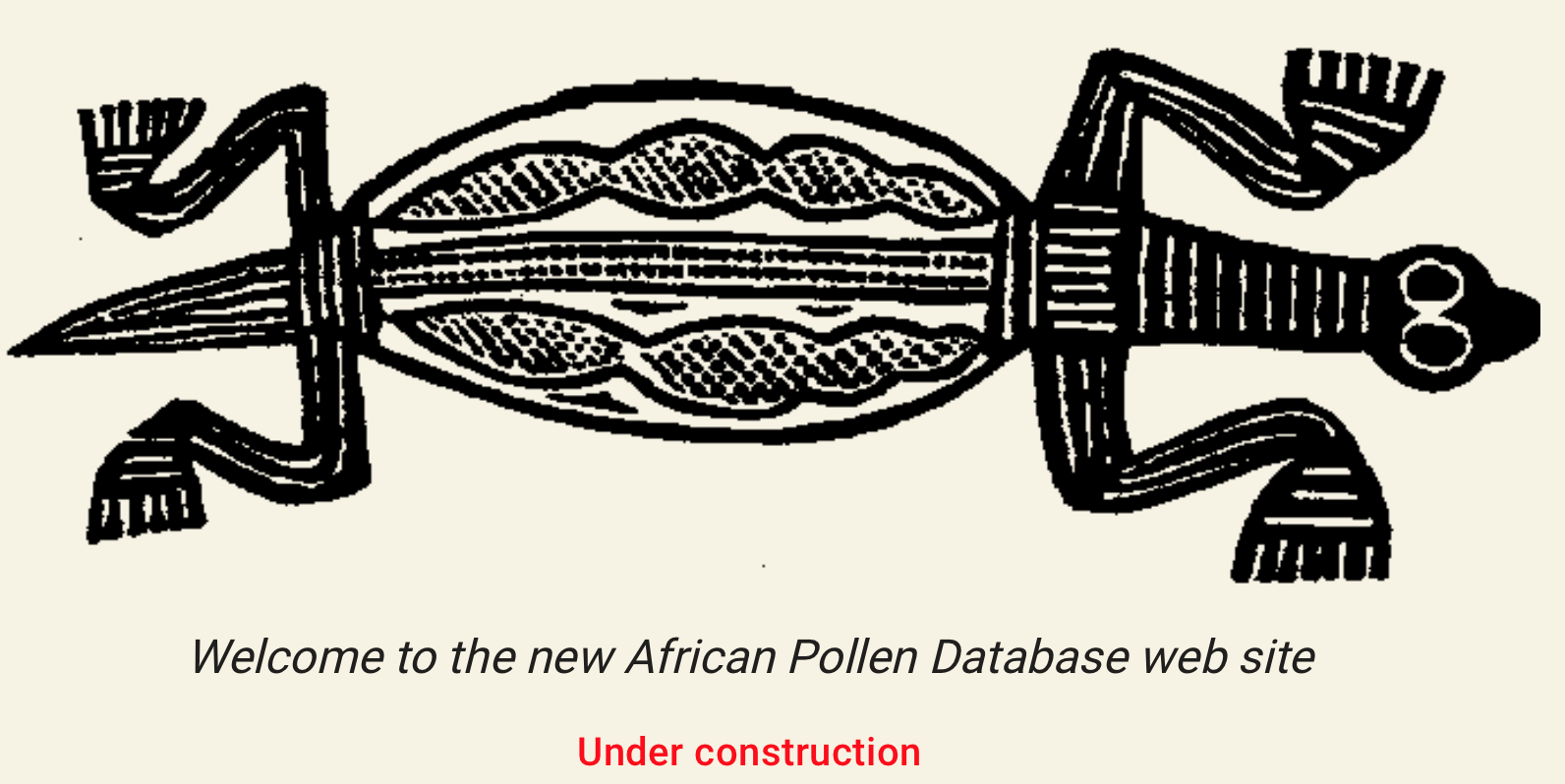
The fifth Mapping Ancient African project took place on Monday 11 April 2022 and focused on the African Pollen Database and past vegetation change in Africa.

The seminar was delivered by Sarah Ivory (Penn State University), Rahab Kinyanjui (National Museums of Kenya), and Lynne Quick (Nelson Mandela University). The seminar covers the principles behind and the working of the African Pollen Database (why make data openly available?) and the latest advances in eastern and southern Africa.

For more about the African Pollen Database check out:

You can watch the seminar now on the Ecology of the Past YouTube channel. Seminar details can be found here.

Mapping Ancient Africa: Seminar 5

April 7, 2022
WDG

The fifth in Mapping Ancient Africa (MAA) online seminar series will take place on Monday 11 April at 17:00 CEST. This seminar will focus on past vegetation change in Africa.

The seminar will be delivered via Zoom. The link for the seminar can be obtained from the MAA Slack page, or from seminar chair and chaired by William Gosling

For more about the African Pollen Database check out:

For further information on seminars in this series visit the MAA schedule page.

INQUAlogo

On Stage: Ice Age Cemeteries

April 6, 2022
WDG

The Dutch Association for the Study of Pleistocene Mammals will celebrate turning 40 on the 21st and 22nd May by holding a symposium in Maastricht (program in English).

To find out more and register visit the event web page: On Stage: Ice Age Cemeteries

Ecological baselines for the Andes

March 18, 2022
WDG

The value of good field notes and memory really is highlighted in the publication of Grubb et al. (2020) who report the botanical findings of an expedition to high elevation (4050-4600 m) parts Ecuadorian Andes in AD 1960. The new study focuses on the relationship between vegetation and geology (lava flows), and surface processes (burning, grazing and trampling).

References

Grubb, P.J., Lloyd, J.R., Pennington, T.D. & Páez-Bimos, S. (2020) A historical baseline study of the páramo of Antisana in the Ecuadorian Andes including the impacts of burning, grazing and trampling. Plant Ecology & Diversity 1-32. https://doi.org/10.1080/17550874.2020.1819464

Ludgate PhD thesis 2014

March 15, 2022
WDG

Natalie

Ludgate, N. (2014) Organic matter preserved in cave sediments: A new environmental proxy. PhD thesis, Department of Environment, Earth & Ecosystems, The Open University.

Abstract

Exploring new terrestrial archives to investigate past climate and the resultant impact on ecosystems is key to assessing changing climate within large continents, where major records are limited. This study presents the first comprehensive geochemical investigation of clastic cave sediments, a previously under-explored field, demonstrating the effective use of caves as an environmental archive, and recovering useable records of moisture and vegetation regime within the complicated monsoonal system of South East Asia.

Clastic cave sediments were recovered from a 2.4 m deep archaeological trench covering ~24 ka to ~12 ka within Hang Trõng, Vietnam. Clay mineral, bulk carbon, pollen, terrestrial snail shells and plant-derived lipid biomarkers were analysed to provide a multi-proxy approach. No diagenetic alteration was found below 20 cm despite clay mineral and bulk carbon δ13C analysis demonstrating microbial action and weathering of surface sediments. As previously observed in cave sediments, poor preservation lead to limited pollen recovery, however δ13C values from CSIA and shell carbonate indicates C3 vegetation persisted around the cave during the last glacial maximum.

The time-series δ18O record from recovered shells shows clear fluctuations corresponding to global climatic events including the LGM and Heinrich 1. It is hypothesised that these reflect moisture availability, with heavier isotopic values indicating drier periods. Most higher plant lipid biomarkers provide evidence for a stable forest composition, however a shift in n-alkane lipid from C31 to C27 can also be linked with the Heinrich 1 event. The warm Greenland interstadial 1 event is also expressed within the record by low δ18O shell values attributed to more available moisture and higher bulk δ13C values, which indicate greater micro-organism action.

Hang Trõng’s multi-proxy record adds to a growing body of evidence demonstrating the importance of global teleconections when assessing the impact of climate change on monsoons and local vegetation. The data collected here proves clastic cave sediments can hold valuable climatic proxies; something which is of especial importance as palaeoenvironmental archives rely on limited capture and preservation for long term environmental records.

Supervisors: Dr. Alison Blyth (The Open University/Curtin University), Dr. William D. Gosling , and Dr. Iain Gilmore (both The Open University)

Examined by: Prof. Frank McDermot (University College Dublin), and Dr. Victoria Pearson (The Open University).

To borrow a copy from The Open University Library click here.

DOI: https://doi.org/10.21954/ou.ro.0000ef12
Why palm fossils are important for the Amazon rainforest

March 14, 2022
ninahylkjewitteveen

With all the horror chaos in the world, science doesn’t seem like the most important thing. I forgot all about my paper, until I received an email, that… the first chapter of my PhD is published! Some positive news I would like to share with you.  

If you think about a stereotypical scientist, hidden in a lab, investigating every detail of a tiny thing…. that is great description of what I was doing! 

A snapshot of data analysis
Continue Reading

Legacies of Indigenous land use and cultural burning in the Bolivian Amazon rainforest ecotone

March 10, 2022
WDG

Maezumi, S.Y., Elliott, S., Robinson, M., Betancourt, C.J., Gregorio de Souza, J., Alves, D., Grosvenor, M., Hilbert, L., Urrego, D.H., Gosling, W.D. & Iriarte, J. (2022) Legacies of Indigenous land use and cultural burning in the Bolivian Amazon rainforest ecotone. Philosophical Transactions of the Royal Society B: Biological Sciences 377, 20200499. https://doi.org/10.1098/rstb.2020.0499

Blog at WordPress.com.