Montoya PhD thesis 2011

May 8, 2014
encarnimontoya

Montoya, E. (2011) Paleocology of the southern Gran Sabana (SE Venezuela) since the Late Glacial to the present. PhD Thesis, Department of Animal Biology, Plant Biology and Ecology, Unitersitat Autonoma de Barcelona.
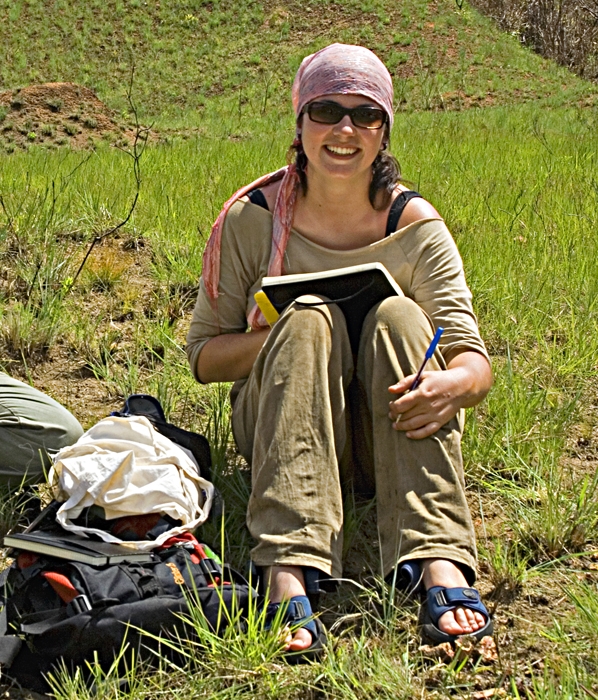
Encarni_07

EM Venezuela (2007)

Abstract:

This thesis is aimed to study the paleoecology of the southern Gran Sabana region (GS; SE Venezuela) since the Late Glacial to the present. This region is characterized nowadays by the occurrence of large extent of savannas in a climate suitable for rainforests. For this purpose, three sequences (two from peat bogs and one from lake sediments) have been analyzed for pollen and spores, non-pollen palynomorphs (NPP), and microscopic charcoal particles. Among the sequences analyzed, two of them are located currently within treeless savannas (Lakes Chonita and Encantada); whereas the third one is placed in the boundary between GS savannas and Amazon forests (El Paují). The Late Glacial interval of Lake Chonita was characterized by a shrubland that was replaced by a treeless savanna at the end of Younger Dryas (YD) and the onset of the Holocene, linked to the occurrence of regional fires since ca. 12.4 cal kyr BP. The beginning of local fires was dated synchronous with the vegetation replacement, ca. 11.7 cal kyr BP. A similar shrubland, though not identical, is located nowadays around 200 m elevation above the lake, so the replacement by surrounding savannas was interpreted as a probably upward displacement of the former vegetation and an increase in average temperatures of approximately 0.7 ‐1.5ºC. This section represents the oldest interval analyzed for GS so far, and the presence of fires during the Late Pleistocene is among the oldest fire records documented for northern South America. The peat bog records of Lake Encantada and El Paují showed the main vegetation trends of the last 8 cal kyr BP, which were characterized by the continuous occurrence of regional fires. In Lake Encantada, the presence of treeless savannas was reported during the whole interval analyzed as the dominant vegetation type, despite variations in forest abundance and composition taxa of the community also occurred. The vegetation changes in this record were interpreted as mainly due to climatic shifts until the Late Holocene. At El Paují, the occurrence of forests and savanna/forest mosaics was reported during the same interval, and fire was postulated to have been the major driver of the vegetation shifts. In this sequence, a treeless savanna was not recorded as the dominant vegetation of the landscape until the last millennia, and the presence of two different indigenous cultures was postulated as responsible of the shifts in fire regime registered, with an interval of human land abandonment between them. This interval was characterized by the cessation of fires, and the establishment of a secondary dry forest. The Late Holocene was characterized, in the three sequences studied, by a sudden increase of fires, which likely favored the expansion of savannas and the establishment of the present GS landscape.

The join interpretation of the records presented in this thesis, together with previous analyses in the region, highlighted some key aspects for understanding the main trends of GS landscape and vegetation, e.g., the appearance and establishment of morichales (Mauritia palm stands typical of current southern GS landscapes) has been restricted to the last two millennia, synchronous with the increase in fire incidence. Moreover, it has been possible to gather empirical evidence for testing some previous hypothesis regarding GS. For example, the proposal of an extended aridity prior the Holocene has been rejected, whereas the hypothesis about the postglacial expansion of morichales has been supported. In this sense, with all the available information to date, some suggestions have been proposed: (i) Climate and fire have been the major forcing factors operating in the GS; (ii) During the Late Glacial and the beginning of the Early Holocene, the landscape of southern GS was likely formed by a mosaic of forests, shrubs, and savannas, without the current supremacy of the last vegetation type, which only established during the last 2 cal kyr BP onwards; (iii) Some general climatic trends have been inferred for the study area, as for example an increase in average temperatures around the Late Glacial/Early Holocene transition, a dry interval from 8 to 5 cal kyr BP, and a wetter phase during the Mid-Holocene centered around 4 cal kyr BP; (iv) The establishment of Mauritia in the region has been likely driven by a synergism between biogeographical, climatic and anthropogenic factors, as well as the likely pyrophilous nature of this palm given its synchronous appearance with the increase of fires; (v) The settlement of the modern indigenous culture (Pemón) occurred at least since around ca. 2000 cal yr BP onwards, 1500 yr earlier than previously thought, but previous human presence in the region has been also documented; and (vi) The fire activity observed in the long-term has caused a huge impact on GS landscape.

Supervisor: Dr Valenti Rull (Botanic Institute of Barcelona); Tutor: Dr Iñigo G. de la Cerda (Universitat Autonoma de Barcelona)

Examined by: Prof. Jose S. Carrion (Univesity of Murcia), Dr Toby Pennington (Royal Botanic Garden of Ediburgh), Prof. Francisco LLoret (Autonomous University of Barcelona), Dr Fred Stauffer, (Conservatoire et Jardin botaniques Ville de Geneve), and Dr Walter Finsinger (CNRS).

To access to this thesis PF file from the library service of the Autonomous University of Barcelona, please click here.

Continue Reading

Miller PhD thesis 2014

March 26, 2014
lottiemiller

Miller, C.S. (2014) 520,000 years of environmental change in West Africa. PhD Thesis, Department of Environment, Earth & Ecosystems, The Open University.

Lottie 2014

CSM (2014)

Abstract:

Global temperatures are predicted to rise by 2–2.5°C by 2065, profoundly affecting the Earth’s environment. The response of ecosystems to past climate fluctuations can inform on how systems will respond in the future. This thesis focuses on Quaternary environmental changes in West Africa, a region important because of its high ecological value and role in the global carbon cycle.

In 2004, the International Continental Drilling Program recovered c. 291m of sediments spanning the last c. 1 Myr from Lake Bosumtwi (Ghana). Pollen, charcoal and nitrogen isotopes (d15N) were analysed from the most recent c. 150m (c. 520 kyr). The latitudinal position and long duration of this core makes it unique for understanding West African monsoon dynamics and vegetation change.

To aid characterisation of the Bosumtwi pollen succession, an atlas of present-day pollen was constructed for 364 pollen and spore taxa.

The pollen record from Bosumtwi reveals dynamic vegetation change over the last c. 520 kyr, characterized by eleven biome shifts between savannah and forest. Savannah vegetation is dominated by Poaceae (>55%) associated with Cyperaceae, Chenopodiaceae-Amaranthaceae and Caryophyllaceae. Forest vegetation is palynologically diverse, but broadly characterised by Moraceae, Celtis, Uapaca, Macaranga and Trema. Low d15N values correspond to forest expansion and these are driven by high lake levels. The timescale indicates that the six periods of forest expansion correspond to global interglacial periods. The record indicates that the wettest climate occurred during the Holocene, and the driest during Marine Isotope Stage 7.

The vegetation and d15N records show a strong response to glacial-interglacial variability between c. 520–320 kyr and 130–0 kyr. Between c. 320–130 kyr there is a weaker response to glacial-interglacial cycles probably related to high eccentricity during the peak of the 400-kyr component of eccentricity, with high eccentricity resulting in greater seasonality and ultimately drier conditions.

Supervisors: Dr. William Gosling, Dr. Angela Coe (both The Open University) and Dr. Tim Shanahan (University of Texas at Austin)

Examined by: Prof. Henry Lamb (University of Aberystwyth) and Dr. Pallavi Anand (The Open University).

To borrow a copy from The Open University Library click here.

Continue Reading

PCRG PhD studentship opportunity

December 16, 2013
WDG

Funded PhD studentship opportunity, October 2014 start
Department of Environment, Earth & Ecosystems, The Open Univeristy
Central England NERC Training Alliance (CENTA)
Closing date for applications : 31/01/2014

Past tropical vegetation stability: forest-savannah dynamics in tropical West Africa

William D. Gosling & Phil Jardine

  • Maintain a modern pollen monitoring network in lowland tropical West Africa
  • Reconstruct past vegetation change from fossil pollen records
  • Identify signature of approaching tipping points
  • Field work in tropical Africa (Ghana)

Continue Reading

Forests of the tropical eastern Andean flank during the middle Pleistocene: An insight of how highly biodiverse forests lived without us

October 31, 2013
WDG

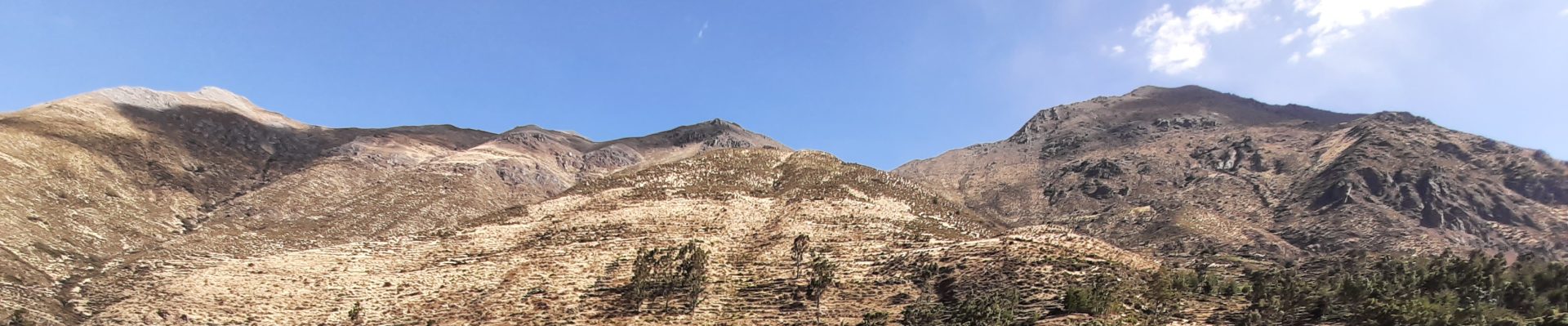
Photo taken close by the study site. The road that pass through Eastern Andes, and the magnificent Montane forest of western Amazonia behind. (Photo by M. L. Cárdenas)

Photo taken close by the study site. The road that pass through Eastern Andes, and the magnificent Montane forest of western Amazonia behind. (Photo by M. L. Cárdenas)

Who would have thought that building a road in Andes would have allowed us to gain new and unique insight of pristine western- Amazonian forests? (I would have thought completely the opposite). Initially Patricia Mothes, chief of the volcanologist section of the Intituto de Geofisica in Ecuador, was called to look at sediments exposed by road works on the eastern flank of the Ecuadorian Andes. Arriving at the site she found thick (>20 vertical meters) deposits of grayish and dark brown interbedded layers of sediments which looked like they have been recently deposited. At closer inspection Patricia discovered that there were even wood pieces and leaves within the dark sediments (now known to be highly organic) that had the appearance of have been deposited within modern time. She wanted to know more. So a PhD student was recruited (a.k.a. Macarena Cárdenas) to work with the sediments at the Palaeoenvironmental Change Research Group at the Open University under the supervision of Dr William Gosling… And so the study began.

After several years spent dating the sediments, analyzing their composition (physical and elemental) and the fossils (pollen and wood) contained within them preliminary insights into vegetation change on the eastern Andean flank during the middle Pleistocene (c. 200,000-300,000 years ago) were revealed and published (Cárdenas et al., 2011a; Cárdenas et al., 2011b). Further work covering stratigraphically lower sediments (older than those previously published; c. 500,000 year) and more detailed sedimentary and fossil analysis of the entire sequence completed a PhD thesis (Cárdenas, 2011).

I am now pleased to announce that the extended work included in my PhD thesis has now been published in a new article in Palaeogeography, Palaeoclimatology, Palaeoecology (Cárdenas et al., online). The new paper is an extended version from previous publications from the same research and provides further evidence of the unique insights that can be gained from palaeoenvironmental studies in this region. These are some of the oldest Quaternary sediments ever discovered and studied from the mid-elevation eastern Andean flank / western Amazon and upon their analyses we were able to get for the first time an insight of how human-untouched Amazonian forests were back in time (up to 500,000 years ago!), how was their diversity and how they responded to intense volcanic activity and climatic change.

By Dr Macarena L. Cárdenas

REFERENCES

Cárdenas, M.L. (2011) The response of western Amazonian vegetation to fire and climate change: A palaeoecological study. In: Department of Earth & Environmental Sciences, p. 242. The Open University, Milton Keynes

Cárdenas, M.L., Gosling, W.D., Pennington, R.T., Poole, I., Sherlock, S.C. & Mothes, P. (online) Forests of the tropical eastern andean flank during the middle pleistocene. Palaeogeography, Palaeoclimatology, Palaeoecology. DOI: 10.1016/j.palaeo.2013.10.009

Cárdenas, M.L., Gosling, W.D., Sherlock, S.C., Poole, I., Pennington, R.T. & Mothes, P. (2011a) The response of vegetation on the Andean flank in western Amazonia to Pleistocene climate change. Science, 331, 1055-1058. DOI: 10.1126/science.1197947

Cárdenas, M.L., Gosling, W.D., Sherlock, S.C., Poole, I., Pennington, R.T. & Mothes, P. (2011b) Response to comment on “the response of vegetation on the Andean flank in western Amazonia to Pleistocene climate change”. Science, 333, 1825. DOI: 10.1126/science.1207888


PCRG publications 2009

February 15, 2013
WDG

Gosling, W.D., Hanselman, J.A., Knox, C., Valencia, B.G. & Bush, M.B. (2009) Long term drivers of change in Polylepis woodland distribution in the central Andes. Journal of Vegetation Science, 20, 1041-1052

Gosling, W.D., Mayle, F.E., Tate, N.J. & Killeen, T.J. (2009) Differentiation between Neotropical rainforest, dry forest, and savannah ecosystems by their modern pollen spectra and implications for the fossil pollen record. Review of Palaeobotany and Palynology, 153, 70-85

Marchant, R., Cleef, A., Harrison, S.P., Hooghiemstra, H., Markgraf, V., Van Boxel, J., Ager, T., Almeida, L., Anderson, R., Baied, C., Behling, H., Berrio, J.C., Burbridge, R., Björck, S., Byrne, R., Bush, M., Duivenvoorden, J., Flenley, J., De Oliveira, P., Van Gee, B., Graf, K., Gosling, W.D., Harbele, S., Van Der Hammen, T., Hansen, B., Horn, S., Kuhry, P., Ledru, M.P., Mayle, F., Leyden, B., Lozano-García, S., Melief, A.M., Moreno, P., Moar, N.T., Prieto, A., Van Reenen, G., Salgado-Labouriau, M., Schäbitz, F., Schreve-Brinkman, E.J. & Wille, M. (2009) Pollen-based biome reconstructions for Latin America at 0, 6000 and 18 000 radiocarbon years ago. Climate of the Past, 5, 725-767

Blog at WordPress.com.