The long history of people in the rainforest of Suriname 

July 25, 2024
ninahylkjewitteveen

In this article I summarize and describe the scientific research that was performed near Botopasi in Suriname, which was published in Ecology as ‘Pre-contact and post-colonial ecological legacies shape Surinamese rainforests’ (https://doi.org/10.1002/ecy.4272). 

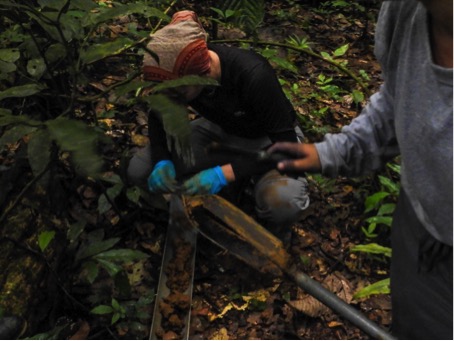
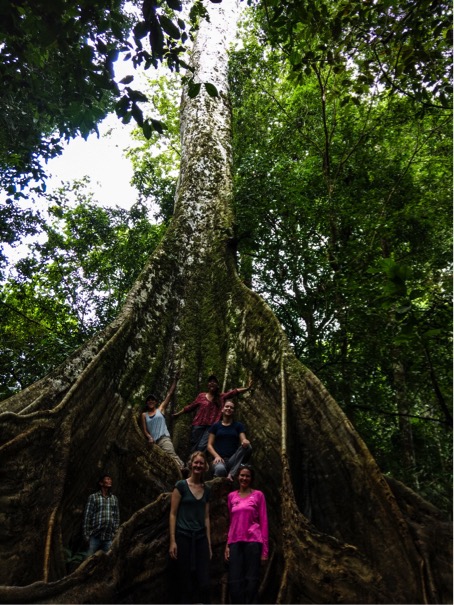
Figure 1: Our research team in the field

Background

In October 2021, between COVID-19 restrictions, I joined archaeologist dr. Cheryl White and her team to excavate the remnants of a ‘lost village’ of Saamaka Maroons in the Surinamese rainforest. Maroons are the descendants of enslaved Africans, who, in the late 1600s, fled plantations to live in freedom in the Surinamese rainforests. Dr. White has been investigating the first villages and the movements of Suriname’s Maroon communities for decades and is an expert in this topic. 

Our wonderful research team consisted of Farisha Kartosemito B.Sc., Sushmeeta Ganesh B.Sc., Jõvan Samson B.Sc., Agir Axwijk B.Sc., Santosh Singh M.A., Thanya Fonkel MPA, Harrold Sijlbing, Dombi Lö, Gerno Eduards & Farik Eduards. We were welcomed in the village Botopasi, and after a day of hard work in the field, we enjoyed delicious Surinamese food and played troefcall!

As an ecologist, I was interested in the ecological effects of past human activities on the forest ecosystem. In these rainforests, Maroon and Indigenous communities often burn and remove trees near their homes to grow a variety of crops like cassava, tayer, maize and banana. After some years, the cultivation site is abandoned and forests can grow back. But do those forests recover back to their original state? 

What did the forest look like before people arrived and settled in the landscape of Boven Suriname?

To study how Maroon communities have shaped Surinamese forests over time, I made a reconstruction of the landscape of the past (going back thousands of years). The landscape was near an archaeological sites called ‘Beng Tau’, where Maroons lived in the 17th century. We used plant fossils and charcoal remains to reconstruct the forest from the past, to research if people were using fire and growing crops, and how the forests recovered from that.

Results and implications

Figure 2: Phytoliths from the banana plant

The charcoal remains and plant fossils, particularly from maize and banana, confirmed Saamaka Maroons settled in the area since ca. 1700 and practiced slash-and-burn agriculture was near the archaeological site called ‘Beng Tapu’ (Figure 2). The site may have been a cooking area, because remnants of pottery with maize, rice and banana were found. Within 1 km of Beng Tapu, we found large fragments of charcoal, and plant fossils from maize and banana. Smaller charcoal fragments and banana were found within 5 km of the archaeological site. Nowadays, agriculture is practiced within 8 km of the archaeological site and Suriname river. The area used for agriculture likely expanded over time. 

How did the forest recover from these activities? 

Within 1 km of the archaeological site, forests were burnt and used multiple times. Here, forests have a lower biomass than further away from Beng Tapu, meaning fewer or smaller trees have grown back. Also, Attalea and Oenocarpus palm trees increased. Still today, the Saamaka Maroon community uses the maripa palm to make oil. Therefore, the number of maripa palms may have increased due to human activities like cooking and oil production! Attalea and Oenocarpus palms are also adapted to open conditions and fire, showing the influence people had on the environment and how the forest responded to fires.

Further (2-7 km) away from the archaeological site, where disturbances were fewer, the forests recovered much better but Astrocaryum palms grew back in higher numbers in the understory of the forests. What makes these palms so resilient? We are still uncertain. The forests furthest away (>8km) from Beng Tapu showed little signs of disturbances. 
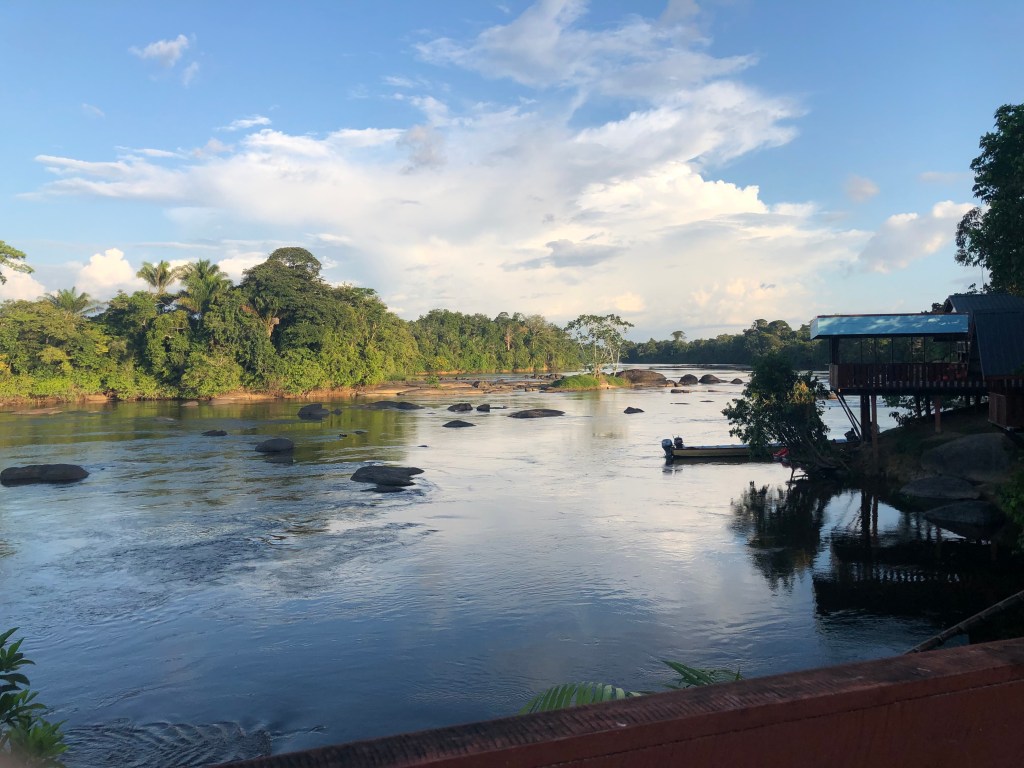
Figure 3: View from the Suriname River

A long human history, and an Indigenous archaeological site?

The Saamaka Maroons were not the first people to have inhabited the forests near Botopasi. Charcoal fragments show that people were in region (the ca. 20 km radius we studied) already 2000 years ago, and fire events occurred ca. 2000, 1700,1500, 1300, 1200 and 800 years ago. We don’t know which Indigenous Cultures may have inhabited this region, because of limited archaeological and historical research here. Large charcoal fragments were found ca. 7 km away from Beng Tapu, across the Suriname River. Could this be an Indigenous archaeological site?  

Conclusion

Our results show the timing, intensity and frequency of past disturbances are very important for good forest recovery and some disturbances from the past can still impact the modern vegetation. 

Unravelling the past not only tells us about the ancestors of Maroons and the lives of Indigenous communities before the 1500s. The past also helps us to understand how forests respond to human impacts. To better guide conservation strategies, we need to do more archaeological and ecological research in Surinamese rainforests. 

Next to the Suriname River, past human activities shaped the forest and increased local palm abundances. The broader forested region showed a healthy recovery. These results indicate that the Saamaka Maroon community preserved most of the forests they inhabited since the 1700s. We can learn from traditional knowledge about which management practices are sustainable to keep forests healthy. 

If you want to know more about the “hows” of this research… dive with me into the methodology! 

Continue Reading

Pre-contact and post-colonial ecological legacies shape Surinamese rainforests

April 10, 2024
WDG

Open access:

Witteveen, N.H., White, C., Sánchez-Martínez, B.A., Philip, A., Boyd, F., Booij, R., Christ, R., Singh, S., Gosling, W.D., Piperno, D.R. & McMichael, C.N.H. (2024) Pre-contact and post-colonial ecological legacies shape Surinamese rainforests. Ecology, e4272. DOI: 10.1002/ecy.4272

Uncovering Ecuador’s landscapes and cultures: A student adventure

August 16, 2023
Bianca Tacoronte Gomes

By: Lina Cabrera Sáenz and Bianca Gomes

We invite you to join us on an incredible journey through the heart of Ecuador, where a group of adventurous students from Florida Institute of Technology embarked on a life-changing experience as part of the Neotropical Archaeoecology summer field course. Buckle up as we delve into the marvels of nature, indigenous cultures, and unforgettable experiences. Let’s dive right in!

Unveiling the Andes

Our adventure began with a breath-taking visit to the Paramo at Cayambe-Coca National Park. Paramos are high altitude (3000-4000 metres) wet grasslands above the tree line and below the snow line within the equatorial Andes. Our tour guides Patricio and Byron gave us information about the local vegetation, focusing on the Polylepis tree (locally known as “paper tree”), which is unique to this sort of habitat. They also told us about some of the fascinating wildlife that can be seen here, such as the Andean Bear (Tremarctos ornatus) and the Andean Puma (Puma concolor).

We then descended through the cloud forest (3,600–3,400 meters) and lower montane rainforest (3,400–2,500 meters). Across these various habitats, we documented changes in hummingbird abundance and recorded their behaviour at four different feeder points: Guango Lodge, La Brisa, San Isidro Lodge, and Cascada el Hollin. The sheer diversity of hummingbird species left us in awe, and we marvelled at their iridescent feathers and incredible agility. 

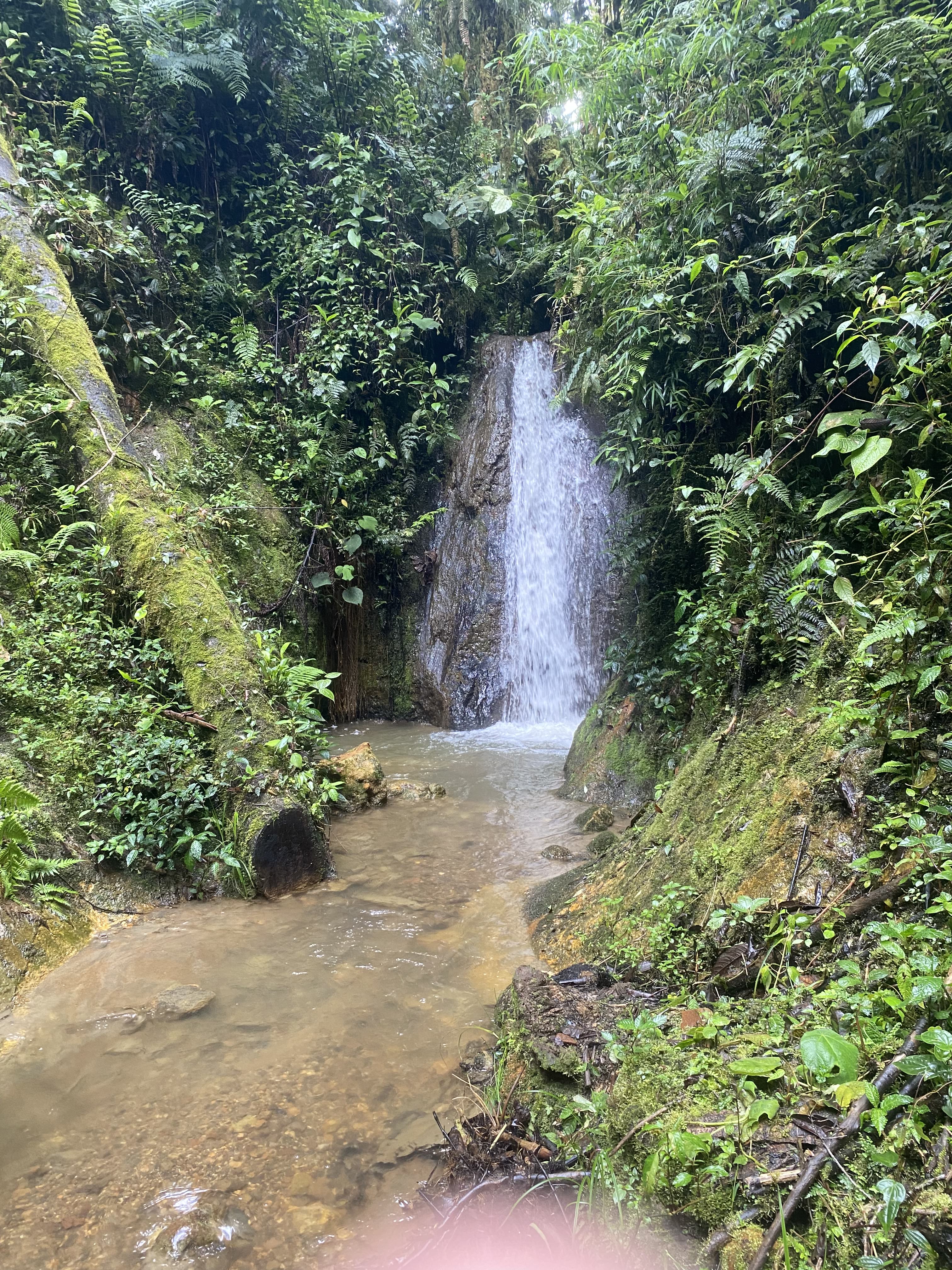
We explored a waterfall near San Isidro Lodge (https://cabanasanisidro.com), and we were able to observe pre-Inca pottery. At the lodge we also saw a diverse array of bird species, which was delightful! The forest’s nightlife brought us close encounters with a group of nocturnal monkeys, and to our surprise, we stumbled upon a very rare mountain tapir. The following morning we saw a small agouti (a small rodent) prowling around the lodge, and ended our adventures in the cloud forest on a high note. 

San Isidro waterfall and some of the animal diversity we observed

Continue Reading

Influences of sea level changes and volcanic eruptions on Holocene vegetation in Tonga

June 8, 2023
WDG

Open access:

Strandberg, N.A., Edwards, M., Ellison, J.C., Steinbauer, M.J., Walentowitz, A., Fall, P.L., Sear, D., Langdon, P., Cronin, S., Castilla-Beltrán, A., Croudace, I.W., Prebble, M., Gosling, W.D. & Nogué, S. (2023) Influences of sea level changes and volcanic eruptions on Holocene vegetation in Tonga. Biotropica. DOI: 10.1111/btp.13231

Ecological legacies of past fire and human activity in a Panamanian forest

February 23, 2023
WDG

Open access:

McMichael, C.N.H., Vink, V., Heijink, B.M., Witteveen, N.H., Piperno, D.R., Gosling, W.D. & Bush, M.B. (2023) Ecological legacies of past fire and human activity in a Panamanian forest. Plants, People, Planet 5, 281-291. DOI: 10.1002/ppp3.10344

Legacies of Indigenous land use and cultural burning in the Bolivian Amazon rainforest ecotone

March 10, 2022
WDG

Maezumi, S.Y., Elliott, S., Robinson, M., Betancourt, C.J., Gregorio de Souza, J., Alves, D., Grosvenor, M., Hilbert, L., Urrego, D.H., Gosling, W.D. & Iriarte, J. (2022) Legacies of Indigenous land use and cultural burning in the Bolivian Amazon rainforest ecotone. Philosophical Transactions of the Royal Society B: Biological Sciences 377, 20200499. https://doi.org/10.1098/rstb.2020.0499

UvA-TREUB Symposium Advances in Tropical Research

October 18, 2019
WDG

Date: 18th of  October 2019
Location: Institute for Biodiversity & Ecosystem Dynamics, Science Park Amsterdam
Organisers: Dr. Carina Hoorn and Dr. Crystal McMichael (University of Amsterdam)

Programme

14:00-14:10 WELCOME & OPENING

  • 14:10-14:30: Characterization of phytoliths in mid-elevation Andean forests Seringe Huisman (University of Amsterdam/Treub grant awardee)
  • 14:30 –14:50: Extinction-driven changes in frugivore communities on tropical islands: worldwide and in Mauritius Julia Heinen (University of Copenhagen, Denmark)
  • 14:50 – 15:10: Are the current Amazonian fires unprecedented? Crystal N.H. McMichael (University of Amsterdam)
  • 15:10 – 15:30: On the relationship between tiger conservation and water management Jasper Griffioen, Hanne Berghuis & Ewa van Kooten (Utrecht University)

15:30-16:00: TEA

  • 16:00 – 16:45: Assembling the diverse rain forest flora of SE Asia by evaluating the fossil and molecular record in relation to plate tectonics Robert J. Morley (Palynova, and Southeast Asia Research Group, Royal Holloway University of London, UK)

17:00: DRINKS

For full details visit the Treub web site here.

Netherlands Annual Ecology Meeting 2019

February 11, 2019
WDG

The Netherlands Annual Ecology Meeting (NAEM) 2019 takes place in the 12 and 13 February. This annual showcase of predominantly Dutch based ecological research will take place, as usual, at Conference Centre “De Werelt” (Lunteren). I am particularly excited this year as, along with Marielos Pena Carlos and Patrick Jansen, I am co-convening a session on “Tropical Ecology”. The first time I have contributed to the program in this way. Our session will be on the second day of the conference and contain the following exciting presentations:

  • 15:00 Predator avoidance and prey tracking in a Neotropical forest (Constant Swinkels, Wageningen University & Research)
  • 15:20 The role of fig volatiles in pollinator specificity and fig diversity (Aafke Oldenbeuving, Naturalis Biodiversity Center)
  • 15:40 Mangrove Atlantis: Can mangroves keep up with extreme land-subsidence? (Celine van Bijsterveldt, Royal Netherlands Institute for Sea Research)
  • 16:00 Break
  • 16:10 The fate of forests in agro-forest frontier landscapes, implications for conservation (Madelon Lohbeck, Wageningen University & Research)
  • 16:30 Trends in the variability of Specific Leaf Area of paramo vegetation during succession (Marian Cabrera, University of Amsterdam)
  • 16:50 Succession dynamics of tree and soil fungal communities in regenerating tropical rainforests are strongly influenced by regional species pool and abiotic factors (Irene Adamo, Naturalis Biodiversity Center)


Introducing Yoshi Maezumi

May 14, 2018
S. Yoshi Maezumi

This slideshow requires JavaScript.

Greetings Paleo-Family!

For those of you I have not had the pleasure of meeting yet, please allow me to introduce myself. My name is Yoshi Maezumi. I have recently been awarded a Marie Curie Fellowship for my research proposal FIRE: Fire Intensity in Rainforest Ecotones. I will have the honor of working with an extraordinary team of international, interdisciplinary researchers including Will Gosling, Crystal McMichael, Emiel van Loon, and Boris Jansen from the University of Amsterdam, Boris Vannière from the Université de Franche-Comté, Jose Iriarte from the University of Exeter, and Francisco Cruz from the University of São Paulo. Together we will examine the long-term role of fire in shaping Amazon Rainforest Ecotones.

My research is focused on paleofire (fire in the past) in Neotropical savanna and rainforest ecosystems. My current post-doctoral research at the University of Exeter is investigating the role indigenous fire management practices had on shaping the composition, structure, and flammability of modern Amazonian rainforests.

Recently introduced to a book by Bill Gammage entitled The Biggest Estate on Earth: How the Aborigines Made Australia.  Gammage identifies five uses of indigenous fire: 1) to control wildfire fuel; 2) to maintain diversity; 3) to balance species; 4) to ensure abundance; 5) to locate resources conveniently and predictably. Gammage argues that our current regime is struggling with number one. These stages of fire management provide some really interesting food for thought for my Marie Curie Fellowship as I aim to develop new paleoecological techniques to analyze paleofire that will be used to model natural and anthropogenic drivers of paleofire activity.

I have been thinking a lot about what we do and do not know about paleofire. One of the ways we reconstruct past fire activity is through the use of charcoal preserved in lake sediments. Charcoal can tell us a lot about what past fires were like including what kind of plants were burning, how often fires occurred, and potentially how big a fire was. One of the more elusive components is paleofire intensity, or how hot a particular fire was. The temperature of a fire has important ecological implications, as hotter fires tend to cause more ecological damage. Lots of factors can contribute to fire intensity including droughts, fuel loads, vegetation composition and structure, fuel moisture, etc.  All of this is to say that, fire intensity is complicated. Nevertheless, one of the main objectives of my Marie Curie research will be to compile what we currently know about the effect of modern fire intensity on the charcoal formation to figure out how that information can be used to interpret charcoal from the palaeorecord.

If you would like to join me on this ‘intense’ paleofire journey, (punny, I know, I just couldn’t resist), I am starting a weekly science blog called Her Science that will highlight the trials, tribulations, and triumphs of my Marie Curie research over the next few years.

Until next time,

Live long and Science On,

-yoshi

Introducing Britte Heijink

March 2, 2018
WDG

Veerle and I trying to protect ourselves from the mosquitos.

Veerle and I trying to protect ourselves from the mosquitos.

Hi all!

My name is Britte Heijink and I’m doing my MSc Biological Science thesis research project with Crystal McMichael and William Gosling. I travelled with Veerle Vink and Crystal to the Colombian part of Amazonia to collect samples for my project. At Amacayacu National Park, we collected soil cores from different locations in the plot. Now that we’re back in Amsterdam, I’m analysing the soils to reconstruct the fire and vegetation history from the plot using charcoal and phytoliths. I am specifically looking to see if humans have been present in the system and how they potentially affected the vegetation at Amacayacu.

 Here I’m Sampling pieces of soil cored by Louisa and checking for large pieces of charcoal

Here I’m Sampling pieces of soil cored by Louisa and checking for large pieces of charcoal

I’ve completed my bachelor thesis for Bèta-Gamma (Liberal Arts and Sciences) under the supervision of Crystal and Will here at the UvA. I’m really excited to work with them again, and already looking forward to our meetings at the Oerknal 😉  I will be finished by the end of September, and then possibly return for a literature study.

One of the most wonderful experiences in my academic career so far has been the fieldwork to Panama and Colombia with Crystal, Veerle, and Nina. It was a lot of hard work, and 90% of our time was spent covered in mud, sweat, and insect repellant, but the experience of working in a tropical rainforest was completely worth it! Veerle and I will write another blog about our fieldwork soon. Come see us in the microscope lab if you want to hear our dangerous and amazing stories before that!

Cheers,

Britte

Our last day in the Amazon was spend with some of the local students, Louisa Fernando Gomez Correa and Mariana Gutierrez Munera.

Our last day in the Amazon was spend with some of the local students, Louisa Fernando Gomez Correa and Mariana Gutierrez Munera.

Blog at WordPress.com.