Biodiversity and the functioning of tropical forests

July 12, 2016
WDG

Biodiversity and the functioning of tropical forests
PhD defense University of Wageningen
Candidate: Masha T. van der Sande
Date: 06/07/2016

Watch Masha’s thesis defense on WUR TV (featuring W.D. Gosling as an opponent…)

WRUTVClick here to watch the video

Tropical palynology meeting

July 8, 2016
WDG

PalykringThe Palynologische Kring (Palynological Association)
Tropical palynology meeting
14 July 2016

Hosted by: Palaeoecology & Landscape Ecology, Institute for Biodiversity & Ecosystem Dynamics, University of Amsterdam
Located: Science Park 904
Organised: Carina Hoorn (if you want to attend please contact Carina for further details)


Speakers

  • 14.00-14.30 Suzette Flantua (University of Amsterdam) – Thriving palynological research in Latin America: What has been done and what’s next.
  • 14.30-15.00 Dunia Urrego (University of Exeter, UK)- Tropical and subtropical vegetation dynamics over orbital and millennial timescale
  • 15.00-15.30 Coffee break
  • 15.30-16.00 William Gosling (University of Amsterdam) – Long-term solar and ultraviolet-B irradience detected using sporopollenin chemistry
  • 16.00-16.30 Kim Hagemans (Utrecht University) – High Andean vegetation responses to changes in palaeo-ENSO


In the news:

Jonathan Amos (2016) ‘Case is made’ for Anthropogenic Epoch. BBC News: Science & Environment.

Scientific publications:

Sarmiento, F.O. (2002) Anthropogenic change in the landscapes of highland Ecuador. Geographical Review 92, 213-234. doi: 10.1111/j.1931-0846.2002.tb00005.x

Swindles, G.T., Lamentowicz, M., Reczuga, M. & Galloway, J.M. (online)  Palaeoecology of testate amoebae in a tropical peatland. European Journal of Protistology. doi: 10.1016/j.ejop.2015.10.002

Tellkamp, M.P. (2014) Habitat change and trade explain the bird assemblage from the La Chimba archaeological site in the northeastern Andes of Ecuador. Ibis 156, 812-825. doi: 10.1111/ibi.12179

Waters, C.N., Zalasiewicz, J., Summerhayes, C., Barnosky, A.D., Poirier, C., Galuszka, A., Cearreta, A., Edgeworth, M., Ellis, E.C., Ellis, M., Jeandel, C., Leinfelder, R., McNeill, J.R., Richter, D.d., Steffen, W., Syvitski, J., Vidas, D., Wagreich, M., Williams, M., Zhisheng, A., Grinevald, J., Odada, E., Oreskes, N. & Wolfe, A.P. (2016) The Anthropocene is functionally and stratigraphically distinct from the Holocene. Science 351, . doi: 10.1126/science.aad2622

Tropical Ecology in the Netherlands

October 12, 2015
WDG

UvAPresentations by current PhD research students
R
elated to the University of Amsterdam Tropical Ecology course

Date: Friday October 16 2015
Location: Sciencepark 904
Contact: Joost Duivenvoorden

Program

9:00-9:30 Marian Cabrera (UvA): Paramo response to human influence: A trait-based approach.
9:30-10:00 Caterina Cúcio (UvA): The seagrass rhizobiome and its role in the sulfur cycle.
10:00-10:30 Vitor Gomes (Naturalis): Endangered tree species future in Amazon.

Coffee Break

11:00-11:30 Catarina Jacovac (WUR): Effects of land use on forest succession in the Amazon.
11:30-12:00 Andre van Proosdij (WUR/Naturalis): Assessing botanical diversity patterns in Gabon using Species Distribution Models: methods & applications.
12.00-12.30 André Junqueira (WUR): Legacies of anthropogenic soils on forests and cultivation systems in Amazonia.

Lunch

Mashpi (25)

Tropical Botany in Belize: Part 1 – An Introduction

February 12, 2015
nicholasloughlin

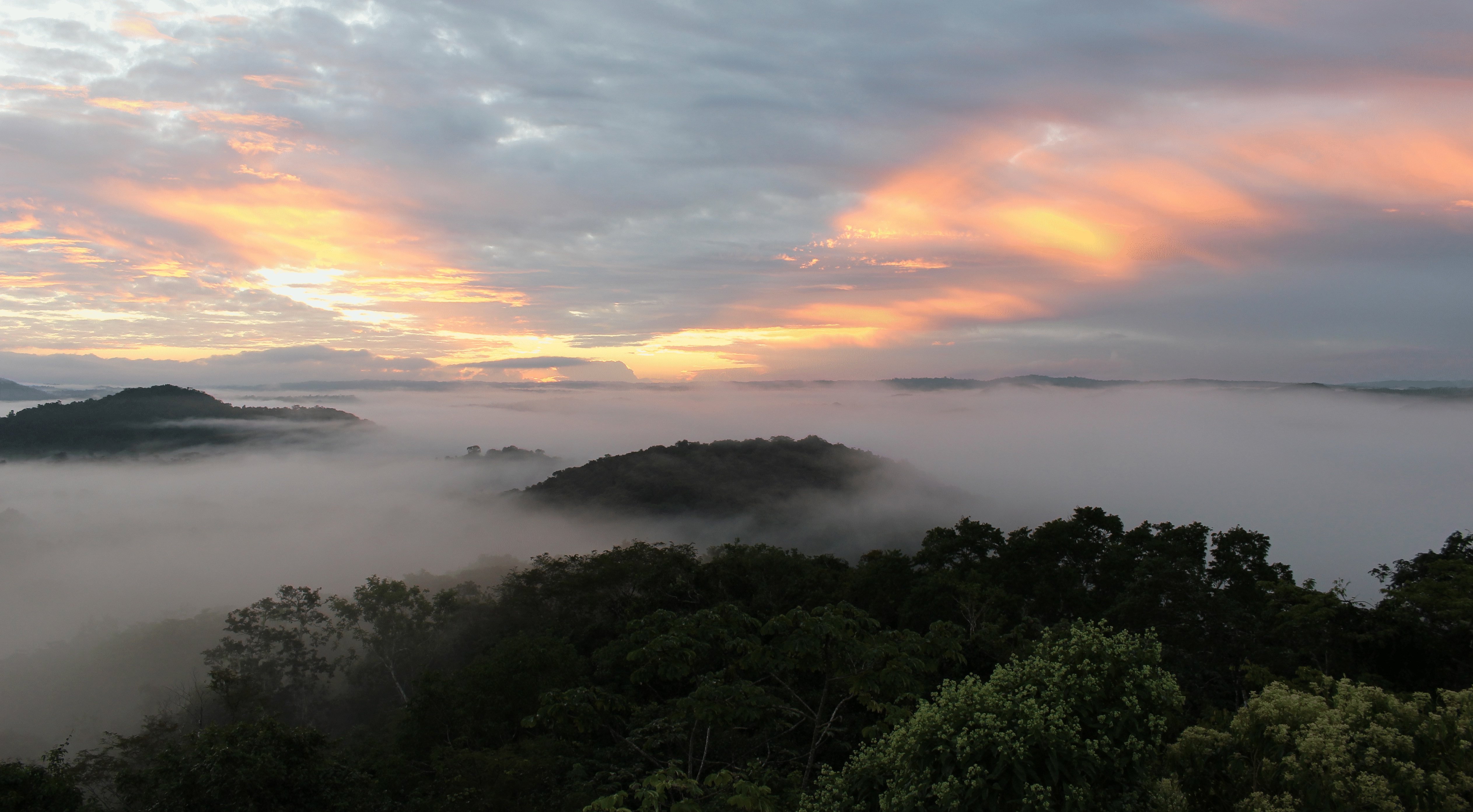
Sunrise in Belize (Photograph by Anna Turbelin)

Sunrise in Belize (Photograph by Anna Turbelin)

Tropical Botany in Belize
by Nick Loughlin

Getting back to the UK after fieldwork is always jarring and this time is certainly no different, the change from 32°C days walking through the savanna and lowland forests of Belize to the -2°C early mornings walking through snow in Milton Keynes is an abrupt transition. I have recently returned from a 2 week field course in tropical botany run by the Royal Botanic Garden Edinburgh (RBGE) in conjunction with their MSc course on the ‘Biodiversity and Taxonomy of Plants’. The field course allowed for 10 NERC funded PhD students in relevant fields to accompany the MSc students out to Belize to learn a host of valuable skills in tropical botany and ecology. During our time in Belize we visited 2 main locations, Las Cuevas Research Station within the Chiquibul forest reserve and the Rio Bravo Conservation and Management Area (RBCMA), in my next two posts I will briefly cover the places we visited and the botany we learned.

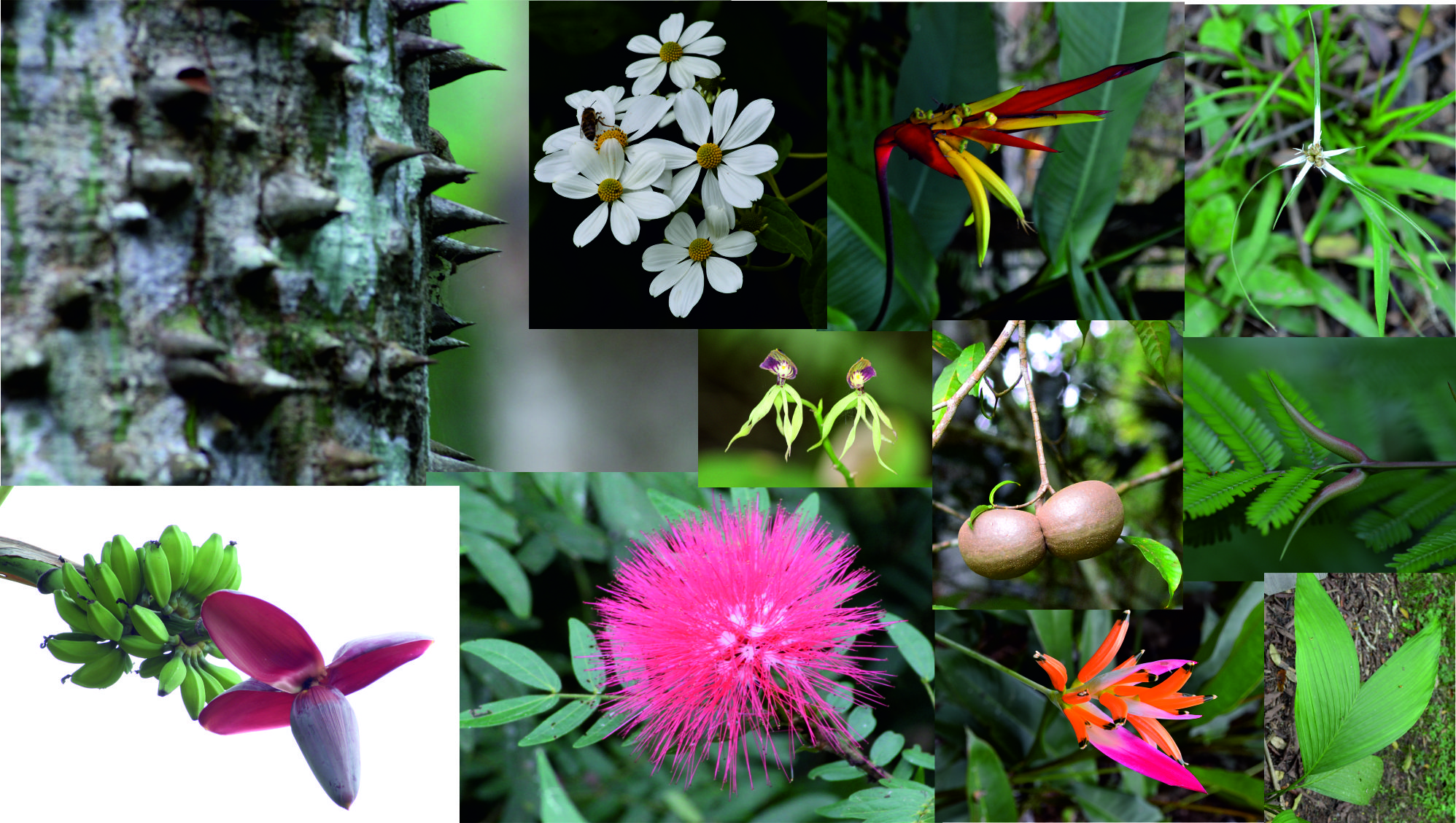
A very small selection of the plants we sampled and identified during the course (Photographs by Anna Turbelin and Nick Loughlin)

A very small selection of the plants we sampled and identified during the course (Photographs by Anna Turbelin and Nick Loughlin)

Before I get going I would just like to thank all of the staff from the RBGE who led the field course, (David, Louis, Tiina, Becky, Chris and Helen) their ability to teach the major characteristics of 70+ tropical families to many of us who are not botanists or taxonomists in an engaging way was astounding, although I don’t believe I will ever be able to identify a Euphorbiaceae from its vegetative characteristics. Also thanks to the students from the MSc course who were great fun, if any of you move away from botany and taxonomy and want more of an idea about the world of tropical palaeoecology, give me a shout.

On our way to see the Mayan ruins at Xunantunich (Photograph by Anna Turbelin)

On our way to see the Mayan ruins at Xunantunich (Photograph by Anna Turbelin)

BES Tropical Ecology Meeting

April 23, 2014
WDG

The 7th Early Career Research meeting 2014

The University of York, August 14th and 15th 2014

Tropical ecosystems – from process to policy

SIG_TropEcol_final-300x214Keynote speakers:

After six successful meetings, the legendary BES-TEG Early Career Research Meeting returns. Day one will focus on Ecology and Ecosystem Processes, while day two will focus on Practical Applications and links to Policy such as conservation, livelihood, policy and development.

All early-career researchers, both PhD and Post-Docs, are welcome to present their tropical ecology related research with a poster and/or oral presentation. There shall be a competition for both with prizes. This event will take place at Derwent College (D/L//047) and the accommodation at Alcuin College (see map link below).

Continue Reading

Tropical pollen database online

April 7, 2014
WDG

PollenTo facilitate the our ability to identify pollen in the fossil record we have been building a searchable digital tropical pollen database. Our work builds upon the architecture provided by Bush & Weng (2007) for their Neotropical pollen database (Palaeoecology labFlorida Institute of Technology). We have used Bush & Weng’s freeware tool and expanded it to include an additional 364 pollen and spore types from tropical Africa. The images are of pollen reference material collected over the career of Prof. Dan Livingstone and curated in the Department of BiologyDuke University; full collection details of each specimen are indicated on each individual electronic record. In conjunction with the open access publication “Atlas of the tropical West African pollen flora” (Gosling et al., 2013) we have made the entire updated pollen database available. We hope that this will prove to be a useful tool for palynologists working in Africa and the wider tropics and that it will encourage others to develop the database further.

Continue Reading

Blog at WordPress.com.