Forests of the tropical eastern Andean flank during the middle Pleistocene: An insight of how highly biodiverse forests lived without us

October 31, 2013
WDG

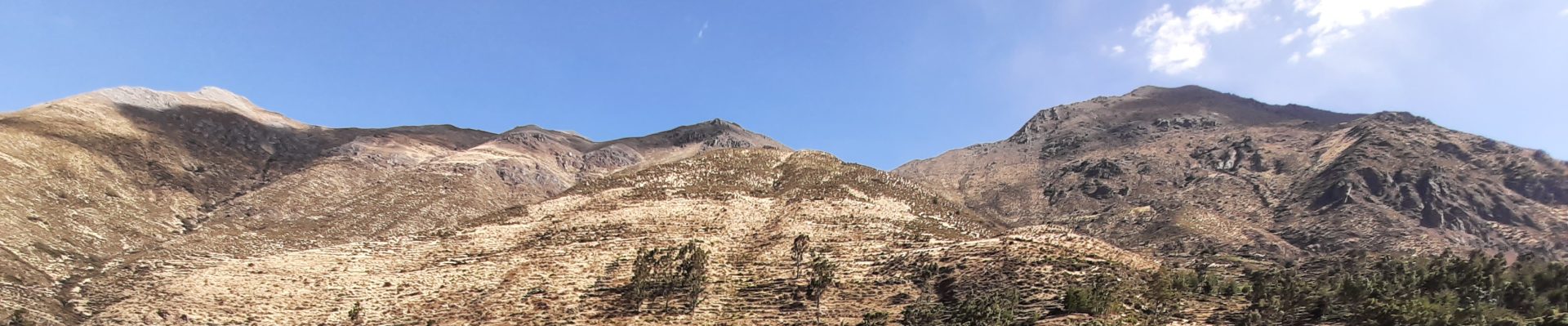
Photo taken close by the study site. The road that pass through Eastern Andes, and the magnificent Montane forest of western Amazonia behind. (Photo by M. L. Cárdenas)

Photo taken close by the study site. The road that pass through Eastern Andes, and the magnificent Montane forest of western Amazonia behind. (Photo by M. L. Cárdenas)

Who would have thought that building a road in Andes would have allowed us to gain new and unique insight of pristine western- Amazonian forests? (I would have thought completely the opposite). Initially Patricia Mothes, chief of the volcanologist section of the Intituto de Geofisica in Ecuador, was called to look at sediments exposed by road works on the eastern flank of the Ecuadorian Andes. Arriving at the site she found thick (>20 vertical meters) deposits of grayish and dark brown interbedded layers of sediments which looked like they have been recently deposited. At closer inspection Patricia discovered that there were even wood pieces and leaves within the dark sediments (now known to be highly organic) that had the appearance of have been deposited within modern time. She wanted to know more. So a PhD student was recruited (a.k.a. Macarena Cárdenas) to work with the sediments at the Palaeoenvironmental Change Research Group at the Open University under the supervision of Dr William Gosling… And so the study began.

After several years spent dating the sediments, analyzing their composition (physical and elemental) and the fossils (pollen and wood) contained within them preliminary insights into vegetation change on the eastern Andean flank during the middle Pleistocene (c. 200,000-300,000 years ago) were revealed and published (Cárdenas et al., 2011a; Cárdenas et al., 2011b). Further work covering stratigraphically lower sediments (older than those previously published; c. 500,000 year) and more detailed sedimentary and fossil analysis of the entire sequence completed a PhD thesis (Cárdenas, 2011).

I am now pleased to announce that the extended work included in my PhD thesis has now been published in a new article in Palaeogeography, Palaeoclimatology, Palaeoecology (Cárdenas et al., online). The new paper is an extended version from previous publications from the same research and provides further evidence of the unique insights that can be gained from palaeoenvironmental studies in this region. These are some of the oldest Quaternary sediments ever discovered and studied from the mid-elevation eastern Andean flank / western Amazon and upon their analyses we were able to get for the first time an insight of how human-untouched Amazonian forests were back in time (up to 500,000 years ago!), how was their diversity and how they responded to intense volcanic activity and climatic change.

By Dr Macarena L. Cárdenas

REFERENCES

Cárdenas, M.L. (2011) The response of western Amazonian vegetation to fire and climate change: A palaeoecological study. In: Department of Earth & Environmental Sciences, p. 242. The Open University, Milton Keynes

Cárdenas, M.L., Gosling, W.D., Pennington, R.T., Poole, I., Sherlock, S.C. & Mothes, P. (online) Forests of the tropical eastern andean flank during the middle pleistocene. Palaeogeography, Palaeoclimatology, Palaeoecology. DOI: 10.1016/j.palaeo.2013.10.009

Cárdenas, M.L., Gosling, W.D., Sherlock, S.C., Poole, I., Pennington, R.T. & Mothes, P. (2011a) The response of vegetation on the Andean flank in western Amazonia to Pleistocene climate change. Science, 331, 1055-1058. DOI: 10.1126/science.1197947

Cárdenas, M.L., Gosling, W.D., Sherlock, S.C., Poole, I., Pennington, R.T. & Mothes, P. (2011b) Response to comment on “the response of vegetation on the Andean flank in western Amazonia to Pleistocene climate change”. Science, 333, 1825. DOI: 10.1126/science.1207888


Introducing Adele Julier: New PCRG PhD researcher

October 14, 2013
adelecmj

Adele Julier

Adele Julier and a Malvaceae

Hello! I’m Adele and I started my PhD about a week ago. It’s been a little intense but I can almost find the lab without a map now, so it is probably time to introduce myself.

I’ll be studying pollen-vegetation relationships in Ghana, as part of the NERC funded project500,000 years of solar irradiance, climate and vegetation changes’. This means I’ll be using pollen traps to figure out how pollen outputs vary between (and sometimes within) different vegetation types in Ghana. I will also be trying my hand at chemotaxonomy and video making. I’m heading out to Ghana (along with Phil Jardine) in just over a week to do my first lot of field work which will involve seeing the plots, collecting existing traps, replacing them with new ones, and setting up some new sites. I’m very excited.

My background is broadly botanical; I did a BA at Magdalene College, Cambridge in Natural Sciences specialising in Plant Science and then an MSc in Biodiversity and Taxonomy of Plants at the Royal Botanic Gardens, Edinburgh.

Here’s a picture of me holding the biggest Malvaceae flower I’d ever seen and being incredibly happy about that.

To find out more about me visit my blog: Plants in real life

PDRA: Past environmental and climate change in West Africa

March 29, 2013
WDG

Full time Post-Doctoral Research Associate, Temporary contract for 36 months, £27,854 – £36,298
Department of Environment, Earth & Ecosystems, Faculty of Science, The Open University

Closing date : 25/04/2013

The PDRA project will descover more about past vegetation and climate change in Lake Bosumtwi (Ghana)

The PDRA project will descover more about past vegetation and climate change in Lake Bosumtwi (Ghana)

We are seeking a PDRA to study past climate and vegetation change in tropical West Africa as part of the NERC-funded “500,000 years of solar irradiance, climate and vegetation changes” project. You will join a multidisciplinary collaborative research team and will work with an international network of project partners. The project will utilise cutting-edge organic geochemical techniques to generate the longest continuous record of fossil pollen chemistry change. The study will build upon previous research into the sediments recovered from Lake Bosumtwi (Ghana). The data generated will shed new light on the role of climate in driving vegetation change in the tropics.

You will already hold a PhD, or be near to completing your PhD, in a relevant scientific discipline with a background in the Earth or Environmental sciences. You must have substantial experience of organic geochemistry or tropical palynology, with well-developed self-management skills and the ability to prioritise effectively.

The PDRA will work with an associated PhD student looking at modern pollen-vegetation relationships in the same region.

The PDRA will work with an associated PhD student looking at modern pollen-vegetation relationships in the same region.

Co-Investigators:
Dr Barry Lomax (University of Nottingham)
Dr Wesley Fraser (Oxford Brookes University)

Project partners:
Prof . Yadvinder Malhi (University of Oxford)
Prof. Mark Sephton (Imperial College London)
Dr Tim Shanahan (University of Texas, Austin)
Dr Stephen Abu-Bredu (Forestry Research Institute of Ghana)

For further particulars click here.
For information on how to apply click here visit The Open University jobs web site.

Associated PhD project.

The PDRA will be part of an international team; partners based at University of Nottingham, Oxford Brooks University, Imperial College London, Oxford University, University of Texas at Austin and the Forestry Research Institute of Ghana

The PDRA will be part of an international team; partners based at University of Nottingham, Oxford Brooks University, Imperial College London, Oxford University, University of Texas at Austin and the Forestry Research Institute of Ghana

PCRG publications 2005

February 15, 2013
WDG

Bush, M.B., Hansen, B.C.S., Rodbell, D.T., Seltzer, G.O., Young, K.R., Leon, B., Abbott, M.B., Silman, M.R. & Gosling, W.D. (2005) A 17,000-year history of Andean climate and vegetation change from Laguna de Chochos, Peru. Journal of Quaternary Science, 20, 703-714

Gosling, W.D. & Bush, M.B. (2005) A biogeographic comment on Wüster et al. (2005): Tracing an invasion: Landbridges, refugia, and the phylogeography of the neotropical rattlesnake (serpentes: Viperidae: Crotalus durissus). Molecular Ecology, 14, 3615-3617

Gosling, W.D., Mayle, F.E., Tate, N.J. & Killeen, T. (2005) Modern pollen-rain characteristics of tall terra firme moist evergreen forest, southern Amazonia. Quaternary Research, 64, 284-297

Hanselman, J.A., Gosling, W.D., Ralph, G.M. & Bush, M.B. (2005) Contrasting histories of MIS 5e and the Holocene from Lake Titicaca (Bolivia/Peru). Journal of Quaternary Science, 20, 663-670

Blog at WordPress.com.