Open acess, online:
Loughlin, N.J.D., Gosling, W.D. & Montoya, E. (2017) Identifying environmental drivers of fungal non-pollen palynomorphs in the montane forest of the eastern Andean flank, Ecuador. Quaternary Research. DOI: 10.1017/qua.2017.73

October 23, 2017
Open acess, online:
Loughlin, N.J.D., Gosling, W.D. & Montoya, E. (2017) Identifying environmental drivers of fungal non-pollen palynomorphs in the montane forest of the eastern Andean flank, Ecuador. Quaternary Research. DOI: 10.1017/qua.2017.73
October 20, 2017
Open acess, online:
Loughlin, N.J.D., Gosling, W.D., Coe, A.L., Gulliver, P., Mothes, P. & Montoya, E. (2017) Landscape-scale drivers of glacial ecosystem change in the montane forests of the eastern Andean flank, Ecuador. Palaeogeography, Palaeoclimatology, Palaeoecology. DOI: 10.1016/j.palaeo.2017.10.011
October 20, 2017

Crytsal McMichael (University of Amsterdam)
Discussion on human impacts on Amazonian forest…
McMichael, C.H., Feeley, K.J., Dick, C.W., Piperno, D.R. & Bush, M.B. (2017) Comment on “Persistent effects of pre-Columbian plant domestication on Amazonian forest composition”. Science 358. DOI: 10.1126/science.aan8347
Junqueira, A.B., Levis, C., Bongers, F., Peña-Claros, M., Clement, C.R., Costa, F. & ter Steege, H. (2017) Response to Comment on “Persistent effects of pre-Columbian plant domestication on Amazonian forest composition”. Science 358. DOI: 10.1126/science.aan8837
October 19, 2017
 Title: When was the South Pacific colonised? A lake sediment approach to understanding climate:human drivers of ecosystem change on remote Pacific Islands
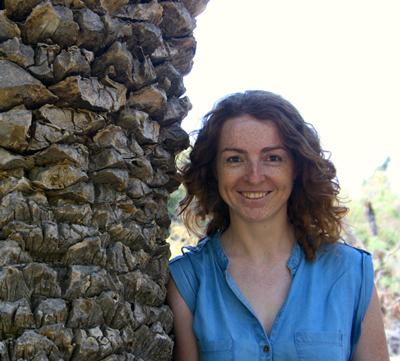 Location: University of Soithampton (Geography & Environment)
Supervsiory team: Dr. Sandra Nogué, Prof Mary Edwards, Prof. David Sear, Dr. William Gosling (University of Amsterdam), Prof. Inger (Tromso University), Prof. Janet Wilmshurst (Landcare research and University of Auckland)
Rationale: The Pacific islands of Polynesia were among the last places on earth to be colonised by humans. The precise dates of colonisation are debated – a situation which arises from the different sources of evidence (1, 2). New lake sediment records from the Cook Islands (Atiu, Mangaia) and Samoa (Upolu) and Tonga show very clear evidence of disturbance, but what is unclear is to what extent the signal represents the arrival of humans or a change in climate (2). A key question for the analysis of sedimentary records is the ability to distinguish natural variability in the environment of Pacific Islands from that arising from the arrival of humans in a temporal and spatial context. We aim to use a multi-proxy approach based on SedDNA, lipid biomarkers, fossil charcoal, and pollen preserved in lake sediments to identify: a) the presence of humans and/or livestock that were brought with them, and b) the related environmental change. Multiproxy approaches supported by statistical analysis, will be deployed to four sites where we already have good chronological controls and high resolution records of palaeoclimate. We are well placed to apply new methods and higher resolution analyses to address fundamental questions about the response of remote pacific islands to climate and human forcings.
October 11, 2017
Goni, M.F.S., Desprat, S., Daniau, A., Bassinot, F.C., Polanco-Martinez, J.M., Harrison, S.P., Allen, J.R.M., Anderson, R.S., Behling, H., Bonnefille, R., Burjachs, F., Carrion, J.S., Cheddadi, R., Clark, J.S., Combourieu-Nebout, N., Mustaphi, C.J.C., Debusk, G.H., Dupont, L.M., Finch, J.M., Fletcher, W.J., Giardini, M., Gonzalez, C., Gosling, W.D., Grigg, L.D., Grimm, E.C., Hayashi, R., Helmens, K., Heusser, L.E., Hill, T., Hope, G., Huntley, B., Igarashi, Y., Irino, T., Jacobs, B., Jimenez-Moreno, G., Kawai, S., Kershaw, A.P., Kumon, F., Lawson, I.T., Ledru, M., Lezine, A., Liew, P.M., Magri, D., Marchant, R., Margari, V., Mayle, F.E., McKenzie, G.M., Moss, P., Mueller, S., Mueller, U.C., Naughton, F., Newnham, R.M., Oba, T., Perez-Obiol, R., Pini, R., Ravazzi, C., Roucoux, K.H., Rucina, S.M., Scott, L., Takahara, H., Tzedakis, P.C., Urrego, D.H., van Geel, B., Valencia, B.G., Vandergoes, M.J., Vincens, A., Whitlock, C.L., Willard, D.A. & Yamamoto, M. (2017) The ACER pollen and charcoal database: a global resource to document vegetation and fire response to abrupt climate changes during the last glacial period. Earth System Science Data 9, 679-695. DOI: 10.5194/essd-9-679-2017
October 10, 2017
Online, open access:
Gosling, W.D., Julier, A.C.M., Adu-Bredu, S., Djagbletey, G.D., Fraser, W.T., Jardine, P.E., Lomax, B.H., Malhi, Y., Manu, E.A., Mayle, F.E. & Moore, S. (2017) Pollen-vegetation richness and diversity relationships in the tropics. Vegetation History and Archaeobotany. DOI: 10.1007/s00334-017-0642-y
October 9, 2017
Gosling, W.D., de Kruif, J.*, Norder, S.J., de Boer, E.J., Hooghiemstra, H., Rijsdijk, K.F. & McMichael, C.N.H. (2017) Mauritius on fire: Tracking historical human impacts on biodiversity loss. Biotropica. DOI:
* This paper evolved from the BSc Future Planet Studies thesis of Jona de Kruif (2015) “Multi-proxy analysis of the effect of climate and human activity on the environment of Mauritius during the Holocene” at the University of Amsterdam. Jona was supervised by William Gosling and Erik de Boer.
October 9, 2017
Online, open access:
Matthews-Bird, F., Brooks, S.J., Gosling, W.D., Gulliver, P., Mothes, P. & Montoya, E. (2017) Aquatic community response to volcanic eruptions on the Ecuadorian Andean flank: Evidence from the palaeoecological record. Journal of Paleolimnology 58: 437-453. DOI: 10.1007/s10933-017-0001-0
October 5, 2017
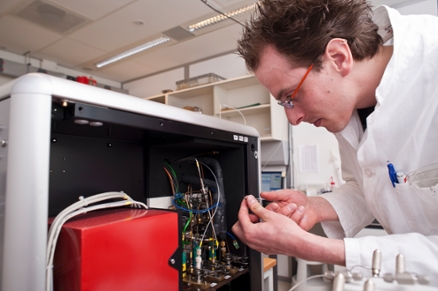 Vacancy: Physical-chemical research technician with management skills (salary scale 10)
Institute for Biodiversity & Ecosystem Dynamics
University of Amsterdam
Closing date: 22 October 2017
This position will link strongly with the IBED Department of Ecosystem & Landscape Dynamics which aims to improve our understanding of the functioning and dynamics of abiotic and biotic components of (geo-)ecosystems across landscapes through time. To achieve this aim we make use of a wide range of state-of-the-art research facilities provided by IBED (for more information on facilities click here).
For full details of the vacancy and how to apply click here, or visit Academic Transfer.
August 31, 2017
 Exciting new edition of the Past Global Changes (PAGES) magazine focused on the sustainability of Earth’s biodiversity. Includes articles by Ecology of the Past blog contributors Dr. Encarni Montoya and Dr. Macarena Cardenas.
To find out more check out the full issue (free):


 Ecology of the past